.jpg)
.jpg)





.jpg)
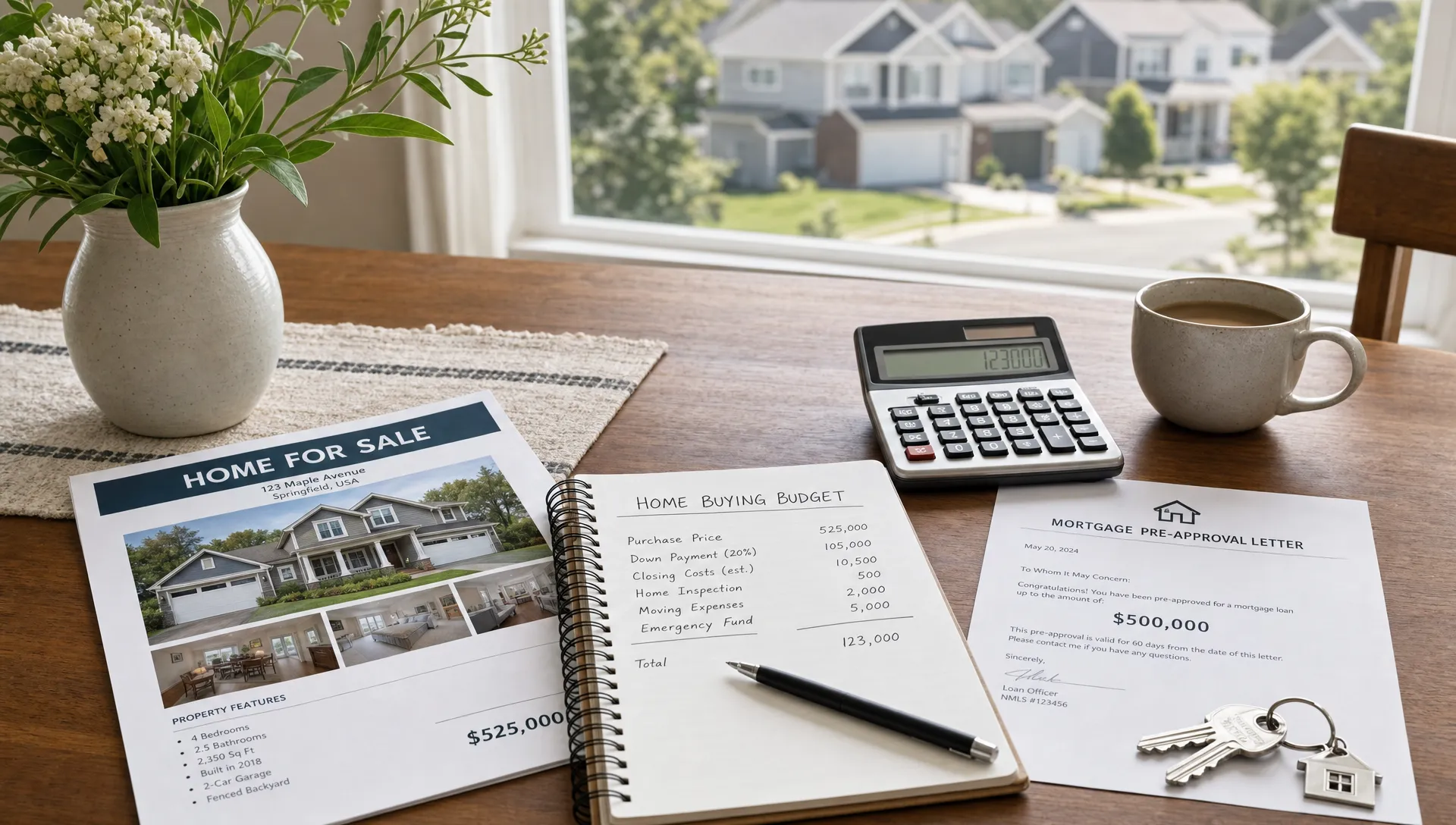

VA Mortgage Financing: A Clear Guide for Veterans
For many veterans, active-duty service members, and eligible surviving spouses, VA mortgage financing is one of the most valuable homebuying benefits available. It can reduce upfront cash needs, eliminate monthly mortgage insurance, and make financing more flexible than many conventional loan options.
But “VA loan” does not automatically mean simple. You still need to qualify with a lender, understand the costs, choose an eligible property, and make sure the loan supports your long-term financial plan. This guide walks through the essentials in plain English so you can move forward with more confidence.
What VA mortgage financing actually means
A VA loan is a mortgage offered by an approved private lender and backed by the U.S. Department of Veterans Affairs. The VA guarantee helps reduce lender risk, which is why qualified borrowers may be able to access favorable terms.
The VA does not usually lend the money directly. Instead, the VA sets key program rules, guarantees a portion of the loan, and allows approved lenders to originate and service the mortgage. That means two things are true at the same time:
- You need to meet VA eligibility rules based on military service.
- You also need to meet lender underwriting requirements based on income, credit, debt, and the property.
This is why working with a lender that understands VA guidelines can make a meaningful difference. The right loan officer can help you understand what is required, what is flexible, and where your file may need additional documentation.
Key benefits of VA mortgage financing
VA loans are popular because they solve several common home financing challenges, especially the challenge of saving a large down payment while managing everyday expenses.
The most recognized benefits include:
- Potential $0 down payment for eligible borrowers with sufficient entitlement and lender approval.
- No monthly private mortgage insurance, which can reduce the monthly payment compared with many low-down-payment conventional loans.
- Competitive interest rates, depending on market conditions, borrower profile, lender pricing, and loan structure.
- Flexible qualification standards, including VA residual income guidelines designed to evaluate whether you have enough income left after major obligations.
- Refinance options, including streamlined refinances for eligible existing VA loans and cash-out refinances for qualified homeowners.
For a deeper look at how these advantages compare with other mortgage programs, New Era Lending’s guide to the benefits of a VA mortgage loan for eligible buyers breaks down the strategic value of the program.
Who may be eligible for a VA loan?
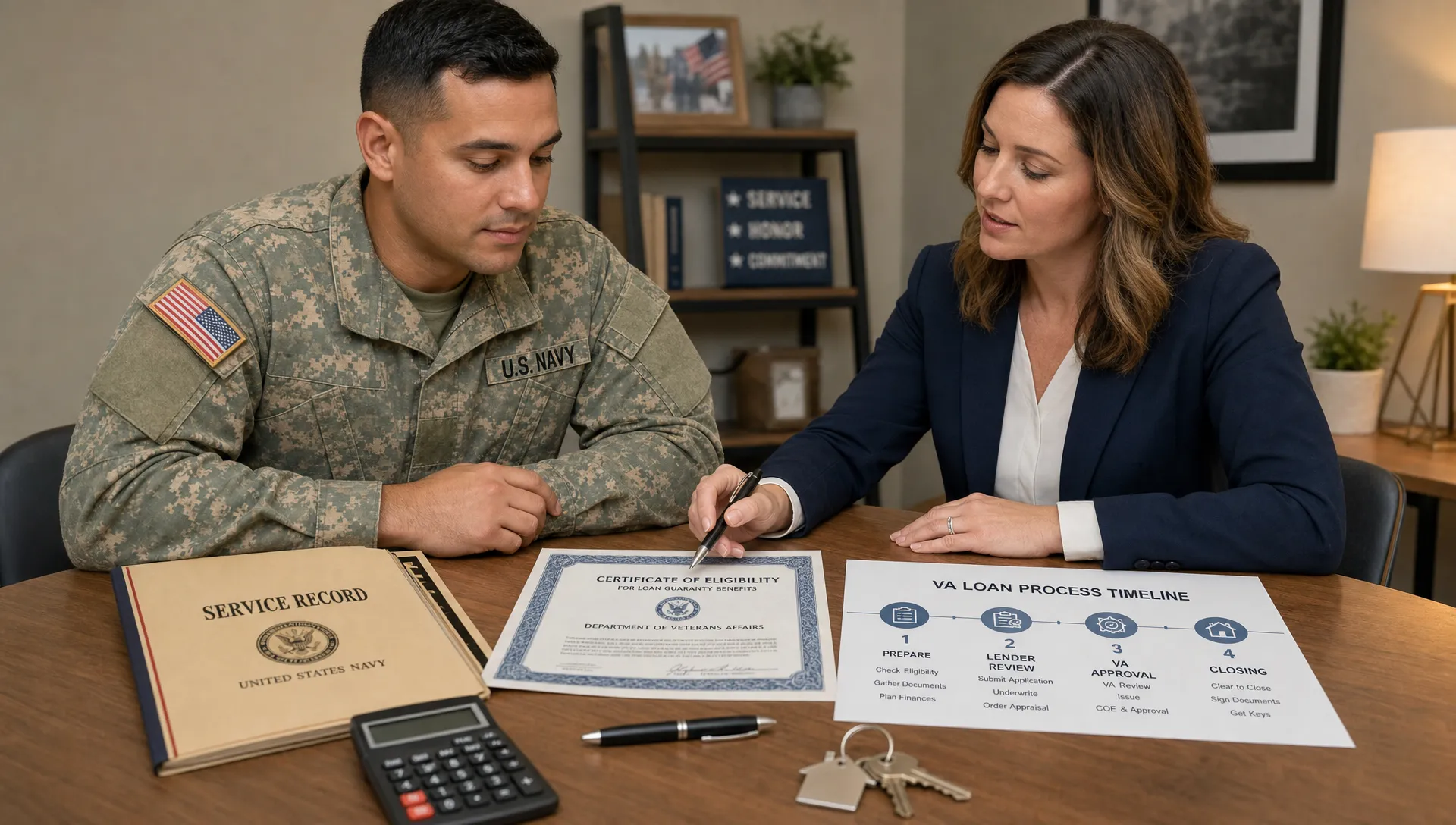
VA mortgage eligibility is generally tied to military service history. Veterans, active-duty service members, certain National Guard and Reserve members, and some surviving spouses may qualify. Your eligibility is typically confirmed through a Certificate of Eligibility, often called a COE.
A COE tells the lender that you meet the VA’s service-based eligibility requirements. It does not guarantee loan approval by itself. You still need to qualify financially and the property must meet VA standards.
Common borrower-side factors include income stability, credit history, debt-to-income ratio, residual income, employment history, and whether you plan to occupy the home as a primary residence. VA loans are not designed for vacation homes or pure investment properties.
If you want a more detailed explanation of service eligibility, income review, occupancy rules, and property standards, this guide on qualifying for a VA loan is a helpful next step.
How the VA loan process works
The VA mortgage process follows many of the same stages as other home loans, but with a few VA-specific checkpoints. Knowing the sequence helps you avoid surprises and move faster when you find the right property.
- Clarify your budget and goals: Decide whether your priority is the lowest possible cash to close, a comfortable monthly payment, a specific location, or long-term equity growth. A $0 down option can be powerful, but it should still fit your monthly budget.
- Confirm eligibility and request your COE: Your lender may be able to help obtain your Certificate of Eligibility. If additional service documentation is needed, it is better to know early.
- Get preapproved before shopping: A preapproval reviews your income, assets, credit, and debt so you can shop with a realistic price range. It also helps sellers see you as a serious buyer.
- Choose a VA-eligible property: The home must be safe, structurally sound, sanitary, and intended as your primary residence. Condos, manufactured homes, and multi-unit properties may have additional requirements.
- Make an offer with VA terms: Your real estate agent and lender should understand how VA financing affects appraisal timelines, closing costs, seller concessions, and required contract language.
- Complete appraisal and underwriting: The VA appraisal evaluates value and minimum property requirements. Underwriting confirms that your financial profile and the property meet program and lender guidelines.
- Close and move in: At closing, you sign final loan documents, pay any required funds, and take ownership. VA occupancy rules generally require you to move into the home within a reasonable period.
The best time to ask questions is before you are under contract. A clear preapproval conversation can prevent confusion later, especially if you have variable income, recent job changes, prior credit events, or partial entitlement from an existing VA loan.
Costs veterans should understand before closing
A VA loan can reduce the upfront burden of buying a home, but it does not mean every cost disappears. Understanding your full cash-to-close estimate is essential.
The most important VA-specific cost is the VA funding fee. This fee helps support the loan program and may vary based on factors such as your down payment, whether you have used the benefit before, and the type of loan. Many borrowers finance the funding fee into the mortgage rather than paying it out of pocket. Some borrowers, including certain veterans receiving VA disability compensation, may be exempt.
Other costs may include lender fees, title fees, appraisal fees, recording charges, prepaid homeowners insurance, property taxes, escrow deposits, and discount points if you choose to buy down the rate. Sellers may be allowed to pay certain costs, but limits and market norms matter.
This is where “no down payment” and “no money needed” are not the same thing. You may still need earnest money, inspection costs, appraisal costs, moving expenses, and reserves after closing. A strong plan looks beyond the loan approval and considers the first year of homeownership.
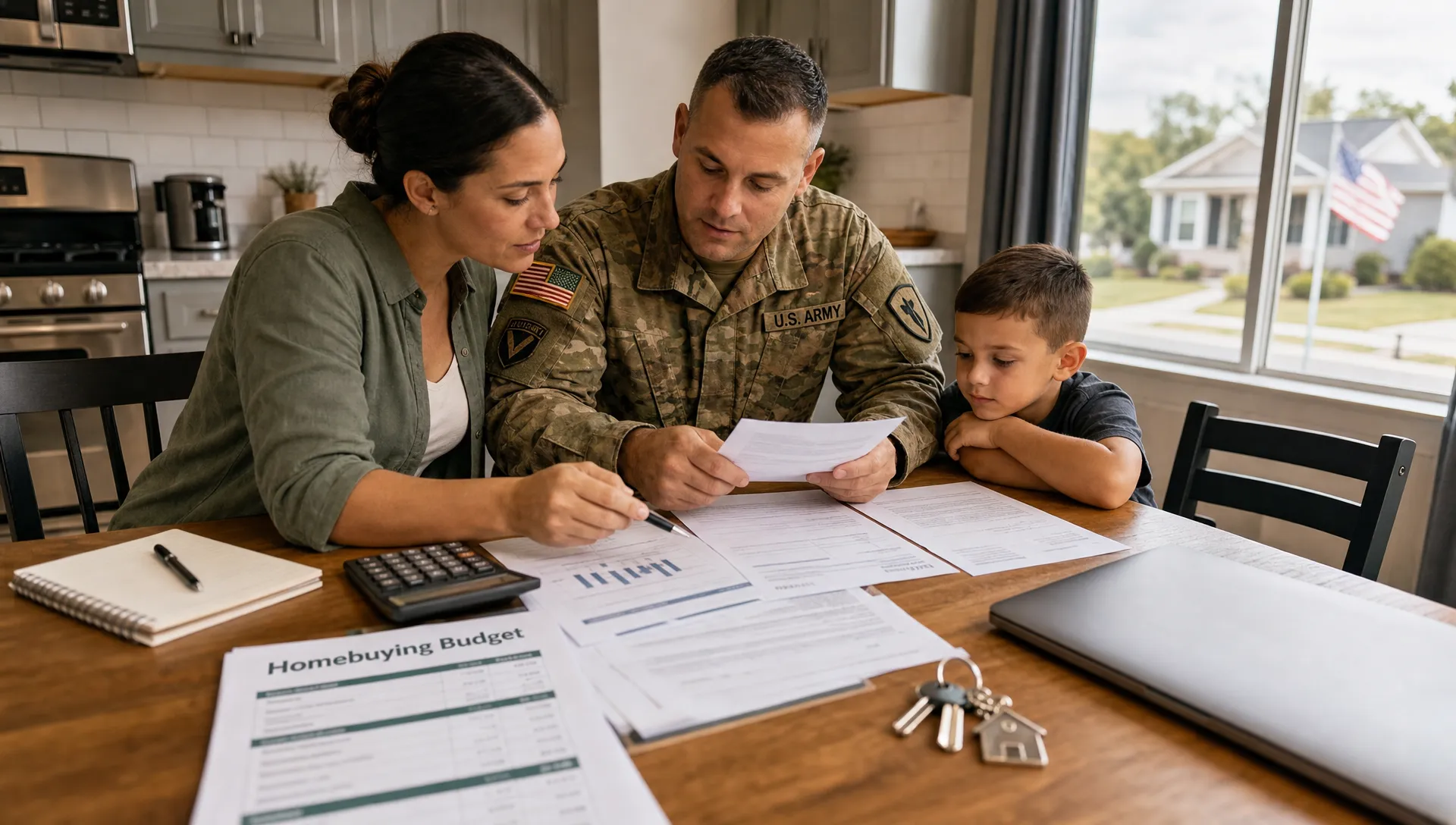
What documents will you likely need?
Documentation requirements vary by borrower profile, but most VA buyers should expect to provide records that confirm identity, income, assets, service eligibility, and housing history.
You may be asked for pay stubs, W-2s, tax returns if self-employed or commission-based, bank statements, photo identification, DD Form 214 if separated from service, a statement of service if active duty, and documentation for disability income, retirement income, or other qualifying income sources.
If you have unusual deposits, gaps in employment, rental income, child support, alimony, or prior credit challenges, your lender may request additional explanations or supporting documents. This is normal underwriting, not necessarily a sign that your loan is in trouble.
To get organized before applying, review this detailed checklist of documents veterans need to qualify for a mortgage. Having these items ready can help reduce delays.
Purchase, refinance, and equity options
VA mortgage financing is not limited to buying a first home. Eligible borrowers may use VA financing to purchase a primary residence, refinance an existing VA loan, or potentially access home equity through a cash-out refinance.
A VA Interest Rate Reduction Refinance Loan, often called an IRRRL or VA streamline refinance, may help eligible homeowners refinance an existing VA loan with less documentation than a full refinance. It is commonly used when the borrower can obtain a lower rate, move from an adjustable-rate mortgage to a fixed-rate loan, or improve the loan structure.
A VA cash-out refinance may allow a qualified homeowner to replace an existing mortgage and access equity. This can be useful for debt consolidation, home improvements, or other major financial goals, but it should be evaluated carefully. Pulling equity from your home increases the loan balance and may affect long-term wealth building.
Not every veteran should automatically choose VA financing in every situation. Conventional, FHA, USDA, or other options may be worth comparing depending on your credit, down payment, property type, entitlement status, and financial goals.
Common myths about VA loans
VA loans are widely used, but several myths still create confusion for buyers and sellers.
Myth 1: VA loans are only for first-time buyers. You can use a VA loan more than once if you have available entitlement and meet program requirements. Some borrowers even use VA financing after selling a prior VA-financed home and restoring entitlement.
Myth 2: VA loans always take longer to close. A VA loan can close efficiently when the lender, real estate agent, borrower, and seller understand the process. Delays usually come from documentation issues, appraisal repairs, title problems, or incomplete communication, not the VA program itself.
Myth 3: VA appraisals are impossible to pass. VA appraisals do include minimum property requirements, but they are not designed to reject good homes. They focus on safety, soundness, and sanitation. A well-maintained home is often a strong fit.
Myth 4: A $0 down payment means you should buy at the top of your approval. Your approval amount is not the same as your comfort zone. Veterans should weigh monthly payment, emergency savings, maintenance, commuting costs, and long-term plans before choosing a price point.
How to choose the right VA mortgage lender
The lender you choose affects more than the quoted rate. It affects your clarity, speed, confidence, and ability to solve issues before they become closing problems.
Look for a mortgage team that can explain VA eligibility, residual income, entitlement, funding fees, appraisal expectations, and refinance options in practical terms. You should also expect transparent estimates, secure document handling, responsive communication, and guidance that fits your goals rather than a one-size-fits-all script.
This is especially important if your situation has moving parts. Examples include self-employment, military transition, disability income, multiple income streams, prior bankruptcy, an existing VA loan, or plans to buy a multi-unit property.
New Era Lending offers technology-driven mortgage solutions with personalized human guidance for purchase, refinance, and equity access. For veterans who want a modern process without losing the ability to speak with a real expert, that balance can make the financing experience feel more manageable.
Plan for life after the mortgage approval
A smart VA loan strategy looks past closing day. Homeownership includes utilities, repairs, insurance, taxes, commuting, furnishings, and the everyday services that support your household.
If you are relocating, build a practical local budget before you close. That might include researching schools, medical care, commuting routes, grocery costs, and health providers. For example, a veteran family moving to Oklahoma may compare local whole-health providers such as Tulsa's holistic dentist along with other recurring household services so their post-move budget feels realistic.
This kind of planning matters because a mortgage payment is only one part of financial stability. The best loan is not just the one that gets approved. It is the one that supports the life you are building.
Practical tips before you apply
Before submitting a full application, take a few simple steps that can improve your experience.
Review your credit report for errors, avoid opening new debt during the mortgage process, and keep your employment and income documentation organized. If you have money moving between accounts, be ready to document where it came from. If you plan to receive gift funds or seller credits, ask your lender how those should be handled before money changes hands.
It is also wise to compare the total loan picture, not just the interest rate. A lower rate may come with points or higher fees. A slightly higher rate may make sense if it reduces upfront costs and better fits your expected time in the home. The right choice depends on your break-even timeline, cash reserves, and financial priorities.
Most importantly, do not wait until you find a house to ask whether you qualify. A preapproval gives you time to fix issues, gather documents, and shop with confidence.
Frequently Asked Questions
Is VA mortgage financing really available with no down payment? Yes, many eligible borrowers can buy with $0 down if they have sufficient VA entitlement and meet lender and property requirements. However, closing costs, prepaid items, inspections, and moving expenses may still apply.
Can I use a VA loan more than once? Yes. VA loan benefits can often be used multiple times, depending on entitlement, prior VA loan history, and whether entitlement has been restored after selling or refinancing a previous property.
Does the VA set a minimum credit score? The VA does not set one universal minimum credit score for all borrowers, but lenders may apply their own credit standards. Your full profile, including income, debts, residual income, and payment history, matters.
What is the VA funding fee? The VA funding fee is a program cost that helps support VA loans. It may be financed into the loan, paid at closing, or waived for certain eligible borrowers, such as some veterans receiving VA disability compensation.
Can I refinance with a VA loan? Yes. Eligible homeowners may consider a VA streamline refinance for an existing VA loan or a VA cash-out refinance if they want to access equity or refinance a non-VA loan into a VA loan.
Do VA loans require a home inspection? A VA appraisal is required, but it is not the same as a full home inspection. A separate inspection is strongly worth considering because it gives you more detail about the property’s condition.
Get clear on your VA mortgage financing options
VA mortgage financing can be a powerful benefit, but the best results come from understanding how the program fits your specific situation. Eligibility, entitlement, credit, income, property type, closing costs, and long-term plans all shape the right path.
If you are preparing to buy, refinance, or explore home equity options, New Era Lending can help you review your choices with smart technology and personalized guidance. Start with a conversation, ask every question, and build a mortgage plan that supports your next chapter with confidence.