.jpg)
.jpg)





.jpg)

How to Value Your Home Before You Refinance
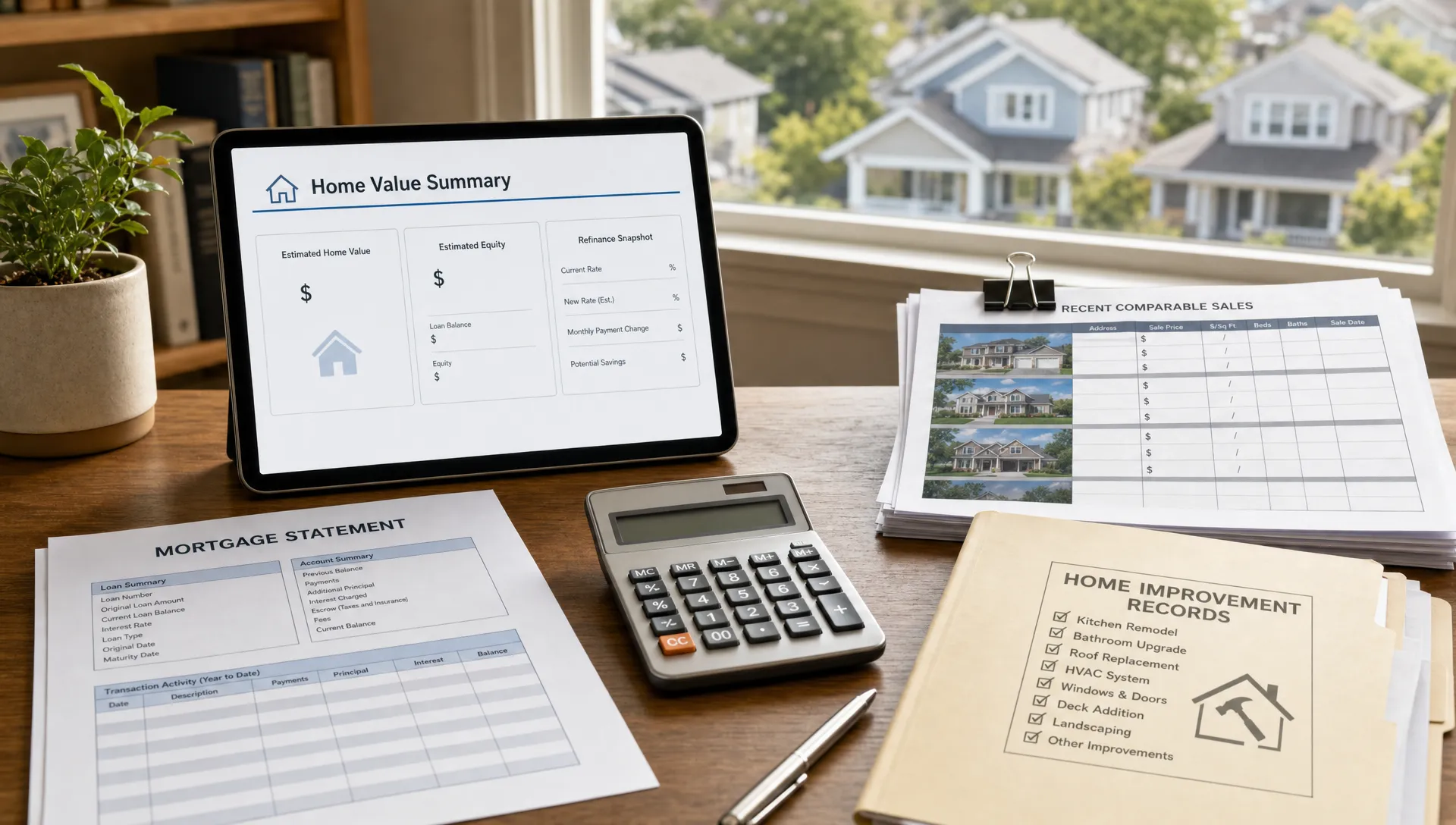
Before you refinance, your home’s value is more than a number you are curious about. It helps determine how much equity you have, which refinance programs may be available, whether mortgage insurance could change, and how much cash you may be able to access if your goal is a cash-out refinance.
The challenge is that homeowners often look at three different estimates and see three different numbers. A real estate website may say one thing, your county tax assessment may say another, and your own sense of what the home is worth may be higher or lower based on upgrades you have made. The key is not to find a perfect number before you apply. It is to build a realistic value range so you can refinance with fewer surprises.
Here is how to value your home before you refinance, what lenders usually care about, and how to use your estimate to make a smarter decision.
Why your home value matters in a refinance
When you refinance, the lender is not only reviewing your credit, income, debts, and loan program. The property matters too. Your home value is used to calculate your loan-to-value ratio, often called LTV.
The basic formula is simple:
Loan amount ÷ home value = loan-to-value ratio
If your estimated home value is $400,000 and your new refinance loan would be $300,000, your LTV is 75%. If the same loan is measured against a $360,000 value, your LTV rises to about 83%. That difference can affect eligibility, pricing, mortgage insurance, and available cash-out proceeds.
This is why a refinance conversation should start with value and equity, not just interest rates. A lower rate may look attractive, but the final refinance option depends on how the loan, property value, and borrower profile fit together. For a deeper look at the relationship between equity and loan options, New Era Lending’s guide on how your home’s value impacts refinance options is a useful next step.
Start with your current mortgage balance
Before estimating your home’s value, confirm how much you currently owe. Your latest mortgage statement should show your unpaid principal balance. If you are considering a refinance soon, remember that your payoff amount may be slightly different because it can include interest through the payoff date and other items required to close out the old loan.
You want a clear view of the loan amount you may refinance. That number could include only the current balance, or it could also include closing costs if you choose to roll them into the new loan. For a cash-out refinance, it may include the existing balance, closing costs, and the amount of cash you want to receive.
Once you know the likely new loan amount, your home value estimate becomes more meaningful. A $25,000 difference in value may not matter much in one scenario, but it could be critical if you are near a program limit, trying to remove mortgage insurance, or hoping to access a specific amount of equity.
Use comparable sales, not just online estimates
Online home value tools can be helpful for a quick starting point, but comparable sales are usually more useful when you are trying to think like a lender or appraiser. Comparable sales, often called comps, are recently sold homes that are similar to yours in location, size, age, condition, and features.
The best comps usually share several traits:
- They sold recently, ideally within the past three to six months.
- They are close to your home, preferably in the same neighborhood or market area.
- They have a similar square footage, bedroom count, bathroom count, lot size, and property type.
- They reflect similar condition, updates, and overall appeal.
- They are true closed sales, not just active listings or pending offers.
Active listings can show what sellers hope to get, but sold properties show what buyers actually paid. For refinance planning, sold data is more reliable than asking prices.
If you live in a neighborhood with many similar homes, this process may be fairly straightforward. If your home is rural, custom-built, unusually large, on acreage, or in a market with few recent sales, estimating value can be more difficult. In those cases, you may need a wider value range and more professional guidance.
Check market trends in your area
Home values are local. National headlines can be useful context, but they may not reflect your county, city, or neighborhood. One area may be seeing strong demand and limited inventory, while another may be cooling because more homes are sitting on the market.
To understand your local trend, look at recent sales volume, days on market, price reductions, and whether homes are selling above or below list price. Public data can help too. The FHFA House Price Index tracks home price trends across the United States and can offer broader context, although it should not replace neighborhood-level research.
The goal is to understand whether the market is supporting your estimated value. If similar homes sold for strong prices six months ago but newer sales are lower, a lender’s valuation may lean closer to the more recent data. If the market is appreciating and inventory is tight, older sales may not fully capture current demand.
Adjust for condition, upgrades, and repairs
Two homes with the same square footage can have very different values. Condition matters. So do layout, quality of updates, curb appeal, lot usability, and functional features.
When you value your home before you refinance, be honest about improvements and deferred maintenance. A renovated kitchen, newer roof, updated HVAC system, finished basement, or energy-efficient windows may support value, especially if those features are typical buyer priorities in your area. On the other hand, peeling paint, roof damage, old plumbing, foundation concerns, or unfinished projects may lower confidence in the property’s value or create appraisal concerns.
Not every upgrade adds dollar-for-dollar value. A luxury improvement that is far above neighborhood norms may not produce the same return as a practical update that most buyers expect. Appraisers typically focus on how the market reacts to improvements, not just what the homeowner spent.
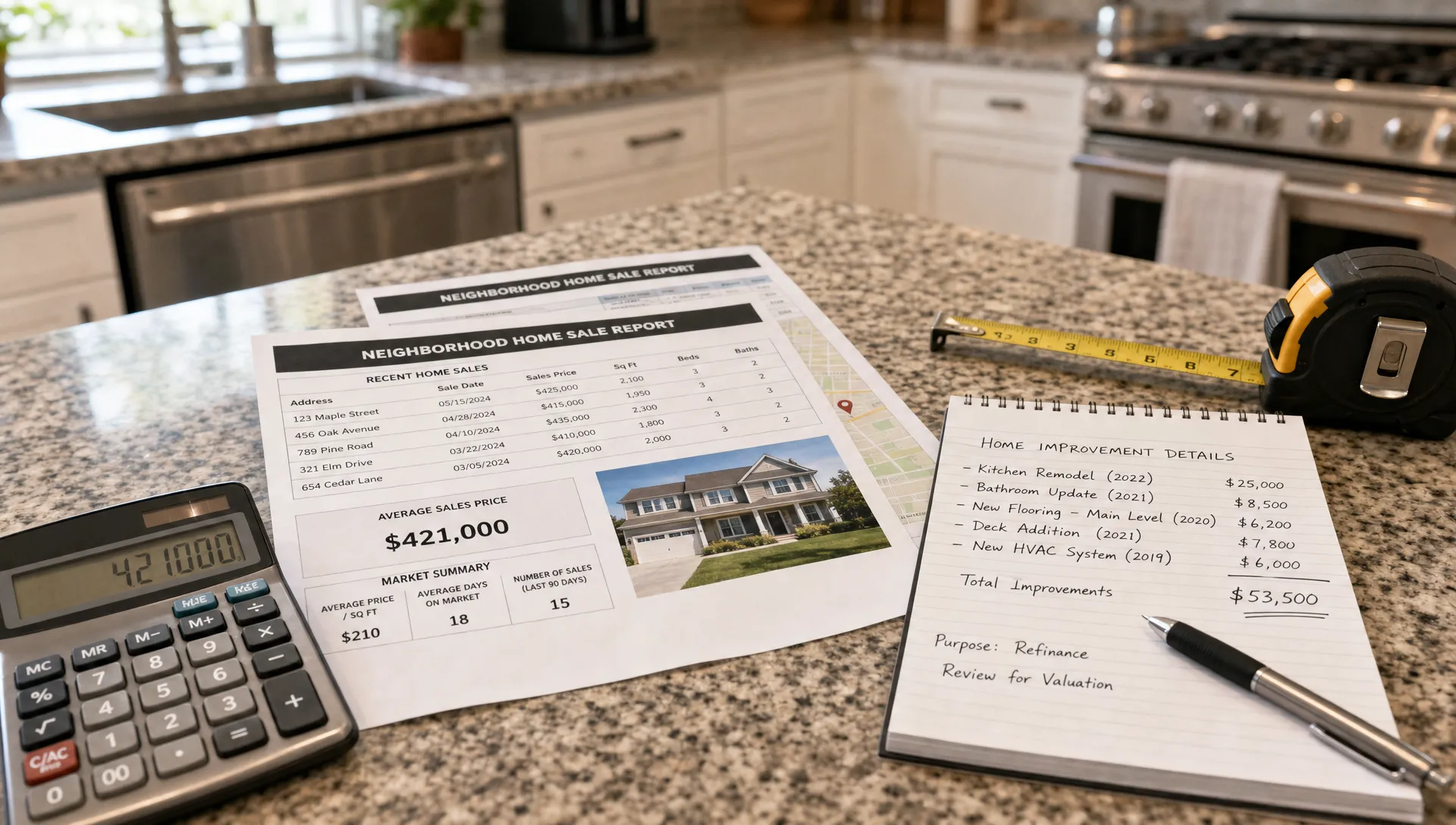
A good exercise is to write down your major updates with approximate dates and costs. Keep receipts, permits, contractor invoices, and before-and-after photos if you have them. This will not guarantee a higher value, but it can help document the property’s condition and improvements if an appraisal is required.
Build a realistic value range
Instead of anchoring to one number, create a low, middle, and high estimate. This is especially helpful before a refinance because it lets you see how sensitive your options are to the final value.
For example, assume you want a new loan amount of $320,000. If your home is worth $450,000, your LTV is about 71%. If it is worth $410,000, your LTV is about 78%. If it is worth $380,000, your LTV is about 84%.
Those three outcomes can lead to different conversations. At the higher values, you may have more flexibility. At the lower value, you may still qualify, but the loan structure, pricing, mortgage insurance, or cash-out availability may change.
This is where a refinance professional can help you model scenarios before you spend time gathering documents or paying for third-party services. The point is not to predict the appraisal perfectly. It is to avoid making decisions based on an overly optimistic estimate.
Understand how the lender may verify value
Your estimate is a planning tool. The lender still needs an acceptable property valuation based on the loan program and investor guidelines. In many refinance transactions, this means an appraisal. In some cases, the lender may be able to use an automated valuation model, property data report, appraisal waiver, or other approved collateral review, depending on the borrower profile, property, loan type, and current guidelines.
If an appraisal is required, a licensed or certified appraiser will evaluate the property and compare it with relevant sales. The appraiser’s opinion of value becomes a major input in the loan approval process. New Era Lending explains this in more detail in its article on how a home appraisal affects your mortgage approval.
It is important to remember that an appraisal is not the same as a home inspection. An appraiser is primarily estimating market value and checking certain property characteristics. They may note obvious condition issues, but they are not performing the same type of detailed inspection a buyer might order during a purchase.
Prepare your home before a refinance appraisal
You do not need to remodel your home before an appraisal, and you should be cautious about spending large amounts of money solely to influence value. However, simple preparation can help the appraiser see the property clearly and document it accurately.
Focus on practical steps:
- Make sure all rooms, attic access points, garages, outbuildings, utilities, and mechanical areas are accessible.
- Complete small repairs that could raise condition concerns, such as broken fixtures, missing trim, loose handrails, or damaged flooring.
- Clean and declutter enough for the appraiser to view the home’s features, layout, and condition.
- Prepare a concise list of major upgrades, including dates, permits, and contractor details when available.
- Share relevant information about recent comparable sales if you have it, but avoid pressuring the appraiser.
The best approach is to be helpful and factual. Appraisers are required to provide independent opinions of value. A well-organized improvement list can support accuracy, but it should not read like a sales pitch.
Do not rely on your tax assessment alone
Many homeowners look at their property tax assessment and assume it reflects market value. Sometimes it is close, but often it is not. Tax assessments are used for local property tax purposes, and assessment methods vary by jurisdiction. Some areas update values frequently, while others lag behind the market. Exemptions, assessment caps, and local rules can also create differences between assessed value and market value.
For refinance planning, your tax assessment can be one data point, but it should not be your only source. Recent comparable sales and lender-accepted valuation methods matter more.
The same caution applies to online estimates. Automated tools can be surprisingly close in some neighborhoods and very inaccurate in others. They may not know about your interior condition, recent renovations, view, lot usability, or unique issues. Use them as a starting range, then compare them against real market evidence.
Watch for issues that can reduce the final value
Sometimes homeowners are surprised by a refinance valuation because they focus on what they love about the home, while the market focuses on different factors. A few common issues can create valuation gaps.
Deferred maintenance is one of the biggest. A home with an aging roof, visible water damage, damaged siding, or outdated major systems may not compare well against updated sales. Unpermitted additions can also complicate the valuation, especially if the finished space is not recognized in public records or does not meet local standards.
Market mismatch can matter too. If the best comparable sales are smaller, older, or in a different school zone, the appraiser may need to make adjustments. Unique homes can be harder to value because there are fewer reliable comps. Rural properties, mixed-use features, large acreage, accessory dwelling units, and unusual layouts may require more analysis.
None of these issues automatically prevent refinancing. They simply mean you should enter the process with realistic expectations and be ready to discuss loan options if the value comes in lower than hoped.
Use your value estimate to clarify your refinance goal
Once you have a reasonable value range, connect it to your refinance objective. Different goals depend on home value in different ways.
If your goal is to lower your monthly payment, value may affect the rate and mortgage insurance, but the payment also depends on the new loan term, closing costs, and interest rate. If your goal is to shorten your term, value may help with pricing, but affordability depends on whether the higher monthly payment fits your budget. If your goal is cash-out, value is central because the available equity helps determine how much cash may be possible.
If you are still deciding whether refinancing makes sense, review the common scenarios in New Era Lending’s guide to signs it’s the right time to refinance your home. Timing is not only about rates. It is also about your equity position, your long-term plans, and the financial outcome after costs.
You should also compare the refinance offer carefully once you receive loan terms. The Consumer Financial Protection Bureau explains that a Loan Estimate is designed to help borrowers review key costs, rate information, and loan features. Your value estimate helps you prepare, but the Loan Estimate helps you compare actual offers.
When to speak with a lender
You do not need a perfect home value estimate before talking with a lender. In fact, waiting too long can slow you down or cause you to miss useful guidance. A lender can help you understand which value thresholds matter for your situation, what documentation may be needed, and which refinance path best aligns with your goals.
This is especially important if you are close to an LTV cutoff, considering cash-out, trying to remove mortgage insurance, or refinancing a property that is difficult to value. A professional can help you model conservative and optimistic scenarios so you know what may change if the final valuation differs from your estimate.
At New Era Lending, homeowners can pair technology-driven mortgage tools with personalized human guidance for home purchase, refinancing, and equity access. That combination matters when value, timing, loan structure, and long-term financial goals all need to work together.
Frequently Asked Questions
How accurate are online home value estimates before refinancing? Online estimates can be useful as a starting point, but they are not final lender valuations. They may miss interior upgrades, repairs, property condition, lot features, and recent local market changes. Use them together with comparable sales and lender guidance.
Can I refinance without a home appraisal? Sometimes, but not always. Certain refinance scenarios may qualify for an appraisal waiver or alternative valuation method, depending on the loan program, property, borrower profile, and investor guidelines. Your lender can tell you what is available for your specific file.
What happens if my appraisal comes in lower than expected? A lower appraisal can affect your LTV, pricing, mortgage insurance, cash-out amount, or program eligibility. You may still have options, such as adjusting the loan amount, changing refinance goals, bringing cash to closing, or reviewing whether there is a valid basis to reconsider the value.
Should I make repairs before a refinance appraisal? Small repairs and basic maintenance can be worthwhile, especially if they address visible condition issues. Large renovations should be considered carefully because the cost may not translate into equal appraised value. Focus on safety, access, cleanliness, and documentation of completed improvements.
Is my home’s tax assessment the same as market value? Usually not. A tax assessment is used for property tax purposes and may be based on local assessment rules, exemptions, or outdated data. Market value for a refinance is typically based more heavily on recent comparable sales and accepted valuation methods.
Get a clearer refinance picture before you apply
Valuing your home before you refinance helps you understand your equity, set realistic expectations, and choose a loan strategy with more confidence. You do not need to solve every detail on your own. You need a practical estimate, a clear goal, and guidance on how your value range affects the next step.
If you are thinking about refinancing, New Era Lending can help you explore your options with modern tools, transparent guidance, and a lending process designed to feel simpler from the start. Visit New Era Lending to begin a refinance conversation that fits your home, your numbers, and your goals.