.jpg)
.jpg)





.jpg)


Qualifying for a VA Loan: Key Rules to Know
Qualifying for a VA loan can open the door to powerful benefits, including the possibility of buying with no down payment and no monthly private mortgage insurance. But VA eligibility alone does not automatically mean loan approval.
A VA loan has two approval layers. First, you must meet the Department of Veterans Affairs eligibility rules. Second, you must qualify with a VA-approved lender based on income, credit, debts, property requirements, and the details of the transaction.
If you are a veteran, active-duty service member, eligible National Guard or Reserve member, or qualifying surviving spouse, here are the key rules to understand before you apply.
1. VA Loan Eligibility Starts With Your Service History
The first question is whether you are eligible to use the VA home loan benefit. Eligibility is generally based on your military service category, length of service, duty status, and discharge type.
Common eligible groups include veterans who met minimum service requirements, active-duty service members with sufficient continuous service, certain National Guard and Reserve members, and some surviving spouses. Because service requirements vary by era and status, it is best not to guess based on a single online rule of thumb.
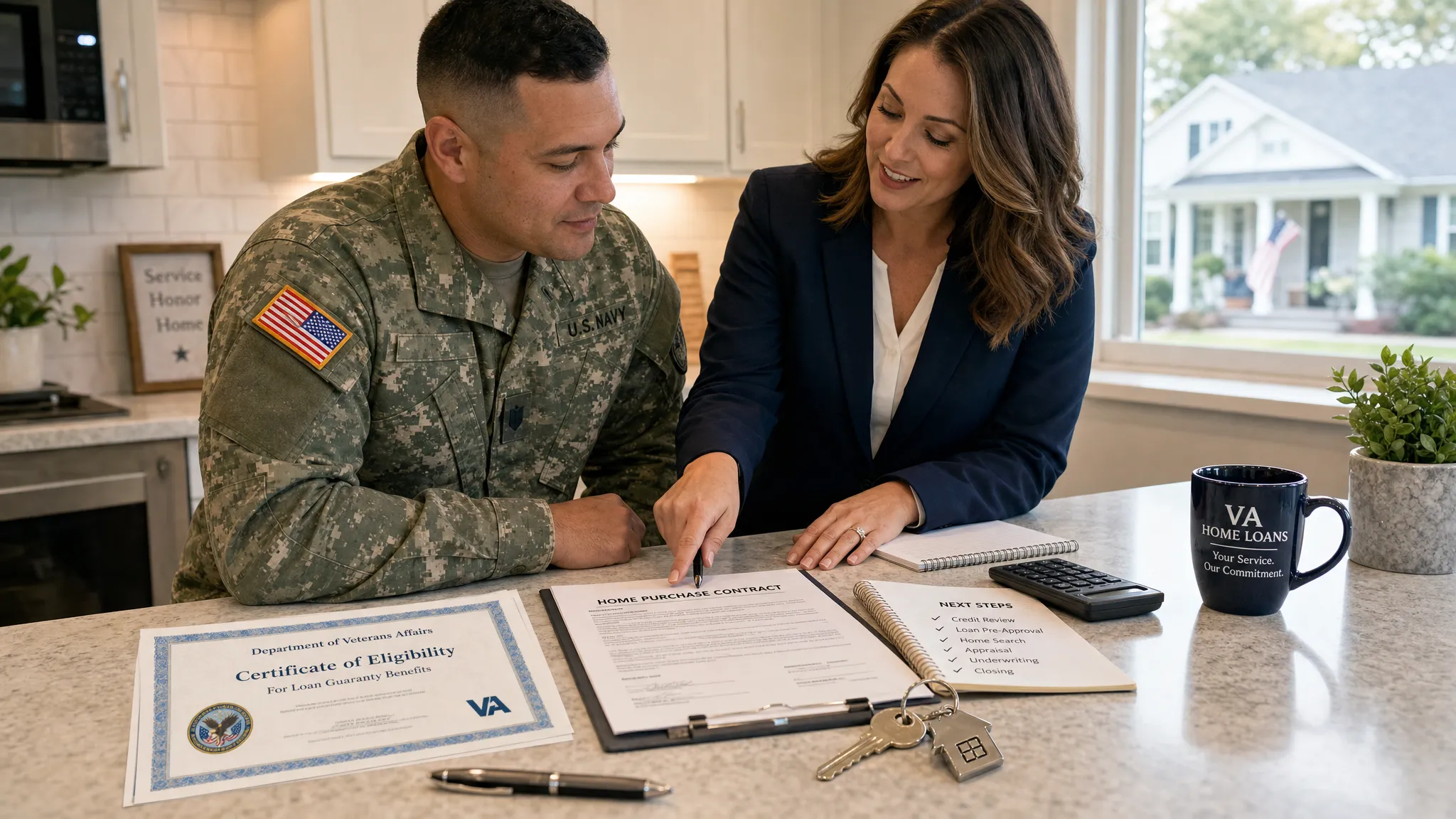
The document that confirms your eligibility is called a Certificate of Eligibility, often shortened to COE. A COE tells the lender that you have VA home loan eligibility and can also show important details such as entitlement status or potential funding fee exemption information.
A COE does not approve you for a mortgage by itself. It only confirms that you may use the VA benefit. You still need to meet lender and property requirements.
For a broader look at the advantages of this program, see New Era Lending’s guide to the benefits of a VA mortgage loan for eligible buyers.
2. You Still Need to Qualify Financially
One of the biggest misconceptions about VA loans is that eligibility guarantees approval. It does not. A VA loan is still a mortgage, and the lender must verify that you have the ability and willingness to repay it.
Lenders typically review your credit history, income, employment, assets, debts, housing payment, and overall financial stability. The VA provides program guidelines, but individual lenders may also have their own requirements, sometimes called overlays.
Unlike many loan programs, VA guidelines do not set one universal minimum credit score for every borrower. However, lenders commonly use credit score benchmarks as part of their approval process. Your recent payment history, credit utilization, collections, bankruptcies, foreclosures, and overall credit pattern can all matter.
Income must be stable, reliable, and likely to continue. That can include employment income, military pay, retirement income, VA disability income, certain benefit income, and self-employment income when properly documented. If your income is variable, seasonal, commission-based, or self-employed, the lender may need more history to calculate a qualifying average.
3. Debt-to-Income Ratio Matters, But So Does Residual Income
Debt-to-income ratio, or DTI, compares your monthly debt payments to your gross monthly income. It helps lenders evaluate whether the proposed housing payment fits your budget.
For VA loans, DTI is important, but it is not the only affordability test. VA underwriting also places special emphasis on residual income, which is the money left over after major monthly obligations are paid. Residual income requirements vary based on family size, loan amount, and region.
This is one reason VA loans can sometimes be more flexible than borrowers expect. A borrower with a higher DTI may still have a strong file if residual income is healthy, credit is solid, and the overall risk profile makes sense. On the other hand, a lower DTI does not guarantee approval if cash flow, credit, or documentation is weak.
A common benchmark you may hear is 41% DTI. That number can matter, but it should not be treated as an automatic pass or fail line. VA approvals are often based on the full picture.
4. The Home Must Be Your Primary Residence
VA loans are designed to help eligible borrowers buy, refinance, or improve a primary residence. They are not intended for vacation homes or pure investment properties.
In most purchase scenarios, you are expected to occupy the home as your primary residence within a reasonable time after closing. There can be exceptions or special rules for active-duty service members, deployment, spouses, or unique circumstances, but occupancy should be discussed early with your loan officer.
VA financing can work for several property types, including single-family homes, eligible condos, some manufactured homes, and multi-unit properties up to four units when you live in one of the units. However, lender requirements and property approval rules can vary by property type.
If you are considering a condo, duplex, manufactured home, or mixed-use property, ask about VA eligibility before you write an offer. Property issues can create delays if they are discovered late.
For more detail on home types and occupancy rules, read New Era Lending’s guide to VA loans for homes, property types, occupancy, and rules.
5. The VA Appraisal Is About Value and Minimum Property Standards
A VA-financed home must be appraised by a VA-assigned appraiser. The appraisal helps confirm that the property value supports the purchase price and that the home meets VA Minimum Property Requirements.
These property standards are focused on safety, soundness, and basic livability. The appraiser may flag issues involving the roof, utilities, heating, water supply, structural concerns, peeling paint in certain older homes, access, drainage, pests, or other conditions that could affect habitability.
A VA appraisal is not the same thing as a home inspection. The appraisal protects the lender and supports the loan decision. A home inspection protects you by helping identify potential repairs, maintenance concerns, and hidden defects. Even when not required, an inspection is often a smart step.
If the appraisal comes in low, you may need to renegotiate the price, bring additional funds, challenge the value through the proper process, or consider another property. If repairs are required, they may need to be completed and re-inspected before closing.
6. Full Entitlement Can Mean No VA Loan Limit, But Approval Still Has Limits
Many eligible borrowers with full VA entitlement can finance a home with no down payment, provided the purchase price is supported by the appraisal and the borrower qualifies for the payment.
When you have full entitlement, the VA does not impose a standard county loan limit in the same way it once did. That does not mean you can borrow any amount. The lender still evaluates income, credit, assets, DTI, residual income, property value, and investor guidelines. Higher loan amounts may also require stronger financial qualifications.
If you have used a VA loan before and still have an active VA loan, or if you had a previous VA foreclosure or short sale, your remaining entitlement may affect how much you can borrow with no down payment. In those cases, county loan limits and entitlement calculations may become important.
This is a key reason to get a personalized VA scenario review instead of relying only on a generic mortgage calculator.
7. No Down Payment Does Not Mean No Cash Needed
The VA loan benefit is often known for allowing eligible borrowers to buy with no down payment. That is a major advantage, but borrowers should still plan for cash needs.
You may still have closing costs, prepaid taxes, prepaid homeowners insurance, escrow setup, inspection costs, appraisal costs, moving expenses, and post-closing reserves. Some costs may be paid by the seller, covered through lender credits, or structured into the loan where guidelines allow, but you should review the numbers carefully.
VA loans also have a VA funding fee for many borrowers. This fee helps support the program and can often be financed into the loan. The amount can vary based on loan type, down payment, first-time or subsequent use, and exemption status. Some borrowers, such as certain veterans receiving VA disability compensation and some surviving spouses, may be exempt.
Your Loan Estimate should clearly show the interest rate, APR, closing costs, funding fee treatment, cash to close, and projected monthly payment. If you are comparing offers, do not look at the interest rate alone. Compare the full structure.
It is also smart to protect your move-in budget. Avoid draining verified funds before closing on furniture, renovations, or décor. If your new home needs updates after you own it, price those projects separately, from moving supplies to customizable designer lighting, so you do not accidentally weaken your approval file before closing.
8. Documentation Can Make or Break Your Timeline
VA loans are not necessarily slow, but missing paperwork can slow any mortgage. The faster your lender can verify eligibility, income, assets, debts, and property details, the smoother the process tends to be.
Common VA loan documents may include:
- Certificate of Eligibility
- DD Form 214 for veterans, or a statement of service for active-duty borrowers
- Recent pay stubs, Leave and Earnings Statements, W-2s, or tax returns
- Bank statements and documentation for large deposits
- Photo ID and Social Security number
- VA disability award letter or exemption documentation, if applicable
- Divorce decree, child support documentation, or other legal documents when relevant
- Purchase contract and property-related documents once you are under contract
Do not move money around, open new credit, finance a vehicle, change jobs, or make large undocumented deposits without talking to your loan team first. Even normal financial changes can create underwriting questions if they happen at the wrong time.
For a deeper checklist, see New Era Lending’s guide to veterans mortgage loans documents you’ll need to qualify.
9. Pre-Approval Is Especially Important With VA Offers
In competitive markets, a strong pre-approval can help show sellers that your VA offer is serious. It can also help your real estate agent write a cleaner offer, set realistic price limits, and avoid properties that may create VA appraisal concerns.
A VA pre-approval should be more than a quick estimate. Ideally, your lender reviews your COE, income, assets, credit, debts, and target payment range before you shop aggressively. That way, you are not discovering major qualification issues after finding a home.
You should also ask how the lender handles VA appraisals, repair conditions, condo approvals, seller-paid costs, and closing timelines. An experienced VA loan team can help identify issues early and explain them clearly to all parties involved.
If you are new to the process, New Era Lending’s guide to VA loans for first-time home buyers can help you understand the path from eligibility to closing.
10. Common VA Loan Qualification Mistakes to Avoid
Many VA loan problems are preventable. The most common issues usually come from timing, assumptions, or incomplete information.
Watch for these mistakes:
- Assuming VA eligibility equals full mortgage approval
- Shopping for homes before confirming your COE and budget
- Ignoring residual income and focusing only on DTI
- Forgetting to budget for closing costs and prepaid expenses
- Choosing a property before checking VA property rules
- Skipping the home inspection because the VA appraisal is required
- Making major credit or bank account changes before closing
- Comparing lenders only by rate instead of APR, fees, credits, and cash to close
The cleaner your file is upfront, the fewer surprises you are likely to face during underwriting.
Frequently Asked Questions
What credit score do I need for a VA loan? The VA does not set one universal minimum credit score for every borrower, but lenders often have their own credit score requirements. Your full credit history, income, debts, residual income, and loan details can also affect approval.
Can I qualify for a VA loan with no down payment? Many eligible borrowers with full entitlement can buy with no down payment, but the property value, lender approval, income, credit, and entitlement status still matter. If you have partial entitlement or the appraisal is lower than the price, a down payment may be needed.
Does the VA funding fee always apply? Not always. Many VA borrowers pay a funding fee, but some are exempt, including certain veterans receiving VA disability compensation and some eligible surviving spouses. Your lender can help verify whether an exemption applies.
Can I use a VA loan more than once? Yes, the VA home loan benefit can often be reused. Your available entitlement depends on whether prior VA loans have been paid off, restored, or are still active.
Can I use a VA loan for an investment property? VA loans are intended for primary residences, not stand-alone investment properties or vacation homes. However, you may be able to buy a 2- to 4-unit property if you occupy one unit as your primary residence and meet lender rules.
Is the VA appraisal the same as a home inspection? No. A VA appraisal reviews value and minimum property standards, while a home inspection is a more detailed review of the home’s condition for your benefit. Buyers should consider an inspection even when it is not required.
Get Clear on Your VA Loan Options Before You Shop
Qualifying for a VA loan is easier to understand when you separate the process into three questions: Are you VA eligible, can you qualify financially, and does the property meet VA rules?
New Era Lending helps eligible borrowers compare VA loan options with smart technology, secure document uploads, e-signature support, and personalized human guidance. With specialized veteran loan programs and service across 39 states, the goal is to make the mortgage process clearer, faster, and more confident from pre-approval to closing.
If you are thinking about using your VA home loan benefit, start with a personalized review before you make an offer. The right guidance can help you understand your budget, confirm your eligibility, and avoid avoidable delays.