.jpg)
.jpg)





.jpg)

VA Loans for Homes: Property Types, Occupancy, and Rules
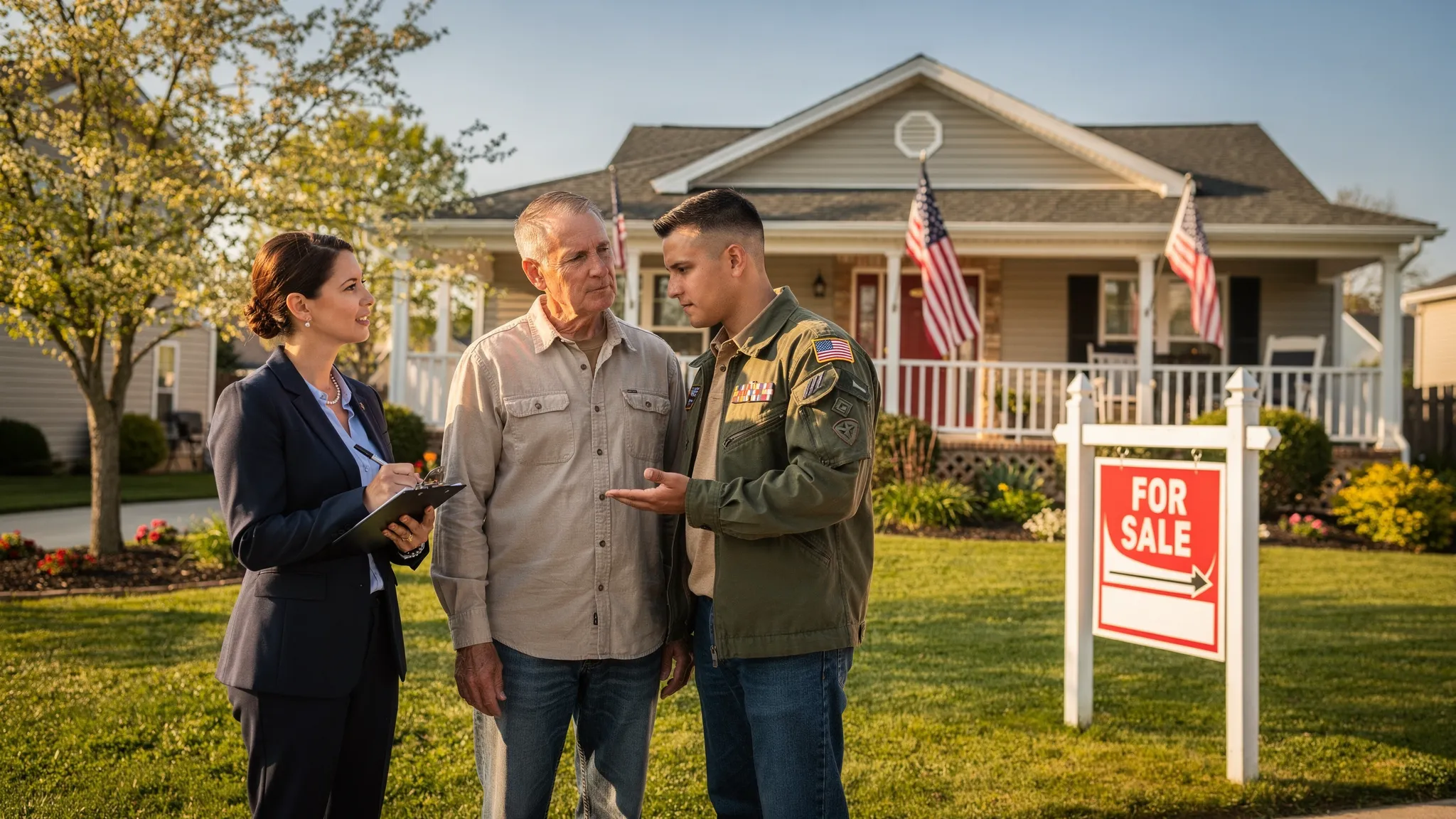
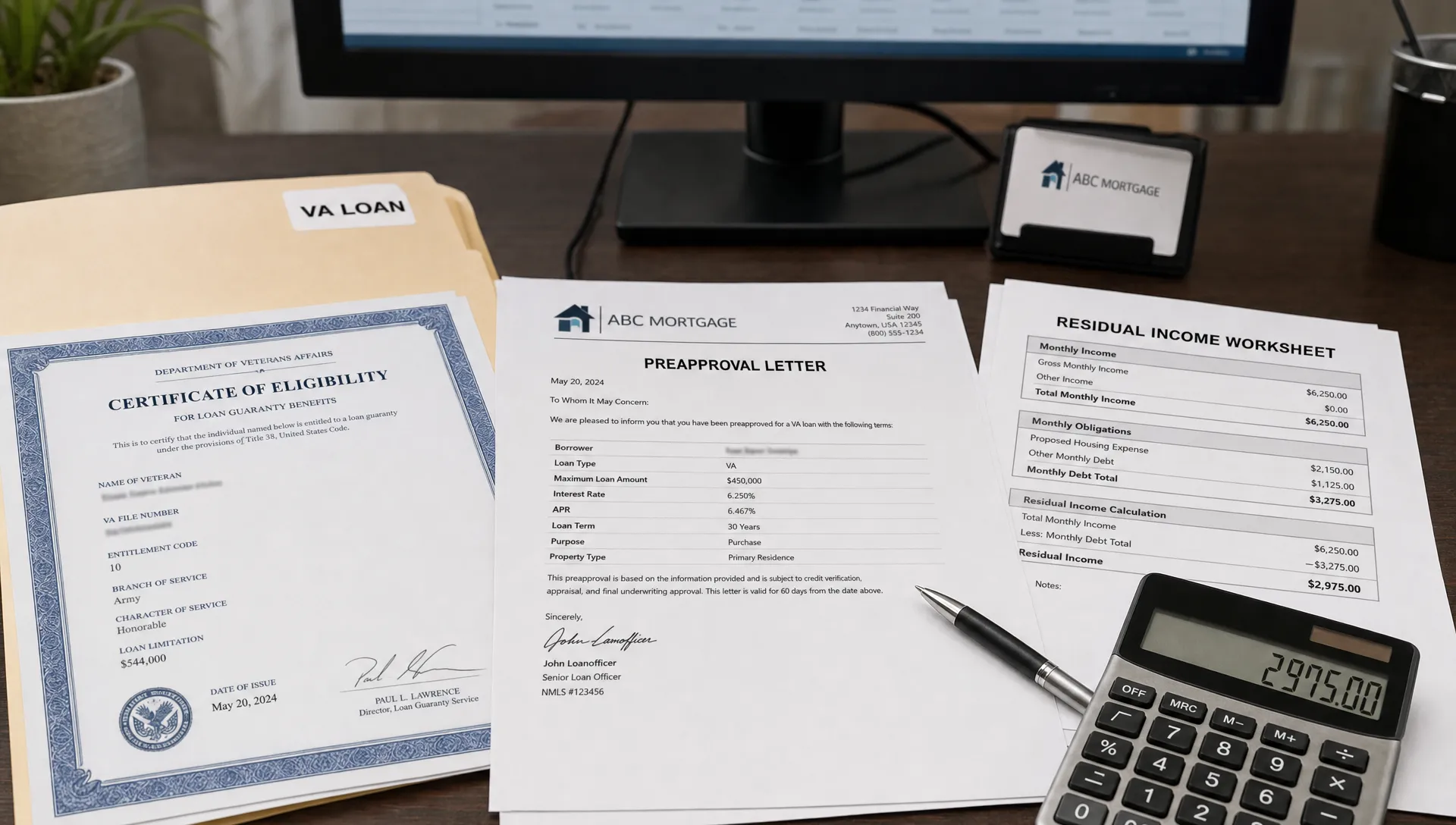
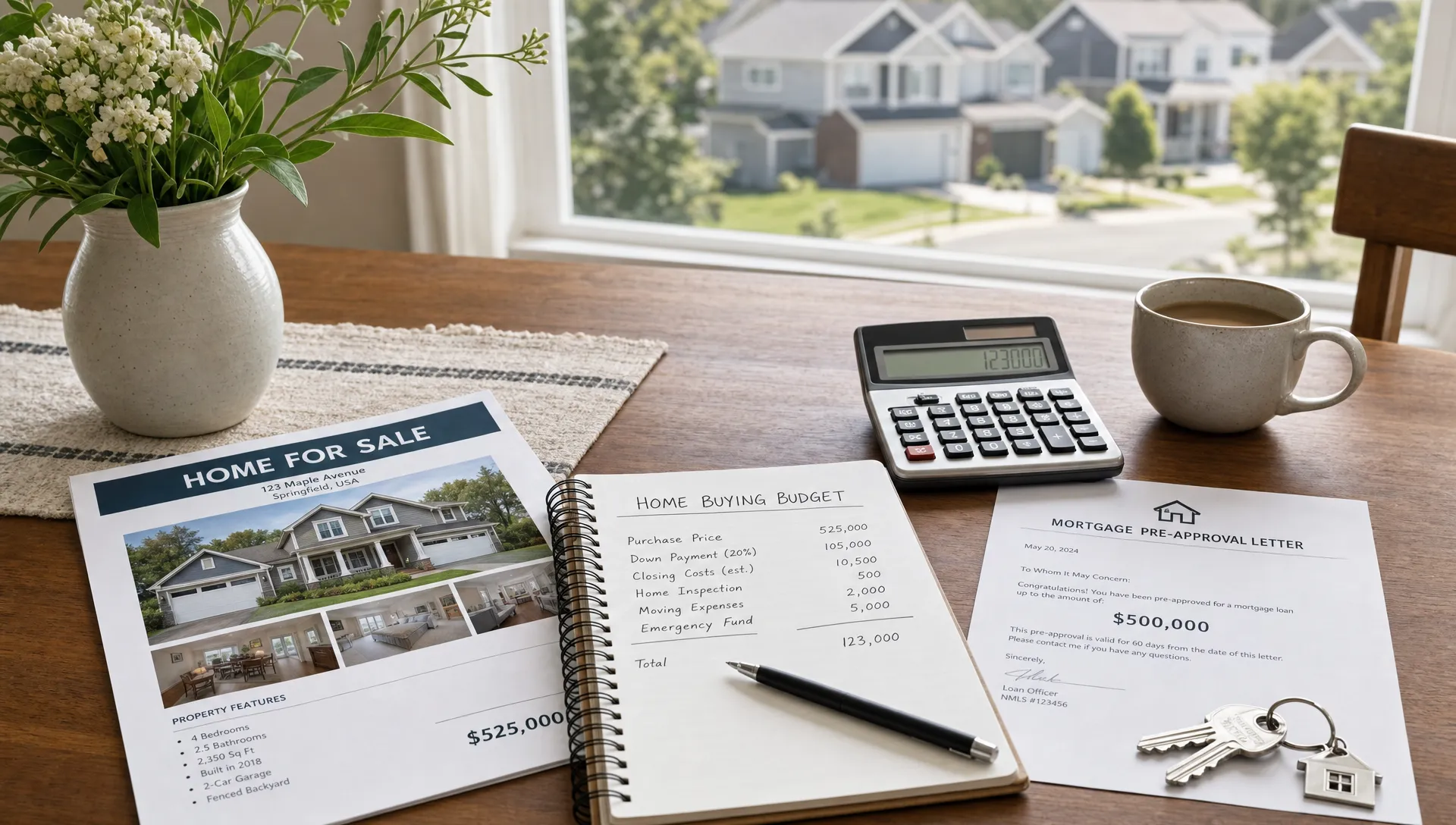
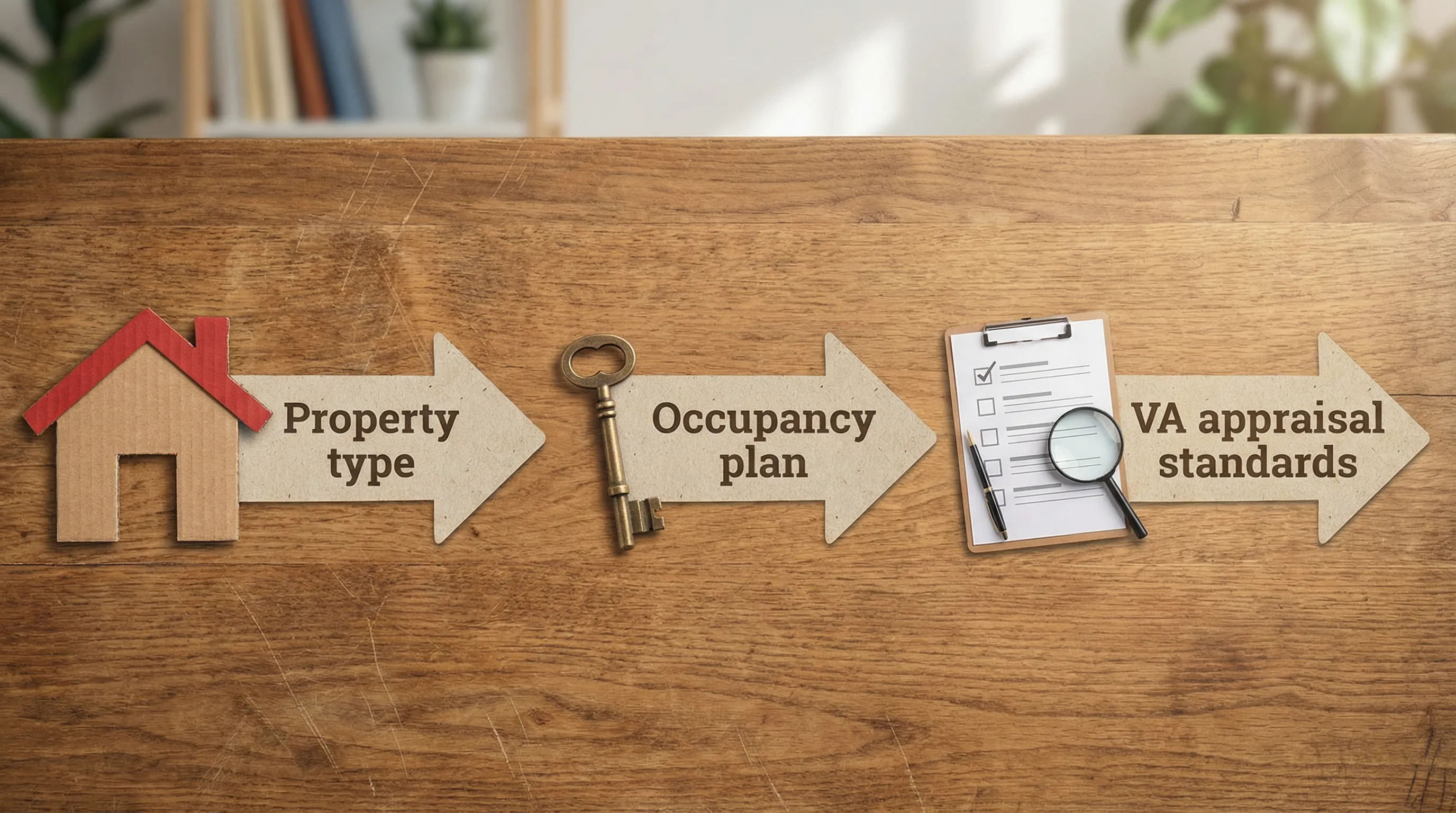
Buying with a VA loan is one of the most valuable homeownership benefits available to eligible service members, veterans, and surviving spouses. But “VA eligible” does not automatically mean “any home, any time, any use.” The fastest way to avoid contract headaches is to understand three things before you start touring properties: what property types the VA will finance, the occupancy requirement, and the rules a home must meet to pass appraisal.
This guide breaks down VA loans for homes in plain English, with real world examples of what tends to trip buyers up.
A quick refresher: what a VA home loan is (and what it is not)
A VA loan is a mortgage backed by the U.S. Department of Veterans Affairs. The VA guarantee helps lenders offer favorable terms, often including 0% down options and no monthly private mortgage insurance (PMI).
What it is not: a VA loan is not designed for vacation homes, pure investment properties, or buying a home you do not intend to live in.
If you want the official program details, the most comprehensive source is the VA’s lender guidance, the VA Lenders Handbook (VA Pamphlet 26-7).
VA loans for homes: eligible property types (and common restrictions)
In general, the VA focuses on one thing: the property must be primarily residential and be a place you can safely live in as your primary residence.
1) Single family homes (the most straightforward)
Most detached, single family homes are eligible if they meet VA appraisal standards (more on that below). Planned Unit Developments (PUDs) are also commonly eligible.
Where buyers run into issues is usually not the “type” of home, but the condition of the home (roof life, peeling paint, utilities, safety issues) or a low appraisal.
2) Condos (eligible, but only if the project is approved)
VA financing can be used for condominiums, but the condo project generally must be VA approved.
Before you fall in love with a unit, check whether the project is approved using the VA’s official condominium search tool.
Important nuance: some condos that qualify for conventional financing can still be difficult under VA rules if the project has issues (financials, litigation, owner occupancy ratios). Also, some lenders apply additional requirements (called lender overlays).
3) Multi-unit properties (2 to 4 units), with “house hacking” allowed
VA loans can finance 2-unit, 3-unit, and 4-unit properties, as long as you live in one unit as your primary residence.
This is one of the most powerful ways to use VA eligibility: you can buy a duplex, live in one side, and rent the other unit(s). The key is occupancy, not whether there will be rental income.
4) Manufactured homes (possible, but the details matter)
VA loans for manufactured homes can be done, but this category has the most “fine print.” In many cases, the home must:
- Be built to HUD standards (HUD label)
- Be permanently affixed to the land with an acceptable foundation
- Be classified as real property (not personal property) in the way your state and county require
- Have market comps that support an appraisal
Some lenders do not offer VA manufactured home loans in every scenario, even if technically permitted.
5) Modular homes (often easier than manufactured)
Modular homes are typically treated more like site built homes for financing and appraisals, assuming the home meets local code and VA property standards. They are not the same thing as manufactured homes.
6) New construction (allowed, with documentation requirements)
VA loans can be used for new construction purchases. Expect extra steps compared to buying an existing home, such as builder documentation, plans and specs, and required warranties or certifications depending on the transaction structure.
Tip: if your timeline is tied to a PCS, separation from service, or starting a new civilian job, new construction can be a great fit, but it requires tighter coordination between your lender, builder, and agent.
7) Mixed-use properties (sometimes)
A property with a small business component may be eligible if it is primarily residential. For example, a home with a small office space can be fine. A property that is mostly commercial use typically is not.
8) Land, farms, and acreage (limited)
The VA does not generally finance “land only.” The loan is meant to finance a home you will occupy.
Large acreage is not automatically disallowed, but the property must still look like a typical residential property for the area. If the value is driven by farming operations, income production, or extensive non-residential outbuildings, it can be difficult to fit within VA guidelines.
Occupancy rules: the most important VA requirement to understand
The VA occupancy rule is simple in concept: you must intend to occupy the property as your primary residence.
This requirement affects which properties you can buy, how you structure the purchase, and what you can do with the home after closing.
What counts as a “primary residence”?
A primary residence is the home where you actually live most of the time. Lenders evaluate this based on factors like your stated intent, work location, and a reasonable expectation that you will live there.
How soon do you have to move in?
A common standard is that you occupy the home within about 60 days of closing, but extensions can be possible in specific situations (for example, construction delays or deployment related constraints). Your lender will document the circumstances.
Can a spouse satisfy occupancy?
Often, yes. VA guidelines allow occupancy by an eligible borrower’s spouse in certain situations, including when the borrower cannot occupy due to military requirements.
If occupancy is complicated by orders, deployment, or relocation timing, bring it up early, before you write an offer. The solution is usually documentation and structure, not guesswork.
Can you rent the home out?
VA loans are not for buying a pure investment property. However:
- You can buy a 2 to 4 unit property, live in one unit, and rent the others.
- After you have satisfied occupancy and lived in the home, you may be able to rent it out later if you move.
The “later” piece is important. Buying with the plan to never occupy the home is typically not acceptable.
Relocation and career changes: plan your occupancy timeline
Many veterans buy around major transitions, ETS/separation, a PCS, or a new civilian role. If you are moving because of a job change, align your mortgage timeline with your start date, commute expectations, and required move-in window.
For veterans relocating internationally for senior roles, it can help to coordinate employment timing with a recruiter. If you are exploring opportunities abroad, an international recruitment agency can be a useful resource for mapping your move and housing plan.
VA appraisal and Minimum Property Requirements (MPRs)
Many buyers hear “VA appraisal” and assume it is just about value. It is also about basic property condition.
VA Minimum Property Requirements are designed to ensure the home is safe, structurally sound, and sanitary. The VA appraiser is looking for issues that could impact livability.
Common MPR related items that can trigger repairs include:
- Active roof leaks or severe roof wear
- Electrical hazards
- Non-functioning heating (when required for the area)
- Plumbing and water issues
- Broken windows or exposed hazards
- Peeling paint in older homes (often tied to lead-based paint safety)
- Evidence of wood destroying insects in areas where inspections are customary
If repairs are required, they typically must be completed before closing, and the appraiser may need to re-inspect.
The “tough” VA appraisal myth
In practice, VA appraisals are not “harder,” they are simply stricter about livability and safety. Many homes pass with no issues, especially well maintained properties.
The bigger risk is waiting until after you are under contract to discover:
- The condo is not approved
- The property has condition issues that the seller refuses to repair
- The unique home style cannot be supported by comparable sales

Property type “watch-outs” that can derail a VA deal
These are some of the most common problems buyers can avoid with a little upfront screening.
Condos: project approval and financing health
If the condo project is not approved, you may need a different unit, a different financing route, or additional steps that can take time.
Multi-unit: condition and rental considerations
Multi-unit properties can have deferred maintenance (handrails, stairs, roof, peeling paint) that triggers repairs. Also, be conservative with rental assumptions. Your loan officer can help you understand how rental income may or may not be counted for qualification.
Manufactured homes: title, foundation, and comps
The three most common issues are:
- The home is not properly converted to real property
- The foundation or tie-down system is not acceptable
- Appraisal comps are thin, which can hurt value support
Rural homes and acreage: “residential first”
A rural property can be eligible, but if the land use looks more like a working farm than a residence, it can fall outside what the VA program is meant to finance.
Fixer-uppers: VA is not a renovation loan
A home can have minor issues and still qualify, but a property needing major rehab often is not a match for a standard VA purchase loan.
If the home is not move-in ready and you are committed to renovations, ask your lender about renovation financing alternatives and whether a VA aligned solution exists for your scenario.
A practical way to confirm eligibility before you write an offer
Most VA purchase surprises are preventable if you do a quick pre-check.
- Confirm the home matches your plan to occupy (primary residence, not a pure rental).
- If it is a condo, check VA approval early.
- Review disclosures and listing photos for obvious MPR red flags (roof condition, missing flooring, exposed wiring, water damage).
- Tell your lender what you are considering before you go under contract, especially for manufactured, multi-unit, mixed-use, or unique properties.
Frequently Asked Questions
What property types can you buy with VA loans for homes? You can generally buy a single-family home, certain condos (usually VA-approved projects), and 2 to 4 unit properties if you live in one unit. Manufactured, modular, and new construction may also be possible with additional requirements.
Can I use a VA loan to buy a duplex and rent out the other unit? Yes, as long as you occupy one unit as your primary residence.
Can I use a VA loan for an investment property? Not as a pure investment from the start. VA loans require primary occupancy. You may be able to rent the home later after you have occupied it, depending on your situation and lender guidance.
Do I have to move in within 60 days with a VA loan? Often, yes, that is a common standard. Extensions can be possible in specific circumstances such as deployment or construction, but they must be documented.
Can I buy a condo with a VA loan? Yes, but many condos must be in a VA-approved project. It is smart to check approval before making an offer.
What is a VA Minimum Property Requirement (MPR)? MPRs are basic livability and safety standards evaluated during the VA appraisal. If a home has hazards or major deficiencies, repairs may be required before closing.
Can I buy a fixer-upper with a VA loan? It depends. Minor issues may be acceptable, but homes needing major repairs often do not meet VA appraisal standards for a standard purchase loan.
Can my spouse occupy the home if I cannot due to military orders? In many cases, yes. Talk with your lender early so the correct documentation is in place.
Make your VA purchase smoother with the right prep and the right lender
If you are comparing homes and want clarity on whether a condo, multi-unit, manufactured home, or new build will work with your VA benefits, it helps to run the scenario before you write an offer.
New Era Lending supports VA buyers across 39 states with a tech-forward process and human guidance, including secure document uploads and e-signatures. To talk through property eligibility, occupancy timing, and next steps for pre-approval, visit New Era Lending and connect with a loan expert.