.jpg)
.jpg)





.jpg)


New Mortgage Rates: How to Compare Offers Today

New mortgage rates can feel like a moving target. One website shows a national average, another lender advertises a lower number, and a loan officer may quote something different after reviewing your details. The problem is not that there is one hidden rate you have to find. It is that a mortgage rate is a customized price, not a universal sticker.
That is why the smartest question is not simply, what are rates today? A better question is, which offer gives me the best combination of monthly payment, upfront cost, loan terms, and closing certainty for my exact situation?
For buyers, homeowners refinancing, and borrowers tapping equity, the right comparison can prevent expensive mistakes. Two offers with the same interest rate can differ by thousands of dollars in points and fees. Two offers with different rates can have the same monthly payment once mortgage insurance, taxes, and credits are included. And a low advertised rate may not be available for your credit profile, property type, loan amount, or lock period.
National averages, such as Freddie Mac's Primary Mortgage Market Survey, are useful for understanding the broader market. But they are only a starting point. To make a real decision, you need personalized offers that are built on the same assumptions and reviewed line by line.

What new mortgage rates really mean today
When people talk about new mortgage rates, they may be referring to national averages, lender advertisements, online rate checkers, or personalized quotes. Those are not the same thing.
A national average tells you where the market is generally moving. An advertised rate is often based on a narrow borrower profile, such as excellent credit, a specific down payment, a certain loan size, and payment of discount points. A personalized quote is closer to what you may actually receive, but it can still change until the lender verifies your information and the rate is locked.
Mortgage pricing can move daily, and sometimes within the same day, because lenders react to changes in bond markets, mortgage-backed securities pricing, economic data, and investor demand. That is why comparing a Monday quote from one lender to a Thursday quote from another lender can be misleading. If you want a fair comparison, gather offers within the same short time window.
Every mortgage offer is a bundle of several moving parts:
- Interest rate and APR
- Discount points and lender credits
- Origination charges and third-party fees
- Loan program, loan term, and rate structure
- Down payment or equity position
- Mortgage insurance, if applicable
- Rate lock length and closing timeline
To understand why your personal pricing may differ from the market average, see New Era Lending's guide on how home mortgage loan rates are priced.
Start by making every lender quote the same scenario
The fastest way to confuse rate shopping is to give different lenders different assumptions. One lender may quote a 30-year fixed conventional loan with 20% down, while another quotes FHA with 3.5% down, and a third includes points without making that clear. Those are not comparable offers.
Before you request quotes, prepare a simple loan scenario. If you are buying, include the estimated purchase price, down payment, property location, property type, occupancy, and target closing date. If you are refinancing, include your current loan balance, estimated home value, current interest rate, remaining term, and refinance goal. If you are accessing equity, be clear about how much cash you want and whether you prefer a cash-out refinance, home equity loan, or HELOC.
A strong quote request should include:
- Loan purpose, such as purchase, refinance, or cash-out
- Property value or purchase price, ZIP code, property type, and occupancy
- Down payment or available equity
- Estimated credit score range, if known
- Preferred loan programs, if you already have a preference
- Fixed rate, ARM, or buydown preference
- Loan term, such as 30-year, 20-year, or 15-year
- Target closing date and desired lock period
- Preference for no points, points, or side-by-side options
If you are not sure which loan program fits, ask each lender to show you the most relevant options rather than guessing. You can also review the main program differences in Mortgage Loan Programs: Compare FHA, VA, Conventional and More.
Compare interest rate and APR together
The interest rate affects your principal and interest payment. If all other terms are equal, a lower interest rate usually means a lower monthly payment. But all other terms are rarely equal.
APR, or annual percentage rate, attempts to show the cost of credit by including the interest rate plus certain finance charges. APR can help you compare similar loans because it reflects some costs that the interest rate alone ignores. If two lenders quote the same loan amount, same term, same program, and same lock period, the APR can reveal which offer is more expensive after fees.
APR is not perfect. It can be less useful when comparing loans with different terms, different rate structures, or very different upfront cost strategies. It also assumes you keep the loan for the full term, which may not match your real plan if you expect to sell or refinance in a few years. Still, you should never ignore it.
For a plain-English breakdown of APR, points, and amortization, read Loan Terms Explained: APR, Points, and Amortization.
Do not separate rates from points, credits, and fees
A low rate can be expensive if you have to pay heavily for it. Discount points are upfront charges used to buy down the rate. One point generally equals 1% of the loan amount, though the rate reduction you receive for paying points varies by lender and market conditions.
Lender credits work in the opposite direction. You may accept a slightly higher rate in exchange for a credit that helps cover closing costs. This can make sense if you want to reduce cash to close, plan to refinance soon, or prefer to keep more savings after closing.
Consider a simple hypothetical example. Offer A has a 6.50% rate with 1 point due at closing. Offer B has a 6.625% rate with no points and a lender credit. Offer A may save money if you keep the mortgage long enough for the monthly savings to outweigh the upfront point cost. Offer B may be better if cash is tight or you expect to sell or refinance before the break-even point.
This is why you should compare the total structure, not just the rate. Ask each lender how much it costs to obtain the quoted rate, whether lender credits are included, and what the same loan would look like with no points.
Use the Loan Estimate as your scorecard
Once you apply for a mortgage, federal rules generally require a lender to provide a Loan Estimate within 3 business days. The Consumer Financial Protection Bureau's Loan Estimate guide is a helpful reference if you want to understand the form before reviewing offers.
The Loan Estimate is one of the best tools for comparing mortgage offers because it organizes the rate, payment, cash to close, fees, and APR in a standardized format. Do not rely only on emails, screenshots, or verbal quotes when you are making a final decision.
When reviewing Loan Estimates, focus on these sections:
- Page 1 shows the loan amount, interest rate, monthly principal and interest, projected payments, and estimated cash to close.
- Page 2 shows origination charges, services you cannot shop for, services you can shop for, taxes, prepaids, escrow items, and lender credits.
- Page 3 shows comparison figures such as APR, total interest percentage, and other key disclosures.
Pay special attention to lender-controlled costs, such as origination charges, discount points, underwriting fees, and lender credits. Third-party fees, taxes, insurance, and escrow deposits can vary by estimate and may be less useful for judging lender pricing, especially early in the process. That said, they still matter for planning your total cash to close.
If two Loan Estimates use different loan amounts, different down payments, different lock periods, or different programs, ask for revised side-by-side scenarios before choosing.
Look at the full monthly payment, not only principal and interest
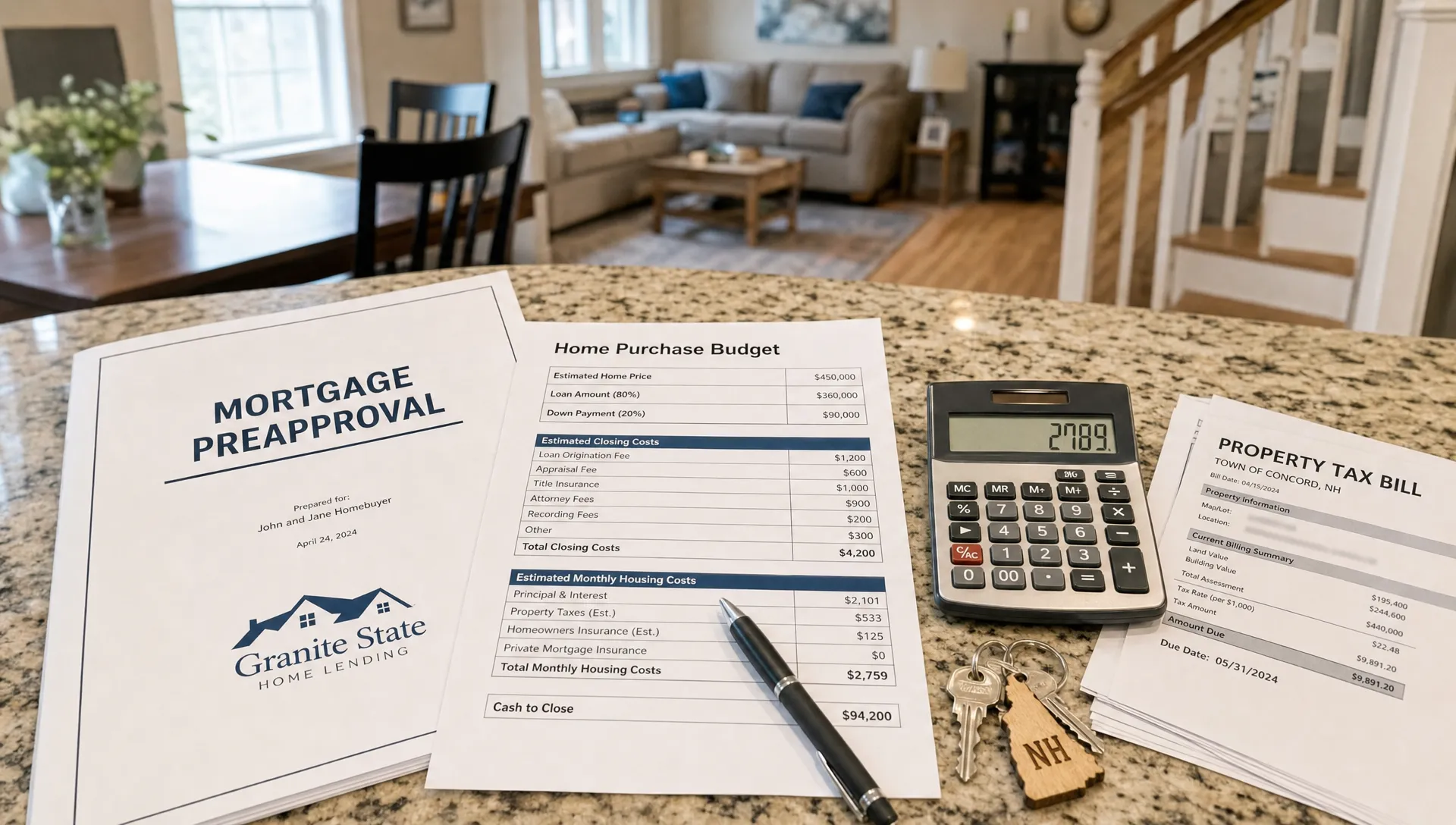
A mortgage payment is often more than principal and interest. Depending on your loan and property, your full monthly housing payment may include property taxes, homeowners insurance, mortgage insurance, HOA dues, and sometimes flood insurance or other required coverage.
This matters because a loan with a lower interest rate can still have a higher total payment if it includes higher mortgage insurance or escrow estimates. FHA loans, for example, may offer competitive rates for some borrowers, but mortgage insurance premiums can change the total cost picture. Conventional loans may have a higher rate but different PMI rules. VA loans can be powerful for eligible borrowers because they do not require monthly mortgage insurance, though a VA funding fee may apply unless the borrower is exempt.
For refinances, be careful when comparing your current payment to a new one. Extending a loan with 22 years remaining into a new 30-year mortgage can lower the monthly payment, but it may increase the total interest paid over time. If your goal is payment relief, that may still be worthwhile. If your goal is total interest savings, you need to compare the long-term cost as well.
Check the rate lock before you trust the quote
A mortgage quote is not the same as a locked rate. A rate lock is a lender's commitment to honor a specific rate and pricing for a defined period, assuming the loan details do not change and the loan closes within the lock window.
Lock period matters. A 15-day lock may be cheaper than a 45-day lock, but it may not be realistic for your closing timeline. If the lock expires before closing, extension fees can erase the benefit of the lower quote. A slightly higher rate with a realistic lock period may be safer than a lower rate tied to a timeline you cannot meet.
Ask these questions before comparing offers: Is the rate locked or floating? How long is the lock? What happens if closing is delayed? Does the quote assume a specific credit score, loan-to-value ratio, property type, or closing date? What changes would trigger new pricing?
If you are deciding whether to lock or wait, the answer depends on your budget, timeline, and risk tolerance. Borrowers with tight payment limits often value certainty. Borrowers with flexibility may be more comfortable floating while they monitor the market. For more context on market movement, see Mortgage Rates in 2026: What Really Moves Them.
Compare the loan program, not just the lender
Sometimes the best offer comes from choosing the right program, not simply finding the lowest lender quote. Conventional, FHA, VA, USDA, jumbo, ARM, fixed-rate, and buydown options can all price differently and carry different rules.
A fixed-rate loan gives payment stability, which many borrowers prefer when rates feel uncertain. An adjustable-rate mortgage may offer a lower initial rate, but you need to understand the adjustment schedule, caps, and future payment risk. A temporary buydown can lower the payment at the start of the loan, but you should qualify and budget for the full payment after the buydown period ends.
The key is to match the loan structure to your timeline. If you plan to stay in the home for decades, long-term stability may matter more than a small upfront savings. If you expect to move within a few years, cash to close and break-even timing may matter more. If you are comparing fixed rates, ARMs, and buydowns, this guide to mortgage options compared can help clarify the tradeoffs.
A simple workflow to compare offers today
A good comparison process does not need to be complicated. It does need to be consistent.
- Gather your loan details before requesting quotes, including price, down payment, credit range, property type, and closing timeline.
- Request personalized quotes from at least two or three lenders within the same business day when possible.
- Ask for the same scenario from each lender, including the same term, program, lock period, and point preference.
- Request a no-points option and, if relevant, a separate option with points so you can calculate the break-even period.
- Compare Loan Estimates instead of relying only on advertised rates or verbal quotes.
- Review the full monthly payment, APR, lender fees, cash to close, lock terms, and closing timeline.
- Choose the offer that fits your budget, cash position, timeline, and long-term plan, not just the lowest advertised rate.
Be cautious with any offer that looks dramatically lower than the others. It may assume points, a shorter lock, a different loan amount, a different down payment, or a borrower profile that does not match yours. Also be careful with vague no-cost claims. No-cost usually means costs are covered through lender credits or built into the rate, not that the loan is free.
Why technology helps, but human guidance still matters
Mortgage shopping has become more digital, and that is a good thing when it removes friction. Secure uploads, e-signatures, online disclosures, and clear scenario comparisons can help borrowers move faster when rates change.
Modern borrowers expect financial tools to feel as intuitive as the apps they use every day. That expectation is shaped by the same product and user-experience discipline seen at Appzay, a premium mobile app development agency, but a polished interface should not be mistaken for a complete mortgage analysis. The numbers still need context.
A strong mortgage process pairs smart technology with experienced human guidance. Technology can organize documents, speed up communication, and make comparisons easier. A loan professional can explain why two offers differ, whether a lower rate is worth the upfront cost, how a lock fits your timeline, and which loan program supports your goals.
That combination is especially valuable when you are comparing new mortgage rates in a shifting market. Acting quickly matters, but acting clearly matters more.
Frequently Asked Questions
What is the best way to compare new mortgage rates today? Compare personalized quotes from the same day using the same loan amount, loan program, term, down payment, lock period, and point structure. Then review the Loan Estimate for rate, APR, fees, credits, cash to close, and monthly payment.
How many mortgage offers should I compare? Many borrowers benefit from comparing at least two or three personalized offers. More quotes can help, but only if they are based on the same assumptions and you can review them before market pricing changes.
Is the lowest mortgage rate always the best offer? Not always. A lower rate may require discount points, higher fees, a shorter lock period, or a loan program with higher mortgage insurance. The better offer is the one that balances monthly payment, upfront cost, loan terms, and your expected time in the home.
Should I compare APR or interest rate first? Review both. The interest rate helps determine the monthly principal and interest payment, while APR helps show the cost of certain fees over time. APR is most useful when comparing similar loans with the same term and structure.
When should I lock my mortgage rate? Consider locking when the payment fits your budget, your closing timeline is clear, and you prefer certainty over market risk. Before locking, confirm the lock length, extension policy, and whether any loan changes could affect pricing.
Can I negotiate a mortgage rate offer? You can ask a lender to review a competing written offer, especially if you have a Loan Estimate. The lender may be able to adjust pricing, credits, or fees, but changes depend on market conditions, loan details, and lender guidelines.
Compare new mortgage rate offers with less guesswork
If you are buying a home, refinancing, or exploring equity access, New Era Lending can help you compare personalized mortgage options with clear guidance. Our process combines smart technology, secure document uploads, e-signature support, transparent rate and term discussions, and human support across a wide range of loan options.
Instead of chasing a single advertised number, build a side-by-side comparison that reflects your real credit profile, property, timeline, and goals. That is how you choose a mortgage offer with confidence.