
.jpg)
.jpg)





.jpg)


Refinance Your Mortgage Step by Step in 2026
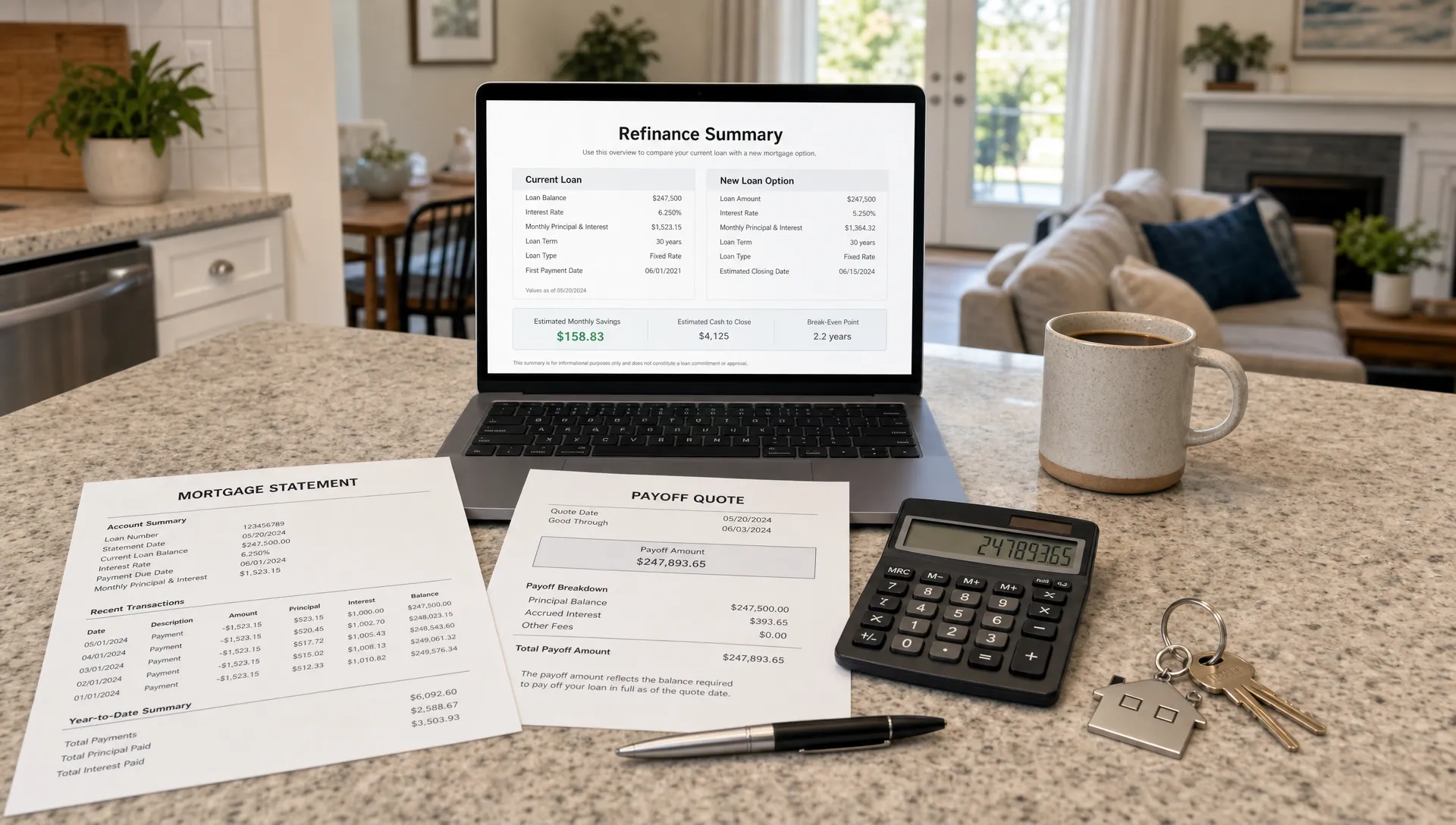
Refinancing can be a smart way to reshape your mortgage, but it is not something to rush because a rate ad looked attractive or a neighbor said they saved money. In 2026, the best refinance decisions start with a clear goal, realistic numbers, and a step-by-step process that helps you compare the full cost of a new loan against the benefit you expect to receive.
If you are wondering how to refinance a mortgage without getting overwhelmed, this guide walks through the process from the first goal-setting conversation to closing day. The key is to treat refinancing as a financial strategy, not just a transaction.
What refinancing your mortgage means
When you refinance, you replace your current mortgage with a new mortgage. The new loan pays off the old one, and you move forward with new terms. Those terms may include a different interest rate, loan length, monthly payment, loan type, or cash-out amount.
A refinance can help you pursue several different outcomes, including lowering your monthly payment, paying off the home faster, switching from an adjustable-rate mortgage to a fixed-rate mortgage, removing mortgage insurance, or accessing equity for another financial purpose.
But a refinance also comes with closing costs, qualification requirements, and a fresh timeline. That is why the right question is not simply, “Can I get a lower rate?” The better question is, “Will the new loan improve my financial position enough to justify the cost?”
Step 1: Decide why you want to refinance
Before you compare lenders or upload documents, define the main reason you are refinancing. This goal will influence the loan structure, the term, the type of refinance, and how you judge whether the offer is worth it.
Common refinance goals include:
- Lowering your monthly payment to improve cash flow
- Reducing your interest rate to save money over time
- Shortening your loan term so you can pay off the home faster
- Converting an adjustable-rate mortgage into a fixed-rate mortgage
- Removing mortgage insurance if you have enough equity
- Taking cash out for renovations, debt consolidation, or another planned use
- Refinancing after a credit score, income, or equity improvement
Try to pick one primary goal and one secondary goal. For example, your primary goal may be to reduce the monthly payment, while your secondary goal is to avoid restarting a 30-year payoff schedule. That clarity helps your loan advisor compare options that actually fit your needs.
Step 2: Check whether 2026 is the right time for your situation
Mortgage rates in 2026 may move throughout the year, and the rate you qualify for will depend on your credit profile, loan type, property, equity position, and market conditions when you lock. A national average or online rate headline can be useful for context, but it is not the same as a personalized quote.
Timing can make sense when your current mortgage no longer fits your life. Maybe your rate is higher than what you could qualify for today. Maybe your income has grown, and you want a shorter term. Maybe home values in your area have increased, and you want to see if you can remove mortgage insurance or access equity.
If you want a deeper look at rate timing, APR, and the factors that affect refinance pricing, New Era Lending’s guide to refinance rates for mortgages in 2026 is a helpful next read.
The practical rule is simple: do not refinance just because rates changed. Refinance because the numbers, costs, timeline, and loan structure support your financial goal.
Step 3: Estimate your current loan balance and home equity
Your equity position plays a major role in your refinance options. Equity is the difference between your home’s estimated value and what you owe on the mortgage. If your home is worth $400,000 and your loan balance is $280,000, you have about $120,000 in equity before any transaction costs or payoff adjustments.
Start by reviewing your most recent mortgage statement. Look for your unpaid principal balance, current interest rate, monthly principal and interest payment, escrow amount if applicable, and loan servicer contact information. You may also want to request a payoff quote later in the process because your payoff amount can differ from the balance on your statement due to interest, fees, or timing.
Then estimate your home’s value. Online estimates can give a rough starting point, but they are not a substitute for lender review or an appraisal when one is required. If values in your market have changed significantly, your actual qualifying equity could be higher or lower than expected.
Equity matters because it can affect your loan-to-value ratio, whether mortgage insurance applies, whether you can do a cash-out refinance, and what pricing may be available.
Step 4: Review your credit, income, and monthly debts
Refinancing requires qualification, similar to getting your original mortgage. Lenders typically review credit, income, assets, debts, property details, and the purpose of the refinance. The stronger and cleaner your file is before you apply, the smoother the process can be.
Check your credit reports for errors, late payments, high credit card balances, or accounts that need clarification. If you plan to refinance soon, avoid opening new credit, financing large purchases, or moving money in ways that are hard to document.
Your debt-to-income ratio also matters. This compares your monthly debt obligations to your qualifying income. Car loans, student loans, credit cards, personal loans, and other recurring obligations may all be part of the review.
Budgeting should include the real life expenses you want to keep after the refinance, not just the debts that appear on your credit report. For example, if you invest in long-term health through personal training, nutrition coaching, or performance testing at Custom Fit, include that recurring cost in your monthly planning so your mortgage choice supports the lifestyle you actually intend to maintain.
A refinance should make your finances more sustainable, not squeeze your budget so tightly that the new payment looks good only on paper.
Step 5: Choose the refinance type that fits your goal
Not all refinances work the same way. The right structure depends on what you want to accomplish and what you qualify for.
A rate-and-term refinance is often used to change the interest rate, loan term, or loan program without taking significant cash out. This may be a fit if you want to lower your monthly payment, shorten the loan term, or switch from an adjustable rate to a fixed rate.
A cash-out refinance allows you to replace your existing mortgage with a larger new mortgage and receive part of the difference in cash, subject to qualification and equity limits. Homeowners often consider this for renovations, debt consolidation, education costs, or other planned expenses. The key is to be disciplined about how the funds are used because you are turning home equity into mortgage debt.
A shorter-term refinance can help you pay the home off faster, but the payment may be higher. A longer-term refinance can lower the payment, but it may increase total interest if you keep the loan for the full term.
Government-backed refinance options may also be available depending on your current loan, eligibility, and goals. For example, eligible veterans and service members may have VA refinance options, while some borrowers with FHA loans may explore FHA refinance paths.
For a broader comparison of structures, review New Era Lending’s breakdown of mortgage refinance options that could fit your goals.
Step 6: Gather your refinance documents early
The document stage is where many refinances slow down. You can save time by preparing your paperwork before the lender asks for it.
Common refinance documents may include:
- Recent pay stubs or income documentation
- W-2s, 1099s, or tax returns, depending on employment type
- Bank statements or asset statements
- Current mortgage statement
- Homeowners insurance information
- Property tax information if not already included in escrow records
- Photo identification
- Documents for any large deposits, recent credit changes, or additional properties
Self-employed borrowers may need more documentation, such as business tax returns, year-to-date profit and loss statements, or other income verification. If you receive bonus, commission, overtime, rental, retirement, or investment income, ask early how it will be documented.
New Era Lending supports secure document uploads and e-signature tools, which can make this part of the process more efficient while still keeping expert guidance available when questions come up.
Step 7: Compare quotes using the Loan Estimate
Once you are ready to apply or request detailed pricing, compare offers carefully. A low advertised rate is not enough. You need to compare the full Loan Estimate, including rate, APR, lender fees, discount points, third-party fees, prepaid items, escrow setup, projected payment, and cash needed to close.
Try to compare quotes on the same day if possible because rates can change. Also make sure each quote uses the same basic assumptions, such as loan amount, loan term, loan type, property value, occupancy, credit profile, and whether points are included.
Pay close attention to discount points. Paying points means you pay more upfront to potentially receive a lower interest rate. That can make sense if you plan to keep the loan long enough to recover the upfront cost through monthly savings. It may not make sense if you expect to sell, move, or refinance again soon.
Also distinguish between lender credits and true savings. A lender credit can reduce upfront costs, but it may come with a higher interest rate. That is not necessarily bad, but it should be understood as a tradeoff.
Step 8: Calculate your break-even point
The break-even point estimates how long it takes for your monthly savings to recover the cost of refinancing. A simple version divides refinance costs by monthly payment savings.
For example, if refinancing costs $4,000 and lowers your monthly payment by $200, the simple break-even point is 20 months. If you expect to stay in the home and keep the loan longer than that, the refinance may be worth considering. If you expect to move in a year, it may not be.
But the simple break-even calculation does not tell the whole story. You should also consider whether you are extending the loan term, increasing the loan balance, paying points, taking cash out, or changing the total interest paid over the life of the loan.
This is why a lower rate alone does not automatically mean a refinance is a win. If you are comparing a new offer against your current mortgage, New Era Lending’s article on whether a new mortgage rate is good enough to refinance explains how to think beyond the headline rate.

Step 9: Submit your application and decide when to lock the rate
After you choose a lender and loan structure, you will submit a full refinance application. The lender will verify your information, review your credit, collect documents, and begin processing the loan.
You will also need to decide when to lock your rate. A rate lock protects your quoted rate for a set period, assuming your loan closes within that window and your application details do not materially change. Lock periods vary, and longer locks may cost more or affect pricing.
Ask your loan advisor these questions before locking:
- How long is the lock period?
- What happens if closing is delayed?
- Is there a float-down option if rates improve?
- Are points or lender credits included in the locked offer?
- What conditions could change the final pricing?
Rate locking is partly about risk management. If the refinance already meets your goals, locking can protect the numbers you used to make the decision.
Step 10: Move through appraisal and underwriting
After application, the lender may order an appraisal or determine whether an appraisal waiver is available. The need for an appraisal depends on the loan program, property, data available, equity position, and underwriting requirements.
If an appraisal is required, the appraiser evaluates the property and comparable sales to support an opinion of value. The result can affect your loan-to-value ratio, mortgage insurance, cash-out availability, and final approval.
Underwriting is the formal review of your loan file. The underwriter checks whether your credit, income, assets, property, and loan structure meet guidelines. It is normal for underwriting to request additional documents or clarification. A condition is not automatically a problem. It usually means the underwriter needs more information before issuing final approval.
Respond quickly, keep documents complete, and avoid making financial changes during this stage. Do not open new credit, change jobs, make unexplained large deposits, or skip payments while your refinance is in process.
Step 11: Review your Closing Disclosure carefully
Before closing, you will receive a Closing Disclosure that outlines the final terms and costs of the loan. For most mortgage transactions, this disclosure must be provided at least three business days before closing.
Review the Closing Disclosure against your most recent Loan Estimate. Look at the interest rate, APR, loan amount, monthly payment, closing costs, cash to close, escrow details, and whether any fees changed. Some changes are normal, especially for prepaid items or escrow amounts, but you should understand every major difference.
If something looks unfamiliar, ask before signing. A good refinance experience should feel transparent, not rushed.
Step 12: Close the loan and understand the funding timeline
At closing, you sign the final loan documents. Depending on your state, lender process, and transaction type, some documents may be signed electronically, while others may require wet signatures or notarization.
For many refinances of a primary residence, there is a three-business-day right of rescission after signing. This means the loan typically does not fund immediately at the signing appointment. The rescission period gives eligible borrowers time to cancel the transaction if they choose. After that period ends and all funding conditions are satisfied, the new loan pays off the old mortgage.
Your old lender may still draft a scheduled payment if the payoff timing overlaps with your normal payment date, so ask your loan team how to handle payments during the transition. You should also watch for escrow refunds from your previous servicer if applicable.
Step 13: Set up your new mortgage for success
Once the refinance funds, your work is not quite finished. Set up your new online account, confirm the first payment due date, verify escrow details if taxes and insurance are included, and update autopay only after the new servicer confirms your account.
Keep your final Closing Disclosure, promissory note, deed of trust or mortgage, and payoff confirmation in a secure place. If you refinanced to save money each month, decide where that savings will go. You might use it to rebuild reserves, pay down debt, increase retirement contributions, fund home maintenance, or make extra principal payments.
The refinance is the tool. Your follow-through determines how much value you get from it.
Common refinance mistakes to avoid in 2026
A refinance can be beneficial, but avoid these common missteps:
- Chasing the lowest rate without comparing total costs
- Ignoring how a new loan term affects lifetime interest
- Taking cash out without a clear repayment or investment plan
- Opening new credit before closing
- Waiting too long to provide underwriting documents
- Assuming online home value estimates will match the lender’s valuation
- Forgetting to account for taxes, insurance, escrow, and prepaid interest
- Refinancing repeatedly without checking cumulative costs
The best refinance decisions are made with complete information. If the numbers are unclear, slow down and ask for a side-by-side comparison.
Frequently Asked Questions
How long does it take to refinance a mortgage in 2026? Timelines vary by lender, loan type, appraisal requirements, borrower responsiveness, and underwriting conditions. A well-prepared file with complete documents can move more efficiently, while appraisal delays, title issues, or complex income can add time.
How much does it cost to refinance? Refinance costs can include lender fees, appraisal fees, title and settlement charges, recording fees, prepaid interest, escrow setup, and optional discount points. Some costs may be paid upfront, rolled into the loan, or offset with lender credits, depending on the loan structure and qualification.
Is it worth refinancing for a lower rate? It depends on the size of the rate improvement, closing costs, loan term, how long you plan to keep the mortgage, and whether the refinance supports your broader financial goals. A lower rate is helpful, but the full cost and long-term impact matter.
Can I refinance if my credit score improved? Possibly. A stronger credit profile may help you qualify for better terms, but approval also depends on income, debt, equity, property details, and loan program requirements.
Can I refinance and take cash out? If you have enough qualifying equity and meet program guidelines, a cash-out refinance may allow you to access part of your home equity. Make sure the purpose is clear and the new payment fits your long-term budget.
Do I need an appraisal to refinance? Not always. Some borrowers may qualify for an appraisal waiver, but many refinances still require an appraisal. The decision depends on the loan program, property, equity, available data, and underwriting requirements.
Refinance with a clearer process
Refinancing your mortgage step by step in 2026 starts with the right plan: define your goal, understand your equity, prepare your documents, compare complete loan offers, and make sure the new mortgage improves your financial picture.
New Era Lending combines smart mortgage technology with personalized human guidance to help homeowners explore refinancing, equity access, and other loan options with more confidence. With secure document uploads, e-signature support, transparent communication, and lending availability across 39 states, the process is designed to feel simpler from application to closing.
If you are ready to see whether refinancing makes sense for your home and goals, connect with New Era Lending and start with a personalized review of your options.