
.jpg)
.jpg)





.jpg)


How to Choose From Today’s Mortgage Lending Options

Choosing from today’s mortgage lending options can feel harder than choosing the home itself. You may see conventional loans, FHA loans, VA loans, adjustable-rate mortgages, cash-out refinances, jumbo loans and lender-specific programs all described as “the right fit.” In reality, the best option depends on what you need the loan to accomplish, how comfortable you are with the payment and which lender can explain the tradeoffs clearly.
A smart mortgage decision is not about finding one universally “best” loan. It is about matching the loan structure to your life, your budget and your next few years of plans. The right loan for a first-time buyer with limited cash may be very different from the right loan for a homeowner refinancing to access equity.
Start With the Purpose of the Loan
Before comparing rates or program names, define the job of the mortgage. This step makes every later decision easier because each loan type is designed around a different borrower need.
If you are buying a home, your key questions are usually about down payment, monthly affordability, property type and how quickly you need to close. If you already own a home, your decision may center on lowering your payment, changing the length of the loan, consolidating debt, funding repairs or accessing equity through a refinance.
For purchase loans, the right option usually balances cash-to-close with long-term payment comfort. For refinances, the right option should be judged against your current loan, not against a generic market rate. A lower payment can help, but only if the closing costs, new loan term and equity impact make sense.
A useful first filter is simple: are you trying to buy, improve cash flow, shorten your payoff timeline or use home equity? Once you know the purpose, you can narrow the field quickly.
Know the Main Mortgage Lending Options
Most borrowers will compare a handful of common loan categories. You do not need to become a mortgage underwriter, but you should understand the basic strengths and tradeoffs of each option before applying.
| Mortgage option | Often fits borrowers who | Key tradeoff to review |
|---|---|---|
| Conventional loan | Have solid credit, stable income and some down payment flexibility | May have stricter credit or mortgage insurance requirements |
| FHA loan | Need more flexible credit or down payment guidelines | Mortgage insurance costs can last longer than some borrowers expect |
| VA loan | Are eligible veterans, service members or surviving spouses | Eligibility rules and VA funding fee details should be reviewed |
| USDA loan | Are buying in an eligible rural or suburban area | Property location and household income limits matter |
| Jumbo loan | Need financing above standard conforming loan limits | Qualification standards can be more demanding |
| Non-QM or portfolio loan | Have nontraditional income, complex finances or unique property needs | Pricing and documentation can differ widely by lender |
| Refinance or cash-out refinance | Already own a home and want a new loan structure or equity access | Closing costs, equity position and total interest should be compared carefully |
This table gives you the landscape, but it is not a substitute for a personalized review. If you want a deeper breakdown of each program type, New Era Lending’s guide to mortgage loan options for different buyer profiles is a helpful companion piece.
Compare Payment Certainty Against Flexibility
One of the biggest choices borrowers face is whether to prioritize payment stability or potential flexibility. A fixed-rate mortgage keeps the principal and interest portion of your payment consistent over the life of the loan. This can be valuable if you plan to stay in the home for a long time, have a tight monthly budget or simply prefer predictability.
An adjustable-rate mortgage, often called an ARM, usually begins with an initial fixed period and then adjusts according to the loan’s terms. ARMs can make sense for some borrowers, especially when they expect to sell, refinance or experience a significant income change before the first adjustment. The risk is that future payments may rise.
Buydowns and other payment strategies can also affect affordability in the early years. These can be useful, but they should be reviewed carefully. A temporary lower payment is not the same as permanent affordability. Ask what the payment will be after the buydown period ends and whether you would still be comfortable if your housing costs increased.
The right question is not “Which option has the lowest payment today?” It is “Which payment can I manage comfortably if life does not go exactly as planned?”
Look Beyond the Advertised Rate
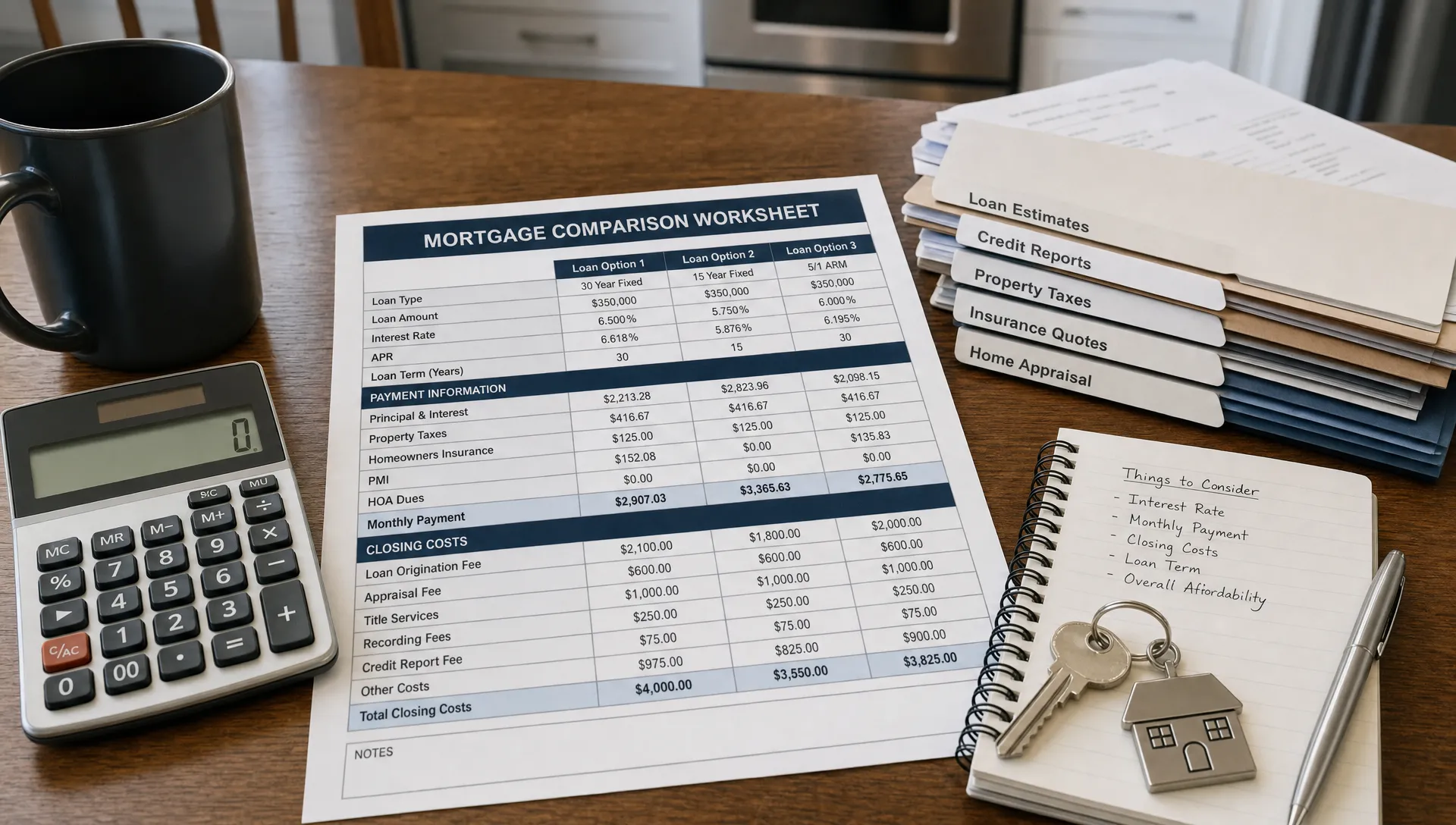
Mortgage shoppers often start with the interest rate because it is easy to compare. Rate matters, but it is only one part of the total cost. Two loans with the same rate can have very different fees, points, credits, mortgage insurance and closing costs.
According to the Consumer Financial Protection Bureau, lenders must provide a Loan Estimate after receiving a complete mortgage application. This document helps borrowers compare key details such as rate, APR, estimated monthly payment, cash to close and closing costs.
APR can be useful because it reflects certain loan costs beyond the interest rate, but even APR has limits. For example, it may not fully capture how long you expect to keep the loan. Paying points for a lower rate may be worthwhile if you plan to keep the mortgage for many years, but less attractive if you expect to move or refinance soon.
When reviewing mortgage offers, compare these items side by side:
- Interest rate and APR
- Monthly principal and interest payment
- Mortgage insurance, if applicable
- Discount points or lender credits
- Estimated closing costs
- Cash needed at closing
- Loan term and prepayment details
- Whether the rate is locked and for how long
A lender should be able to explain why one option costs more upfront but less over time, or why another option gives you lower cash-to-close but a higher monthly payment. If you are currently comparing offers, this guide on how to compare new mortgage rates can help you look past the headline number.
Match the Loan to Your Cash Position
Cash-to-close is one of the most practical factors in choosing a mortgage. It includes the down payment, closing costs and prepaid items such as property taxes, homeowners insurance and prepaid interest. A loan with a low down payment may still require meaningful funds at closing, depending on the property, taxes and final pricing.
Some borrowers are comfortable using more cash upfront to reduce the monthly payment. Others prefer to preserve savings for repairs, moving costs or emergency reserves. Neither approach is automatically better. The right choice depends on your full financial picture.
For example, putting more money down may lower your payment or reduce mortgage insurance, but draining your savings can create stress after closing. A lower cash-to-close option may keep more money in your bank account, but it could increase the payment or total cost. A good mortgage comparison should show both short-term and long-term effects.
Consider Eligibility, Not Just Preference
You may prefer a certain loan program, but eligibility determines what is realistically available. Lenders review your credit, income, debts, assets, employment history, property type and occupancy plans. They also evaluate the home through appraisal and program-specific guidelines.
Credit score can affect both approval and pricing. Debt-to-income ratio can influence how much you may qualify to borrow. Income type also matters, especially for self-employed borrowers, commission earners, retirees or people with multiple income streams.
Property details can change the recommendation too. A primary residence is evaluated differently from a second home or investment property. Condominiums, manufactured homes, multi-unit properties and homes needing major repairs may require additional review.
This is why a conversation with a mortgage professional is valuable. A good lender does not just ask what rate you want. They ask how you earn income, how long you plan to stay, how much cash you want to keep available and what kind of property you are buying.
Evaluate the Lending Experience
The loan program matters, but the lender experience matters too. A confusing process can create avoidable delays, especially when you are under contract on a home and working against closing deadlines.
Modern borrowers increasingly expect online applications, secure document uploads, electronic signatures and faster status updates. This shift is not limited to mortgages. The broader lending market has moved toward streamlined online experiences, as seen in coverage of the shift toward digital loan services across consumer borrowing.
Still, technology alone is not enough. A mortgage is too large and too personal to be handled like a basic online transaction. You need clear human guidance when the numbers change, documents are requested or one loan option appears cheaper but carries hidden tradeoffs.
New Era Lending’s approach combines smart mortgage technology with personalized guidance, which is especially helpful for borrowers comparing multiple options across purchase, refinance and equity-access scenarios. Secure document uploads, e-signature support and educational resources can make the process easier, but the real value comes from having someone help you understand what each decision means.
Use Your Time Horizon as a Decision Filter
How long you expect to keep the home or mortgage should influence almost every choice. A borrower planning to stay for 20 years may prioritize a stable fixed payment and long-term interest savings. A borrower expecting to relocate in three years may focus more on upfront costs, break-even timing and flexibility.
This matters most when comparing points, lender credits, ARMs and refinance options. A lower rate is more valuable when you keep the loan long enough for monthly savings to outweigh upfront costs. If you expect a shorter timeline, paying less at closing may be more sensible, even if the rate is slightly higher.
For refinances, calculate the break-even point. If a refinance costs several thousand dollars and saves you a certain amount each month, divide the cost by the monthly savings to estimate how long it takes to recover the expense. Then compare that timeline with how long you realistically expect to keep the loan.
For purchase loans, think beyond the first year. Will your income change? Are childcare costs, renovations or other major expenses coming? Could taxes or insurance rise? A mortgage that barely works at closing may feel uncomfortable later.
Watch for Common Mistakes
Borrowers often run into trouble when they compare loans too narrowly. The lowest advertised rate may not be the lowest-cost loan. The highest approval amount may not be the most comfortable budget. A familiar bank may not always offer the best structure for your situation.
Another common mistake is waiting too long to get organized. Documentation takes time, especially if you have self-employment income, recent job changes, large deposits or multiple properties. Starting early gives you more room to compare options without pressure.
You should also avoid making major financial changes during the mortgage process unless your lender has reviewed them first. New credit accounts, large purchases, unexplained deposits or changes in employment can affect underwriting. If something changes, communicate quickly so the lender can help you understand the impact.
A Simple Framework for Choosing
A practical mortgage comparison does not need to be complicated. Start with your purpose, then move through the factors that affect approval, cost and comfort.
Ask yourself these questions before choosing a loan:
- What is the main goal of this mortgage, purchase, lower payment, faster payoff or equity access?
- What monthly payment feels comfortable after taxes, insurance and other debts?
- How much cash do I want to bring to closing while still keeping reserves?
- How long do I expect to keep the home or loan?
- Do I qualify for special programs such as VA, FHA or USDA financing?
- Am I comparing full Loan Estimates, not just rates?
- Does the lender explain tradeoffs in plain language?
If you can answer these questions, you are no longer shopping blindly. You are choosing with a framework.
Frequently Asked Questions
What are the main mortgage lending options available today? Common options include conventional, FHA, VA, USDA, jumbo, non-QM, fixed-rate, adjustable-rate and refinance loans. The best fit depends on your credit, income, property, down payment, eligibility and financial goals.
Is the lowest mortgage rate always the best choice? No. A low rate can come with higher points, fees or closing costs. Compare the full Loan Estimate, including APR, cash to close, mortgage insurance and how long you expect to keep the loan.
How do I know if I should choose a fixed-rate mortgage or an ARM? A fixed-rate loan may fit if you want long-term payment stability. An ARM may fit if you understand the adjustment risk and expect to move, refinance or change your financial position before the rate adjusts.
When should I talk to a lender? It is wise to talk with a lender before you start making offers or before you commit to a refinance. Early guidance helps you understand your budget, documentation needs and realistic loan options.
Can technology make the mortgage process easier? Yes, digital tools such as secure uploads and e-signatures can reduce friction. The best experience combines those tools with human guidance so you understand the loan, not just the application steps.
Choose With Clarity, Not Guesswork
Today’s mortgage lending options give borrowers more flexibility, but more choices can also create confusion. The strongest decision comes from comparing the full picture: purpose, payment, cash-to-close, eligibility, total cost, time horizon and lender support.
If you are preparing to buy, refinance or access home equity, New Era Lending can help you review personalized mortgage options with modern tools and clear human guidance. The goal is not just to get approved, but to choose a loan that fits your life with confidence.