.jpg)
.jpg)





.jpg)


Mortgage Insurance and Down Payment Rules Explained

Many homebuyers are told they need 20 percent down to buy a home. That idea has stuck around because 20 percent down can help you avoid private mortgage insurance on many conventional loans, but it is not a universal requirement and it is not always the smartest use of your cash.
The real relationship between mortgage insurance and down payment rules is more practical: the less equity you bring to the purchase, the more the lender may require protection against default. That protection can make homeownership possible sooner, but it also affects your monthly payment, your cash to close and your long term strategy.
This guide breaks down how the major loan types handle down payments and mortgage insurance, what rules matter most and how to compare your options without getting lost in acronyms.
The core rule: down payment affects loan-to-value
Mortgage insurance is usually tied to loan-to-value, often shortened to LTV. LTV compares your loan amount with the property value used by the lender. For a purchase, lenders typically use the lower of the purchase price or appraised value.
If you buy a $400,000 home and put $40,000 down, your loan amount is $360,000. That is a 90 percent LTV loan. The lender is financing most of the home value, so mortgage insurance or a similar program fee may apply depending on the loan type.
Mortgage insurance does not protect you the way homeowners insurance does. Homeowners insurance helps protect your home and personal liability. Mortgage insurance protects the lender if the borrower defaults. The benefit to you is access: it can allow you to buy with a smaller down payment than a lender would otherwise accept.
A larger down payment usually lowers the loan amount, may reduce or eliminate mortgage insurance and can improve the overall risk profile of the loan. A smaller down payment can preserve savings for moving costs, repairs, emergency reserves and other financial goals. The right answer depends on more than the lowest possible monthly payment.
Conventional loans: PMI usually starts below 20 percent down
On a conventional mortgage, mortgage insurance is called private mortgage insurance, or PMI. According to the Consumer Financial Protection Bureau, lenders commonly require PMI when a conventional loan is made with less than 20 percent down.
That does not mean conventional loans require 20 percent down. Some conventional programs allow as little as 3 percent down for eligible borrowers, and 5 percent down is also common. The tradeoff is that PMI will usually be part of the payment until enough equity is built.
PMI pricing can vary based on several factors, including credit score, LTV, loan term, property type, occupancy and the mortgage insurer used. A borrower with strong credit and 10 percent down may have a very different PMI cost than a borrower with a lower credit score and 3 percent down.
Conventional PMI has one major advantage over some other forms of mortgage insurance: it can often be removed without refinancing. Under federal rules, borrowers may generally request PMI cancellation when the loan reaches 80 percent of the original value, assuming requirements are met. PMI is generally scheduled for automatic termination at 78 percent of the original value if the loan is current. The CFPB explains the basics of canceling private mortgage insurance in more detail.
Some servicers may also consider cancellation based on a new property value, but that can involve seasoning requirements, a clean payment history and an appraisal. The exact process depends on the lender, servicer and investor rules.
FHA loans: lower down payment, mortgage insurance built in
FHA loans are government-insured loans designed to expand access to mortgage financing. They are often considered by buyers who want a low down payment or who may not fit conventional credit guidelines.
FHA down payment rules are different from conventional rules. FHA allows a 3.5 percent minimum down payment for borrowers who meet the credit score requirement of 580 or higher under FHA program standards. Borrowers with scores from 500 to 579 may need 10 percent down, although many lenders set their own higher credit requirements. HUD provides a general overview of FHA loan basics for homebuyers.
FHA mortgage insurance is called mortgage insurance premium, or MIP. Most FHA loans include an upfront MIP and an annual MIP paid monthly. Unlike conventional PMI, FHA MIP is not simply removed when the loan reaches 80 percent LTV.
For many FHA loans made under current rules, if the original down payment is less than 10 percent, annual MIP lasts for the life of the loan. If the original down payment is 10 percent or more, annual MIP often lasts 11 years. Borrowers who later qualify for a conventional loan may refinance to remove FHA MIP, but refinancing only makes sense if the new loan improves the overall financial picture after costs.
FHA can still be a strong option when the payment, cash to close and approval profile work better than conventional financing. The key is to compare the full structure, not just the down payment percentage.
VA and USDA loans: zero down does not always mean zero fees
VA loans and USDA loans are often discussed as zero down options, but their mortgage insurance rules are unique.
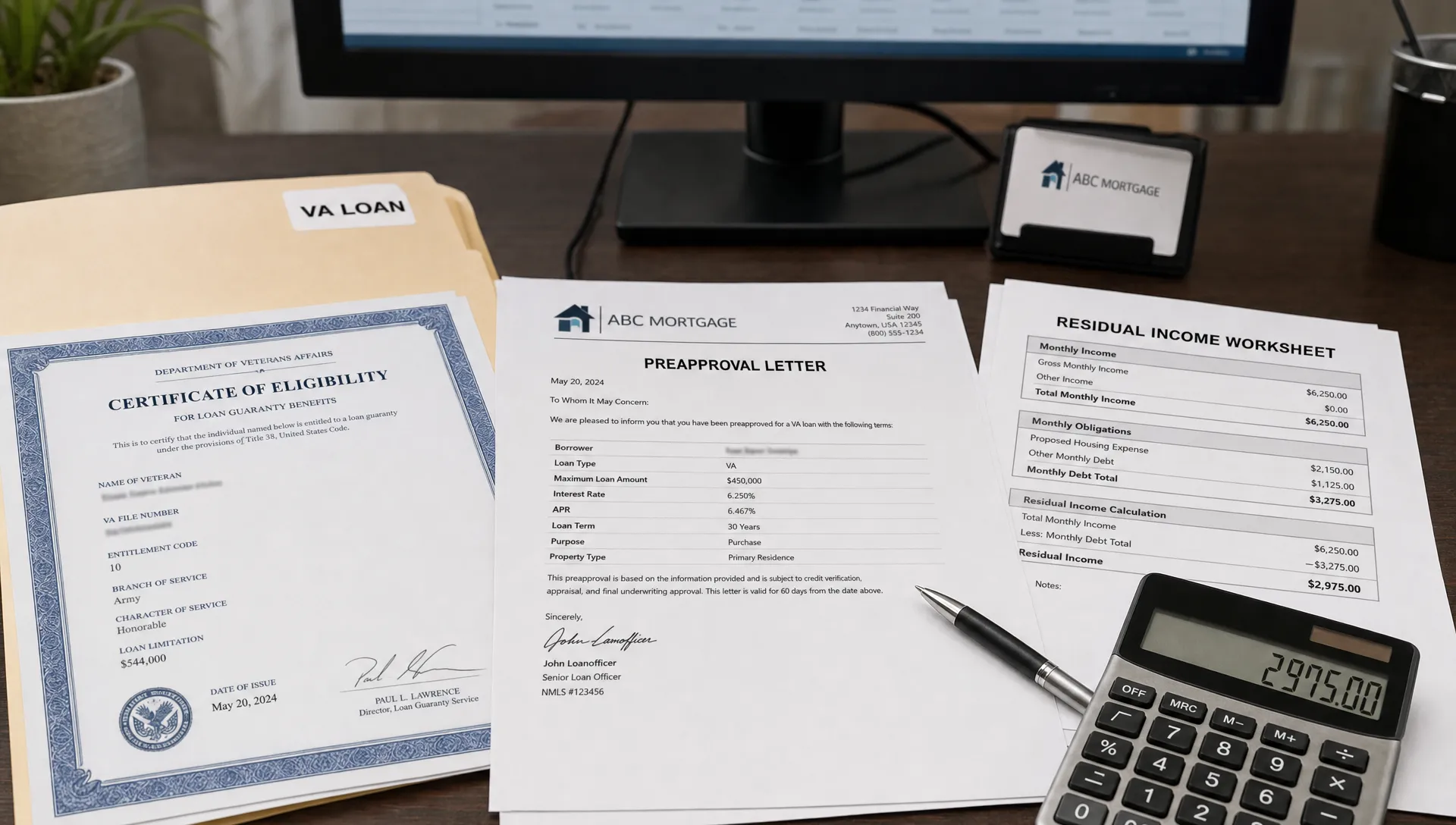
VA loans are available to eligible service members, veterans and certain surviving spouses. A VA loan does not charge monthly mortgage insurance. Instead, many VA borrowers pay a VA funding fee, which can often be financed into the loan. The fee can vary based on military service category, down payment amount and whether the borrower has used VA benefits before. Some borrowers, including certain veterans receiving disability compensation, may be exempt. The Department of Veterans Affairs explains VA funding fee and closing cost rules directly.
USDA loans can also allow zero down financing for eligible properties and borrowers who meet income and location rules. USDA does not use conventional PMI, but it does charge guarantee fees. These usually include an upfront guarantee fee and an annual fee paid monthly. USDA eligibility depends on household income, property location and program requirements, which the USDA outlines in its Single Family Housing Guaranteed Loan Program.
For a deeper comparison of the main mortgage insurance types, New Era Lending’s guide to PMI, FHA MIP and VA options can help clarify how each structure works.
How down payment size changes the real cost
Mortgage insurance is only one part of the down payment decision. A larger down payment can reduce your loan balance and possibly your interest rate pricing, but it can also leave you with less liquidity after closing. A smaller down payment can get you into a home sooner, but it may increase your monthly payment and total borrowing cost.
When comparing down payment options, look at these factors together:
- Monthly payment: Principal, interest, mortgage insurance, property taxes, homeowners insurance and any HOA dues all matter.
- Cash to close: Your down payment is not the only cash requirement. Closing costs, prepaid taxes, prepaid insurance and escrow deposits may also apply.
- Emergency reserves: Keeping savings after closing can be just as important as reducing the loan amount.
- Mortgage insurance duration: PMI that can be canceled in a few years may feel very different from FHA MIP that could last much longer.
- Opportunity cost: Money used for a bigger down payment cannot be used for repairs, investments, debt payoff or other priorities.
If you want to see how these pieces fit together, New Era Lending’s breakdown of how down payment size changes your home loan explains the broader payment and approval impact.
A simple example: three down payment paths
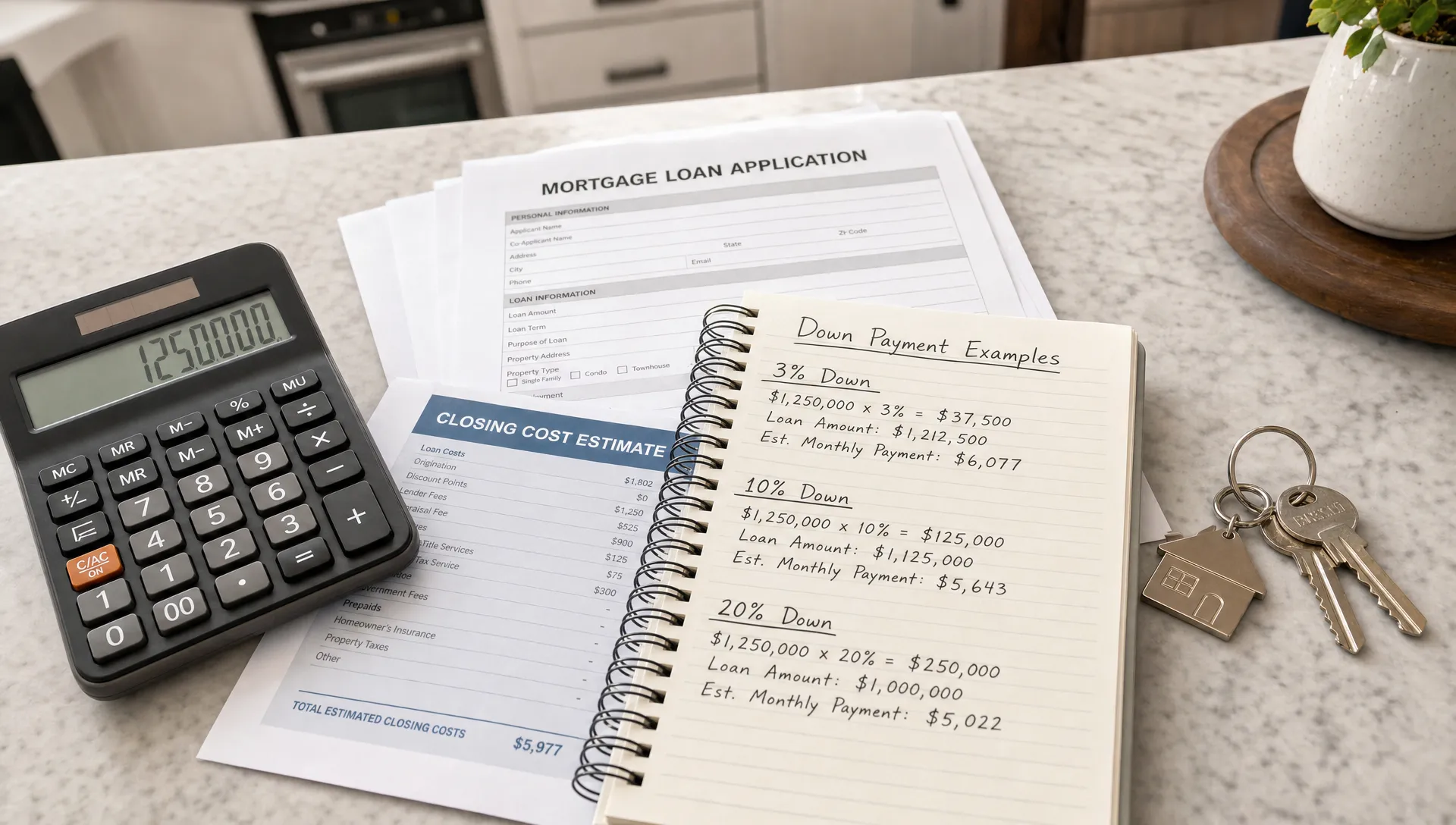
Assume a buyer is purchasing a $400,000 home. Rates, taxes and insurance are not included here because those vary by borrower, property and market conditions. This example only shows how the loan amount and mortgage insurance logic changes.
- 3 percent down conventional: The buyer puts $12,000 down and finances $388,000. PMI will usually apply, but the buyer keeps more cash available after closing.
- 10 percent down conventional: The buyer puts $40,000 down and finances $360,000. PMI will usually still apply, but it may cost less than the 3 percent down scenario and may be removed sooner.
- 20 percent down conventional: The buyer puts $80,000 down and finances $320,000. PMI is generally avoided, but the buyer commits much more cash upfront.
None of these is automatically best. The 20 percent down option may have the lowest payment, but it might not be wise if it drains savings. The 3 percent down option may help a buyer purchase sooner, but the higher loan balance and PMI must fit comfortably into the budget. The 10 percent down option can sometimes be a middle ground.
That is why side by side loan estimates matter. A realistic comparison should show the interest rate, APR, mortgage insurance, cash to close, estimated monthly payment and how much money remains after closing.
Ways to reduce or avoid mortgage insurance
Avoiding mortgage insurance can be useful, but the method matters. Some no PMI structures shift the cost into a higher interest rate or a different loan setup. Others require more cash than a buyer wants to use.
Common strategies include:
- Put 20 percent down on a conventional loan: This is the most straightforward way to avoid monthly PMI on many conventional purchases.
- Use eligible VA financing: VA loans do not charge monthly mortgage insurance, though a funding fee may apply unless the borrower is exempt.
- Consider USDA if the property and household qualify: USDA can allow zero down, but guarantee fees still apply.
- Ask about lender-paid mortgage insurance: This may remove a separate monthly PMI line item, but it often comes with a higher rate or other pricing tradeoff.
- Request PMI cancellation later: If you choose conventional financing with PMI, understand the timeline and requirements for removal.
- Refinance when the numbers support it: If your equity grows or your credit profile improves, refinancing may remove mortgage insurance, but closing costs and the new rate must be considered.
Before assuming a no PMI option is cheaper, compare the lifetime and break-even costs. New Era Lending’s article on how a no PMI mortgage really works explains why the lowest visible insurance cost is not always the lowest total cost.
Questions to ask before choosing a down payment
The best mortgage insurance and down payment decision comes from comparing real numbers for your situation. Ask your lender to run scenarios, not just quote one program.
Useful questions include:
- What loan programs do I qualify for based on my credit, income, property type and location? Program eligibility can change the entire comparison.
- What is my estimated cash to close at 3 percent, 5 percent, 10 percent and 20 percent down? This shows the real upfront difference.
- How much is mortgage insurance each month and how long will it last? Duration is as important as the monthly amount.
- Can the mortgage insurance be canceled without refinancing? This is especially important when comparing conventional PMI with FHA MIP.
- What would my payment look like if I kept more savings after closing? A slightly higher payment may be acceptable if it preserves emergency reserves.
- Are there down payment assistance options or seller credits available? These may change cash to close, but they can also affect pricing and program rules.
A good loan comparison should make the tradeoffs clear enough that you can choose confidently, not just chase the lowest down payment or the lowest monthly payment in isolation.
Frequently Asked Questions
How much down payment do I need to avoid PMI? On many conventional loans, you generally need 20 percent down to avoid PMI at purchase. If you put less than 20 percent down, PMI will usually apply until you build enough equity and meet cancellation rules.
Is mortgage insurance the same on every loan? No. Conventional loans use PMI, FHA loans use MIP, VA loans may have a funding fee instead of monthly mortgage insurance and USDA loans use guarantee fees. Each program has its own rules, costs and cancellation options.
Can PMI be removed later? Conventional PMI can often be removed when you reach enough equity and meet lender, servicer and federal requirements. Many borrowers can request cancellation around 80 percent LTV based on original value, and automatic termination is generally scheduled at 78 percent if the loan is current.
Does FHA mortgage insurance go away? It depends on the original loan terms. Under current rules, many FHA loans with less than 10 percent down have annual MIP for the life of the loan. FHA loans with 10 percent or more down often have annual MIP for 11 years.
Are VA loans really no down payment and no mortgage insurance? Eligible VA borrowers with full entitlement may be able to buy with zero down, and VA loans do not charge monthly mortgage insurance. A VA funding fee may apply unless the borrower qualifies for an exemption.
Is it better to put 20 percent down or pay mortgage insurance? It depends on your cash reserves, monthly budget, credit profile, loan options and how long you expect to keep the home or loan. Paying PMI can be reasonable if it helps you buy sooner while keeping healthy savings.
Compare your options before you choose
Mortgage insurance and down payment rules can look simple from a distance, but the best choice depends on the full loan structure. A 3 percent down conventional loan, FHA loan, VA loan, USDA loan or 20 percent down option can each make sense for the right borrower.
New Era Lending helps homebuyers and homeowners compare personalized mortgage options with modern tools and human guidance. If you want a clearer view of your down payment choices, mortgage insurance costs and possible loan paths, start with New Era Lending and review your options with a lending professional before you commit.