.jpg)
.jpg)





.jpg)
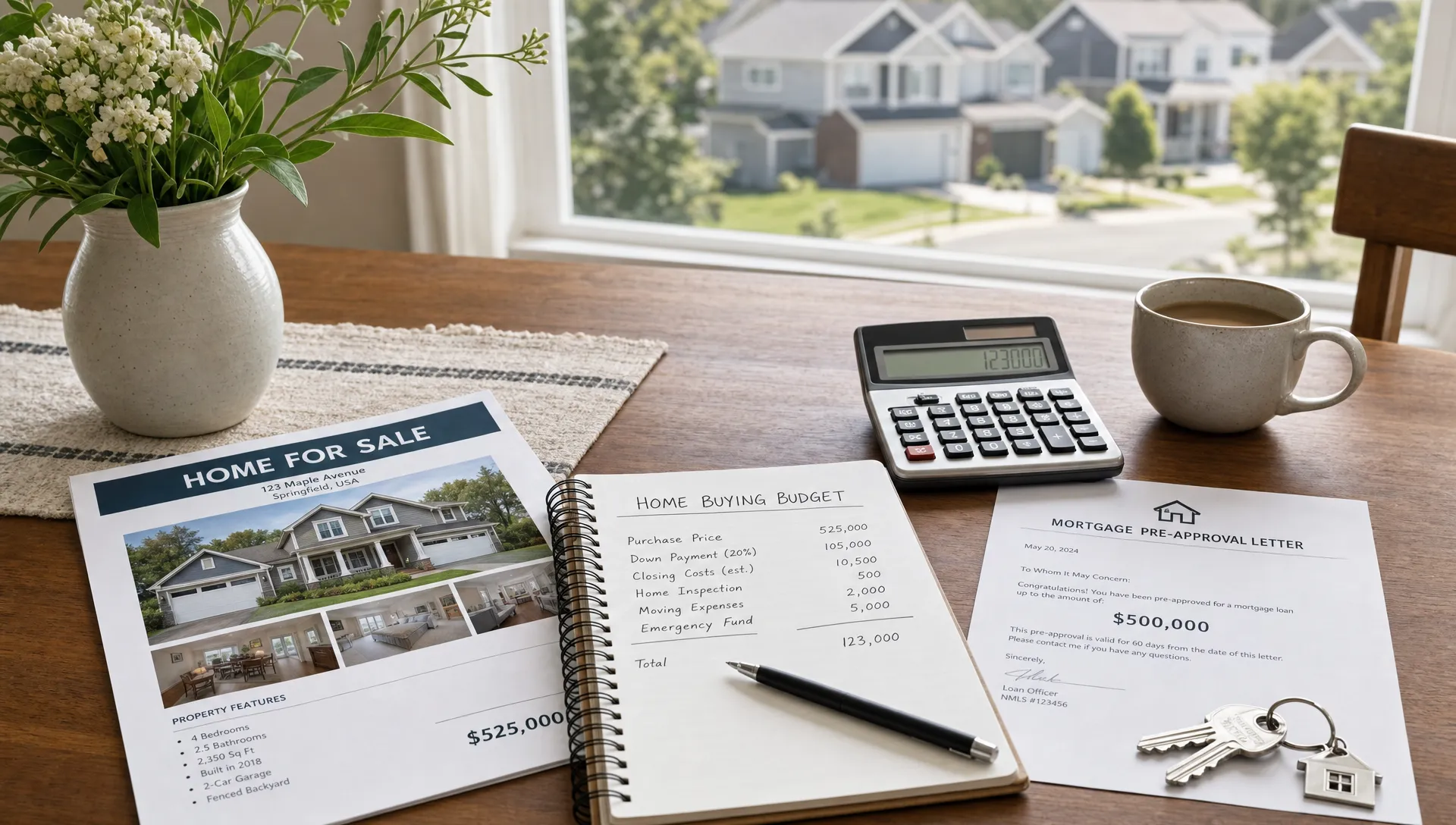

How a No PMI Mortgage Really Works
A no PMI mortgage sounds simple: get a home loan without paying private mortgage insurance. In practice, it is a little more nuanced. Sometimes “no PMI” means you have enough equity that mortgage insurance is not required. Other times, it means the cost has been replaced by a higher rate, a second loan, a government funding fee, or a special program structure.
That does not make no PMI mortgages bad. In the right situation, they can reduce your monthly payment, preserve cash flow, or help you buy sooner. The key is understanding how the lender is managing risk, where the cost may show up, and whether the tradeoff fits your plans.
What “no PMI mortgage” actually means
PMI stands for private mortgage insurance. It is usually associated with conventional loans when the borrower puts down less than 20% or has less than 20% equity. PMI protects the lender if the borrower defaults. It does not protect the homeowner the way homeowners insurance does.
The Consumer Financial Protection Bureau explains that PMI is typically required when a conventional loan has a higher loan-to-value ratio, often above 80%. Loan-to-value, or LTV, compares the loan amount to the home’s value. A $320,000 loan on a $400,000 home equals 80% LTV.
So, a no PMI mortgage is generally a mortgage where there is no separate monthly borrower-paid PMI charge. That can happen because the loan is low risk, because another party or program is absorbing the risk, or because the cost is built into the loan in another way.
If you want a broader breakdown of PMI charges, rules, and avoidance strategies, New Era Lending also covers PMI costs and rules in more detail.
Why lenders require PMI in the first place
Lenders care about equity because it creates a buffer. If a borrower stops making payments and the lender has to foreclose, selling the property may involve legal costs, missed interest, repairs, market changes, and other losses. A higher down payment reduces that risk.
When you put less than 20% down on a conventional loan, the lender may still approve the loan, but PMI helps offset the additional risk. That is why PMI can make low-down-payment homebuying possible. Without it, many conventional borrowers would need to wait longer to save more cash.
A no PMI mortgage answers the lender’s risk question differently. Instead of monthly PMI, the loan may rely on stronger equity, a higher interest rate, a second lien, government backing, or strict qualification standards.
The main ways a no PMI mortgage works
There is no single “no PMI loan” that works the same way for every borrower. Here are the most common structures you may see.
1. You put 20% down on a conventional loan
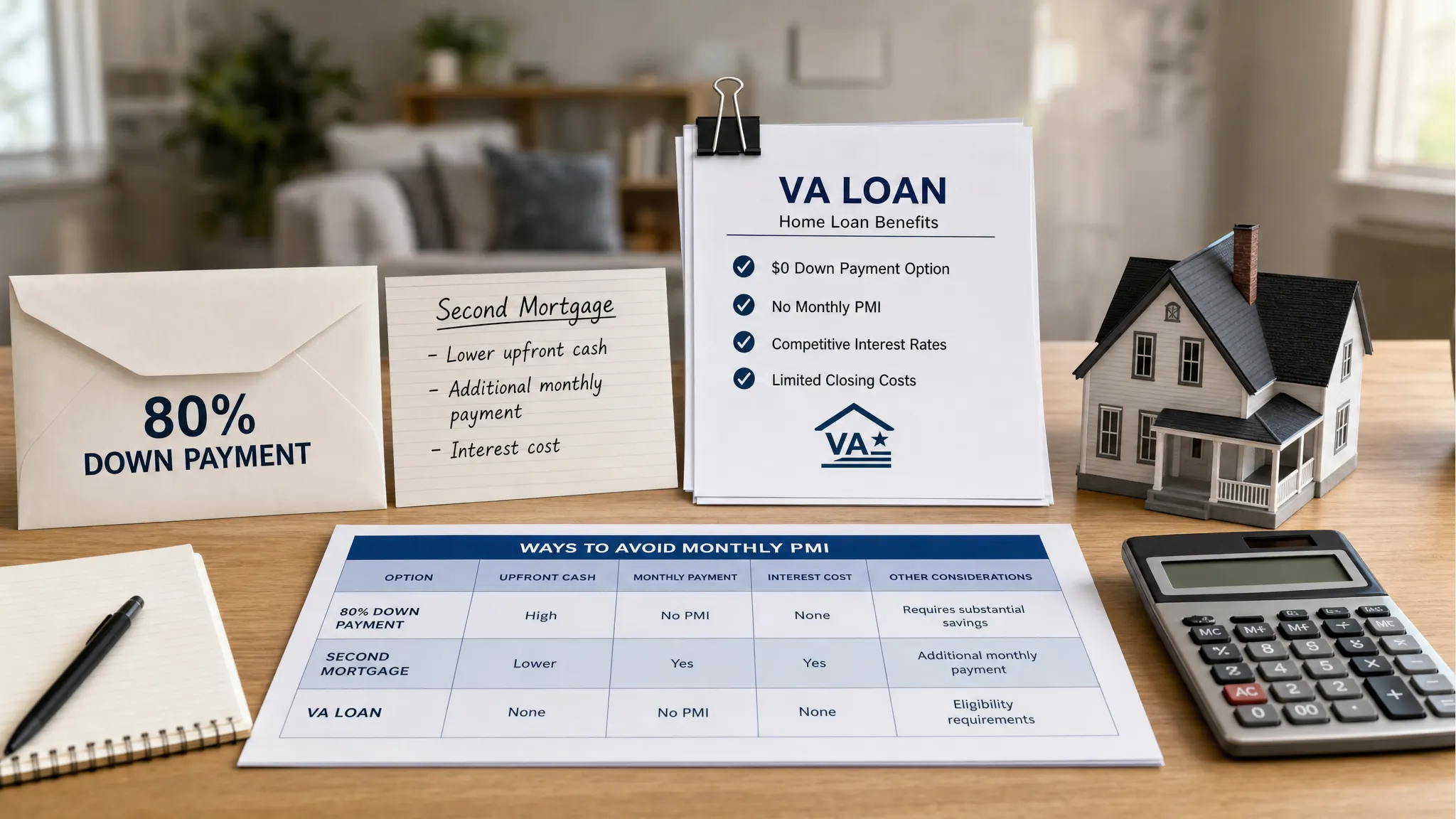
This is the cleanest version. If you buy a home with a conventional mortgage and put at least 20% down, PMI is usually not required because the first mortgage starts at 80% LTV or lower.
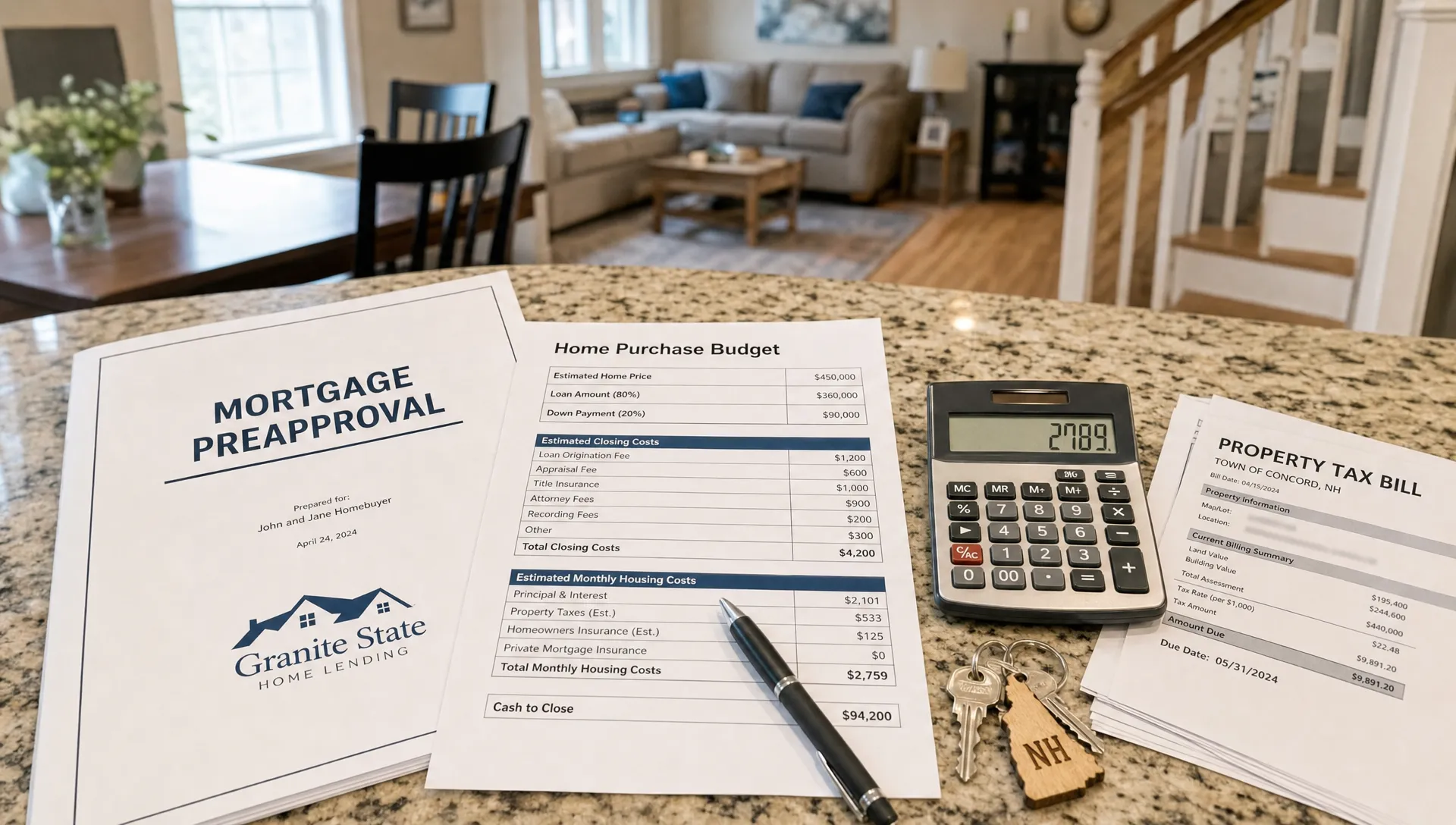
For example, if the purchase price is $400,000 and you borrow $320,000, your LTV is 80%. In many conventional scenarios, that avoids PMI from day one.
The benefit is simplicity. You have one mortgage, no separate PMI payment, and no need to track cancellation rules. The drawback is obvious: tying up 20% of the purchase price can be difficult, and it may leave less cash for moving costs, repairs, reserves, or other financial goals.
If you are still comparing purchase scenarios, it helps to understand what down payment you need for a mortgage loan before assuming 20% is always the best move.
2. You refinance after building enough equity
A no PMI mortgage can also happen later. If you bought with PMI but your home value increased or you paid down your loan, you may be able to refinance into a new conventional loan at or below 80% LTV.
This can remove PMI, but it is not automatic. Refinancing means qualifying for a new loan, paying potential closing costs, and accepting the market rate available at that time. If rates are higher than your current mortgage rate, removing PMI may not produce savings.
There is also a difference between refinancing and canceling PMI on your existing loan. For many conventional loans, federal rules allow borrower-requested PMI cancellation around 80% of the original value and automatic termination around 78%, assuming certain conditions are met. However, those rules do not apply the same way to every loan type or every mortgage insurance structure.
3. The lender uses lender-paid mortgage insurance
Lender-paid mortgage insurance, often called LPMI, is one of the most misunderstood no PMI mortgage options. With LPMI, the borrower does not pay a separate monthly PMI premium. Instead, the lender typically pays for the mortgage insurance and prices that cost into the loan, often through a higher interest rate.
This can make the monthly payment look cleaner because there is no PMI line item. It may even produce a lower payment than borrower-paid PMI in some cases, depending on the rate difference and loan details.
But the tradeoff matters. Borrower-paid PMI on many conventional loans may be cancellable once you build enough equity. LPMI is often not cancellable in the same way because it is embedded in the rate. To get rid of that higher-rate structure, you may need to refinance.
LPMI can be useful for borrowers who want a predictable payment without a separate PMI charge, especially if they do not expect to keep the loan for a long time. It can be less attractive if you plan to stay in the home for many years and would otherwise be able to cancel borrower-paid PMI.
4. You use a piggyback loan
A piggyback loan uses two mortgages instead of one. A common version is an 80-10-10 structure: an 80% first mortgage, a 10% second mortgage, and a 10% down payment. Because the first mortgage is at 80% LTV, PMI may not be required on that first loan.
This can be appealing if you want to avoid PMI but do not have 20% down. However, the second mortgage is not free. It has its own payment, rate, terms, and qualification requirements. Some second loans may have variable rates or shorter repayment periods, so the total monthly cost and long-term risk must be reviewed carefully.
A piggyback structure can make sense for certain borrowers with strong credit, stable income, and enough cash flow to comfortably handle both payments. It is not automatically better than a single mortgage with PMI.

5. You qualify for a VA loan
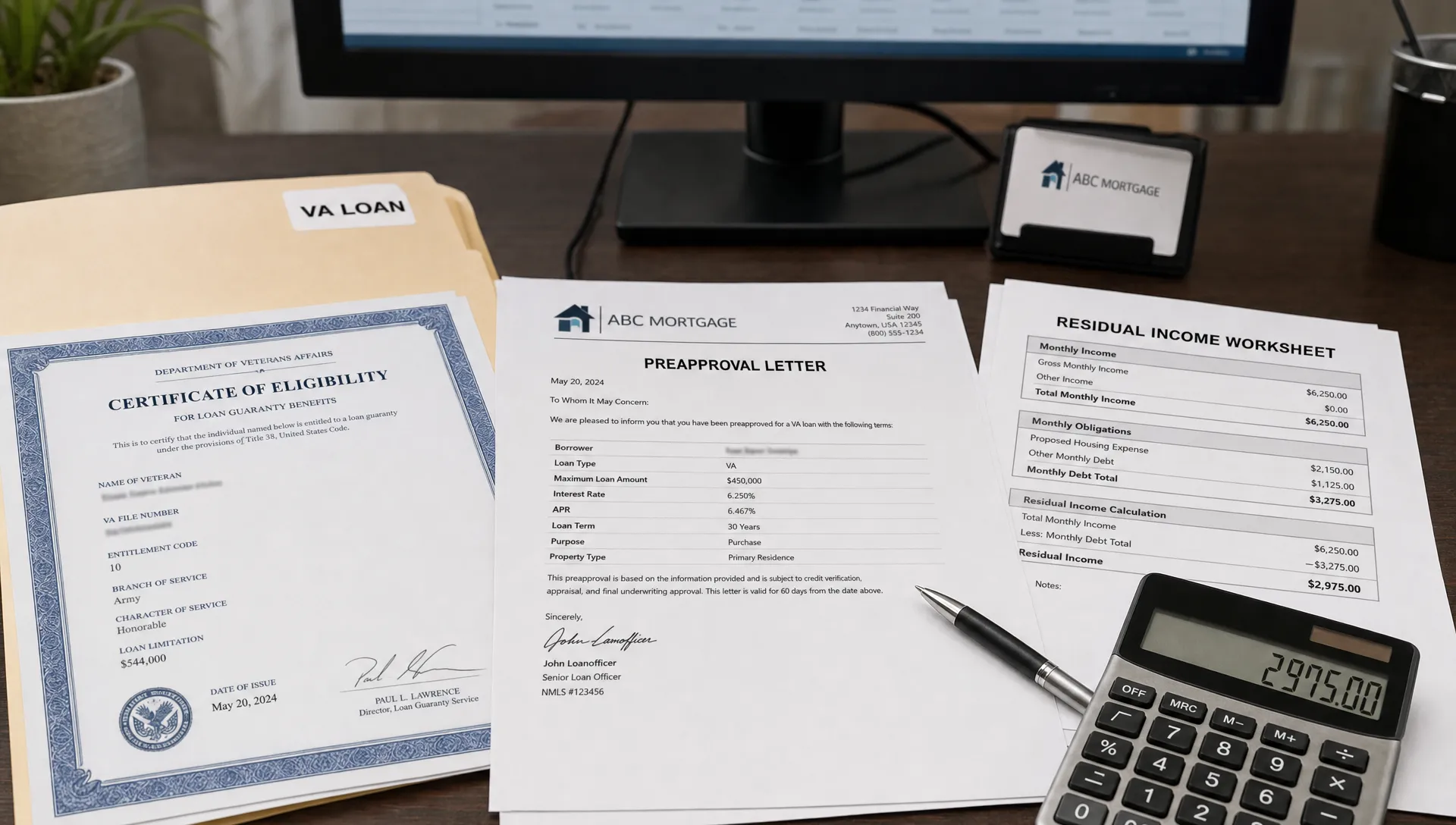
For eligible veterans, active-duty service members, certain National Guard and Reserve members, and eligible surviving spouses, a VA loan can be one of the strongest no monthly PMI options. VA loans do not require monthly PMI, even with no down payment in many eligible scenarios.
That does not mean there are no costs. VA loans may include a VA funding fee unless the borrower is exempt. The fee can often be financed into the loan, but it still affects the total cost. The U.S. Department of Veterans Affairs provides details on funding fees and exemptions.
For eligible buyers, the lack of monthly PMI can be a major advantage. New Era Lending explains this further in its guide to the benefits of a VA mortgage loan.
6. You use a specialty, portfolio, or assistance program
Some lenders, credit unions, housing agencies, or specialized programs may offer loans advertised with no PMI. These can be legitimate, but the details vary widely.
A portfolio loan, for example, may be held by the lender rather than sold through the standard secondary market. Because the lender controls the guidelines, it may choose not to charge PMI, but it may also use different pricing, stricter credit requirements, or unique terms.
USDA loans are another common point of confusion. USDA loans do not use conventional PMI, but they generally have guarantee fees. FHA loans also do not use conventional PMI, but they have mortgage insurance premiums, known as MIP. So if someone says “no PMI” on an FHA or USDA loan, that may be technically true, but it does not necessarily mean there is no mortgage insurance-like cost.
No PMI does not always mean lower total cost
The biggest mistake borrowers make is comparing only the monthly PMI line. A loan with no PMI may still cost more if the interest rate is higher, the upfront fee is larger, or the second mortgage is expensive.
A good comparison should look at the full picture:
- Monthly principal and interest payment
- Any separate PMI, MIP, funding fee, guarantee fee, or second mortgage payment
- Interest rate and APR
- Upfront closing costs
- How long you expect to keep the home or loan
- Whether the mortgage insurance can be canceled later
- How much cash you will have left after closing
For example, a conventional loan with borrower-paid PMI might have a slightly higher monthly payment at first, but the PMI may be removable later. A lender-paid PMI option might remove the separate PMI payment now, but keep you in a higher interest rate unless you refinance. A piggyback loan might avoid PMI, but the second mortgage could make the payment less stable or more expensive.
This is why the “best” no PMI mortgage is not always the one with the lowest payment on day one. The best structure is the one that fits your cash, credit, timeline, and risk tolerance.
When a no PMI mortgage can make sense
A no PMI mortgage may be a strong fit if you have enough savings to put 20% down without draining your reserves. It can also make sense if you already have enough equity and can refinance into a better overall loan.
Eligible VA borrowers should almost always compare a VA option because no monthly PMI can be a meaningful benefit. The right answer still depends on the funding fee, rate, seller concessions, property type, and long-term plans.
Lender-paid PMI or a piggyback loan may be worth considering if you want to reduce the visible monthly PMI cost and you understand the tradeoff. These options are especially worth reviewing when you are comparing how long you expect to stay in the home, how quickly you may build equity, and whether refinancing later is realistic.
When paying PMI may actually be smarter
PMI is not fun to pay, but it can be useful. It may allow you to buy a home sooner instead of waiting years to save 20% down. If home prices rise while you wait, delaying your purchase could cost more than the PMI would have.
Borrower-paid PMI can also be temporary on many conventional loans. If your loan is eligible and you meet the requirements, you may be able to request cancellation after reaching enough equity. That can make a lower-down-payment conventional loan more attractive than a no PMI structure with a permanently higher rate.
Paying PMI may also preserve cash. Keeping emergency reserves after closing can be more important than forcing a 20% down payment. A homeowner with no PMI but no savings may be in a weaker financial position than a homeowner with PMI and a healthy reserve fund.
Questions to ask before choosing a no PMI loan
Before you choose a no PMI mortgage, ask your lender to show the numbers side by side. The goal is not just to remove PMI. The goal is to choose the most practical, affordable structure for your situation.
Strong questions include:
- Is there truly no mortgage insurance, or is it lender-paid or replaced by another fee?
- Is the interest rate higher because there is no monthly PMI?
- Can the mortgage insurance be canceled later, or would I need to refinance?
- What are the upfront costs, funding fees, or guarantee fees?
- How does the total monthly payment compare to a loan with borrower-paid PMI?
- What happens if I sell or refinance in three, five, or ten years?
- Will I still have enough savings after closing?
A clear loan comparison should include both short-term affordability and long-term cost. If the answer is hard to understand, ask for it in plain language before moving forward.
Frequently Asked Questions
Is a no PMI mortgage the same as a no down payment mortgage? No. A no PMI mortgage simply means there is no separate private mortgage insurance charge. You may still need a down payment unless you qualify for a program such as a VA loan or certain specialty financing options.
Can I avoid PMI without putting 20% down? Sometimes. Options may include lender-paid mortgage insurance, a piggyback loan, VA financing for eligible borrowers, or certain lender and assistance programs. Each option has tradeoffs, so compare the full cost.
Is lender-paid PMI really free? Usually not. With lender-paid PMI, the cost is often built into the interest rate or loan pricing. You may not see a separate PMI line item, but you should compare the payment, APR, and long-term cost.
Can PMI be removed later? On many conventional loans with borrower-paid PMI, yes, if you meet equity, payment history, and loan requirements. Lender-paid PMI and government-backed mortgage insurance structures may follow different rules.
Do FHA loans have no PMI? FHA loans do not use conventional private mortgage insurance, but they do have mortgage insurance premiums, called MIP. A loan can be “no PMI” and still have another type of mortgage insurance cost.
Find the right no PMI strategy for your numbers
A no PMI mortgage can be a smart way to reduce monthly costs, but only when the structure truly supports your financial goals. The right choice depends on your down payment, credit profile, eligibility, home price, equity position, and how long you expect to keep the loan.
New Era Lending combines smart mortgage technology with personalized human guidance to help borrowers compare purchase, refinance, and equity-access options with clarity. If you want to see whether a no PMI mortgage, a traditional loan with cancellable PMI, or another structure makes the most sense, start by reviewing your options with a lending team that can explain the numbers clearly.