.jpg)
.jpg)





.jpg)


How to Make Mortgages Easy Without Missing Key Details

A mortgage can feel complicated because the decision is both emotional and technical. You are choosing a home, planning a budget, comparing loan terms, submitting private documents, and trying to hit closing deadlines, often all at once.
The goal is not to make the mortgage process feel easy by skipping the fine print. The goal is to make mortgages easy by turning the process into clear decisions, reliable checklists, and timely guidance, while still protecting the details that affect your money.
That distinction matters. A simple mortgage experience should reduce confusion, not reduce your understanding. It should help you move faster without guessing, upload documents securely without losing track of what was sent, and compare loan options without overlooking long-term cost.
What “easy” should mean in a mortgage
An easy mortgage is not a shortcut. It is a well-organized process where you understand what is happening, why it matters, and what comes next.
In practice, that means a few things should be clear from the beginning: your estimated monthly payment, your cash to close, your loan type, your interest rate structure, your approval conditions, and the timeline from application to closing. If those details are vague, the process may feel smooth at first but become stressful later.
A borrower-friendly process also keeps protections in place. Clear disclosures, secure document handling, and honest conversations about costs are part of what makes lending safer, not slower. New Era Lending has covered this idea in more depth in its guide on how easy lending can still protect borrowers, and the same principle applies here: simplicity should make important information easier to see.
Start with the payment you can live with
Many buyers begin by asking, “How much can I qualify for?” That is useful, but it is not the same as asking, “What payment fits my life?”
A lender may evaluate your income, credit, debts, assets, and loan program eligibility. You still need to decide what monthly payment leaves room for savings, repairs, emergencies, transportation, childcare, travel, or anything else that matters in your household.
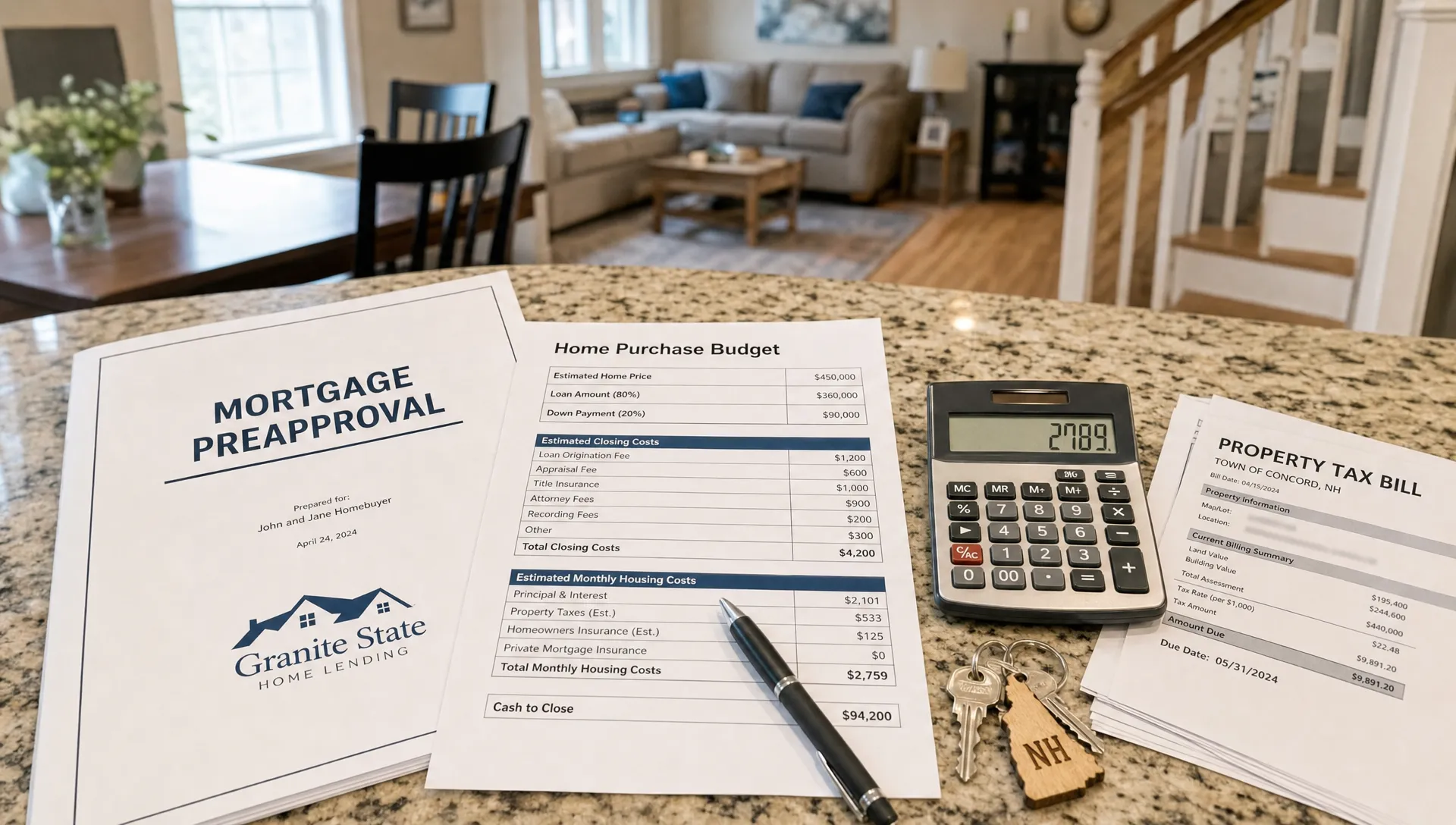
A practical mortgage budget should include more than principal and interest. Look at the full housing picture:
- Principal and interest on the loan
- Property taxes and homeowners insurance
- Mortgage insurance, if applicable
- HOA dues or condo fees, if any
- Utilities, maintenance, and future repairs
- Emergency savings after closing
This is one of the easiest places to miss a key detail. A home can be technically affordable on paper and still feel tight month after month. Before you compare loan options, decide on a comfortable payment range and a maximum payment you do not want to exceed.
Know which details change your total cost
Mortgage offers are not just about the interest rate. The rate matters, but it is only one part of the total cost. A loan with a slightly lower rate may include discount points. A loan with lender credits may reduce upfront costs but increase the rate. A shorter term can reduce total interest but raise the monthly payment.
When reviewing options, slow down around the details that have the biggest impact:
- Interest rate: The cost of borrowing expressed as a percentage of the loan balance.
- APR: A broader cost measure that includes the rate plus certain fees, useful for comparing offers.
- Discount points: Upfront fees paid to reduce the rate, which may or may not make sense depending on how long you keep the loan.
- Lender credits: Credits that can lower closing costs, often in exchange for a higher rate.
- Loan term: The length of repayment, commonly 15, 20, or 30 years depending on the program.
- Cash to close: The total amount you need for down payment, closing costs, prepaid items, and initial escrow deposits.
A good rule is to ask, “What changes if I keep this loan for three years, seven years, or the full term?” That question helps you look beyond the payment and understand the tradeoff between upfront cost and long-term interest.
Match the loan to your goal, not someone else’s
The “best” mortgage depends on what you are trying to accomplish. A first-time buyer with limited savings, a homeowner refinancing to reduce monthly payments, a veteran using eligible benefits, and a homeowner accessing equity are not solving the same problem.
Before comparing programs, define your goal in plain English. Are you trying to buy with a manageable down payment? Lower your rate? consolidate debt through home equity? shorten your term? create more monthly cash flow? buy before selling? Each goal points to different questions.
This is where personalized guidance can prevent confusion. If you want a deeper framework for comparing options, New Era Lending’s article on how to find the right loan without guesswork is a helpful companion to this step.
The main point is simple: do not choose a loan because it sounds popular. Choose it because the payment, cost structure, eligibility requirements, and long-term strategy fit your situation.
Use technology to reduce friction, not attention
Modern mortgage technology can make the process far more convenient. Secure uploads, digital document requests, e-signatures, and online status updates can reduce delays and keep paperwork from becoming a mess.
But technology should not replace careful review. It should give you more time and clarity to review the details that matter. Before submitting documents or signing disclosures, make sure your name, address, income details, loan amount, property information, and contact information are accurate.
Also, be thoughtful about how you send sensitive information. Documents that include Social Security numbers, bank account details, tax information, or payroll records should be shared through secure systems provided by your lender, not casual email threads or text messages.
Personalization is not unique to finance. In many high-trust services, better guidance begins by understanding the person before recommending a path, a principle reflected in Montgó Lifestyle’s personal program approach. The mortgage version is similar: your loan strategy should be shaped around your timeline, income, cash flow, risk comfort, and long-term plans.
Build your mortgage file before you need it
One of the simplest ways to make the mortgage process easier is to organize documents early. Underwriting becomes more efficient when your lender can clearly verify income, assets, debts, identity, and property details.
You do not need to know every document in advance, since requirements vary by loan type and borrower profile. Still, many borrowers can prepare by gathering common items such as:
- Recent pay stubs or income documentation
- W-2s, 1099s, or tax returns when requested
- Recent bank and asset statements
- Photo ID and current address information
- Documentation for large deposits or transfers
- Homeowners insurance information when available
- Purchase contract details if you are buying
If you are self-employed, paid by commission, receiving retirement income, using gift funds, or buying with multiple borrowers, expect extra documentation. That does not mean anything is wrong. It simply means the lender has to verify the full picture.

Treat preapproval as a planning tool
Preapproval can make the buying process feel more manageable because it gives you a clearer sense of your price range and potential loan options. It can also help you make stronger offers because sellers can see that a lender has reviewed key financial information.
Still, preapproval is not the same as final approval. Final approval usually depends on underwriting, property review, appraisal when required, title work, insurance, updated documents, and confirmation that your finances have not materially changed.
To keep preapproval useful, be honest and complete during the application. Mention side income, debts, recent deposits, job changes, or credit concerns early. Surprises late in the process create more stress than open conversations at the beginning.
Review the Loan Estimate line by line
The Loan Estimate is one of the most important documents in the mortgage process. Under federal mortgage disclosure rules, borrowers generally receive it within three business days after submitting a complete loan application. It gives you a standardized way to review loan terms, projected payments, closing costs, and cash to close.
Do not treat it as paperwork to skim. It is one of your best tools for making sure an “easy” mortgage is still transparent.
Pay special attention to the loan amount, interest rate, monthly principal and interest, whether the rate can change, whether the payment can change, estimated taxes and insurance, origination charges, points, lender credits, escrow details, and total estimated cash to close.
Also look for which costs are controlled by the lender and which are third-party or prepaid costs. Not every closing cost is a lender fee. Taxes, prepaid interest, insurance premiums, escrow deposits, appraisal charges, title services, and recording fees may appear in the estimate depending on the transaction.
If something looks different from what you discussed, ask right away. A good mortgage process welcomes questions before closing, not after.
Avoid last-minute approval problems
Many mortgage delays happen after the application because a borrower makes a normal financial move that creates new underwriting questions. The safest approach is to keep your financial profile steady until closing.
Before making any major change, ask your loan team. This includes opening a new credit card, financing furniture, changing jobs, depositing large cash amounts, moving money between accounts, co-signing a loan, or missing payments.
Common ways to protect your approval timeline include:
- Pay all bills on time until closing
- Avoid new debt unless your lender says it is acceptable
- Keep documentation for large deposits or transfers
- Respond quickly to underwriting requests
- Do not assume a small financial change is too minor to mention
For more practical preparation ideas, New Era Lending’s simple lending tips for a smoother mortgage approval can help you reduce avoidable back-and-forth.
Understand what can still change before closing
A mortgage is not fully finished until the loan closes. Some numbers may update along the way because of final property taxes, insurance premiums, prepaid interest based on the closing date, title charges, escrow setup, or negotiated seller credits.
That is why the Closing Disclosure matters. Borrowers generally receive it at least three business days before closing. Compare it with your most recent Loan Estimate and ask about any changes you do not understand.
Also verify wire instructions carefully. Wire fraud is a real risk in real estate transactions. Confirm instructions through trusted channels and be cautious of last-minute email changes. If something feels off, pause and call a verified number before sending money.
Ask better questions throughout the process
You do not need to become a mortgage expert to make a confident decision. You only need to ask questions that reveal the details behind the offer.
Useful questions include:
- What is included in my estimated monthly payment?
- How much cash do I need to close, and what could change that number?
- Is my rate locked, and when does the lock expire?
- Am I paying points or receiving lender credits?
- What are the biggest approval conditions still outstanding?
- How would this loan compare if I kept it for five years instead of 30?
- Which costs are lender charges, and which are third-party or prepaid costs?
- What should I avoid doing financially before closing?
These questions do more than gather information. They help your lender understand what you value: payment stability, lower upfront costs, faster closing, long-term savings, or flexibility.
How New Era Lending helps simplify the details
New Era Lending is built around the idea that home financing should be clearer and more human. Its technology-driven process can help streamline applications, document uploads, and e-signatures, while personalized guidance helps borrowers understand the decisions behind the numbers.
That combination matters because a mortgage is not just a form to complete. It is a financial plan connected to your home, your income, your savings, and your future options. Whether you are buying, refinancing, or exploring access to equity, the right process should help you move efficiently while still seeing the details clearly.
For eligible borrowers, specialized veteran loan programs may also be part of the conversation. The key is to compare options based on your circumstances, not assumptions.
Frequently Asked Questions
How do I make mortgages easy without missing important details? Start with a realistic budget, organize documents early, use secure digital tools, compare Loan Estimates carefully, and ask your lender to explain every cost or condition you do not understand.
What is the most overlooked mortgage detail? Cash to close is often misunderstood because it can include more than the down payment. Closing costs, prepaid interest, insurance, property taxes, escrow deposits, and credits can all affect the final number.
Is the lowest mortgage rate always the best option? Not always. A lower rate may come with higher upfront costs or points. The better choice depends on your cash available, expected time in the home, monthly payment goals, and total cost over time.
Can a digital mortgage process still be personal? Yes. Digital tools can reduce paperwork and speed up communication, while human guidance helps you interpret loan options, approval conditions, and tradeoffs. The best process uses both.
What should I avoid before closing on a mortgage? Avoid opening new credit, taking on new debt, changing jobs without discussing it, making unexplained large deposits, missing payments, or moving money in ways that are hard to document.
Make your mortgage feel more manageable
You do not have to choose between convenience and clarity. A well-run mortgage process can be simple, secure, and transparent at the same time.
If your goal is to buy, refinance, or access home equity with fewer surprises, New Era Lending can help you take the next step with smart technology and personalized guidance across 39 states.