.jpg)
.jpg)





.jpg)


North Dakota Mortgage Guide: Taxes, Insurance, and Closing Costs

A North Dakota mortgage is shaped by more than the interest rate you see on a quote. Property taxes, homeowners insurance, escrow setup and closing costs can all change the amount you need at closing and the monthly payment you will live with after move-in. For buyers comparing homes in Fargo, Bismarck, Grand Forks, Minot or a smaller rural market, understanding these costs early can prevent last-minute surprises.
The goal is not to memorize every county fee or insurance rule before you shop. It is to know which numbers are predictable, which ones vary by property and which ones deserve a closer look before you make an offer.
What Makes a North Dakota Mortgage Different?
North Dakota has a mix of urban housing markets, small towns, farm properties, new construction and older homes that may need extra due diligence. A home in Cass County may have a very different tax profile than a rural property with acreage, and insurance needs can vary based on flood exposure, wind, hail risk and the age of the home.
A North Dakota mortgage can also be affected by loan type. Conventional, FHA, VA and USDA loans may handle down payments, mortgage insurance, property condition requirements and seller credits differently. In many rural areas, USDA financing can be worth exploring because parts of the state may meet location eligibility rules, subject to borrower and property qualifications.
Your lender will focus on two big numbers: cash to close and monthly payment. Taxes, insurance and closing costs touch both. That is why a realistic budget should be built before the purchase agreement, not after the appraisal is ordered.
How Property Taxes Affect Your Payment
Property taxes are one of the most important local costs in a North Dakota mortgage because they are usually collected monthly through escrow and paid by the loan servicer when due. If taxes rise after reassessment or a local levy changes, your monthly payment may rise even if your loan has a fixed interest rate.
North Dakota property taxes are local, meaning the county, city, school district and other taxing authorities can all influence the final bill. The state uses a valuation system that starts with the true and full value of the property, then applies assessment and taxable value rules before local mill levies determine the tax amount.
For residential property, the taxable value is generally a small percentage of market value rather than the full market value itself. A mill levy is then applied to that taxable value. One mill equals $1 of tax for every $1,000 of taxable value.
A simple property tax example
The exact calculation depends on the county and local levies, but the structure below shows why two homes with similar purchase prices may not have identical tax bills.
| Item | What it means | Why it matters |
|---|---|---|
| True and full value | The value used as the starting point for tax purposes | May differ from your purchase price or appraisal |
| Assessed value | A percentage of true and full value | Used to classify property for taxation |
| Taxable value | The value to which mill levies are applied | Drives the actual tax bill |
| Mill levy | Local tax rate per $1,000 of taxable value | Varies by location and taxing district |
When you compare homes, do not rely only on the seller’s current tax bill. A North Dakota mortgage estimate should consider whether the home was recently reassessed, whether exemptions or credits apply and whether the current owner’s tax situation differs from yours.
Tax credits, exemptions and reassessments
North Dakota has offered property tax relief programs, including credits tied to primary residences, but eligibility and amounts can change by tax year. Some homeowners may also qualify for programs based on age, disability, veteran status or income. Your county assessor or the North Dakota Office of State Tax Commissioner can confirm current rules for a specific property.
If you are buying new construction, taxes can be especially tricky. The prior tax bill may reflect land only or a partially completed structure. Your lender may use a projected tax amount for escrow, then your payment can adjust when the completed home receives a full tax assessment.
Homeowners Insurance in North Dakota
Homeowners insurance protects the property and is required by mortgage lenders. For a North Dakota mortgage, the premium depends on replacement cost, roof condition, deductible choices, claim history, construction type, location and risk factors such as hail or flood exposure.
Most standard homeowners policies cover common hazards such as fire, theft, certain storm damage and liability. They do not automatically cover every type of water event. Flood insurance is separate, and your lender may require it if the home is in a FEMA-designated Special Flood Hazard Area.
North Dakota buyers should also pay attention to wind and hail deductibles. A lower annual premium may come with a higher deductible, sometimes stated as a percentage of the dwelling coverage rather than a flat dollar amount. That can make a big difference when you file a claim.
Insurance costs lenders care about
Lenders usually need proof of adequate coverage before closing. If you have an escrow account, part of your monthly payment will be set aside for insurance premiums. At closing, you may also pay the first year of homeowners insurance upfront, plus initial escrow deposits for future bills.
Insurance can be one of the fastest-moving parts of a loan file because the lender must review the policy details, mortgagee clause and coverage amount. If you wait until the final week to shop for insurance, you may limit your options.
Closing Costs Buyers Should Budget For
Closing costs are the lender, title, recording and prepaid expenses required to finalize your purchase. A common planning range is 2% to 5% of the loan amount, but the final number depends on loan type, property price, county charges, discount points, title costs and negotiated seller credits. New Era Lending’s guide to closing costs buyers often overlook is a helpful next step if you want a broader breakdown of fee categories.
A North Dakota mortgage closing may include lender fees, appraisal fees, credit report fees, title search costs, lender’s title insurance, recording fees, prepaid interest and escrow deposits. Some costs are fixed, while others depend on the home’s price or the closing date.
Prepaids are often confused with lender fees. They are not charges for making the loan. They are upfront payments for costs you would owe anyway, such as daily interest from the closing date to the end of the month, homeowners insurance and initial tax or insurance reserves.
Common closing cost categories
| Cost category | Typical purpose | Buyer note |
|---|---|---|
| Lender charges | Origination, processing or underwriting costs | Compare these on Loan Estimates from different lenders |
| Appraisal | Confirms value for the lender | Required for many loans, unless a waiver applies |
| Title and settlement | Title search, closing services and title insurance | Customs and negotiations may vary by transaction |
| Recording fees | County recording of deed or mortgage documents | Usually modest but location-specific |
| Prepaid interest | Interest from closing day to month-end | Changes based on closing date |
| Escrow setup | Initial deposits for taxes and insurance | Helps fund future bills paid by the servicer |
Seller credits and lender credits
Seller credits can reduce the cash you need at closing, but loan programs limit how much a seller can contribute. The allowed amount can depend on down payment, occupancy and loan type. Lender credits can also reduce upfront cash, often in exchange for a higher interest rate.
Neither option is automatically good or bad. A buyer with strong monthly cash flow but limited savings may prefer credits that lower cash to close. Another buyer may choose to bring more cash upfront to secure a lower payment. The right choice depends on how long you expect to own the home and how much emergency savings you want after closing.
Estimating Cash to Close and Monthly Payment
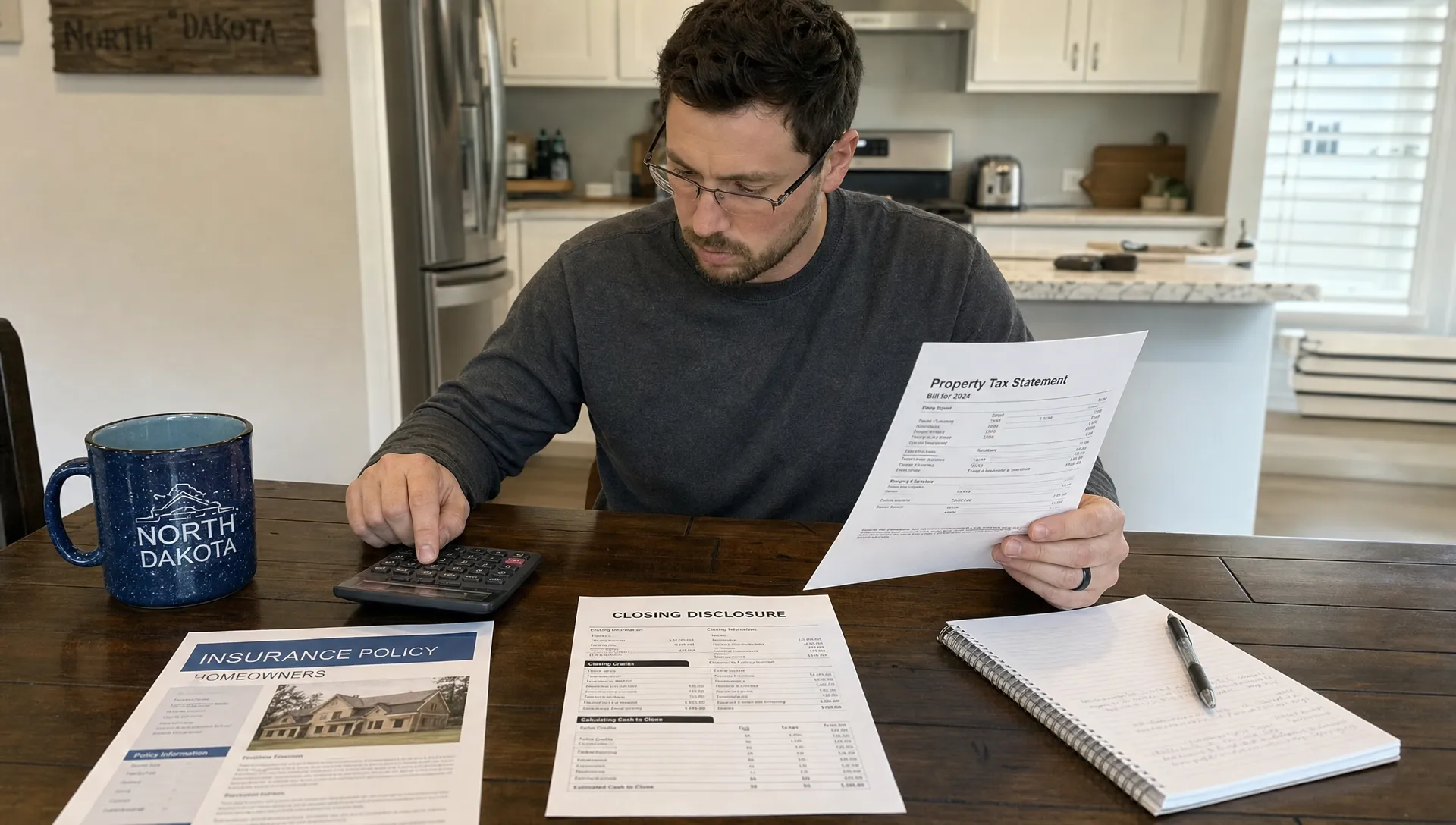
Cash to close is usually down payment plus closing costs plus prepaids, minus earnest money deposits, seller credits and lender credits. Your Loan Estimate will show an early version of this number, and the Closing Disclosure will confirm the final figure before settlement.
For a North Dakota mortgage, your monthly payment is commonly built from principal, interest, property taxes, homeowners insurance and any required mortgage insurance. HOA dues, utilities and maintenance may not appear in the lender’s payment figure, but they still affect affordability.
If you want to build a more complete estimate, start with New Era Lending’s guide on how to estimate your monthly mortgage payment. Then add property-specific items, such as HOA dues, flood insurance if required, utility costs for winter heating and a maintenance reserve.
This is also the right time to separate mortgage costs from relocation costs. Moving trucks, temporary housing, snow equipment, vehicle registration and winter-ready transportation can add up. If your move involves long drives or harsh road conditions, you might even budget for vehicle detailing or professional ceramic coating car paint protection as a non-mortgage relocation expense, but keep those costs separate from cash needed to close.
Special Situations for North Dakota Buyers
Not every purchase fits the same template. A condo in downtown Fargo, a new build near Bismarck and a rural home outside Dickinson can produce different lender questions.
A North Dakota mortgage for a rural property may involve well, septic, access road or acreage considerations. The lender may need to confirm the property is primarily residential, accessible year-round and acceptable under the selected loan program.
For condos or townhomes, the lender may review the homeowners association budget, insurance, owner-occupancy levels and litigation history. HOA dues are included in debt-to-income calculations, even when they are not part of your escrow account.
VA, FHA and USDA considerations
VA loans can be valuable for eligible service members, veterans and surviving spouses because they often allow no down payment and do not require monthly mortgage insurance. The VA funding fee, if applicable, can affect total loan costs, though some borrowers are exempt.
FHA loans may help buyers with smaller down payments or more flexible credit profiles, but they include mortgage insurance costs. USDA loans may be an option in eligible rural areas and have their own property and income requirements.
If you are still comparing programs, New Era Lending’s overview of mortgage loan options for different buyers can help you understand how loan structure changes your upfront and monthly costs.
How to Prepare Before You Make an Offer
The strongest buyers know their numbers before they fall in love with a home. Preapproval is part of that, but you also need a property-specific cost review once you choose a house.
Before writing an offer, ask your lender and real estate agent to help you review:
- The current property tax bill and whether reassessment is likely
- Estimated homeowners insurance and any flood insurance requirement
- Expected closing costs, prepaids and escrow deposits
- Seller credit limits for your loan program
- HOA dues, special assessments or condo fees
- Inspection needs for older homes, rural properties, wells or septic systems
- Utility costs, especially heating costs during North Dakota winters
A North Dakota mortgage becomes much easier to manage when these numbers are reviewed together instead of one at a time. The lowest rate is helpful, but the best loan strategy is the one that fits your cash, timeline and comfort level after closing.
Frequently Asked Questions
How much are closing costs in North Dakota? Many buyers use 2% to 5% of the loan amount as a planning range, but your final costs depend on loan type, price, lender fees, title charges, prepaid interest and escrow deposits. Your Loan Estimate will provide a property-specific breakdown after application.
Are property taxes included in my monthly mortgage payment? Often, yes. If your loan has an escrow account, part of each monthly payment is set aside for property taxes and homeowners insurance. Your servicer then pays those bills when they come due.
Do I need flood insurance for a home in North Dakota? You need flood insurance if the property is in a lender-required flood zone. Even outside required zones, some buyers choose flood coverage because standard homeowners insurance does not cover most flooding.
Can the seller pay my closing costs? In many cases, yes, but seller credits are limited by loan program rules. The limit may depend on whether you use conventional, FHA, VA or USDA financing and how much you put down.
Why did my payment change after closing if I have a fixed-rate loan? A fixed-rate loan keeps principal and interest stable, but taxes, insurance and escrow requirements can change. If your tax bill or insurance premium rises, your total payment may increase.
Get Clear Numbers Before You Close
Buying a home should not feel like decoding a stack of surprise fees. New Era Lending combines smart mortgage technology with human guidance to help buyers compare loan options, upload documents securely, review transparent terms and move toward closing with confidence.
If you are planning a North Dakota mortgage, start with a realistic estimate of taxes, insurance, closing costs and cash to close. The earlier you see the full picture, the easier it is to choose the right home and the right loan strategy.