.jpg)
.jpg)





.jpg)

How Down Payment Size Changes Your Home Loan

Your down payment does more than reduce the amount you borrow. It can change your monthly payment, loan options, mortgage insurance, rate pricing, approval strength, and how much financial breathing room you have after closing.
That is why the “right” down payment is not always the largest one you can make. For some buyers, putting more down unlocks better terms and a lower payment. For others, preserving cash for repairs, moving costs, or an emergency fund may be the smarter move.
Here is how down payment size changes your home loan, and how to think through the tradeoffs before you apply.
The simple math: a bigger down payment means a smaller loan
Your down payment is the portion of the purchase price you pay upfront. The rest becomes your mortgage principal, before any financed fees that may apply.
For example, on a $400,000 home:
- 3% down means $12,000 down and a $388,000 loan amount
- 5% down means $20,000 down and a $380,000 loan amount
- 10% down means $40,000 down and a $360,000 loan amount
- 20% down means $80,000 down and a $320,000 loan amount
The basic effect is straightforward: the more you put down, the less you borrow. But lenders do not only look at the dollar amount. They also look at the relationship between the loan and the property value, called loan-to-value ratio.
Down payment size changes your loan-to-value ratio
Loan-to-value ratio, or LTV, compares your mortgage amount to the property value or purchase price. If you buy a $400,000 home and borrow $360,000, your LTV is 90%.
LTV matters because it helps lenders measure risk. A lower LTV usually means you have more equity from day one, which can make the loan less risky for the lender. That can affect:
- Whether mortgage insurance is required
- How your interest rate is priced
- Which loan programs you qualify for
- How much flexibility you have if the appraisal comes in low
- Whether your file appears stronger in underwriting
This is one of the most important connections between a home loan and down payment. The down payment is not just a savings goal. It directly shapes the risk profile of the loan.
How down payment size affects your monthly mortgage payment
A larger down payment can lower your monthly payment in several ways.
First, you are financing a smaller loan amount. Less principal means less interest charged each month. Second, a larger down payment may reduce or eliminate mortgage insurance. Third, in some cases, it may help you access better rate pricing.
Consider a simplified example. Assume a $400,000 purchase price, a 30-year fixed loan, and the same interest rate for comparison purposes. This is only an illustration, not a rate quote.
At 5% down, the loan amount would be $380,000. At 20% down, the loan amount would be $320,000. The 20% down buyer is borrowing $60,000 less, so the principal and interest payment will be lower even before considering mortgage insurance.
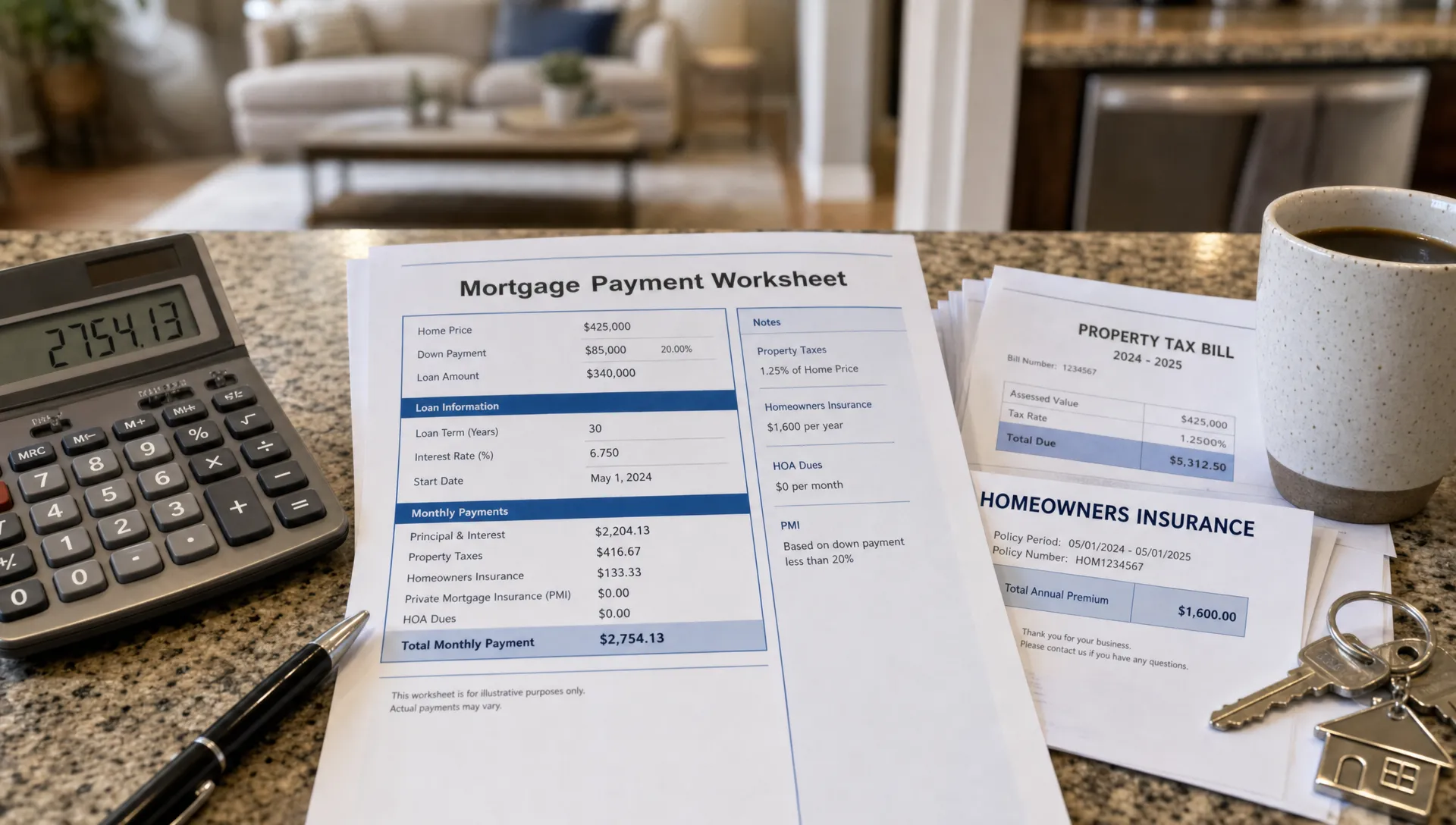
The actual monthly payment also includes property taxes, homeowners insurance, possible HOA dues, and mortgage insurance when applicable. If you want a deeper breakdown of those pieces, New Era Lending’s guide on how to estimate your monthly mortgage payment explains the full payment structure in plain English.
Down payment size can determine whether you pay mortgage insurance
Mortgage insurance is one of the biggest cost differences tied to down payment size.
On many conventional loans, private mortgage insurance, or PMI, is typically required when the down payment is less than 20%. PMI protects the lender, not the borrower, but it allows many buyers to purchase sooner with less cash upfront.
The good news is that conventional PMI is often removable when you reach certain equity milestones. The Consumer Financial Protection Bureau explains PMI cancellation rights under federal rules, including borrower-requested cancellation and automatic termination in many situations.
FHA loans work differently. FHA mortgage insurance includes an upfront mortgage insurance premium and an annual premium paid monthly. Depending on the down payment and loan term, FHA mortgage insurance may last for the life of the loan or for a set period.
VA loans are different again. Eligible veterans, service members, and certain surviving spouses may qualify for a VA loan with no monthly mortgage insurance, though a VA funding fee may apply unless the borrower is exempt. New Era Lending’s article on mortgage insurance options compares PMI, FHA MIP, and VA costs in more detail.
A bigger down payment may improve your interest rate, but not always
Down payment size can influence your mortgage rate because it affects LTV. In general, lower LTVs can be priced more favorably than higher LTVs, assuming the same borrower profile and loan program.
However, mortgage pricing is not based on down payment alone. Lenders also consider credit score, loan type, occupancy, property type, term, points, market conditions, and other risk factors. A borrower with excellent credit and 10% down may receive stronger pricing than a borrower with weaker credit and 20% down.
This is why it is important to compare real Loan Estimates instead of assuming one down payment number automatically creates the best deal. A Loan Estimate lets you compare rate, APR, fees, monthly payment, and cash to close using the same scenario. The CFPB offers a helpful overview of the Loan Estimate form and how buyers can use it.
In practice, the best question is not “Will a bigger down payment lower my rate?” The better question is “How much does my payment, cash to close, and total cost change if I put down 5%, 10%, 15%, or 20%?”
Down payment size affects loan program eligibility
Different mortgage programs have different down payment rules. Your available cash can influence which loan types are realistic.
Conventional loans may allow low down payment options for qualified borrowers, sometimes as low as 3% for certain programs. FHA loans are often used by buyers who want flexible credit guidelines and a low down payment. VA loans may offer eligible borrowers the ability to buy with $0 down. USDA loans may also offer no-down-payment options for eligible properties and borrowers in qualifying areas.
Jumbo loans, investment property loans, and certain non-QM or portfolio loans often require larger down payments. The reason is simple: higher loan balances or higher-risk property types usually require more borrower equity.
If you are still deciding between loan types, New Era Lending’s guide to mortgage loan programs can help you compare FHA, VA, conventional, USDA, jumbo, and other options.
A larger down payment can strengthen approval, but it does not replace income or credit
Putting more money down can help your mortgage application. A lower loan amount may reduce your monthly payment, which can improve your debt-to-income ratio, or DTI. More equity can also reduce the lender’s risk.
But a bigger down payment does not solve every underwriting issue. Lenders still need to verify that you can repay the loan. They typically review income, employment history, assets, credit, existing debts, property condition, and documentation.
For example, if your DTI is too high, increasing the down payment might help if it meaningfully lowers the payment. But if income documentation is incomplete or credit issues are recent and significant, down payment alone may not be enough.
That is why pre-approval matters. A real pre-approval looks at your full financial picture, not just your cash savings.
Down payment size changes your cash-to-close number
Your down payment is a major part of cash to close, but it is not the only part.
Cash to close can include:
- Down payment
- Lender fees
- Title and escrow fees
- Prepaid taxes and insurance
- Initial escrow deposits
- Discount points, if you choose to pay them
- Other third-party costs required for closing
This is where many buyers get surprised. A buyer planning to put 10% down also needs to account for closing costs and reserves. Closing costs commonly add thousands of dollars to the upfront requirement, depending on the loan size, location, program, taxes, insurance, and transaction details.
Seller concessions, lender credits, gift funds, and down payment assistance may help reduce the amount you personally need to bring to closing. But each option has rules, limits, and tradeoffs. If closing costs are your main concern, this guide to closing costs explains the fees buyers should plan for.

Too large of a down payment can create a liquidity problem
A larger down payment can be powerful, but draining your savings to reach a certain number can create risk.
After you buy a home, you may need cash for moving costs, furniture, maintenance, repairs, utility setup, landscaping, or unexpected expenses. Even a well-maintained home can produce surprise costs in the first year.
For that reason, the best down payment is often the one that balances three goals:
- A manageable monthly payment
- A competitive loan structure
- Enough cash left over for reserves and life after closing
Reserves are especially important for self-employed borrowers, buyers with variable income, homeowners purchasing older properties, and anyone moving from renting to owning for the first time. Homeownership tends to be easier when you are not starting with an empty savings account.
Down payment size can affect how competitive your offer looks
In a competitive housing market, sellers and listing agents often look beyond the purchase price. They may consider the buyer’s financing strength, pre-approval quality, appraisal risk, and likelihood of closing on time.
A larger down payment can make an offer look stronger because it may suggest more financial flexibility. If the appraisal comes in slightly low, a buyer with more cash may have more room to adjust. If underwriting requests additional reserves, a buyer with stronger assets may be better positioned.
That said, down payment size is only one part of offer strength. A buyer with 5% down and a strong pre-approval from a responsive lender may be more reliable than a buyer with 20% down but unclear documentation. Listing agents often care about communication, financing certainty, and closing execution as much as the down payment percentage.
Down payment size changes your equity position on day one
Equity is the difference between what your home is worth and what you owe on it. Your down payment creates your starting equity.
If you buy a $400,000 home with 5% down, you start with about $20,000 in equity before transaction costs and market changes. If you buy with 20% down, you start with about $80,000 in equity.
More starting equity can help in several ways. It may reduce the risk of being underwater if property values decline. It may make future refinancing easier. It can also give you more flexibility later if you want to access equity through a HELOC, home equity loan, or cash-out refinance.
However, home equity is not the same as liquid savings. You cannot easily use it for everyday expenses without borrowing against it, refinancing, or selling. That is another reason to balance equity with cash reserves.
Down payment size matters differently by loan type
The same down payment can have different effects depending on the loan program.
Conventional loans
With conventional financing, the 20% down mark is important because it usually avoids PMI. But many qualified borrowers buy with less than 20% down and use PMI strategically. For some buyers, paying PMI for a period of time is worth it if it allows them to buy sooner, keep more cash available, or avoid waiting while home prices change.
FHA loans
FHA loans are known for flexible credit guidelines and low down payment options. A larger FHA down payment may reduce the loan amount and payment, but it does not work the same way as conventional PMI removal. FHA mortgage insurance rules should be reviewed carefully before choosing the program.
VA loans
VA loans can be especially powerful for eligible borrowers because they may allow $0 down and no monthly mortgage insurance. A down payment can still matter, though. It may reduce the VA funding fee for some non-exempt borrowers, lower the loan amount, and reduce the monthly payment.
USDA loans
USDA loans may allow eligible borrowers to purchase with no down payment in qualifying rural or suburban areas. Income limits, property location, and program rules matter. A down payment may reduce the loan amount, but the primary advantage of USDA is often access to financing with limited upfront cash.
Jumbo and investment property loans
Jumbo loans and investment property loans often require larger down payments than standard primary residence loans. The amount required can vary based on credit, reserves, property type, loan amount, and lender guidelines.
Should you put down 3%, 5%, 10%, or 20%?
There is no universal answer. The right down payment depends on your goals, your budget, and your loan options.
A lower down payment may make sense if you have strong income but limited savings, want to buy sooner, qualify for a low-down-payment program, or need to preserve cash for reserves. A middle-range down payment, such as 10%, may reduce the loan amount while keeping more money available than a 20% down strategy. A 20% down payment may make sense if you want to avoid conventional PMI, lower your payment, increase your starting equity, and still keep enough reserves.
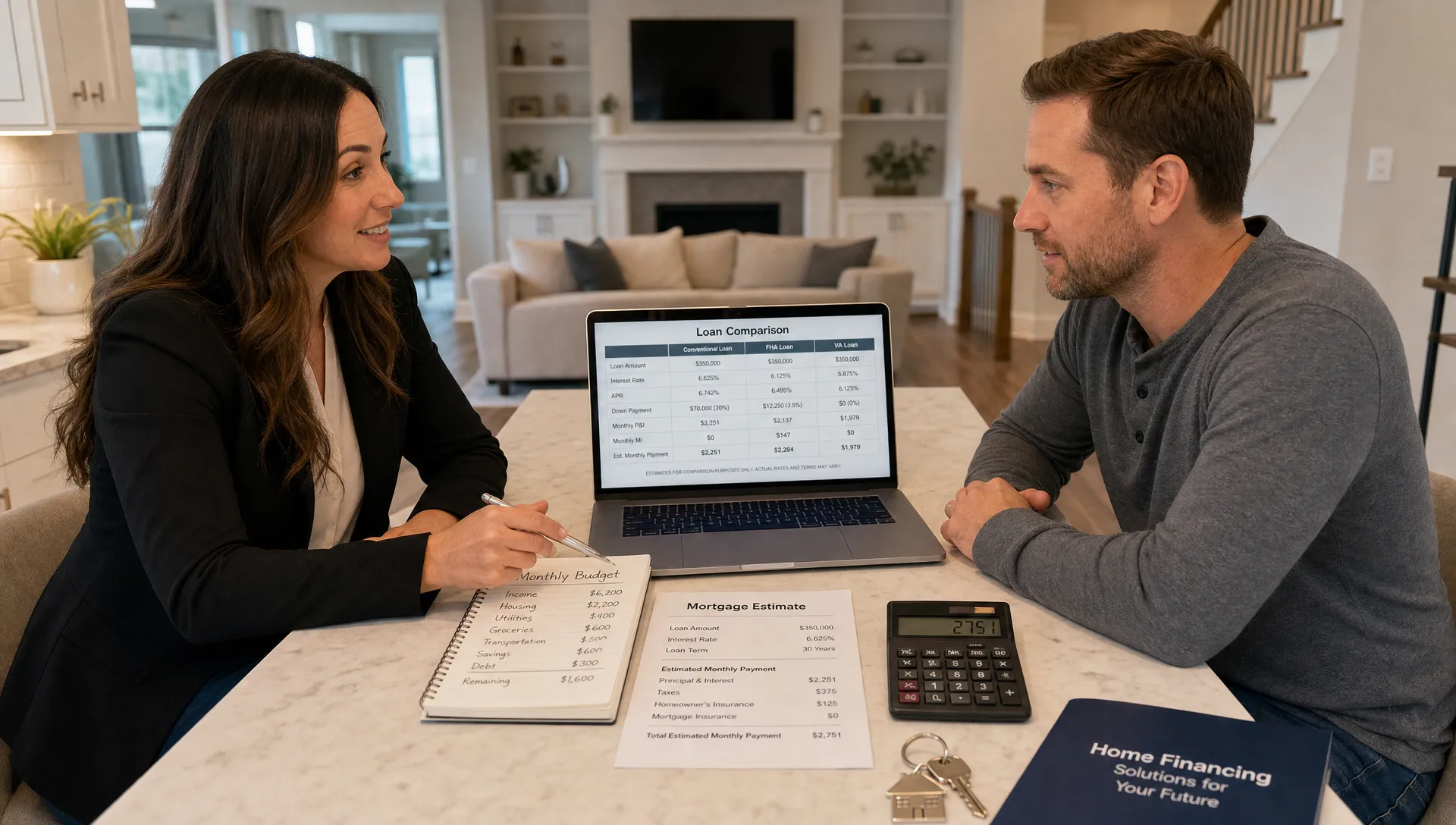
The key is to compare scenarios side by side. Ask your lender to show how each down payment level changes your rate, payment, mortgage insurance, cash to close, and estimated total cost over the period you expect to own the home.
How to decide on the right down payment size
Before choosing a down payment, answer these questions honestly:
- What monthly payment feels comfortable, not just approvable?
- How much cash will I have left after closing?
- Will a larger down payment meaningfully improve my rate or mortgage insurance cost?
- How long do I expect to keep the home or loan?
- Am I using a loan program where down payment changes mortgage insurance rules?
- Could gift funds, seller credits, or assistance programs improve my strategy?
- Would waiting to save more expose me to higher prices, higher rent, or missed opportunities?
This decision is not just about minimizing the loan amount. It is about building a home financing plan that fits your real life.
Frequently Asked Questions
Does a bigger down payment always mean a better home loan? Not always. A bigger down payment can lower your loan amount, reduce mortgage insurance, and improve your equity position. But if it drains your savings, the added risk may outweigh the benefit.
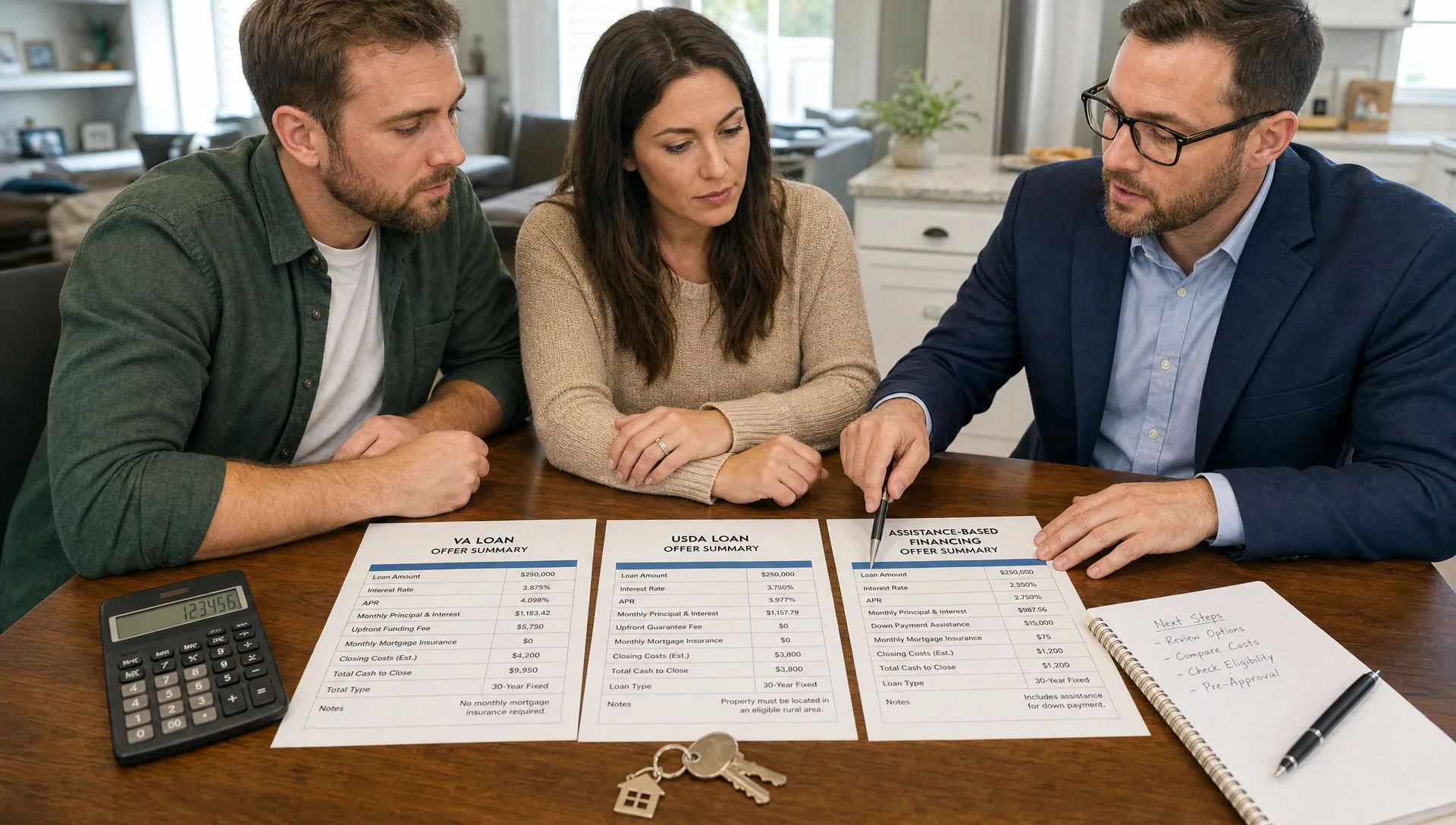
Can I buy a home without 20% down? Yes. Many buyers use conventional, FHA, VA, USDA, or assistance-based options with less than 20% down. The right choice depends on eligibility, credit, income, property type, and total cost.
Will my interest rate be lower if I put more down? It can be, but not automatically. Down payment affects LTV, which can influence pricing, but credit score, loan type, points, occupancy, and market conditions also matter.
Is it better to put 20% down or keep cash in savings? It depends on your full financial picture. Avoiding PMI may be valuable, but keeping emergency reserves can be just as important. Compare both scenarios before deciding.
Does down payment assistance change my home loan? It can. Assistance may reduce your upfront cash requirement, but some programs have income limits, occupancy rules, repayment terms, rate adjustments, or extra approval steps. Review the full structure before relying on assistance.
Compare down payment scenarios before you commit
Down payment size changes more than your upfront cost. It can affect your monthly payment, mortgage insurance, rate pricing, approval strength, offer competitiveness, and long-term flexibility.
New Era Lending helps buyers compare mortgage options with modern tools and personalized human guidance, so you can see how different down payment levels affect the full picture. Whether you are purchasing, refinancing, or evaluating equity options, our team can help you review loan choices, upload documents securely, and move through the process with clearer expectations.
If you are deciding how much to put down, start with a personalized comparison. Visit New Era Lending to explore your options and find a home loan strategy that fits your budget, timeline, and goals.