.jpg)
.jpg)





.jpg)


How to Use Equity When Refinancing Your Home
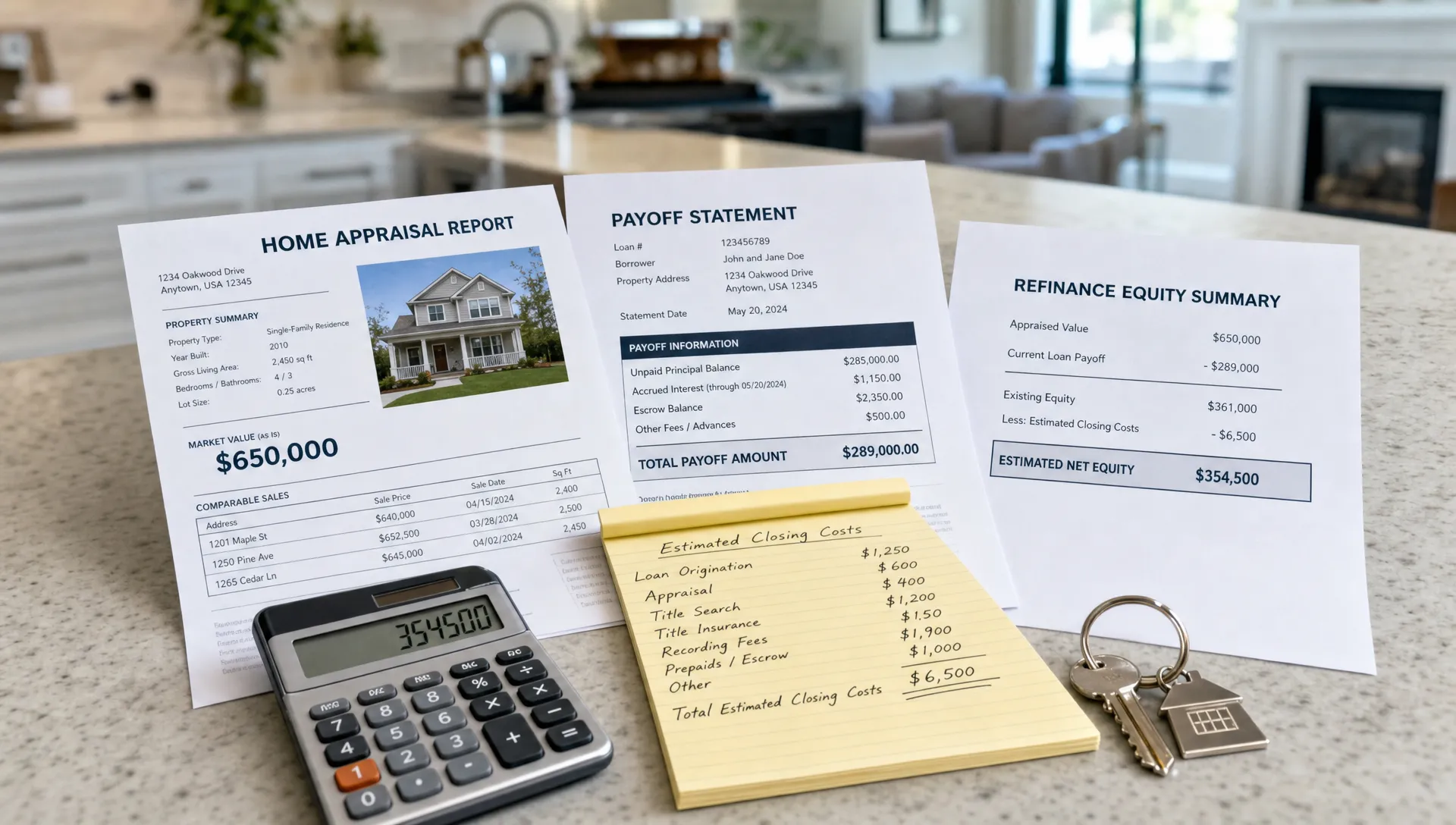
Your home equity can be more than a number on a statement. When used carefully, it can help you restructure debt, fund home improvements, remove mortgage insurance or access cash for major expenses. The key is knowing what a refinance can and cannot do before you trade your current mortgage for a new one.
Using equity when refinancing your home usually means one of two things. You either refinance into a new loan that takes advantage of your stronger equity position, or you refinance for more than you owe and receive the difference in cash. Both can be useful. Both can also raise your total borrowing cost if the new payment, rate, term or fees do not fit your long-term plan.
This guide walks through how refinance equity decisions work, how lenders estimate usable equity and how to decide whether tapping your equity is worth it.
What equity means during a refinance
Home equity is the difference between what your home is worth and what you still owe on loans secured by the property.
The basic formula is simple:
Home value minus mortgage payoff equals gross equity.
If your home is worth $450,000 and your current mortgage payoff is $280,000, you have about $170,000 in gross equity. That does not mean you can borrow all $170,000. Lenders usually require you to keep a certain amount of equity in the home after the refinance, based on loan program, property type, credit profile, occupancy and other factors.
A refinance replaces your current mortgage with a new one. If you are using equity, the new loan may be large enough to pay off the old mortgage, cover allowable closing costs and provide cash back at closing. If you are not taking cash out, your equity may still help you qualify for better terms because the lender sees a lower loan-to-value ratio.
If you want a deeper foundation before running numbers, New Era Lending has a helpful guide on how mortgage equity works and how lenders measure usable equity.
The main ways to use equity when refinancing
Equity can support different refinance goals. The right approach depends on whether you want cash, a better mortgage structure or both.
| Refinance goal | How equity helps | What to watch |
|---|---|---|
| Access cash | A cash-out refinance converts part of your equity into funds at closing | Your loan balance and payment may increase |
| Improve loan terms | More equity may lower risk for the lender | A lower rate is not guaranteed and depends on the full file |
| Remove mortgage insurance | Higher equity can bring your LTV below required thresholds | Rules vary by loan type and mortgage insurance structure |
| Pay for improvements | Equity can fund renovations that may improve livability or value | Projects should be budgeted carefully to avoid overborrowing |
| Consolidate debt | Cash-out funds may pay off higher-interest obligations | Unsecured debt becomes tied to your home if rolled into the mortgage |
A homeowner with a clear purpose often makes a better refinance decision than someone focused only on the maximum available cash. Before you apply, define what the money is for, how much you truly need and how the new payment will fit your monthly budget.
Cash-out refinance vs. rate-and-term refinance
The two most common refinance paths are cash-out and rate-and-term.
A cash-out refinance replaces your current mortgage with a larger new mortgage. After the old loan and approved costs are paid, you receive the remaining amount as cash. This may make sense if you need a lump sum and prefer one mortgage payment instead of adding a separate home equity loan or line of credit.
A rate-and-term refinance changes the interest rate, loan term or loan type without taking significant cash out. Your equity still matters because it affects your loan-to-value ratio, which can influence eligibility, pricing and mortgage insurance.
For example, a borrower who bought with a small down payment may refinance after several years of appreciation and principal reduction. If the new loan amount is low enough compared with the home’s value, the borrower may be able to reduce or remove certain mortgage insurance costs, depending on the loan type and guidelines.
Neither option is automatically better. Cash-out refinancing can be powerful when the money supports a practical goal, but it also restarts or extends debt in many cases. Rate-and-term refinancing can be attractive when it lowers total cost or improves stability, but closing costs still matter.
How to calculate how much equity you may be able to use
Start with an estimate of your home’s current market value. Online estimates can be a rough starting point, but lenders typically rely on an appraisal, automated valuation model or approved valuation process. Local comparable sales, condition, renovations and market demand can all affect the number.
If you are early in the process, you can use New Era Lending’s guide to estimate your home’s value before you refinance so your first conversation with a lender is more realistic.
Next, estimate your current payoff. Your mortgage balance shown online may not be the same as your exact payoff because interest accrues daily and the payoff may include other amounts. Your lender or servicer can provide the official figure.
Then apply the loan-to-value limit for the type of refinance you are considering. Many conventional cash-out refinances for a primary residence are capped around 80% loan-to-value, although actual eligibility depends on the full loan profile and program. Some government-backed options have different rules. Eligible veterans, service members and surviving spouses may have VA refinance options with different guidelines, so it is worth asking a knowledgeable loan professional before assuming one standard applies.
Here is a simplified example:
| Item | Example amount |
|---|---|
| Estimated home value | $450,000 |
| 80% of estimated value | $360,000 |
| Current mortgage payoff | $280,000 |
| Estimated room before costs | $80,000 |
In this example, a maximum new loan of $360,000 would pay off the $280,000 existing mortgage and leave up to $80,000 before closing costs, prepaid items and any program restrictions. The actual cash available could be lower.
This is why the headline number is not the same as spendable cash. Closing costs, escrow setup, property taxes, insurance, payoff timing and lender requirements all affect the final amount.
What lenders review before approving an equity refinance
Equity is important, but it is only one part of the approval process. Lenders also review your ability to repay and the overall risk of the loan.
Common factors include credit history, income stability, employment or self-employment documentation, debt-to-income ratio, cash reserves, property type, occupancy and the new loan amount. A strong equity position can help, but it usually will not overcome major issues like insufficient income documentation or an unsustainable debt load.
Your home’s appraised value can also change the outcome. If the valuation comes in lower than expected, the lender may reduce the cash-out amount, adjust pricing or require you to bring money to closing. If the value comes in higher, you may have more flexibility, but borrowing the maximum is still not always the best move.

Smart uses for refinance equity
A good use of equity should improve your financial position, your home or your quality of life without putting your budget under pressure.
Home improvements are one common reason to consider a cash-out refinance. Repairs, energy upgrades, accessibility changes and functional renovations can make the property more useful. Some improvements may also support resale value, though value increases are never guaranteed and should not be the only reason to borrow.
Debt consolidation is another common use. Mortgage rates are often lower than rates on credit cards or personal loans, but moving unsecured debt into your mortgage changes the risk. If you fail to make the new mortgage payment, your home is on the line. Debt consolidation works best when paired with a plan to avoid rebuilding the balances you just paid off.
Some homeowners use equity for major life expenses, such as education costs, medical bills or family needs. In these cases, compare the refinance against other financing options. A mortgage may offer a lower payment because it is spread over a longer period, but a longer repayment term can increase total interest paid.
You may also use equity indirectly by refinancing into a more stable loan structure. For instance, if you have an adjustable-rate mortgage and enough equity to qualify for a fixed-rate option, the goal may be payment predictability rather than cash.
When using equity may not be worth it
Refinancing is not free, and equity is not income. It is borrowed money secured by your home. That means there are situations where waiting, borrowing less or using a different product may be smarter.
Be cautious if the new payment would leave little room for savings, emergencies or normal household expenses. Also take care if you plan to sell soon. If you will move before you recover the closing costs or benefit from the refinance, the transaction may not have enough time to pay off.
Using equity to cover recurring expenses can be a warning sign. A cash-out refinance may provide temporary breathing room, but it does not fix a long-term income or spending gap. The better move may be a smaller loan, budget restructuring or a different debt strategy.
You should also compare a cash-out refinance with a home equity loan or HELOC. A refinance changes your entire first mortgage. A second-lien product may leave your existing mortgage untouched, which can matter if your current rate is attractive. New Era Lending explains this budgeting angle in more depth in its guide to accessing equity without hurting your budget.
How to compare offers when refinancing with equity
Do not compare refinance offers by interest rate alone. The rate matters, but so do closing costs, discount points, loan term, cash received, monthly payment and total interest over time.
The Consumer Financial Protection Bureau explains that the Loan Estimate is designed to help borrowers compare key loan terms and closing costs. After you apply, review this document carefully and ask questions about anything that is unclear.
Pay special attention to whether costs are paid out of pocket, deducted from your cash-out proceeds or rolled into the new loan. Rolling costs into the loan can reduce the amount you need at closing, but it also means you may pay interest on those costs over time.
Here are the questions to answer before choosing an offer:
- What is my new monthly payment compared with my current payment?
- How much cash will I actually receive after all costs and payoffs?
- What is the new loan term, and am I extending my payoff timeline?
- How much will I pay in closing costs and discount points?
- How long do I expect to stay in the home?
- What happens to my emergency savings after the refinance?
A transparent lender should be able to walk through these answers in plain language, not just quote a rate.
A practical step-by-step plan
A refinance works best when you prepare before you apply. Use this sequence to stay grounded in the numbers.
- Define your goal: Decide whether you want cash, a lower payment, a more stable loan, mortgage insurance relief or a combination of benefits.
- Estimate home value and payoff: Use recent comparable sales and your mortgage payoff information to estimate gross equity.
- Set a borrowing limit: Decide how much cash you need rather than asking only how much you can get.
- Check your budget: Stress-test the new payment against your income, savings goals and recurring expenses.
- Compare refinance options: Review rate, term, fees, cash received and total cost side by side.
- Ask about timing: Rate locks, appraisal scheduling, document collection and closing timelines can affect the final experience.
This process helps you treat equity as a planning tool instead of an open checkbook.
Frequently Asked Questions
Can I use all of my equity when refinancing? Usually no. Lenders generally require you to keep a certain amount of equity in the property. The required amount depends on the loan program, occupancy, property type, credit profile and other factors.
Does a cash-out refinance increase my mortgage payment? It can. Your payment may increase if the new loan balance is higher, the rate is higher or the term changes. In some cases, a longer term can lower the monthly payment, but it may increase total interest over the life of the loan.
Is using equity to pay off credit card debt a good idea? It can reduce monthly payments or interest costs, but it also converts unsecured debt into debt secured by your home. It works best when you have a plan to avoid taking on new high-interest balances.
How much equity do I need to refinance? The answer depends on the refinance type and loan program. Rate-and-term refinances may allow different LTV levels than cash-out refinances. A lender can calculate this using your estimated value, payoff, credit, income and debt profile.
Will I need an appraisal to use equity in a refinance? Often, yes, but not always. Some refinance programs may use alternative valuation methods or appraisal waivers when eligible. Your lender can explain what applies to your loan scenario.
Refinance with a clearer equity strategy
Using equity when refinancing your home can be a smart move when the numbers, timing and purpose all work together. It can also become expensive if you focus only on the cash available and ignore the new payment, closing costs or repayment timeline.
New Era Lending combines smart mortgage technology with personalized human guidance for homeowners exploring refinance and equity access options. If you want to compare scenarios, upload documents securely and understand your choices with transparent rates and terms, you can start with New Era Lending and build a refinance plan that fits your goals.