.jpg)
.jpg)





.jpg)


Home Equity Loan Payment Terms That Change Your Monthly Cost

A lower monthly payment does not always mean a cheaper loan. The home equity loan payment terms in your offer determine how quickly you repay the balance, how much interest you owe and whether the payment stays predictable. Two loans for the same amount can create very different demands on your household budget.
Before choosing an offer, compare the repayment length, interest rate, financed fees and payment structure together. Then check what happens if you pay extra, sell the home or need to keep the loan longer than expected.
Keep the equity loan separate from your first mortgage
A home equity loan generally provides a lump sum secured by your home. If you already have a mortgage, the equity loan typically adds a separate payment rather than replacing the existing one.
For example, a $1,800 first-mortgage payment plus a $478 equity-loan payment creates a combined monthly obligation of $2,278. That figure still needs to account for property taxes and homeowners insurance if they are not included in the first payment, plus any HOA dues.
The Consumer Financial Protection Bureau explains that a home equity loan uses your home as collateral. Failure to repay can put the property at risk, so approval alone is not proof that a payment fits comfortably.
If you have not settled on a borrowing amount, first understand how equity borrowing limits and costs are calculated.
Compare home equity loan payment terms by repayment length
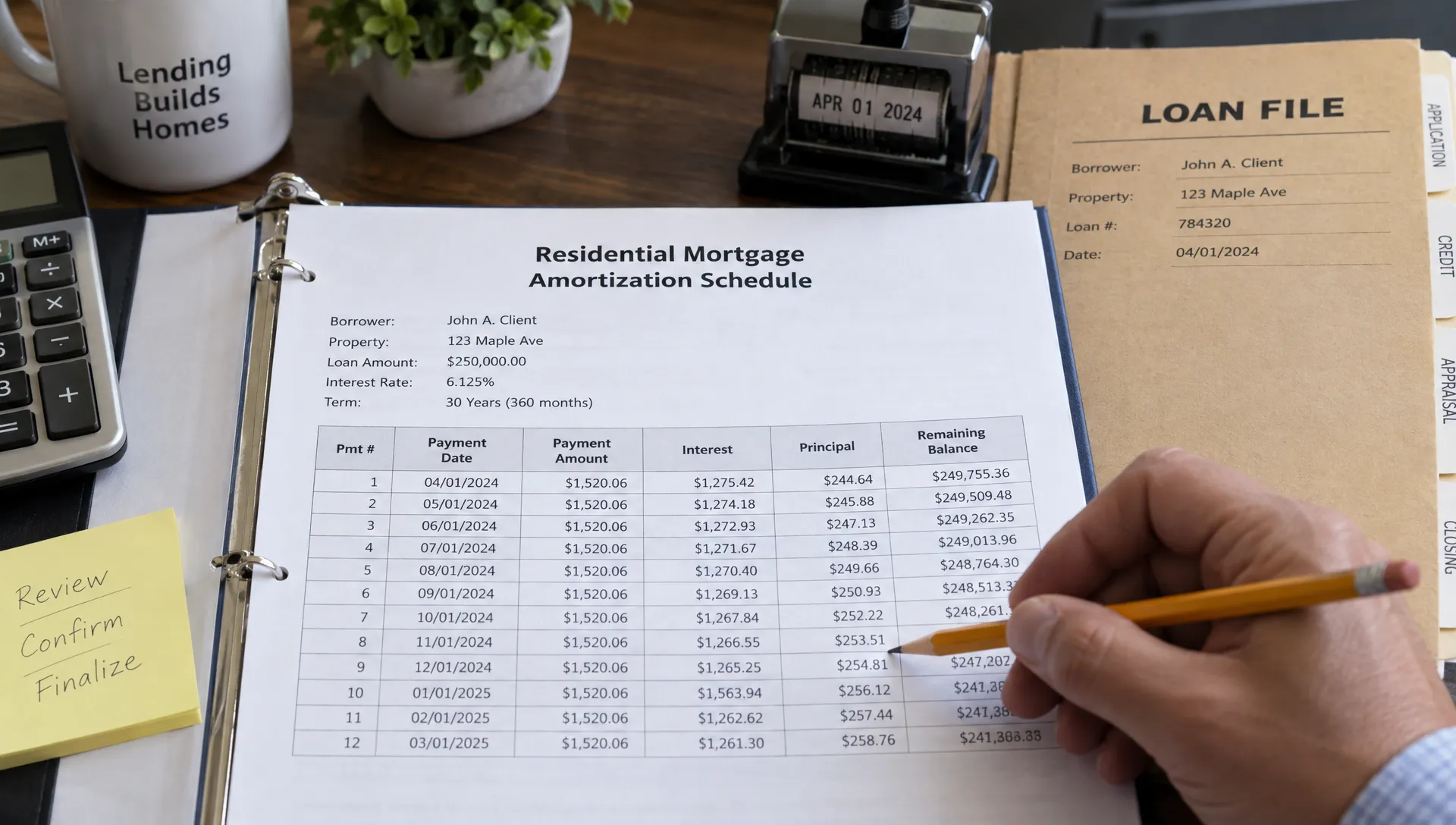
The repayment term spreads your balance across a set number of months. A shorter term usually creates a higher required payment but less total interest. A longer term usually does the reverse.
Consider a $50,000 loan at a fixed 8% interest rate, with equal monthly principal-and-interest payments and no fees financed into the balance:
| Repayment term | Monthly payment | Total interest over the term |
|---|---|---|
| 5 years | $1,014 | $10,829 |
| 10 years | $607 | $22,797 |
| 15 years | $478 | $36,009 |
| 20 years | $418 | $50,373 |
These are illustrative calculations, not advertised rates or loan offers. Payments and total interest are rounded independently, and interest totals assume every scheduled payment is made without extra principal payments.
Moving from 10 years to 20 years reduces the payment by about $189 per month, but adds roughly $27,576 in interest. The longer term provides breathing room at a substantial lifetime cost.
When comparing home equity loan payment terms, ask for both the required monthly payment and total scheduled interest. Actual offers may also carry different rates for different repayment lengths, so your comparison may not look exactly like this table.
Separate the interest rate from APR
Most traditional home equity loans have fixed interest rates, but you should confirm that feature in the actual offer. With a fixed-rate, fully amortizing loan, scheduled principal-and-interest payments generally remain the same throughout the term.
The interest rate helps determine that payment. Annual percentage rate, or APR, reflects the interest rate plus certain finance charges, making it useful when comparing borrowing costs. APR is not the rate you simply substitute into a monthly payment calculation.
For a meaningful comparison, use offers with the same loan amount and repayment length. A lower interest rate paired with substantial upfront charges may not be the better choice, especially if you expect to repay the loan soon.
If an offer has an adjustable rate, ask how often it can change, which index and margin apply and what rate caps limit increases. Request a payment illustration at a higher permitted rate rather than budgeting only around the initial payment.
The home equity loan payment terms should make clear whether you are choosing a stable payment or accepting possible changes. Do not infer payment stability from the first month's quote alone.
Check whether closing costs increase the balance
Fees can affect your cash needs at closing, your monthly payment or both. The distinction is whether you pay them separately, finance them into the loan or accept a different rate in exchange for lender-paid costs.
Suppose you need $50,000 and finance another $3,000 in closing costs. At 8% over 15 years, the payment on a $53,000 balance is approximately $507, compared with approximately $478 on $50,000. Financing the fees adds about $29 per month.
That difference may look small, but the financed costs also accrue interest. You are repaying more than the original $3,000 if you keep the loan for the full term.
Also distinguish the amount borrowed from the cash you actually receive. If fees are deducted from a $50,000 loan, you may receive less than $50,000 while still owing the full balance. Request a written breakdown of gross loan amount, deductions and net proceeds.
Review home equity loan payment terms alongside the fee disclosure, not as a separate decision. A quote with a slightly lower payment may simply deliver less usable cash or require more money upfront.
Confirm that regular payments repay the entire loan
A fully amortizing loan is designed to reach a zero balance at the end of its scheduled term. Each regular payment includes interest and principal, although more of the early payments goes toward interest.
Not every payment structure works that way. If an offer includes interest-only payments, those payments generally do not reduce principal during the interest-only period. A balloon structure leaves a larger balance due at a specified date. These are not features you should assume a standard home equity loan has, but they deserve attention if they appear in your documents.
Ask the lender a direct question: “If I make only the scheduled payments, will the balance be zero at maturity?” If the answer is no, request the amount due and the exact due date in writing.
A HELOC is a different product and may have separate draw and repayment periods. The distinction between an equity loan and a HELOC matters because an initial HELOC payment may not represent its later repayment obligation.
Understanding home equity loan payment terms means checking the final payment as carefully as the first. A low starting payment is not enough if a future balance would require refinancing you cannot count on obtaining.

Learn what extra payments can and cannot change
Extra principal payments can reduce interest and shorten repayment on an amortizing loan. They generally do not automatically reduce the required monthly payment.
For instance, if your scheduled payment is $478 and you send $578, the additional $100 can help retire the balance sooner when properly applied to principal. Your next required payment will ordinarily remain $478 unless the lender allows a formal payment recalculation or another contractual change.
Ask how to designate extra money as principal and confirm its treatment on the next statement. You want the balance reduced, not merely a future due date advanced.
Before planning an early payoff, review any prepayment penalty, minimum-interest provision or requirement to repay waived closing costs. Their applicability depends on the agreement and relevant rules. If you expect to sell soon, request a payoff illustration for that timeline.
Flexible home equity loan payment terms can support a longer required term with voluntary extra payments, but this strategy only saves interest if you consistently make those payments. Compare the actual rates and fees before assuming it is better than selecting a shorter term upfront.
Test the payment against today's income
A payment that works only after a raise, bonus or refinance is fragile. Build your affordability estimate around dependable income and current obligations, then leave room for irregular expenses.
Include the first mortgage, equity loan, vehicle payments, other debts and essential living costs. Home repairs and annual bills also need a place in the budget, even when they do not arrive monthly. Test whether you could still pay if overtime disappeared or a major repair interrupted your savings plan.
Future plans deserve their own expense estimates. For a household preparing for a career change, certification study guides and practice questions from MindMesh Academy can help identify exam-preparation needs. Budget for training and exam expenses separately, and do not treat a hoped-for salary increase as money already available for repayment.
Choose home equity loan payment terms that fit your existing cash flow rather than the most optimistic version of your future budget. If the payment leaves no room for emergencies, reducing the borrowing amount may be more useful than extending repayment again.
Compare written offers using the same assumptions
Before selecting a loan, request a side-by-side breakdown based on the same amount of usable cash. Otherwise, one offer may appear cheaper because it funds fewer project costs or deducts more fees from the proceeds.
Use this checklist to organize the comparison:
- Funding: Total loan balance, net proceeds and cash required at closing.
- Scheduled repayment: Interest rate, APR, term length and monthly principal-and-interest payment.
- Long-term cost: Total scheduled interest and any balance due at maturity.
- Early exit: Prepayment provisions, payoff charges and possible repayment of waived fees.
- Payment administration: First due date, late-payment rules and any conditions attached to an automatic-payment rate discount.
For most closed-end home equity loans secured by real property, a Loan Estimate provides standardized cost information. Ask the lender to explain any differences between that disclosure, an informal quote and the final closing documents.
The most useful comparison of home equity loan payment terms shows three things together: what you receive, what you must pay each month and what you owe when the loan ends. Keep your expected ownership timeline in view, since a loan you repay in three years should also be evaluated on its three-year cost.
Frequently asked questions
What repayment terms are available for a home equity loan? Options vary by lender and program. You may encounter terms such as 5, 10, 15 or 20 years, but availability and pricing must be confirmed with the lender.
Can a fixed-rate home equity loan payment change? The scheduled principal-and-interest payment generally stays level on a fully amortizing fixed-rate loan. Late fees or contractual changes can affect what is due, while taxes and insurance can change your broader housing budget.
Does paying extra lower next month's payment? Usually not. Extra principal generally reduces the balance and repayment time rather than the required monthly installment. Ask whether payment recalculation is available and what conditions apply.
Which home equity loan payment terms produce the lowest monthly cost? A longer repayment term generally lowers the required payment when the balance and rate are unchanged. It usually increases total interest, so the lowest payment is not necessarily the least expensive loan.
Get a payment comparison that fits your plans
Before committing, decide how much cash you need, what monthly payment you can sustain and when you expect to repay the debt. Those answers make a lender's quote easier to evaluate.
New Era Lending combines technology-driven mortgage tools with personalized human guidance. Discuss the equity-access options available for your situation and request a clear explanation of the payment, fees and repayment obligations before choosing a loan.