
.jpg)
.jpg)





.jpg)


How Mortgage Payments Are Built and Why They Change
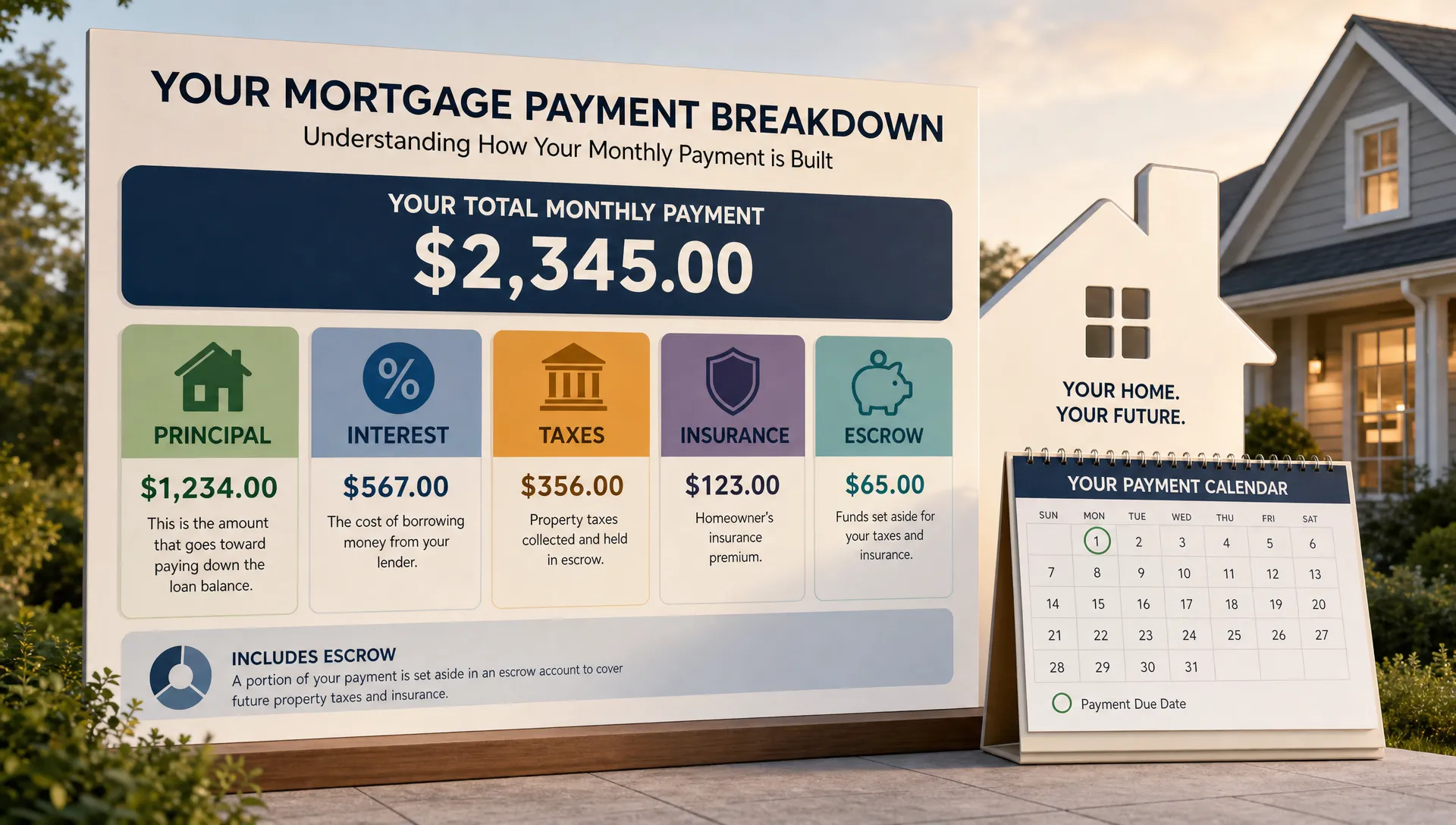
A mortgage payment can feel like one number, but it is really a bundle of several costs working together. Some parts are locked in by your loan terms. Others are estimates that can move as taxes, insurance premiums, or loan features change.
That is why two buyers with the same home price can have very different monthly payments, and why a homeowner with a fixed-rate mortgage may still see the amount due go up or down over time.
Understanding how mortgage payments are built helps you compare loan options more clearly, plan your budget with fewer surprises, and know which changes are normal versus which ones deserve a closer look.
The Core Parts of a Mortgage Payment
Most monthly mortgage payments are made from a few common pieces. You may hear the term PITI, which stands for principal, interest, taxes, and insurance. Depending on your loan type and property, your payment may also include mortgage insurance, HOA dues, or other required costs.
The Consumer Financial Protection Bureau explains that loan costs can vary based on the loan structure, interest rate, taxes, insurance, and other terms. In practice, your full housing payment is usually broader than just the loan repayment itself.
Principal: the money you borrowed
Principal is the portion of your payment that reduces the actual loan balance. If you borrow $320,000, the principal is the amount you are paying back over time.
Early in a standard mortgage, a smaller share of each payment goes toward principal because interest is calculated on a larger remaining balance. As the balance goes down, more of the same scheduled payment typically goes toward principal. This process is called amortization.
Principal is the part of your payment that directly builds equity, assuming home value stays the same or increases. Extra principal payments can reduce your balance faster, but you should always confirm how your servicer applies extra payments and whether your loan has any restrictions.
Interest: the cost of borrowing
Interest is what you pay the lender for borrowing the money. Your interest rate, loan balance, and loan term all shape how much interest is included in each payment.
A fixed-rate mortgage keeps the interest rate the same for the life of the loan, so the principal and interest portion generally stays stable. An adjustable-rate mortgage, often called an ARM, can change after an initial fixed period, which can raise or lower the principal and interest payment.
Rate pricing is influenced by many factors, including the broader market, your credit profile, loan type, occupancy, down payment, and points or credits. If you want a deeper explanation of that side of the equation, New Era Lending breaks down how home mortgage loan rates are priced in more detail.
Property taxes: the local cost that can move
Property taxes are charged by local governments and are usually based on the assessed value of your home and local tax rates. Many homeowners pay taxes through an escrow account, meaning the mortgage servicer collects a portion each month and pays the tax bill when due.
This part of your payment can change even if your loan rate never changes. If your home is reassessed, local tax rates change, exemptions expire, or a new tax levy is approved, your monthly escrow collection may be adjusted.
For buyers, it is important to remember that the seller’s current tax bill may not reflect what you will pay after purchase. In some areas, a sale can trigger a reassessment. That can make your future tax cost meaningfully different from the amount shown on a listing.
Homeowners insurance: required protection for the property
Homeowners insurance helps protect the property against covered risks. Lenders typically require it because the home is collateral for the loan.
Insurance premiums can change year to year. In many markets, homeowners have seen insurance costs affected by rebuilding costs, weather risk, claim trends, deductibles, and changes in carrier pricing. If your premium rises and your policy is escrowed, your mortgage payment may rise after your annual escrow analysis.
Your coverage choices matter too. A lower deductible may increase your premium, while bundling policies or shopping carriers may reduce it. Still, you should be careful not to reduce coverage below what your lender requires or below what would reasonably protect you.
Mortgage insurance: sometimes required, sometimes temporary
Mortgage insurance protects the lender if the borrower defaults. It is commonly required when the down payment is below a certain threshold, though rules differ by loan program.
For conventional loans, private mortgage insurance may be removable once certain equity requirements are met, subject to loan rules and servicer procedures. For FHA loans, mortgage insurance rules depend on the loan terms, down payment, and program requirements. VA loans do not have monthly mortgage insurance, although they may include a funding fee in many cases.
Because mortgage insurance rules vary, it is worth asking early how long it may last, what it costs, and what options exist to remove or avoid it if your loan allows.
Why the First Payment Is Not Always the Best Budget Number
The payment estimate you see early in the process is built from assumptions. Some of those assumptions may change before closing.
Your estimated payment may shift if the final loan amount changes, the rate is not locked yet, homeowners insurance comes in higher than expected, property tax estimates are updated, or you choose a different loan structure. Discount points, lender credits, closing cost decisions, and seller concessions can also affect the cash you bring to closing or the long-term payment math.
That does not mean the estimate was wrong. It means the payment is being refined as more accurate details become available. A good mortgage process should make those changes visible and understandable instead of leaving you to guess.
If you are still in the planning stage, it can help to compare different scenarios before you commit. New Era Lending’s guide on how to estimate your monthly mortgage payment walks through the major components that belong in a realistic estimate.
Fixed Payment Does Not Always Mean Total Payment Never Changes
One of the most common misunderstandings is the idea that a fixed-rate mortgage means the full monthly amount will never move. The principal and interest portion is generally fixed, but the escrow portion can still change.
If your mortgage payment includes property taxes and homeowners insurance, your servicer typically reviews the escrow account once a year. This is called an escrow analysis. The servicer compares what it collected with what it had to pay, then adjusts your monthly amount to cover expected bills for the next cycle.
If the escrow account has a shortage, your payment may increase. Sometimes you can pay the shortage in one lump sum, but if you do not, the servicer may spread it across future payments. If the escrow account has a surplus, you may receive a refund or a lower escrow collection, depending on the amount and applicable rules.
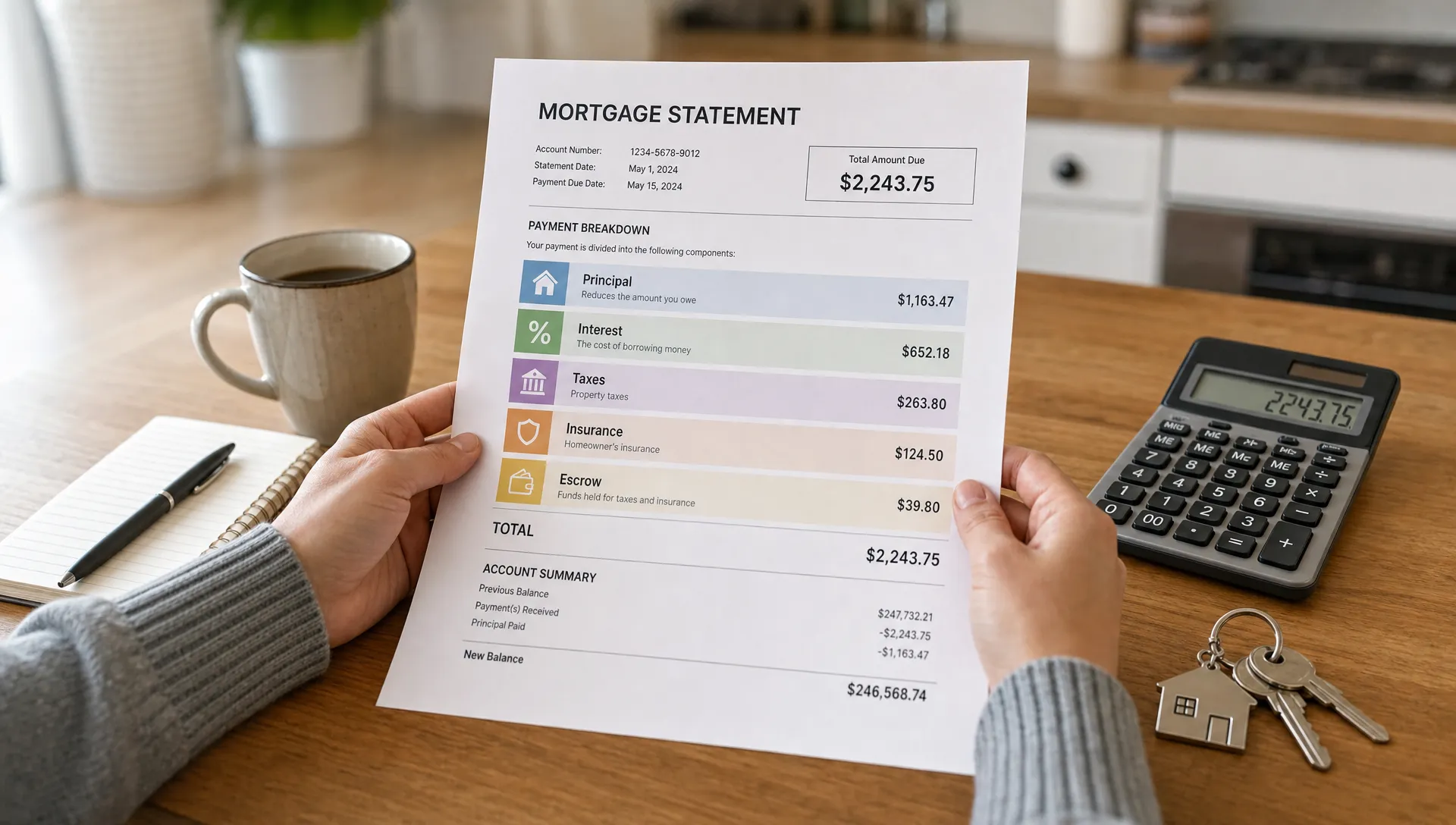
This is why your monthly amount can rise even when your interest rate did not change. It is also why escrow notices are worth reading carefully instead of filing away unopened.
The Loan Structure Can Raise or Lower the Payment
A mortgage is not one standard product. Different loan structures can create different payment patterns, even for the same purchase price.
A 30-year fixed mortgage usually has a lower monthly principal and interest payment than a 15-year fixed mortgage, but the longer term often means more total interest over time. A 15-year loan usually builds equity faster, but the monthly payment is higher.
An ARM may start with a lower rate than a comparable fixed-rate option, but the payment can change after the initial fixed period. A temporary buydown can reduce payments at the start, but the payment increases later based on the buydown schedule. Paying discount points may reduce the interest rate, while accepting lender credits may lower upfront costs but could come with a higher rate.
These are not automatically good or bad choices. They are tradeoffs. The right structure depends on your budget, how long you expect to keep the loan, how much payment flexibility you need, and how comfortable you are with future changes. For a closer look at these tradeoffs, see New Era Lending’s article on loan payment terms that can raise or lower costs.
Other Costs That Can Affect Your Monthly Housing Budget
Some housing costs may not be included in the mortgage statement, but they still affect affordability.
HOA dues are a common example. If you buy a condo, townhome, or property in a planned community, you may owe monthly or periodic homeowners association dues. These are typically paid separately from the mortgage, but lenders consider them when qualifying you because they affect your total housing obligation.
Utilities, maintenance, repairs, and special assessments also matter. They may not be part of the mortgage payment, but they are part of the real cost of owning the home. A payment that looks manageable on paper can feel tight if the broader ownership budget is ignored.
This is especially important for first-time buyers. Renting often consolidates many costs into one monthly amount. Ownership separates them. A realistic budget should account for both the mortgage payment and the expenses that come with maintaining the property.
Why Mortgage Payments Change After You Close
After closing, changes usually come from a few main sources. Some are predictable, while others depend on market conditions, local decisions, or personal choices.
Common reasons your mortgage payment can change include:
- Property taxes increase or decrease after reassessment or local tax changes
- Homeowners insurance premiums change at renewal
- Escrow shortages or surpluses are spread into future payments
- Mortgage insurance is added, removed, recalculated, or adjusted under program rules
- An adjustable-rate mortgage reaches its adjustment period
- A temporary buydown period ends and the scheduled payment steps up
- You refinance into a new loan with different terms
- You modify your loan or enter a repayment plan after hardship
The key is to identify which part changed. If principal and interest changed on a fixed-rate loan, that deserves a closer review. If escrow changed, the explanation is often found in the annual escrow analysis, property tax bill, or insurance renewal documents.
How to Read a Mortgage Payment Change Notice
When your payment changes, start by separating the loan portion from the escrow portion. Your statement or notice should show whether the change came from principal and interest, taxes, insurance, mortgage insurance, or escrow shortage repayment.
Look for the effective date, the old payment, the new payment, and the reason for the adjustment. If taxes changed, compare the servicer’s numbers with the tax authority’s bill. If insurance changed, review your renewal premium and coverage. If there is an escrow shortage, check whether the shortage is from a higher bill, a prior undercollection, or both.
It is also smart to confirm that your exemptions are in place if your state or county offers them. Homestead, senior, veteran, disability, or other exemptions may reduce property taxes for eligible homeowners, but they often require an application and have deadlines.
If something does not add up, contact your servicer promptly. Keep copies of tax bills, insurance declarations pages, escrow statements, and payment change notices so you can compare numbers accurately.
How to Keep Your Payment More Predictable
You cannot control every cost, but you can reduce surprises by planning around the parts most likely to move.
Before buying, ask for realistic property tax estimates, not just the seller’s current tax number. Get an insurance quote early, especially in areas where premiums can vary widely. Ask whether mortgage insurance applies and how it works for your loan type. Review whether you are choosing a fixed rate, ARM, buydown, or other payment structure.
After closing, review your escrow analysis every year. Shop insurance periodically, maintain appropriate coverage, and keep an emergency fund for home repairs or cost increases. If your financial goals change, refinancing or other mortgage solutions may be worth discussing, but only after comparing the costs, savings, and break-even point.
The goal is not to make the payment perfectly unchanging. The goal is to understand what can change, prepare for it, and choose loan terms that fit your life.
Frequently Asked Questions
What is included in a typical mortgage payment? A typical mortgage payment includes principal and interest. Many payments also include escrowed property taxes and homeowners insurance. Depending on the loan and property, mortgage insurance and HOA dues may also affect the monthly housing cost.
Can my mortgage payment change if I have a fixed-rate loan? Yes. With a fixed-rate loan, the principal and interest portion usually stays the same, but taxes, homeowners insurance, mortgage insurance, or escrow shortages can change the total amount due.
Why did my escrow payment increase? Escrow usually increases because your property taxes, homeowners insurance, or both went up. It can also increase if your escrow account had a shortage from the prior year that must be repaid.
Does paying extra principal lower my next monthly payment? Usually, extra principal reduces your loan balance and total interest over time, but it does not automatically lower the required monthly payment unless your loan is recast, refinanced, or otherwise adjusted under lender or servicer rules.
How can I compare mortgage solutions payment options more clearly? Compare the full payment, not just principal and interest. Look at taxes, insurance, mortgage insurance, loan term, rate type, points, credits, and future adjustment risks so you understand both the starting payment and what could change later.
A Clearer Payment Starts With a Clearer Mortgage Process
Your mortgage payment is more than a number. It is the result of your loan amount, rate, term, taxes, insurance, program rules, and the choices you make along the way.
New Era Lending helps homebuyers and homeowners navigate those decisions with smart technology, secure digital tools, and personalized human guidance. Whether you are purchasing, refinancing, or exploring equity access, the right support can help you understand your payment before you commit.
To explore modern mortgage solutions built around clarity and confidence, visit New Era Lending.