.jpg)
.jpg)





.jpg)


Home Equity Loans for a Down Payment: Risks to Know
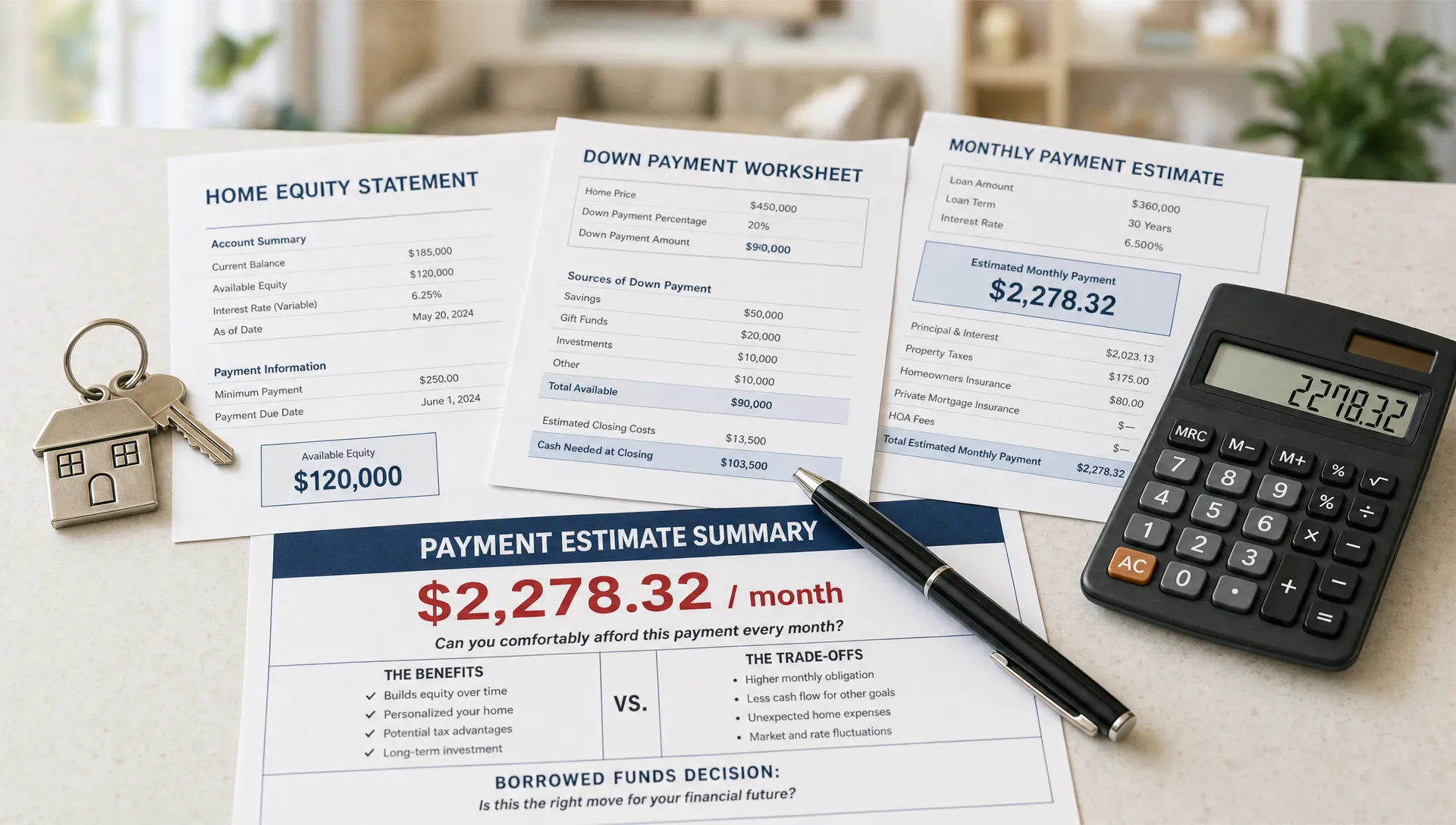
Using a home equity loan for a down payment can look like a smart shortcut. If you already own a property with substantial equity, why wait years to save more cash when you can unlock money that is already tied up in real estate?
That logic can work in the right situation. It can also create serious financial pressure if the numbers are too tight, your current home does not sell or rent as expected, or the new mortgage approval becomes harder because of the added debt.
Before using a home equity loan as a down payment, it helps to separate the strategy from the risk. You are not turning equity into free cash. You are replacing one kind of wealth, ownership in your current home, with a new secured debt that must be repaid whether your next purchase goes smoothly or not.
What using a home equity loan for a down payment really means
A home equity loan lets you borrow against the equity in a property you already own. The Consumer Financial Protection Bureau explains that a home equity loan is a loan secured by your home, usually paid out as a lump sum and repaid over time with interest.
When you use those proceeds for a down payment, the money typically comes from your existing home. The new home purchase then has its own mortgage. If you keep both properties, you may have three housing-related obligations at once: your current first mortgage, the new home equity loan and the mortgage on the property you are buying.
That structure is different from using savings, gift funds or proceeds from selling your current home. It can preserve cash and help you move faster, but it also increases leverage. In plain terms, you owe more money across your real estate portfolio.
Some buyers consider this approach when they want to:
- Buy a new primary home before selling the current one
- Purchase a second home or vacation property
- Buy an investment property while keeping their current home
- Make a larger down payment to reduce mortgage insurance or improve pricing
- Avoid selling investments or draining emergency savings
The strategy is not automatically good or bad. The key question is whether the total debt, timing and fallback plan still work if your best-case scenario does not happen.
The biggest risk: your down payment becomes another monthly debt
A larger down payment can improve parts of a mortgage application. It may lower the loan-to-value ratio, reduce the monthly payment on the new mortgage or help you avoid certain mortgage insurance costs. If you want a refresher on how the down payment affects pricing and monthly obligations, New Era Lending explains it in more detail in this guide to how down payment size changes your home loan.
But when the down payment is borrowed, lenders do not view it the same way as cash you saved. The monthly payment on the home equity loan usually must be counted in your debt-to-income ratio. That can reduce how much you qualify to borrow on the new mortgage, even if the equity loan gives you more money upfront.
For example, a buyer might borrow from home equity to bring more cash to closing. On paper, that larger down payment lowers the new mortgage amount. In underwriting, however, the new equity loan payment may offset part or all of that benefit because it adds another required payment. The real test is not just how much you can put down. It is whether you can safely carry every payment after closing.
Risk 1: you could be tying two homes to one decision
A home equity loan is secured by the property you already own. If you cannot make the payments, that property is at risk, even if the money was used to buy another home.
This is one of the most overlooked risks. Borrowers often focus on the new purchase and think of the equity loan as a funding tool. Legally and financially, it is still debt against the current home. A missed payment problem on the equity loan can affect the home you already have, not just the home you want to buy.
The risk grows if you plan to sell your current home shortly after buying the next one. A delayed sale, price reduction, inspection issue or buyer financing problem can stretch the period during which you carry both properties. If you planned for two months of overlap and the sale takes six months, the extra payments can quickly drain reserves.
Risk 2: your debt-to-income ratio may limit approval
Mortgage approval is not based only on assets. Lenders also look at your recurring monthly obligations compared with qualifying income. A new home equity loan payment can change that equation.
The effect depends on your full profile, including income, credit, property taxes, insurance, HOA dues, current mortgage payment and the proposed new mortgage. If you will rent your existing home, lenders may also evaluate whether rental income can be counted and what documentation is required.
This is why the order of decisions matters. Getting a home equity loan first and shopping for the next house later may feel practical, but it can narrow your mortgage options if the new debt pushes your ratios too high. A safer approach is to review both the equity loan and the purchase mortgage together before committing to either.
Risk 3: the cost of borrowing may be higher than expected
Home equity loans often carry higher rates than first mortgages because they are usually second liens. If your existing home already has a first mortgage, the home equity lender is behind that first mortgage if something goes wrong. That added risk can be reflected in pricing.
Closing costs can also matter. Depending on the lender and loan structure, you may face origination charges, appraisal fees, title fees or recording costs. A low advertised rate does not always tell the full story, especially if the loan is short term and upfront costs are spread over only a few years.
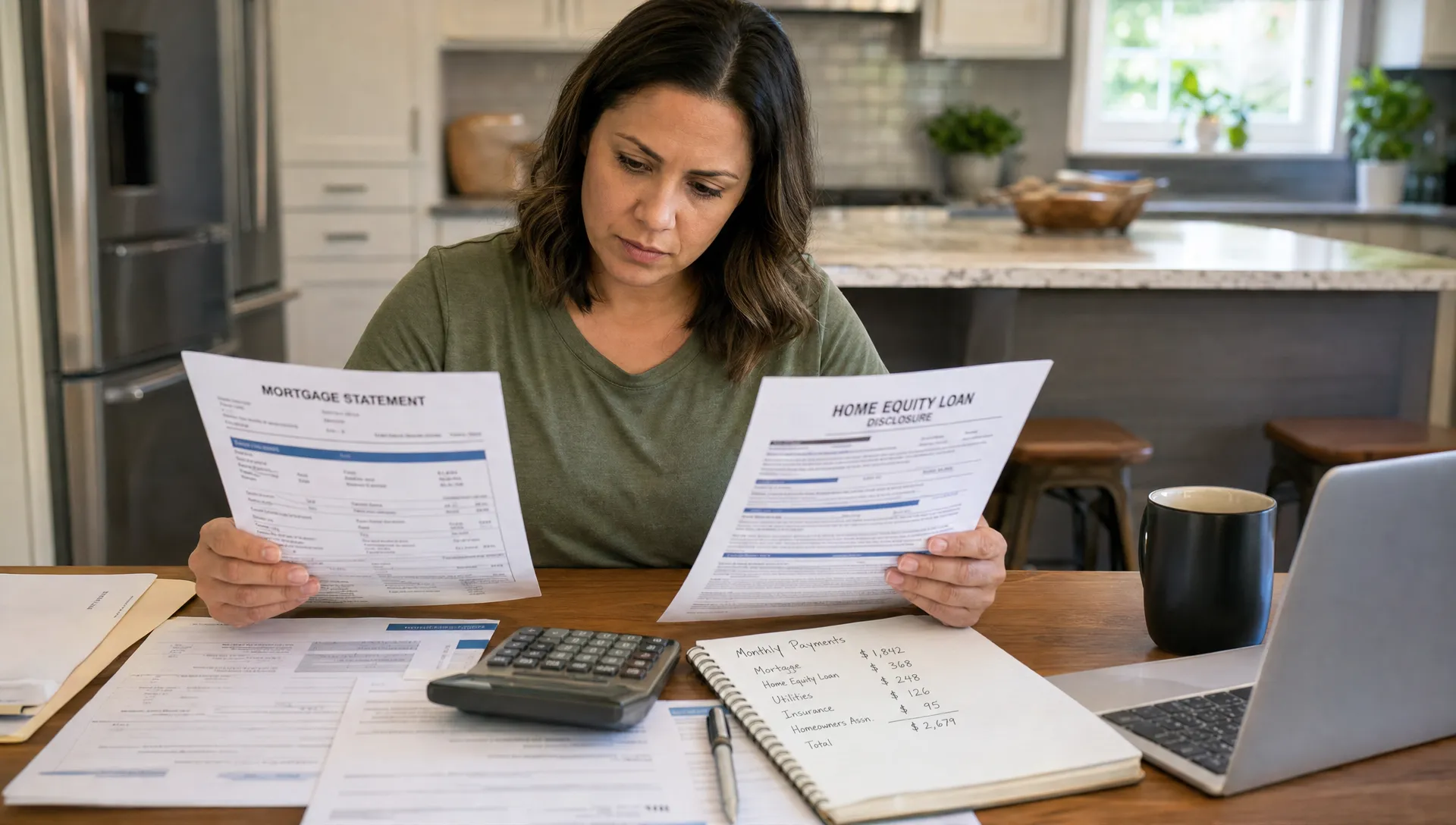
The monthly payment should be viewed alongside the new mortgage payment. A down payment strategy that saves $250 per month on the new mortgage but adds $600 per month on an equity loan may not improve cash flow. It may only shift the cost from one place to another.
If you are deciding between a lump-sum equity loan and a line of credit, it can help to compare a home equity loan with a HELOC before choosing how to access funds.
Risk 4: home values can move against you
Using equity works best when property values are stable or rising. If values fall, your cushion can shrink. That matters because equity protects you if you need to sell, refinance or adjust plans later.
A buyer who taps a large portion of current home equity may have less flexibility if the market softens. Selling the existing home could produce less cash than expected after agent commissions, repairs, concessions and loan payoff amounts. Refinancing could also be harder if the combined loan-to-value ratio is too high.
This risk is especially important for buyers using equity to purchase an investment property. Rental income, repairs, vacancy and market shifts can all affect returns. If the property underperforms, the home equity loan payment does not pause.
Risk 5: tax assumptions may be wrong
Some homeowners assume home equity loan interest is automatically tax deductible. That is not always true.
The IRS explains in Publication 936 that home mortgage interest rules depend on how the loan proceeds are used and which home secures the debt. In general, interest on home equity debt is not deductible simply because the loan is secured by a home. The funds usually need to be used to buy, build or substantially improve the home that secures the loan.
That distinction can matter if you borrow against your current home to make a down payment on a different property. Do not build the strategy around a tax benefit unless a qualified tax professional has reviewed your exact situation.
Risk 6: your plan may depend on perfect timing
Real estate transactions have moving parts. Appraisals, inspections, title issues, insurance quotes, rate locks and underwriting conditions can all affect closing. Adding a home equity loan creates another timeline with its own documentation and approval process.
If the equity loan closes late, you may not have funds available for the purchase closing. If the purchase closes late, you may start paying interest on borrowed down payment funds before you own the new property. If your current home is listed for sale, payoff timing can become more complicated.
The risk is manageable, but only if everyone understands the plan early: the home equity lender, the purchase mortgage lender, your real estate agent and your closing team. Last-minute undisclosed borrowing can create underwriting problems and may delay or derail a closing.
Questions lenders may ask about the funds
Lenders generally need to verify where your down payment money comes from. If the funds are borrowed, they will want to know the type of loan, repayment terms, monthly payment and whether the debt is secured.
Expect questions like these:
- Which property secures the home equity loan?
- What is the monthly payment and remaining term?
- Will the current home be sold, rented or kept as a second home?
- Do you have enough reserves after closing?
- Does the loan program allow this source of funds?
- Have all debts been disclosed on the mortgage application?
These questions are not just paperwork. They help determine whether the purchase is sustainable and whether the loan meets program guidelines. Conventional, FHA, VA, USDA, jumbo and investment property loans can all have different rules, so do not assume one answer applies to every loan type.
When a home equity loan for a down payment may make sense
This strategy can be reasonable for financially strong borrowers who have a clear purpose, adequate reserves and a realistic exit plan.
It may fit better when your current home has substantial equity, your income comfortably supports all payments and you are not relying on a rushed sale to stay afloat. It may also make sense when keeping the current home is part of a long-term plan, such as converting it to a rental, and you have accounted for vacancy, repairs and property management costs.
The strongest candidates usually have room for things to go wrong. They could handle a delayed closing, several months without rental income or a higher insurance bill without missing payments or draining all savings.
A weak fit looks different. If the home equity loan is the only way to qualify, if reserves will be nearly gone after closing or if your plan depends on refinancing quickly, the risk may be too high. In that case, a lower down payment loan, down payment assistance or waiting longer may be safer.
Safer ways to evaluate the strategy
Before applying, run the numbers in a way that reflects real life rather than best-case assumptions. The goal is not to talk yourself out of using equity. It is to know whether the decision still works under pressure.
Start with a full payment view. Include the current mortgage, the home equity loan, the new mortgage, property taxes, homeowners insurance, HOA dues, utilities, maintenance and any expected rental vacancy. If the current property will be rented, use conservative income assumptions rather than assuming 12 fully occupied months every year.
Next, stress test the plan. Ask what happens if the current home sells for 5% less than expected, sits on the market longer than planned or needs repairs before closing. If you are buying an investment property, test vacancy and repair scenarios. A strategy that only works when every number is perfect is not a strategy. It is a gamble.
Finally, compare alternatives. You may have options that create less pressure, such as a smaller down payment, a different loan program, gift funds, down payment assistance, a bridge loan, selling first or using a cash-out refinance instead. New Era Lending covers related options in this article on ways to access equity without hurting your budget.
Alternatives to consider before borrowing from home equity
A home equity loan is not the only way to handle upfront costs. Depending on your situation, another path may give you a better balance of approval strength, cash flow and risk.
Low-down-payment mortgage programs may allow you to buy with less cash upfront, though they can include mortgage insurance or program-specific requirements. For some borrowers, accepting a smaller down payment is safer than borrowing heavily against another property.
A HELOC may offer flexibility if you do not know exactly how much you need, but variable rates and draw-period rules can add uncertainty. A cash-out refinance may simplify liens by replacing the current mortgage, but it can be costly if your existing mortgage rate is much lower than today’s available rate. A bridge loan may be designed for short-term transition, though it has its own qualification standards and costs.
If your goal is simply to reduce the new mortgage amount, compare the payment impact carefully. If your goal is to win a competitive offer, talk with your lender and real estate agent about whether the borrowed down payment actually strengthens your position after underwriting is considered.
A practical decision checklist
Before using a home equity loan for a down payment, make sure you can answer yes to most of these questions:
- You have reviewed the home equity loan and the new mortgage together, not separately.
- You can afford all payments without relying on immediate sale proceeds or perfect rental income.
- You will still have emergency reserves after closing.
- You understand the lien risk on your current home.
- You have confirmed the funds are acceptable for your loan program.
- You have compared at least one lower-risk alternative.
- You have spoken with a tax professional before assuming any interest deduction.
If several answers are no, pause before moving forward. The cost of waiting, saving more or choosing a different loan structure may be lower than the cost of carrying too much debt.
Frequently Asked Questions
Can I use a home equity loan as a down payment on another house? Sometimes, but it depends on the loan program, your qualifications and how the borrowed funds are documented. The new debt payment will typically be included in your debt-to-income ratio, so it can affect approval.
Is a home equity loan better than a HELOC for a down payment? A home equity loan may be easier to budget because it usually provides a lump sum with a fixed payment. A HELOC may offer more flexibility, but payments can change if the rate is variable. The better choice depends on timing, repayment plans and risk tolerance.
Will using home equity help me avoid mortgage insurance? It might if the larger down payment brings the new mortgage below a certain loan-to-value threshold. However, the equity loan payment and costs may outweigh the mortgage insurance savings, so compare the full monthly and long-term cost.
Can I use a home equity loan to buy an investment property? Many buyers consider this, but it adds risk because investment property income is not guaranteed. Vacancy, repairs and market changes can make the home equity loan harder to manage, especially if the loan is secured by your primary residence.
What is the biggest danger of borrowing a down payment from home equity? The biggest danger is overleveraging. You may end up with multiple mortgage-related payments, less equity cushion and collateral risk on your current home if your income, sale timeline or rental plan does not perform as expected.
Get a clearer view before you use equity
A home equity loan for a down payment can be a useful tool, but it should not be treated as an easy workaround. The right answer depends on your equity, income, credit profile, purchase goals, reserves and timeline.
New Era Lending combines smart mortgage technology with personalized human guidance to help borrowers evaluate home purchase, refinance and equity-access options with more clarity. If you are thinking about using home equity to buy your next property, start by reviewing the full picture with a lending professional who can compare the options side by side.
Explore your next steps with New Era Lending and make sure your down payment strategy supports the home you want without putting the home you already own at unnecessary risk.