.jpg)
.jpg)





.jpg)

Veterans Mortgage Options for Purchase and Refinance
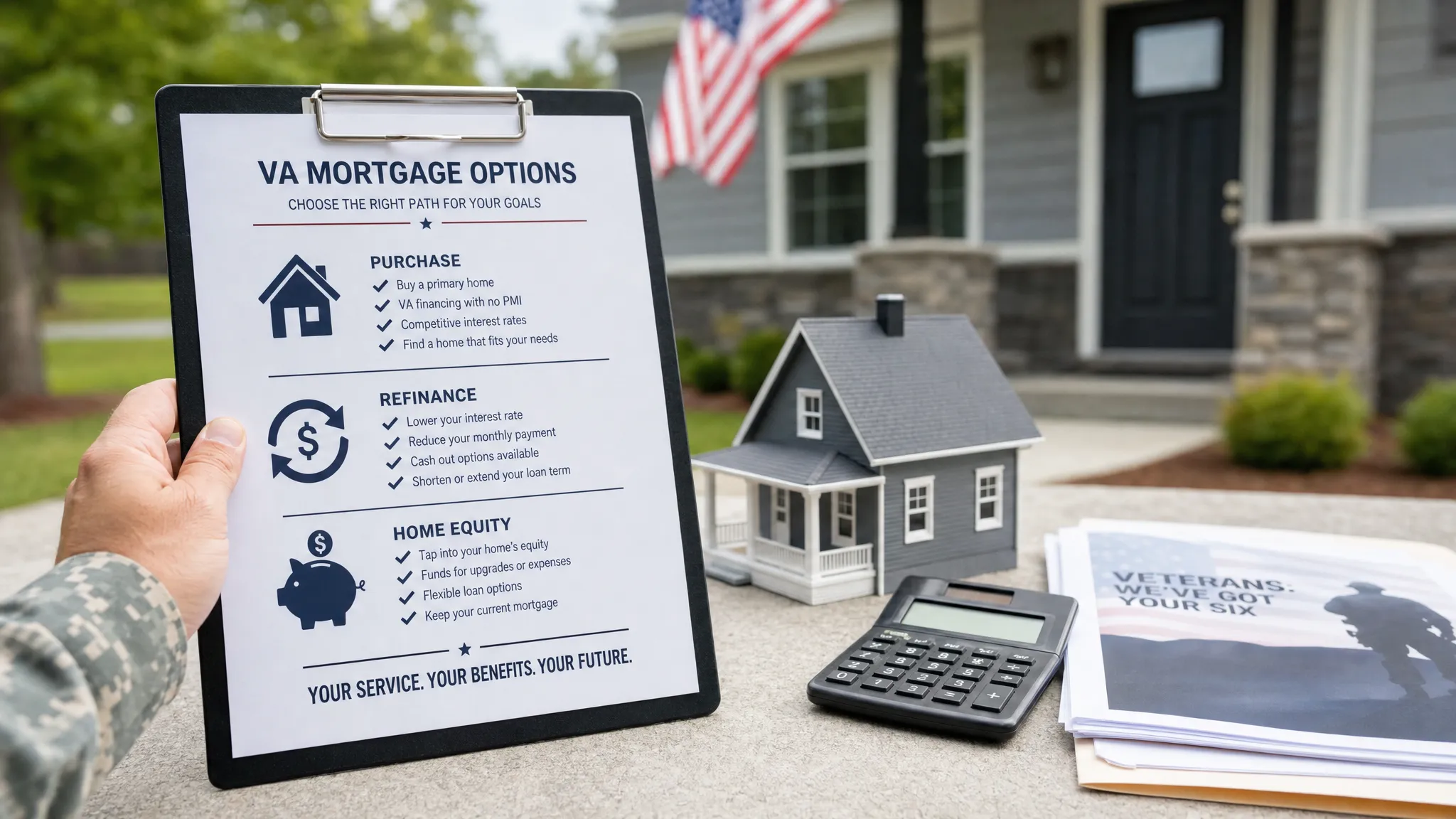
For eligible veterans, active-duty service members, certain National Guard and Reserve members, and surviving spouses, a veterans mortgage strategy can open more than one path to home financing. The VA loan is often the starting point, but it is not the only option. Depending on your goal, you may compare VA purchase loans, VA streamline refinances, VA cash-out refinances, conventional loans, FHA loans, USDA loans, jumbo financing, or home equity products.
The right choice is not always the loan with the lowest advertised rate. It is the option that fits your service eligibility, cash-to-close, monthly payment, property type, time horizon, and long-term financial plan.
This guide breaks down veterans mortgage options for both purchase and refinance so you can ask better questions before you apply.
Start with your goal: purchase, refinance, or access equity
Before comparing loan programs, define what you want the mortgage to accomplish. A veteran buying a first primary residence has different priorities than a homeowner refinancing an existing VA loan or tapping equity for renovations.
For a purchase, your key questions usually include how much cash you need upfront, whether the property meets program requirements, how quickly you need to close, and how competitive your offer will look to a seller. For a refinance, the decision depends more on your current loan, your new rate and payment, closing costs, break-even timeline, and whether you want cash back.
The Department of Veterans Affairs guarantees certain loans made by private lenders, but the VA does not lend directly in most standard VA mortgage transactions. That means lender guidelines, pricing, documentation, and service quality still matter. You can review the basics on the official VA purchase loan overview, then compare how VA financing stacks up against other mortgage options for your specific situation.
Purchase mortgage options for veterans
VA purchase loan
A VA purchase loan is often the most powerful option for eligible buyers purchasing a primary residence. The headline benefit is that VA loans may allow 0% down for qualified borrowers, subject to lender approval, property eligibility, and entitlement. VA loans also do not require monthly private mortgage insurance, which can make the monthly payment more efficient compared with some low-down-payment conventional or FHA options.
VA purchase loans may be especially helpful when you want to preserve savings for moving costs, emergency reserves, repairs, or post-closing stability. For many buyers, avoiding a large down payment can be the difference between waiting years to buy and moving forward sooner.
There are tradeoffs. VA loans generally require a VA funding fee unless the borrower is exempt, such as some veterans receiving eligible VA disability compensation. The property must be intended as a primary residence, and it must satisfy VA minimum property requirements. The appraisal also needs to support the value and condition of the home.
If you want a deeper look at the benefits and costs, New Era Lending’s guide to the benefits of a VA mortgage loan explains how eligible buyers can use the program strategically.
Conventional purchase loan
A conventional loan can also make sense for veterans. This is especially true if you have strong credit, a meaningful down payment, or you are buying a property that does not fit VA rules. Conventional loans can be used for primary residences, second homes, and investment properties, while VA loans are generally for primary residences.
Conventional financing may also be worth comparing if you are exempt from neither mortgage insurance nor the VA funding fee and you can put enough down to reduce or avoid PMI. In some cases, the total cost difference between VA and conventional financing depends on how long you plan to keep the home, whether you finance the VA funding fee, and how mortgage insurance would apply on a conventional loan.
Do not assume conventional is better just because a seller is unfamiliar with VA loans. A well-structured VA offer with a strong pre-approval can still be competitive, especially when the lender and real estate agent understand VA timelines, appraisal requirements, and contract details.
FHA and USDA purchase loans
FHA loans may be useful for veterans who do not qualify for VA financing or who need more flexible credit guidelines. FHA loans require mortgage insurance and usually have a minimum down payment, but they can be a practical alternative when VA eligibility is not available or the property does not fit VA requirements.
USDA loans may be available for eligible buyers in qualifying rural or suburban areas who meet income and property rules. Like VA loans, USDA loans may allow no down payment for qualified borrowers, but the program has geographic and income limits.
Veterans should compare these options based on total monthly payment, upfront costs, property rules, and long-term cost. A lower down payment is helpful only if the ongoing payment is sustainable.
Jumbo and specialty purchase loans
If you are buying a higher-priced home, a jumbo loan or specialized mortgage may enter the conversation. VA loans can support large loan amounts for eligible borrowers with full entitlement, but lender requirements may become more detailed as loan size increases. Credit profile, reserves, debt-to-income ratio, and residual income may all receive closer review.
Specialty programs can also matter if you are self-employed, buying a unique property, or dealing with complex income. These situations require early planning because documentation and underwriting can take longer.
Refinance mortgage options for veterans
Refinancing can help lower a payment, change a loan term, move from an adjustable rate to a fixed rate, remove certain costs, or access home equity. For veterans, the best refinance path depends heavily on whether your current loan is already a VA loan.
VA Interest Rate Reduction Refinance Loan
The VA Interest Rate Reduction Refinance Loan, often called an IRRRL or VA streamline refinance, is designed for borrowers who already have a VA loan. It can be used to refinance into another VA loan, typically to reduce the rate, reduce the payment, or move from an adjustable-rate mortgage to a fixed-rate mortgage.
An IRRRL can be simpler than a full refinance because it may involve less documentation than other refinance types. However, it still has rules. The refinance generally needs to provide a required benefit, often called a net tangible benefit. There may be a funding fee unless the borrower is exempt, and closing costs still matter.
The key question is not simply whether the rate is lower. You also need to know how much the refinance costs, whether those costs are paid upfront or rolled into the loan, how long it takes to break even, and whether you plan to keep the home long enough to benefit. New Era Lending’s guide on VA refinance rates explains how to evaluate rate, APR, fees, and break-even math.
VA cash-out refinance
A VA cash-out refinance can replace your current mortgage and allow you to access home equity, subject to approval, property value, and program limits. Unlike an IRRRL, a VA cash-out refinance can be used by some eligible veterans even if the existing mortgage is not a VA loan.
This option may make sense if you want to consolidate higher-interest debt, fund home improvements, build emergency liquidity, or replace a non-VA loan with VA financing. It usually requires full underwriting, income review, credit review, and an appraisal.
Home improvement is one of the more common reasons homeowners consider cash-out financing. That might include a roof, HVAC, accessibility upgrades, energy improvements, or comfort projects like reducing noise in a home office or media room. If acoustics are part of your renovation plan, custom acoustic wall and ceiling panel solutions are one example of a design-focused comfort upgrade to research before deciding how much equity to access.
A cash-out refinance should be used carefully. You are increasing or restructuring debt secured by your home. The funds should have a clear purpose, and the new payment should remain comfortable even if your household budget changes.
Conventional refinance
A conventional refinance can be a strong option for veterans who do not need VA benefits for the new loan. You might compare conventional refinancing if you have substantial equity, strong credit, or a goal that does not fit VA refinance rules.
For example, a conventional refinance may help some borrowers remove mortgage insurance, shorten the loan term, or avoid a new VA funding fee if they are not exempt. It can also be useful for second homes or investment properties, which generally do not qualify for standard VA financing.
The tradeoff is that conventional loans have their own pricing rules. Loan-to-value ratio, credit score, property type, occupancy, and mortgage insurance can significantly affect the offer.
FHA refinance and other alternatives
FHA refinance options may help borrowers who need more flexible credit or who already have an FHA loan and qualify for a streamline refinance. However, FHA mortgage insurance can affect both upfront and long-term cost.
A HELOC or home equity loan may be better than a full refinance if you like your current first mortgage and only need access to a smaller amount of equity. This can be especially relevant when your existing mortgage rate is lower than current refinance rates. The right choice depends on whether you want a lump sum, flexible draw access, a fixed payment, or a new first mortgage.
How to compare veterans mortgage options fairly
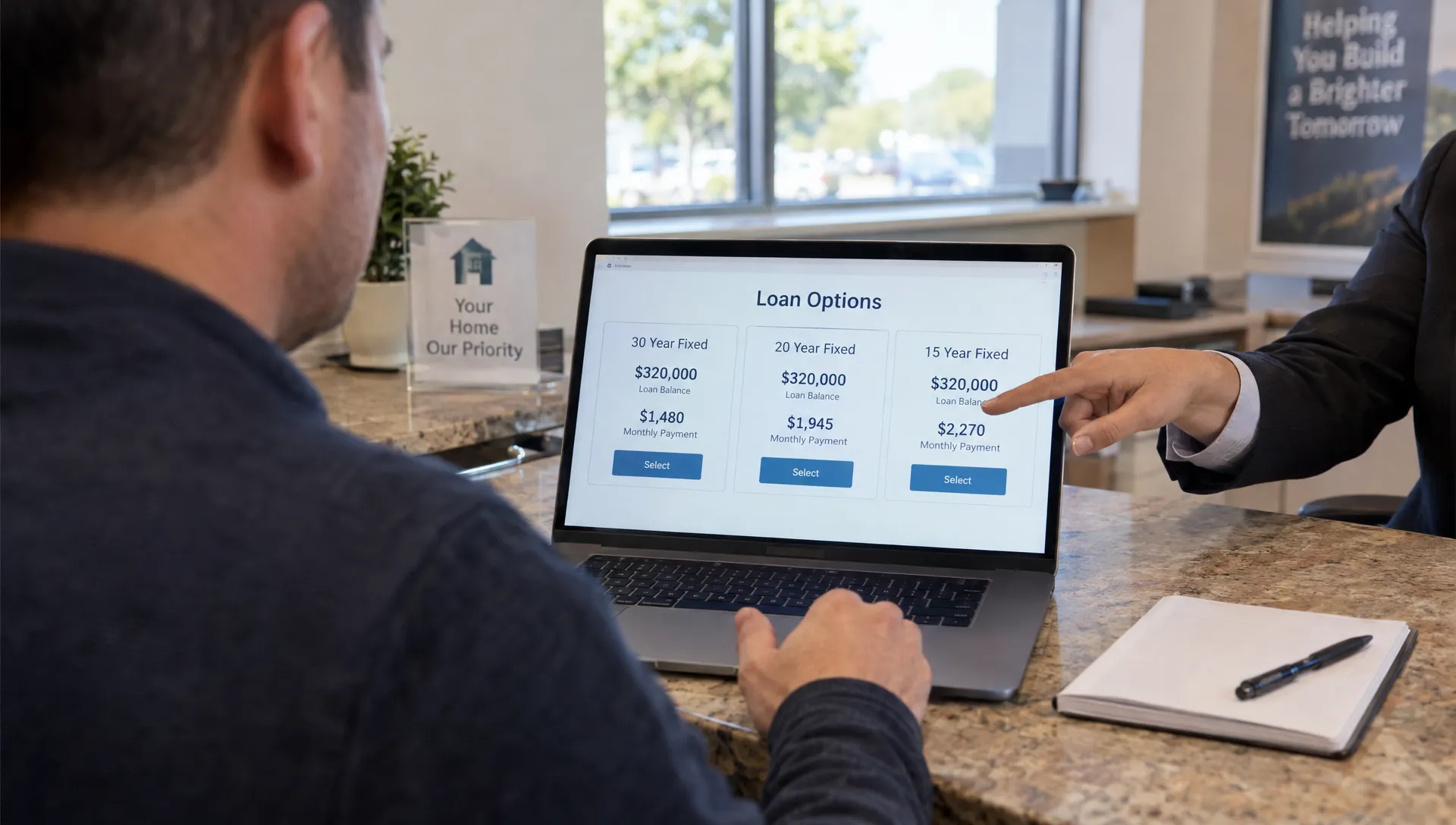
When veterans compare loan options, it is easy to focus only on the interest rate. That can be misleading. The better approach is to compare the full structure of each loan.
Look at the following factors together:
- Cash to close: This includes down payment, closing costs, prepaid items, escrow setup, and any credits or concessions.
- Full monthly payment: Include principal, interest, property taxes, homeowners insurance, mortgage insurance if applicable, HOA dues, and any second-lien payment.
- APR and fees: APR can help compare costs, but it should be reviewed alongside the Loan Estimate and your expected time in the loan.
- Funding fee or mortgage insurance: VA funding fees, FHA MIP, USDA guarantee fees, and conventional PMI work differently.
- Break-even timeline: For refinances, calculate how long it takes for monthly savings to recover closing costs.
- Property fit: VA, FHA, USDA, conventional, and jumbo loans can have different property standards.
- Future flexibility: Consider assumability, refinancing plans, PCS timelines, retirement plans, and whether you may convert the home to a rental later.
The Loan Estimate is one of the most important documents in this comparison. It helps you compare rate, APR, closing costs, credits, cash to close, and projected payment in a consistent format. If two quotes are based on different loan amounts, lock periods, points, or escrow assumptions, they are not true side-by-side comparisons.
Eligibility and documents to prepare
For VA financing, the Certificate of Eligibility is a key starting point. It helps confirm whether your service history meets VA home loan eligibility requirements. Borrowers can learn more through the VA’s guidance on requesting a Certificate of Eligibility, and many lenders can help obtain it during the application process.
You should also prepare standard mortgage documentation. The exact list depends on your loan type, employment, income sources, and whether you are buying or refinancing.
Common items include:
- Service and eligibility documents: COE, DD214, statement of service, or other service records depending on your status.
- Income documents: Pay stubs, W-2s, tax returns, retirement income, disability income, LES, or business documents if self-employed.
- Asset documents: Bank statements, investment statements, gift documentation, or proof of reserves.
- Debt and housing documents: Mortgage statements, homeowners insurance, HOA information, lease details, or payoff statements.
- Transaction documents: Purchase contract, refinance payoff information, appraisal items, title documents, and insurance details.
For a more detailed preparation list, review New Era Lending’s article on documents veterans need to qualify.
Common scenarios and which option may fit
If you are buying your first primary home and have VA eligibility, a VA purchase loan is often worth reviewing first because of the potential 0% down payment and no monthly PMI. You should still compare payment, closing costs, seller expectations, and property requirements.
If you already have a VA loan and rates have improved, an IRRRL may be the simplest refinance path. The deciding factor is whether the savings justify the costs and whether the new loan improves your position.
If you have a conventional or FHA loan and want to access VA benefits, a VA cash-out refinance may allow you to replace the current mortgage with a VA-backed loan, subject to eligibility and underwriting. This can be useful, but you need to compare the new balance, funding fee, payment, and long-term interest.
If you have strong equity and do not need cash out, a conventional refinance may compete well against VA options. This is especially true if you want to shorten the term, remove mortgage insurance, or avoid financing additional fees.
If your current rate is excellent and you only need funds for a specific project, a HELOC or home equity loan may be worth comparing before refinancing the entire mortgage.
For veterans who want to understand choices beyond the standard VA loan, New Era Lending’s guide to veteran loans beyond the VA loan offers a broader view.
Mistakes to avoid
One common mistake is assuming the VA loan is automatically the best option in every situation. VA financing is powerful, but conventional, FHA, USDA, jumbo, or home equity options can sometimes fit better depending on the property, timeline, and financial profile.
Another mistake is comparing quotes without matching assumptions. A quote with discount points is not the same as a quote without points. A 30-day lock is not the same as a 60-day lock. A refinance that rolls costs into the loan is not the same as one paid upfront.
Veterans should also avoid waiting too long to verify eligibility, ignoring the funding fee, making large undocumented deposits, changing jobs or debts during underwriting, or shopping for homes before getting a serious pre-approval.
Finally, do not choose a loan based only on what worked for another veteran. Service eligibility may be similar, but credit, income, property type, entitlement, reserves, and goals can make the right answer different.
How New Era Lending helps veterans compare options
A strong veterans mortgage plan should be clear, personalized, and easy to understand. New Era Lending combines smart mortgage technology with human guidance to help eligible borrowers compare purchase, refinance, and equity options across multiple loan programs.
That means you can review scenarios, upload documents securely, use e-signature support when available, and talk through the tradeoffs with a mortgage professional. For veterans, that guidance can be especially valuable when comparing VA benefits with conventional or other loan paths.
New Era Lending serves borrowers across 39 states and focuses on transparent rates, terms, and educational support so you can move forward with confidence.
Frequently Asked Questions
What is the best mortgage option for veterans buying a home? For many eligible veterans buying a primary residence, a VA purchase loan is a strong first option because it may allow 0% down and no monthly PMI. However, conventional, FHA, USDA, or jumbo loans may fit better depending on the property, credit profile, cash available, and long-term goals.
Can veterans refinance a non-VA loan into a VA loan? Yes, some eligible veterans may be able to refinance a non-VA mortgage into a VA loan through a VA cash-out refinance, subject to lender approval, equity, occupancy, income, credit, and VA requirements.
What is the difference between a VA IRRRL and a VA cash-out refinance? A VA IRRRL is generally for refinancing an existing VA loan into a new VA loan, often to lower the rate or payment. A VA cash-out refinance can allow equity access and may be used to refinance certain non-VA loans into VA financing, but it typically requires full underwriting and an appraisal.
Do VA loans always have the lowest rates? Not always. VA loans often offer competitive pricing, but your actual rate depends on market conditions, lender pricing, credit profile, loan amount, points, lock period, property type, and other factors. Always compare the full Loan Estimate, not just the rate.
Can I use a VA loan more than once? In many cases, yes. VA entitlement can often be reused, and some borrowers may have remaining entitlement available. The details depend on prior VA loan use, whether previous VA loans were paid off, and current entitlement calculations.
Ready to compare your veterans mortgage options?
Whether you are buying a home, refinancing for a better structure, or accessing equity, the right loan should match your real numbers and your future plans. New Era Lending can help you compare VA, conventional, FHA, cash-out, and other mortgage options with smart tools and personal guidance.
Start with a personalized scenario review through New Era Lending and move forward with a clearer path to home financing.