.jpg)
.jpg)





.jpg)

No-Down-Payment Mortgage Programs Compared
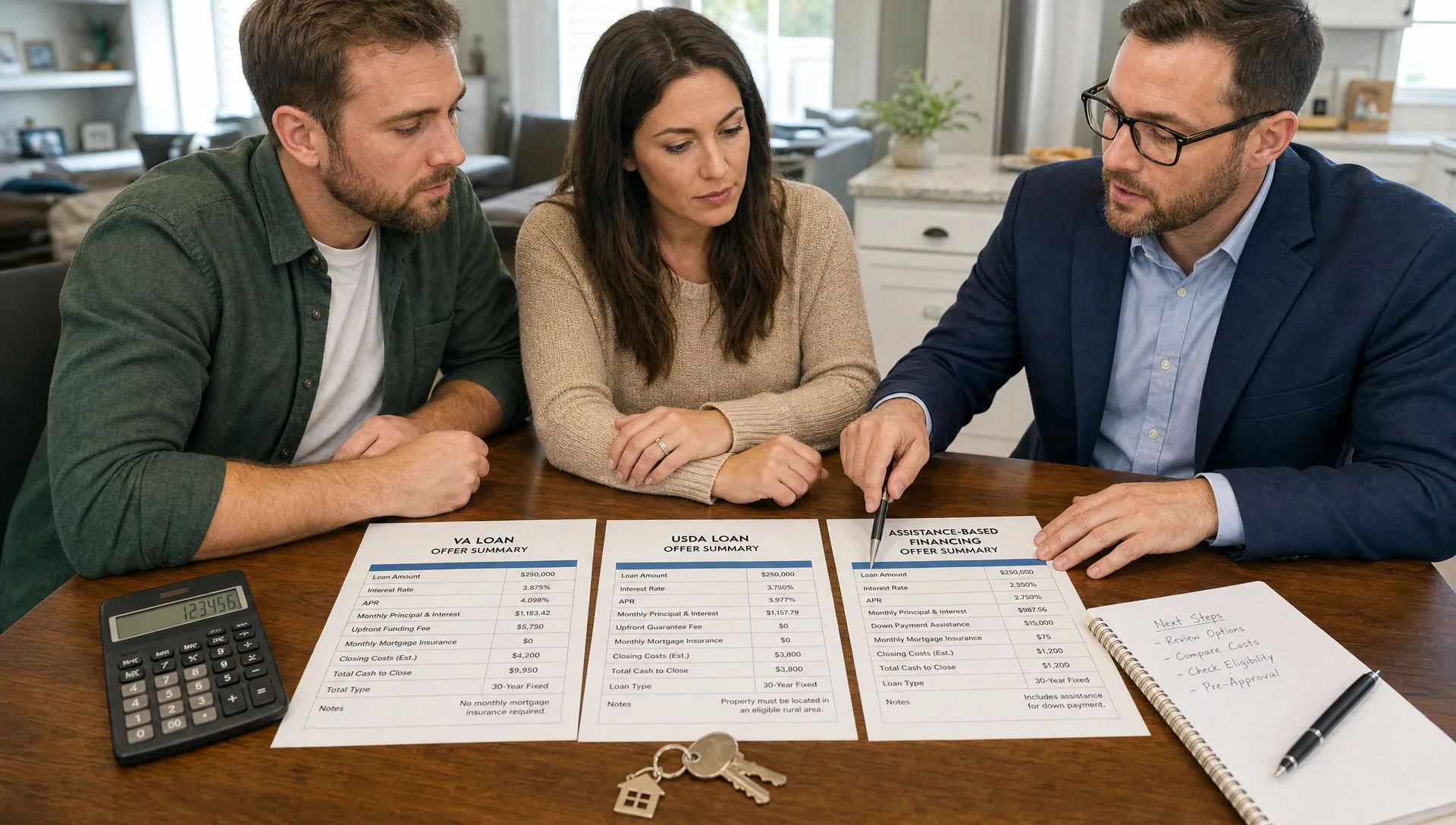
Buying a home without a down payment can be real, but it is not one single loan and it is not automatically cheaper. The best mortgage programs with no down payment differ by borrower eligibility, property location, income limits, military service, assistance funding and lender rules.
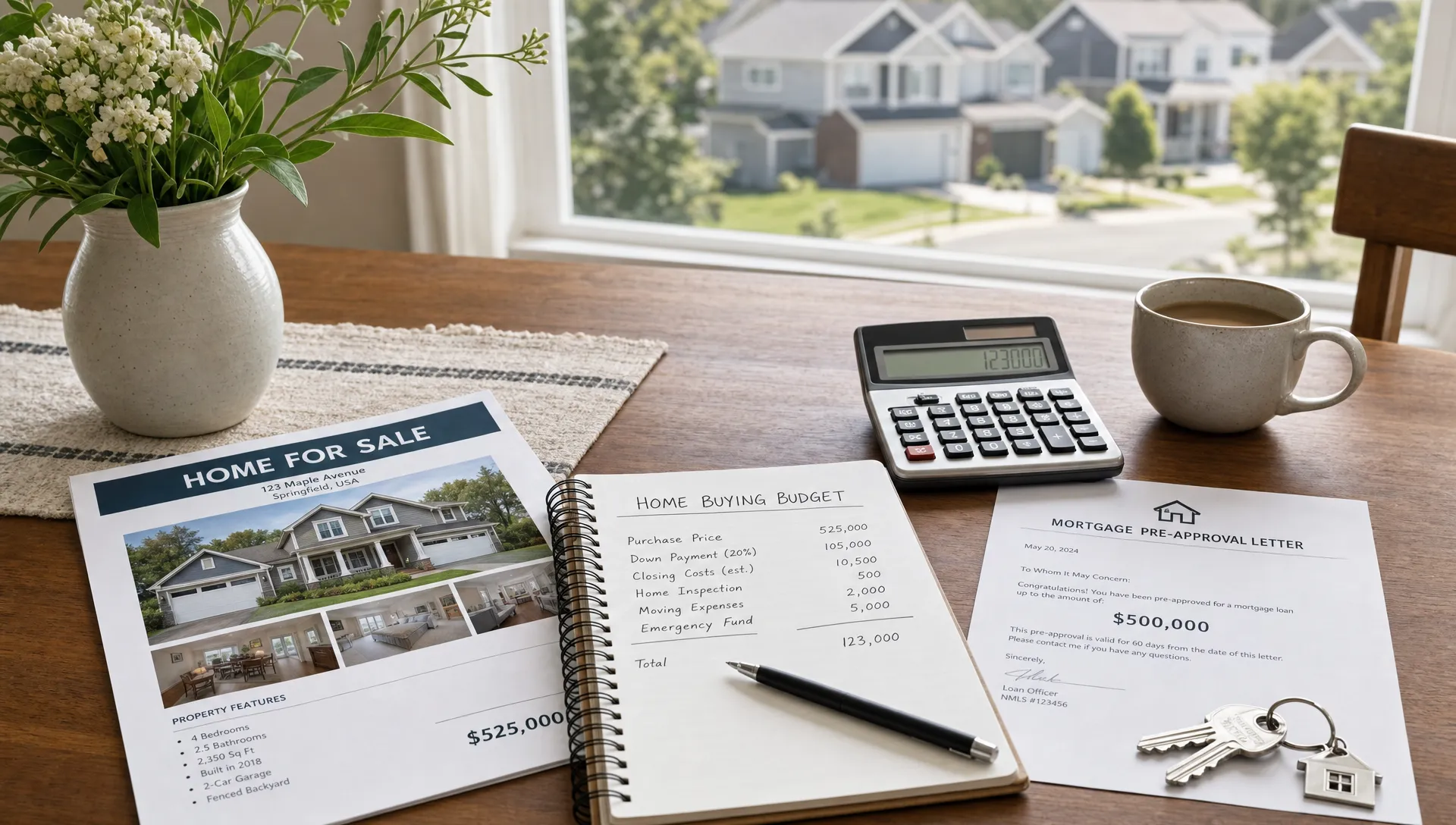
No down payment also does not mean no cash at all. You may still need money for closing costs, prepaid taxes and insurance, inspections, moving expenses and post-closing reserves. This comparison is meant to help you see which zero-down path is worth exploring first, which costs to ask about and when a low-down-payment loan may be the more practical choice.
How mortgage programs with no down payment differ
Zero down can mean two different things. A true zero-down first mortgage finances the full purchase price, subject to appraisal and lender approval. A structured zero-down purchase uses a primary mortgage plus assistance that covers the required down payment.
The biggest differences are not only the down payment itself. Eligibility rules, monthly costs, property restrictions and repayment terms can change the total cost of ownership.
| Program type | Who it usually fits | Down payment treatment | Key limits | Cost to watch |
|---|---|---|---|---|
| VA loan | Eligible service members, veterans and some surviving spouses | Often allows 0% down on qualified purchases | VA eligibility, occupancy rules and lender underwriting | VA funding fee unless exempt |
| USDA loan | Moderate-income buyers purchasing in eligible rural or suburban areas | Offers 100% financing when borrower and property qualify | Income limits, property eligibility and primary residence use | Guarantee fee and annual fee |
| Down payment assistance | Buyers who meet state, local or nonprofit program rules | Grant or second loan may cover the required down payment | Funding availability, income caps, purchase price limits and education rules | Forgiveness, repayment or resale conditions |
| Specialty 100% financing | Qualified buyers in selected markets, occupations or membership groups | Lender may finance the full purchase price or pair loans | Credit profile, geography, relationship requirements or portfolio rules | Interest rate, fees and long-term terms |
For background on basic eligibility, New Era Lending also explains what to know about mortgages with no down payment. The goal here is to compare the main paths side by side so you can ask better questions before you apply.
VA loans: a strong zero-down fit for eligible military borrowers
VA loans are often the cleanest version of mortgage programs with no down payment because eligible borrowers can purchase with no required down payment and no monthly mortgage insurance. The program is backed by the U.S. Department of Veterans Affairs, but the loan is still made by a private lender that reviews income, credit, debt and the property.
The VA purchase loan overview explains the basic benefit, including the ability to buy with no down payment in many qualified transactions. Borrowers typically need a Certificate of Eligibility, and the home must generally be used as a primary residence.
The main tradeoff is the VA funding fee, although some borrowers are exempt, including many veterans receiving VA disability compensation. A VA loan can be especially compelling for eligible buyers who want to preserve savings, but the monthly payment still needs to fit comfortably after taxes, insurance, utilities and maintenance.
USDA loans: zero down based on location and income
USDA loans are one of the few mortgage programs with no down payment available to buyers who do not have military eligibility. The program is designed for eligible rural and certain suburban communities, and many buyers are surprised by how broad the eligible map can be outside dense urban areas.
USDA eligibility depends on both the property and the household. The home must be in an eligible area, and household income must fit the program limits for the location and family size. The USDA eligibility site is a useful starting point for checking property and income rules, although a lender still needs to verify the full application.
USDA loans do not use conventional private mortgage insurance, but they do have guarantee-related fees. They also require owner occupancy and property standards. If you are flexible on location and your income fits the program, USDA can be a practical way to buy with less cash upfront.
Down payment assistance: zero down as a financing structure
For some buyers, mortgage programs with no down payment are created by pairing a standard mortgage with down payment assistance. The first mortgage might be FHA, conventional or another approved loan type, while the assistance covers the required upfront contribution.
Assistance can take several forms. Some programs offer grants that do not need to be repaid if rules are met. Others use forgivable second mortgages, deferred second mortgages or repayable loans. Terms vary widely by state, city, county, employer, nonprofit and housing finance agency.
The details matter. A forgivable second mortgage may require you to live in the home for a set period. A deferred loan may not require monthly payments now, but it can become due when you sell, refinance or pay off the first mortgage. For buyers comparing ways to cover upfront costs, New Era Lending has a separate guide to down payment loans and how they differ from grants.
Specialty 100% financing: useful, but read the fine print
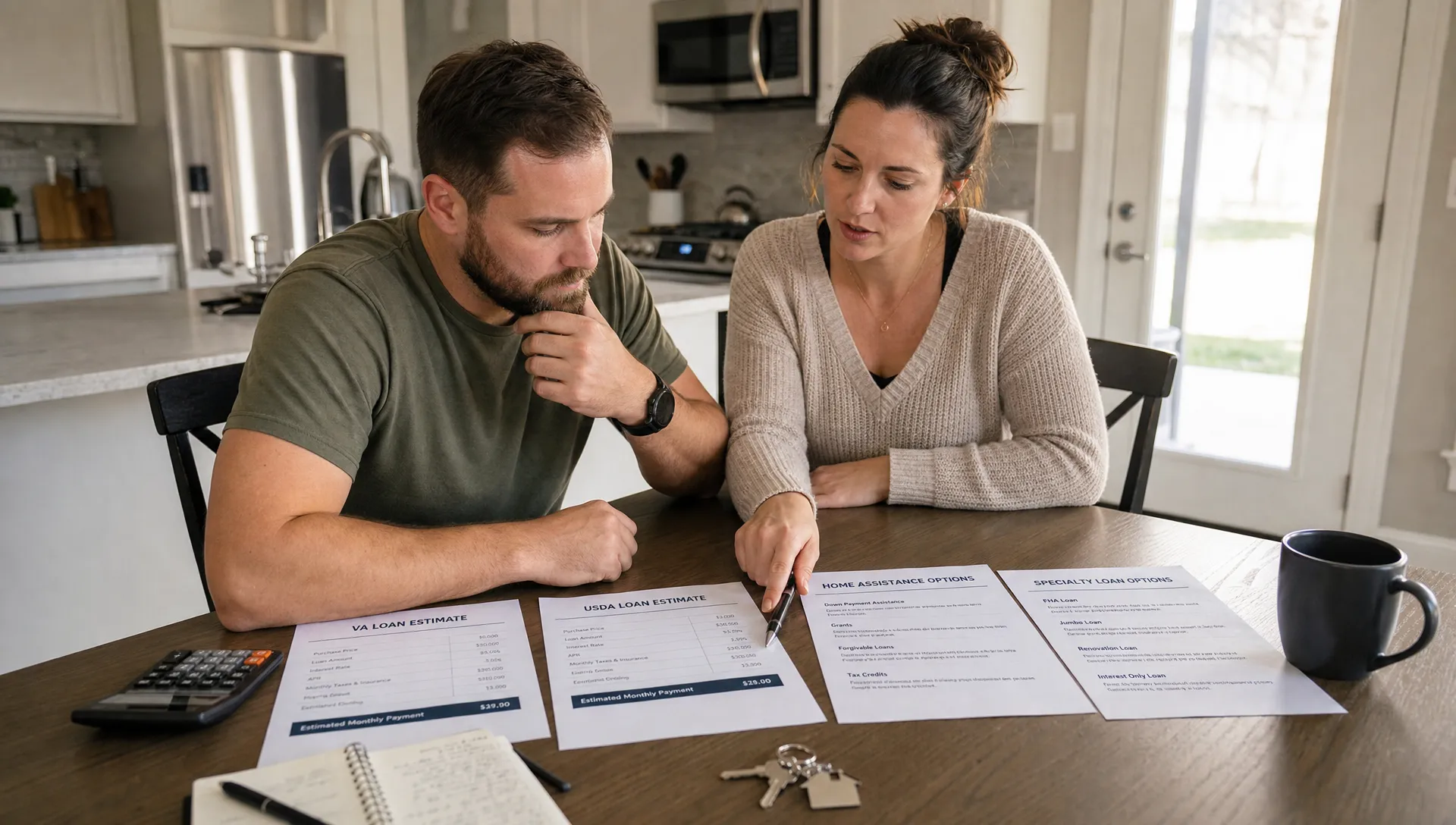
Specialty lender programs can be helpful, but they are the least standardized category of mortgage programs with no down payment. These may come from credit unions, community banks, portfolio lenders or mission-driven programs serving specific regions or borrower groups.
Some 100% financing options are limited to first-time buyers, moderate-income households, certain professions, existing members or properties in defined communities. Others may be portfolio products, meaning the lender keeps the loan rather than selling it through the usual secondary market channels.
A specialty option may advertise no mortgage insurance or no down payment, but compare the full Loan Estimate before assuming it is the cheapest path. The interest rate, origination costs, eligibility rules and refinance flexibility can outweigh the upfront advantage if the program is not a good fit.
Costs that still matter when the down payment is zero
The best mortgage programs with no down payment still require cash planning. A buyer who uses every available dollar to close may be more vulnerable to repairs, job changes or rising household expenses after moving in.
Common costs to review before choosing a zero-down path include:
- Closing costs, such as lender charges, title fees, recording fees and settlement fees
- Prepaid costs, such as homeowners insurance, property taxes and prepaid interest
- Inspections, appraisal-related costs and optional specialty inspections
- Program fees, including VA funding fees or USDA guarantee fees when applicable
- Moving expenses, utility deposits, furniture, repairs and emergency savings
The Consumer Financial Protection Bureau explains how the Loan Estimate helps borrowers compare rate, APR, monthly payment and cash to close. Ask for side-by-side estimates whenever possible, not just a verbal payment quote.
A realistic moving budget should also include non-housing expenses that follow you into the new home. If a move changes your everyday providers, compare essential services early, from child care and auto repair to healthcare options such as a dentist in West Malling for families planning an international relocation to Kent.
Qualification factors side by side
When lenders underwrite mortgage programs with no down payment, they still need to verify that the borrower can repay the loan. Zero down changes the upfront cash requirement, not the need for stable income, acceptable credit, manageable debt and a property that meets program standards.
| Factor | VA loan | USDA loan | Assistance structure | Specialty 100% financing |
|---|---|---|---|---|
| Borrower eligibility | Military-related eligibility required | Income must fit USDA limits | Program-specific income, location or buyer rules | Lender-specific rules |
| Property location | Broad, subject to property approval | Must be USDA-eligible | Often state or local boundaries | Often limited by lender footprint |
| Occupancy | Primary residence | Primary residence | Usually primary residence | Usually primary residence |
| Credit review | Lender guidelines apply | Lender and USDA guidelines apply | First mortgage and assistance rules apply | Program rules vary |
| Main advantage | No required down payment for eligible borrowers | 100% financing for eligible areas | Can reduce cash needed for FHA or conventional loans | May help borrowers who do not fit VA or USDA |
| Main caution | Funding fee and entitlement details | Income and location limits | Repayment or forgiveness terms | Rate, fees and restrictions |
Credit score requirements are not identical across lenders, even within the same program. Debt-to-income ratio, residual income, reserves and compensating factors can influence approval. A preapproval review is more useful than guessing from national averages.
How to choose the right path
If you have VA eligibility
Start with VA. It may offer the strongest combination of no required down payment, no monthly mortgage insurance and flexible underwriting for eligible borrowers. Compare the funding fee, rate and payment against other options, especially if you have enough savings to consider a down payment.
If you are open to rural or suburban areas
USDA should be on your list. It can work well when the property location and household income fit the program. Buyers who only search in dense urban neighborhoods may miss this option, but those open to smaller communities often find more possibilities.
If your income fits local assistance rules
Assistance can turn a low-down-payment loan into a very low-cash or zero-down purchase. The right mortgage programs with no down payment may depend on your state, county, employer or housing agency, so ask whether assistance funds are currently available and how long approval takes.
If zero down makes the payment uncomfortable
A smaller down payment is not always the same as no down payment. If zero down pushes the monthly payment too high, compare 3% down conventional options, FHA financing and other lower down payment mortgage options. Keeping the payment sustainable usually matters more than reaching the lowest possible cash-to-close number.
Mistakes to avoid before applying
Comparing mortgage programs with no down payment is easier when you ask the same questions for every loan. A program that looks best in the first conversation may look different once you review payment, fees, assistance terms and future refinance options.
Ask these questions before you commit:
- What is my total estimated cash to close, including prepaid costs?
- Is there monthly mortgage insurance, an annual fee or an upfront program fee?
- If assistance is involved, is it a grant, forgivable loan, deferred loan or repayable second mortgage?
- What happens if I sell, refinance or move out earlier than expected?
- How does the monthly payment compare with a low-down-payment option?
Do not shop only by the down payment requirement. A slightly higher upfront contribution can sometimes reduce the monthly payment, remove a fee or create more lender options. On the other hand, preserving cash may be the smarter move if it keeps an emergency cushion intact after closing.
Frequently Asked Questions
Are no-down-payment loans only for first-time buyers? No. VA and USDA are not limited only to first-time buyers, although each has its own eligibility rules. Many assistance programs do target first-time buyers, but some define that term as not having owned a home in the past three years.
Which is better, VA or USDA? VA is usually the first option to evaluate if you have military-related eligibility. USDA can be strong for non-military borrowers who meet income limits and buy in an eligible area. The better choice depends on eligibility, property location, fees and payment.
Can assistance cover closing costs too? Some programs can help with closing costs, but not all do. Assistance rules vary, and seller credits or lender credits may also be part of the strategy. Review the full Loan Estimate and assistance documents before relying on a specific amount.
Do zero-down loans have higher monthly payments? Often, yes, because borrowing more can increase the monthly principal and interest payment. Program fees, insurance costs, taxes and homeowners insurance also affect the final payment, so compare full monthly estimates.
How quickly can I know if I qualify? A lender can usually screen the main mortgage programs with no down payment early in the process by reviewing your eligibility, income, credit, debts, estimated purchase area and available cash. Full approval still depends on documentation, underwriting and the property.
Compare your options with New Era Lending
The right zero-down option depends on your full financial picture, not just whether a program sounds available. New Era Lending combines smart mortgage technology with personalized human guidance to help borrowers compare purchase, refinance and equity options with clearer terms and a simpler process.
If you want to know whether VA, USDA, assistance or another loan path may fit your goals, connect with New Era Lending and review your options before you start making offers.