.jpg)
.jpg)





.jpg)


New Lending Rate: How to Compare a Fresh Mortgage Quote
A new lending rate can look like an improvement without making your mortgage offer better overall. The updated quote may include more discount points, a different lock period or a changed loan amount. Before accepting it, compare the fresh offer against your previous version and identify exactly what moved.
The goal is not simply to find the lowest percentage. It is to confirm that the revised offer lowers the costs you care about without creating a cash shortage or changing terms you intended to keep.
Save your baseline before reviewing the update
Keep the original quote, its date and any accompanying Loan Estimate. An email saying “your rate improved” is difficult to evaluate if the earlier numbers have disappeared from the lender’s portal.
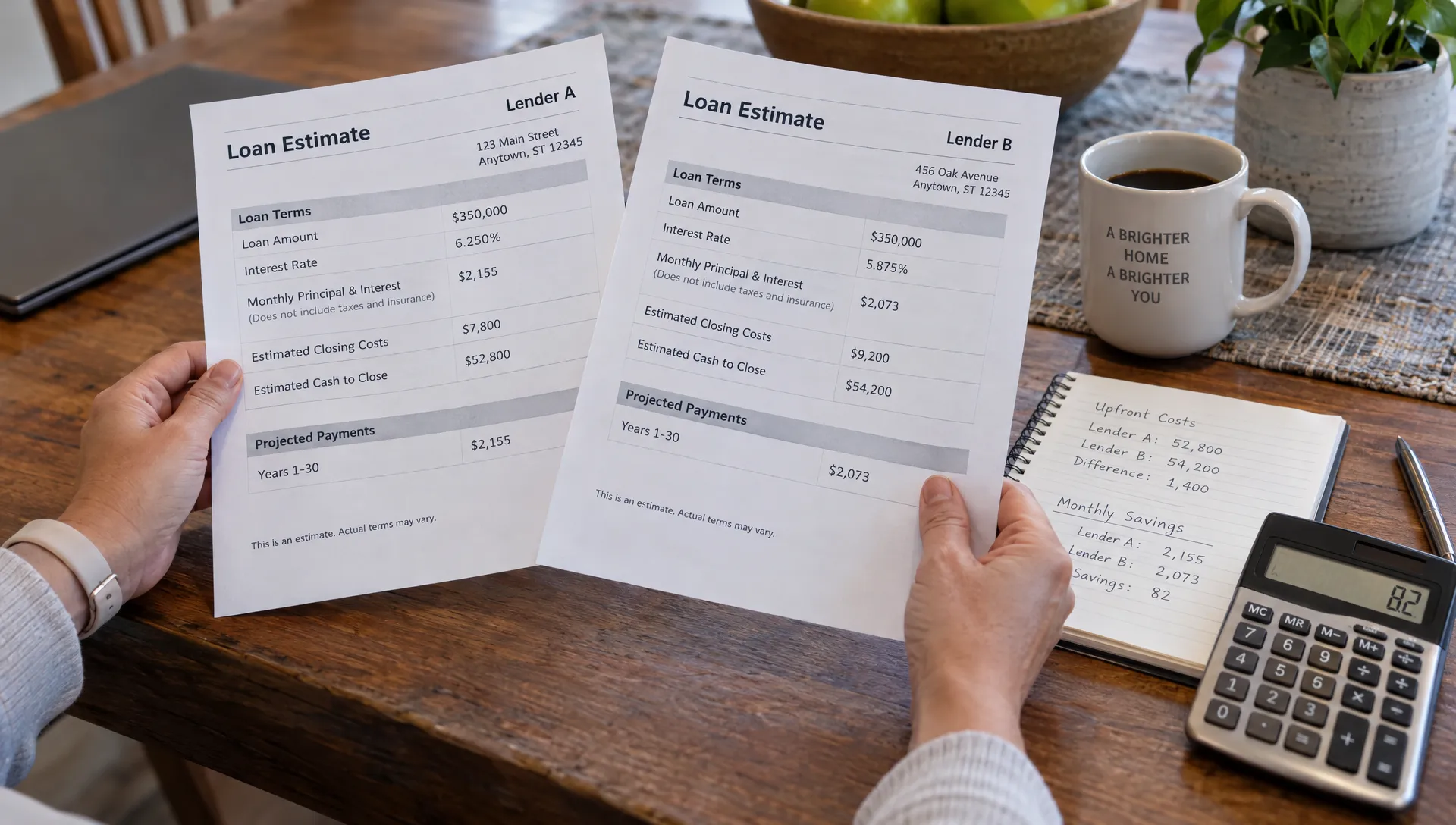
Create a comparison using the original offer and the revised offer side by side. Record the loan amount, loan program, term, interest rate, points, lender fees and lock status. Also note the estimated monthly payment and cash needed at closing.
Compare the same financing scenario. A quote based on a larger down payment is not a direct replacement for one based on your original budget. Neither is a 15-year mortgage a like-for-like alternative to a 30-year mortgage, even if its rate is lower.
If you are comparing lenders, request quotes as close together in time as practical. A quote from last week and an unlocked quote from this morning may reflect different market conditions rather than a difference in lender pricing.
Check the assumptions behind a new lending rate
Start by checking the inputs, not the output. Ask the lender to confirm that the fresh quote uses the same borrower and property information as the previous version.
| Item to verify | Why a change affects the comparison |
|---|---|
| Loan amount and down payment | Changes the amount financed and may affect pricing |
| Loan program and repayment term | Changes eligibility, payment structure and total interest |
| Credit information used | Updated credit information can affect available pricing |
| Property type and occupancy | A primary residence may be priced differently from an investment property |
| Discount points and lender credits | Moves costs between upfront charges and the interest rate |
| Lock status and duration | Determines whether pricing is protected and for how long |
A lower rate deserves closer inspection when any of these fields changes. Ask for a written explanation instead of assuming that the difference came entirely from a better market.
Separate market repricing from changes to your application
An updated offer can reflect market movement, lender pricing changes or new information about your application. Those explanations have different implications.
For example, a larger down payment might improve pricing while reducing the cash you have available after closing. A revised property classification might change both the rate and the loan options available to you.
Ask: “What changed between these two versions, and which change accounts for the difference in pricing?” A new lending rate is easier to evaluate when the lender identifies its cause rather than describing it only as a discount.
For more detail on borrower and property factors, see the guide to what can change your mortgage offer rate.
Get the updated terms in the right document
A text message or pricing worksheet can help you explore options, but it is not a substitute for a Loan Estimate when you are ready to evaluate a formal offer.
For most standard purchase and refinance mortgages, lenders generally must provide a Loan Estimate within three business days after receiving the six pieces of information that constitute an application. The Consumer Financial Protection Bureau’s Loan Estimate guide explains the form and its key sections.
Use page 1 to check the loan terms, projected payments and whether the interest rate is locked. Use page 2 to inspect origination charges, points, other closing costs and credits. Page 3 includes comparison figures such as APR and the “In 5 Years” figures.
When a new lending rate arrives, ask whether the lender will provide a revised Loan Estimate and when. Not every informal pricing update is a formal revision, and revisions are subject to disclosure rules.
APR is a cross-check, not the entire decision. It reflects the rate and certain financing costs over the scheduled loan term. It does not tell you how much cash you need at closing or necessarily identify the best offer for a short ownership period.
Translate the revised quote into dollars
Consider this hypothetical example. Both offers are for the same $350,000, 30-year fixed-rate mortgage with a 45-day lock. These figures illustrate a comparison method, not current market pricing or a New Era Lending offer.
| Comparison item | Baseline quote | Fresh quote |
|---|---|---|
| Interest rate | 6.50% | 6.25% |
| Discount points | $0 | $3,500 |
| Other lender origination charges | $1,800 | $1,800 |
| Monthly principal and interest | About $2,212 | About $2,155 |
| Lock duration | 45 days | 45 days |
One discount point equals 1% of the loan amount, so one point on this loan costs $3,500. Here, the new lending rate reduces principal and interest by approximately $57 per month, but requires an additional $3,500 upfront.
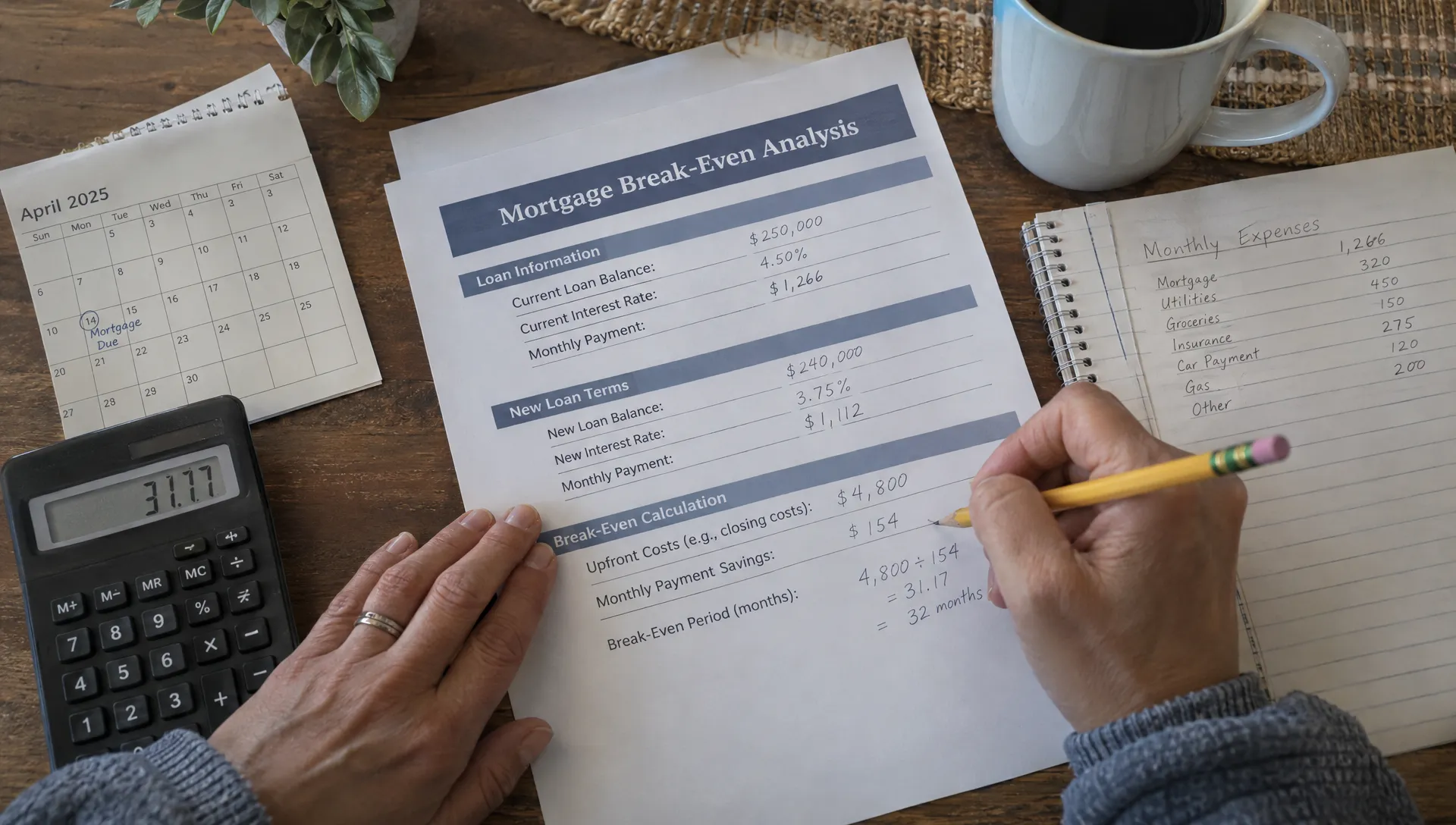
A simple payment-based break-even calculation is:
Additional upfront cost ÷ monthly payment savings = approximate break-even period.
Using the unrounded payment figures, $3,500 divided by approximately $57.23 is about 61 months. You would recover the extra cost through payment savings during roughly the 62nd monthly payment.
That calculation is a useful screening tool, not a complete financial comparison. It does not account for differences in remaining loan balances, the time value of money or possible tax effects.
Test the savings against your likely timeline
If you expect to sell or refinance in two years, this example produces only about $1,374 in payment savings during that period. That is less than the additional $3,500 paid upfront.
If you keep the mortgage for seven years, the payment savings total approximately $4,807. The longer holding period makes the lower-rate option more attractive on this simple measure, although your cash reserves and other financial priorities still matter.
Ask the lender for an amortization comparison showing cumulative interest and the remaining balance at your expected payoff date. That helps you evaluate more than the monthly payment.
For a refinance, compare the proposal against keeping your existing loan as well as against other offers. The guide to deciding whether a new mortgage rate justifies refinancing covers that separate decision.
Check the lock before treating the rate as secured
A lower unlocked quote and a slightly higher locked quote do not offer the same protection. An unlocked rate can change before you close.
The CFPB explains that a mortgage rate lock generally protects the rate for a specified period, subject to the agreement’s conditions. Changes to your application can still affect pricing.
Before choosing a new lending rate, confirm the lock expiration date, any lock charge and whether the quoted points and lender credits are covered by the agreement. Ask who pays for an extension if closing is delayed and how that cost is determined.
If you already have a lock, do not assume a fresh quote automatically replaces it. Ask whether you qualify for any available float-down option, whether it has a fee and whether accepting it changes the expiration date.
A cheaper rate is less useful if its protection expires before your expected closing date. Get the lock terms in writing and keep them with the quote you accepted.
Reconcile cash to close and the full monthly payment
Principal and interest are only part of a mortgage payment. Taxes, homeowners insurance, mortgage insurance and assessments, when applicable, can change the amount you need to budget.
Separate changes in financing costs from changes in estimates. A lower insurance estimate does not prove that the lender made the mortgage cheaper. Likewise, a smaller initial escrow deposit can reduce cash to close without reducing the underlying cost of the loan.
Request a written explanation that addresses these questions:
- Which loan assumptions changed between the two quotes?
- How much did points, origination charges and lender credits change?
- What is the monthly payment with the same tax and insurance assumptions?
- What explains the difference in cash to close?
- Which terms are locked, and when does that protection expire?
A new lending rate should pass both tests: it should make sense over your expected borrowing period and leave you with enough cash for closing and your planned reserves. Do not spend those reserves merely to obtain the lowest advertised percentage.
Frequently asked questions
Does a lower rate always mean a better mortgage quote? No. A lower rate can come with higher points or fees. Compare upfront costs, payment savings, lock terms and your expected time in the loan. Also check that the loan amount, program and repayment term remain the same.
Should I compare the rate or APR first? Verify that the offers use matching assumptions, then compare both. The interest rate drives principal and interest payments. APR incorporates certain financing costs, but it does not replace a review of cash to close or costs over your own timeline.
Can I negotiate after receiving an updated quote? You can ask the lender to explain its pricing and whether a different combination of rate, points and credits is available. You can also share a competing Loan Estimate based on the same scenario. A price match or concession is not guaranteed.
Does receiving a new lending rate mean I am approved? No. A pricing quote is not final underwriting approval or a guarantee of funding. Confirm outstanding documentation, approval conditions and the expected closing timeline before making commitments based on the offer.
Request a comparison you can act on
Bring your previous quote, updated offer and expected timeline to New Era Lending. Its personalized guidance and transparent rates and terms can help you review purchase or refinance options.
Ask for the differences to be explained in dollars: upfront cost, monthly payment, cash to close and cost over the period you expect to keep the mortgage. Those figures give you a clearer basis for accepting the update or continuing to compare.