
.jpg)
.jpg)





.jpg)


How to Compare Mortgage Loan Deals the Smart Way

A mortgage can look like a great deal at first glance, then become much less attractive once you factor in closing costs, points, loan terms, and how long you plan to keep the home. That is why comparing mortgage loan deals the smart way means looking beyond the advertised interest rate.
The goal is not to find the lowest number on a flyer. The goal is to find the loan structure that fits your budget, timeline, risk tolerance, and long-term financial plan. Whether you are buying a home, refinancing, or tapping equity, a good comparison process can help you avoid surprises and choose with more confidence.
Start with the outcome you actually need
Before you compare offers, define what “best” means for you. A first-time buyer with limited cash at closing may need a different loan than a move-up buyer with strong savings. A homeowner refinancing to reduce monthly payments may compare deals differently than someone refinancing to shorten the loan term.
Start with a few practical questions:
- How much monthly payment feels comfortable, not just technically approved?
- How much cash do you want to keep after closing?
- How long do you expect to stay in the home or keep the loan?
- Are you more focused on the lowest payment, lowest total interest, or lowest upfront cost?
- Do you need a purchase loan, refinance, cash-out refinance, or specialized program?
This matters because the same mortgage deal can be smart for one borrower and expensive for another. For example, paying discount points to lower the rate may make sense if you will keep the loan for many years. It may not make sense if you expect to move or refinance soon.
If you are still defining your comfort zone, New Era Lending’s guide on finding a mortgage that fits your budget can help you think through payment, cash to close, and affordability before you compare offers.
Compare offers on the same day whenever possible
Mortgage pricing can change quickly. Rates, lender credits, and points can shift from one day to the next based on market conditions, loan characteristics, and investor pricing. If you collect one quote on Monday and another on Friday, you may not be making a fair comparison.
For a smarter side-by-side review, ask lenders for quotes based on the same scenario and as close to the same time as possible. Use the same estimated purchase price, down payment, credit profile, property type, occupancy, loan term, and lock period.
This keeps the comparison focused on lender pricing and loan structure rather than mismatched assumptions.
Use the Loan Estimate as your comparison tool
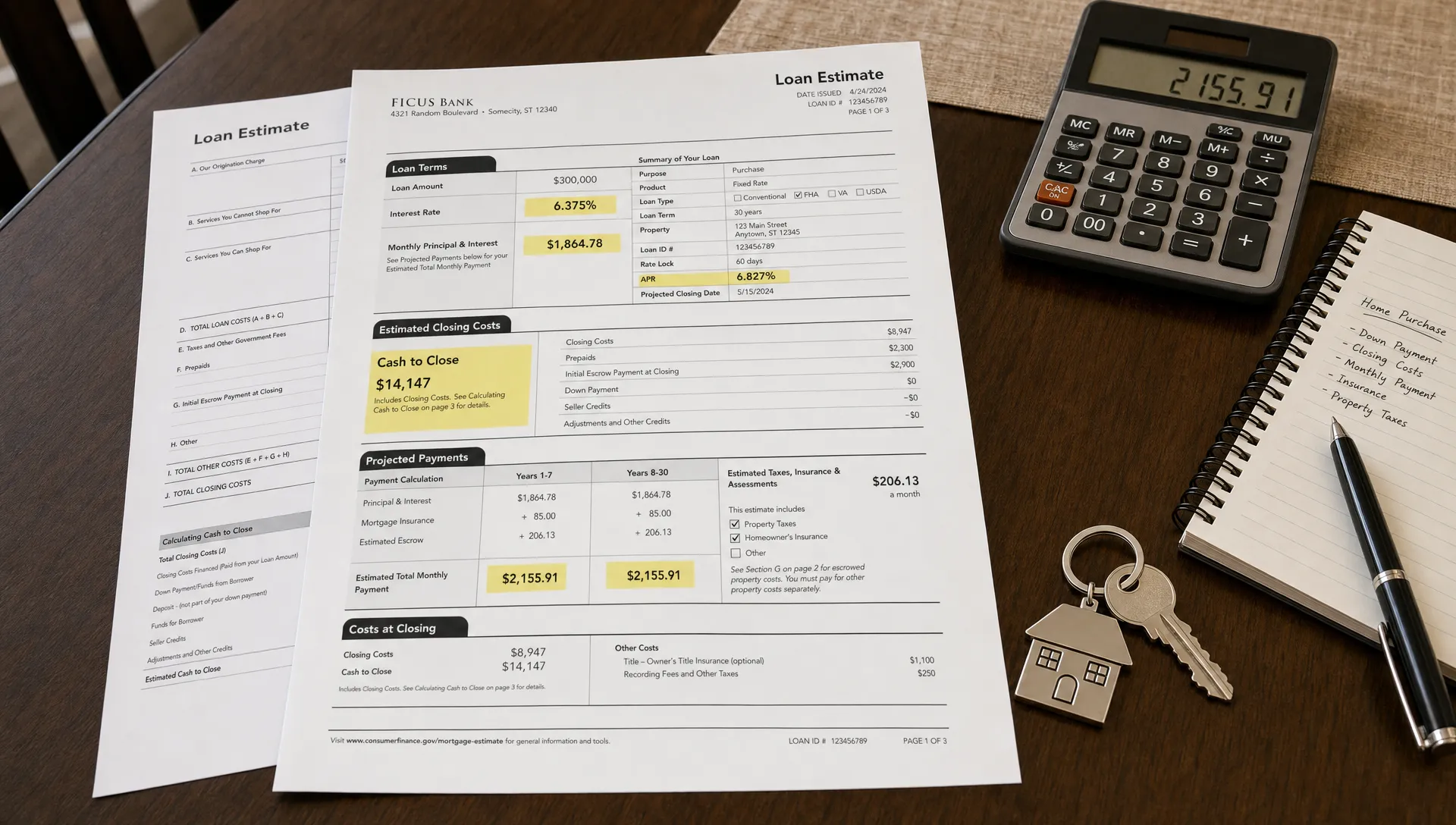
A verbal quote can be helpful early in the process, but the Loan Estimate is where the details become easier to compare. In the United States, lenders generally provide a standardized Loan Estimate after you apply and supply key information. This form makes it easier to review interest rate, APR, projected payments, closing costs, and cash to close.
When comparing mortgage loan deals, do not rely on one line item. Review the full picture. A deal with a lower interest rate can still cost more if it requires higher points or fees. A deal with lower upfront costs can still cost more over time if the rate is meaningfully higher.
Look closely at these areas:
- Interest rate: This determines the base cost of borrowing and strongly affects your monthly principal and interest payment.
- APR: This reflects the interest rate plus certain loan costs, giving you a broader view of cost over time.
- Discount points: These are upfront costs paid to lower the rate. They can be useful, but only if the break-even timeline fits your plans.
- Lender credits: These can reduce closing costs, often in exchange for a higher interest rate.
- Cash to close: This is the estimated amount you need to bring to closing, including down payment, costs, prepaids, and escrows.
- Projected payment: This includes principal and interest, and may also show mortgage insurance, escrowed taxes, and insurance estimates.
For a deeper rate-focused breakdown, you can also review this guide on how to compare new mortgage rates, especially if you are trying to understand why one offer looks cheaper than another.
Understand the difference between rate, APR, and total cost
The interest rate gets the most attention because it is easy to compare. But the rate alone does not tell you how much the loan really costs.
APR can be more useful because it incorporates certain lender fees and finance charges. However, APR also has limits. It assumes you keep the loan for the full term, which many borrowers do not. If you sell, refinance, or pay off the loan early, the real-world value of a lower APR may change.
Total cost matters too. A loan with a slightly higher rate and lower upfront fees may be better if you will keep the mortgage for only a few years. A loan with higher upfront costs and a lower rate may be better if you plan to stay long-term.
A smart comparison asks three questions at the same time:
- What will I pay every month?
- What will I pay upfront?
- What will this loan cost over the time I realistically expect to keep it?
That third question is often where borrowers make the best decision.
Watch how points change the deal
Discount points are one of the most common reasons two mortgage loan deals can look confusing. One lender may quote a lower rate with points, while another quotes a higher rate with little or no points.
A point typically equals 1% of the loan amount. Paying points can be a reasonable strategy when the rate reduction is meaningful and your expected time in the loan is long enough to recover the upfront cost through monthly savings.
The key is the break-even period. If paying points costs $4,000 and saves $100 per month, the simple break-even is 40 months. If you expect to keep the loan longer than that, the points may be worth considering. If you may move or refinance before then, they may not help.
Also compare lender credits in the same way. A lender credit may reduce your cash to close, which can be useful when preserving savings is more important than getting the lowest possible payment.
Compare the loan program, not just the price
A conventional loan, FHA loan, VA loan, USDA loan, jumbo loan, or home equity option may each price differently. They also have different eligibility rules, mortgage insurance requirements, down payment expectations, and long-term cost structures.
For example, a loan with a lower rate may include mortgage insurance that changes the overall monthly cost. A VA loan may offer powerful benefits for eligible veterans, service members, and surviving spouses, but it should still be compared carefully based on funding fees, payment, and cash to close. An FHA loan may be helpful for some borrowers, but mortgage insurance rules can affect long-term cost.
The right loan program should support your larger goal. If you are buying with limited down payment, flexibility may matter most. If you have strong equity and are refinancing, total interest and break-even timing may matter more. If you are accessing home equity, the way proceeds will be used should influence how much you borrow and what term makes sense.
This is where personalized guidance can make the comparison much clearer. New Era Lending combines smart mortgage technology with human support, helping borrowers compare options for purchases, refinancing, and equity access across its available states.
Do not ignore cash reserves after closing
A mortgage deal is not smart if it leaves you financially stretched the day after closing. Cash to close is only one part of the decision. You should also think about your remaining emergency savings, moving costs, repairs, furnishings, and future property plans.
This is especially important for buyers who plan to make changes soon after moving in. A home office, workshop, storage solution, renovation, or backyard project can affect how much liquidity you need. If your post-closing plans include major outdoor storage or modular space, it is wise to get real quotes in advance from providers of shipping containers for sale with nationwide delivery so those costs are part of your budget instead of a surprise.
The smartest mortgage is not always the one that uses every dollar available. Sometimes the better deal is the one that protects your flexibility.
Evaluate lender service and certainty
Cost matters, but service can affect the entire experience. A lender that communicates clearly, explains trade-offs, and helps you understand documentation can reduce stress and prevent delays.
When comparing lenders, pay attention to:
- How clearly they explain the offer
- Whether they compare options or push one product too quickly
- How responsive they are when you ask questions
- Whether they provide secure document upload options
- Whether e-signature and digital tools are available
- Whether the team understands your state, loan type, and timeline
- Whether they are transparent about what can change before closing
Fast approvals are helpful, but speed should come with clarity. You want a process that is efficient without feeling rushed. A lender should help you understand what is locked, what is estimated, and what could still move before closing.
Look for red flags in mortgage loan deals
Some deals deserve extra scrutiny. A low rate is not automatically a red flag, but it should prompt a closer look at the assumptions behind it.
Be cautious if a quote seems to depend on vague terms, unusually high points, a very short lock period, or assumptions that do not match your real situation. Also be careful if someone compares their rate to another lender’s offer without matching the same loan amount, down payment, credit profile, property type, and lock date.
A trustworthy comparison should be transparent. If the numbers change, you should understand why. If a fee is listed, you should know whether it is a lender charge, third-party service, prepaid item, escrow deposit, or government recording cost.
Refinance comparisons require a different lens
If you are refinancing, the smartest deal is not always the lowest rate. You need to compare the new loan against your current loan, including how much time is left, whether the term resets, and how long it will take to recover closing costs.
A refinance can make sense for several reasons, including lowering the monthly payment, changing the loan term, switching loan type, removing a borrower, or accessing equity. But each goal should be measured differently.
If your main goal is monthly savings, calculate the break-even point. If your main goal is total interest savings, compare the total cost over the life of the new loan and over the period you expect to keep it. If you are taking cash out, consider whether the new payment fits comfortably and whether the funds are being used for a clear purpose.
For homeowners focused specifically on refinancing, this guide on comparing home refinance rates the right way can help you evaluate refinance offers with the right assumptions.
A simple smart comparison process
You do not need to be a mortgage expert to compare loan deals well. You just need a repeatable process.
Start by getting clear on your goal. Then request quotes using the same loan scenario and time frame. Review the Loan Estimate, focusing on rate, APR, points, lender credits, monthly payment, and cash to close. Compare how long you expect to keep the loan against any upfront cost trade-offs. Finally, factor in lender communication, digital convenience, program fit, and your comfort level with the process.
The best deal should be explainable in plain English. If you cannot clearly describe why one option is better, ask more questions before moving forward.
Frequently Asked Questions
What is the best way to compare mortgage loan deals? The best way is to compare standardized Loan Estimates using the same loan amount, down payment, property type, credit assumptions, loan term, and lock period. Then review rate, APR, points, fees, cash to close, payment, and long-term cost together.
Is the lowest mortgage rate always the best deal? No. A lower rate may require higher discount points or fees. It may be a good deal if you keep the loan long enough to recover the upfront cost, but it may not be best if you plan to sell or refinance soon.
Should I compare APR or interest rate? Compare both. The interest rate affects your monthly principal and interest payment, while APR helps show certain financing costs. APR is useful, but it should be considered alongside cash to close and your expected time in the loan.
How many mortgage quotes should I compare? Comparing at least a few offers can help you understand the market and identify outliers. The key is to make sure each quote is based on the same assumptions and collected within a similar time frame.
What fees matter most when comparing mortgage offers? Lender fees, discount points, underwriting or processing charges, appraisal costs, title fees, prepaids, escrow deposits, and cash to close all matter. Some costs are controlled by the lender, while others come from third parties or local requirements.
Can a lender credit make a mortgage deal better? Yes, if your priority is reducing upfront costs. A lender credit can lower cash needed at closing, often in exchange for a higher interest rate. It can be useful when preserving savings matters more than getting the lowest possible rate.
Compare with confidence
Choosing a mortgage is one of the biggest financial decisions you will make, and the smartest deal is the one that fits your life, not just the one that looks best on paper.
New Era Lending helps borrowers compare purchase, refinance, and equity options with modern tools, secure digital steps, transparent guidance, and human support. If you want a clearer way to review mortgage loan deals, start with a team that can explain the numbers and help you choose with confidence.