.jpg)
.jpg)





.jpg)

How to Choose the Right New Home Loan
Choosing a new home loan is one of the biggest financial decisions you will make as a buyer. The challenge is that the right choice is rarely the loan with the lowest advertised rate. A mortgage can look attractive on the surface, then become less appealing once you factor in closing costs, mortgage insurance, rate adjustments, cash needed at closing, and how the payment fits your life.
The better approach is to compare loans by fit. A strong new home loan should help you buy confidently, keep your monthly payment manageable, preserve enough cash after closing, and support your plans for the next several years. That means looking at the full loan structure, not just one number on a quote.
Start by defining what right means for you
Before you compare loan programs, get clear on your goal. Two buyers can purchase similarly priced homes and still need very different mortgages. One may prioritize the lowest possible cash to close. Another may want the lowest long-term interest cost. A third may value payment stability above everything else.
Ask yourself what you need the loan to accomplish beyond getting you approved. Your answer will shape the best loan type, down payment strategy, rate structure, and lender process.
Helpful questions include:
- How long do you realistically expect to own the home?
- How much cash do you want left after closing?
- Is your income stable, variable, seasonal, or commission-based?
- Would a higher monthly payment create stress even if you technically qualify?
- Are you trying to minimize upfront costs, monthly payment, or total interest over time?
- Do you expect major life changes soon, such as a growing family, career shift, relocation, or retirement?
This step matters because mortgage approval and mortgage comfort are not the same. A lender may be able to approve you for a certain amount, but only you can decide whether the payment leaves enough room for savings, repairs, utilities, childcare, travel, and emergencies.
Separate what you can qualify for from what you can comfortably afford
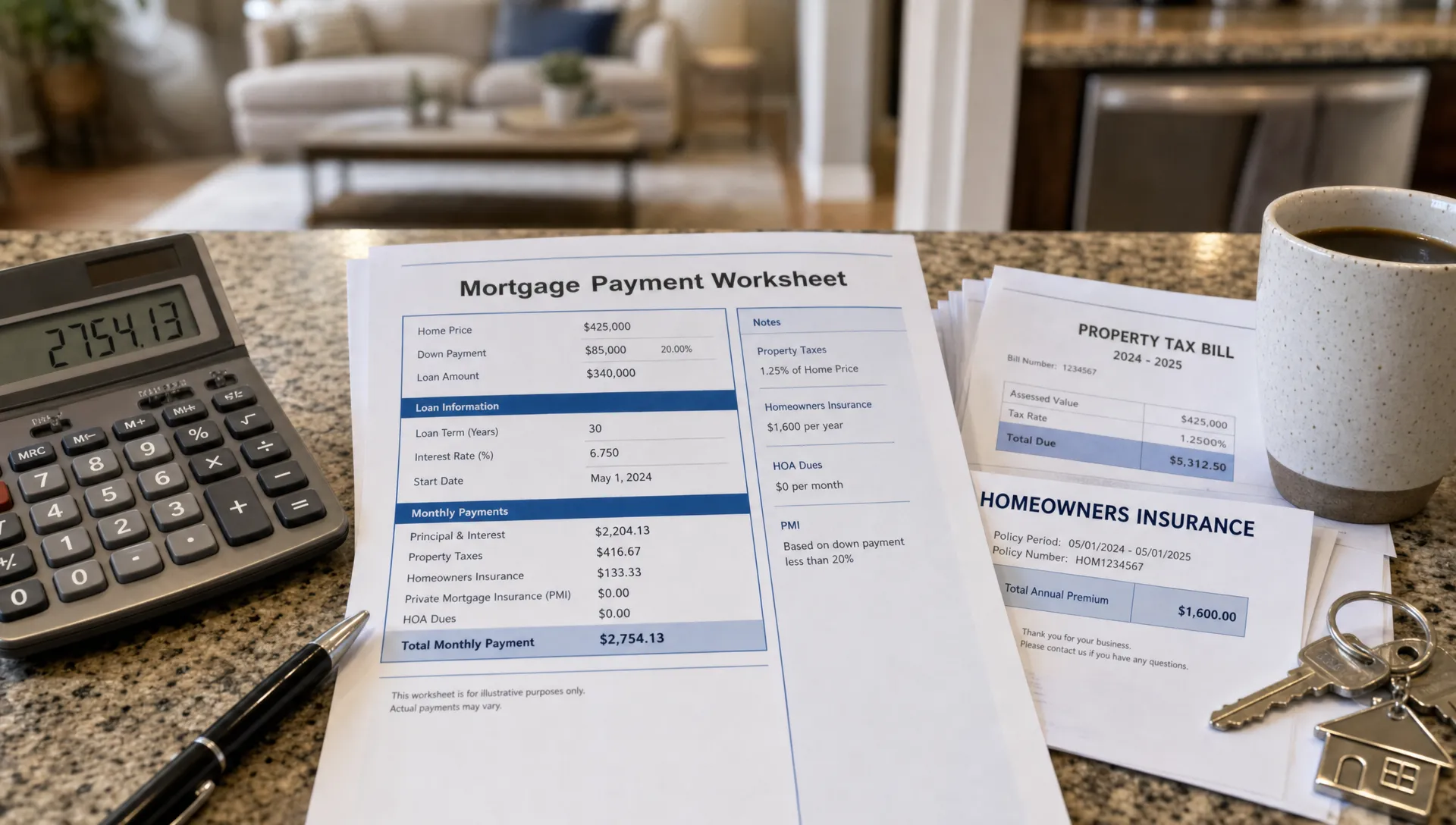
A common mistake is starting with the maximum purchase price instead of the monthly payment. When you choose a new home loan, work backward from a payment range that feels sustainable. Then include the full cost of homeownership, not only principal and interest.
Your actual housing cost may include property taxes, homeowners insurance, mortgage insurance, HOA dues, flood insurance, utilities, and maintenance. Those costs can vary significantly by location and property type. A condo with HOA dues may need a different loan strategy than a single-family home at the same sale price. A property with higher taxes may reduce your comfortable purchase range even if the mortgage rate looks competitive.
This is where a detailed pre-approval conversation becomes valuable. A good lender should help you test different purchase prices, down payment amounts, and loan structures before you are emotionally attached to a property. If you are still at the early research stage, New Era Lending’s guide to home loan options for 2026 can help you understand the main choices before you apply.
Match the loan type to your borrower profile
There is no universal best mortgage program. The right program depends on your credit profile, income documentation, savings, property type, military eligibility, location, and tolerance for upfront versus monthly costs.
Here is how the most common options generally differ:
- Conventional loans: These can work well for borrowers with solid credit, stable income, and enough savings for the required down payment and closing costs. They may offer flexibility across many property types, but pricing and mortgage insurance can depend heavily on credit score, down payment, and other risk factors.
- FHA loans: FHA-insured loans may be useful for buyers who need more flexible credit or down payment requirements. The U.S. Department of Housing and Urban Development explains that FHA loans are made by approved lenders and insured by the Federal Housing Administration, which affects eligibility and cost structure.
- VA loans: Eligible service members, veterans, and certain surviving spouses may benefit from VA-backed financing. The U.S. Department of Veterans Affairs provides eligibility information and details about the VA home loan benefit.
- USDA loans: USDA-backed loans may be an option for eligible buyers in qualifying rural or suburban areas, subject to income, property, and program requirements.
- Jumbo loans: These are used when the loan amount exceeds conforming loan limits. They often require stronger credit, more reserves, and more detailed underwriting.
The goal is not to chase the loan program with the most appealing headline. The goal is to find the program that gives you the right balance of approval strength, payment, cash to close, flexibility, and long-term cost.
Look past the interest rate
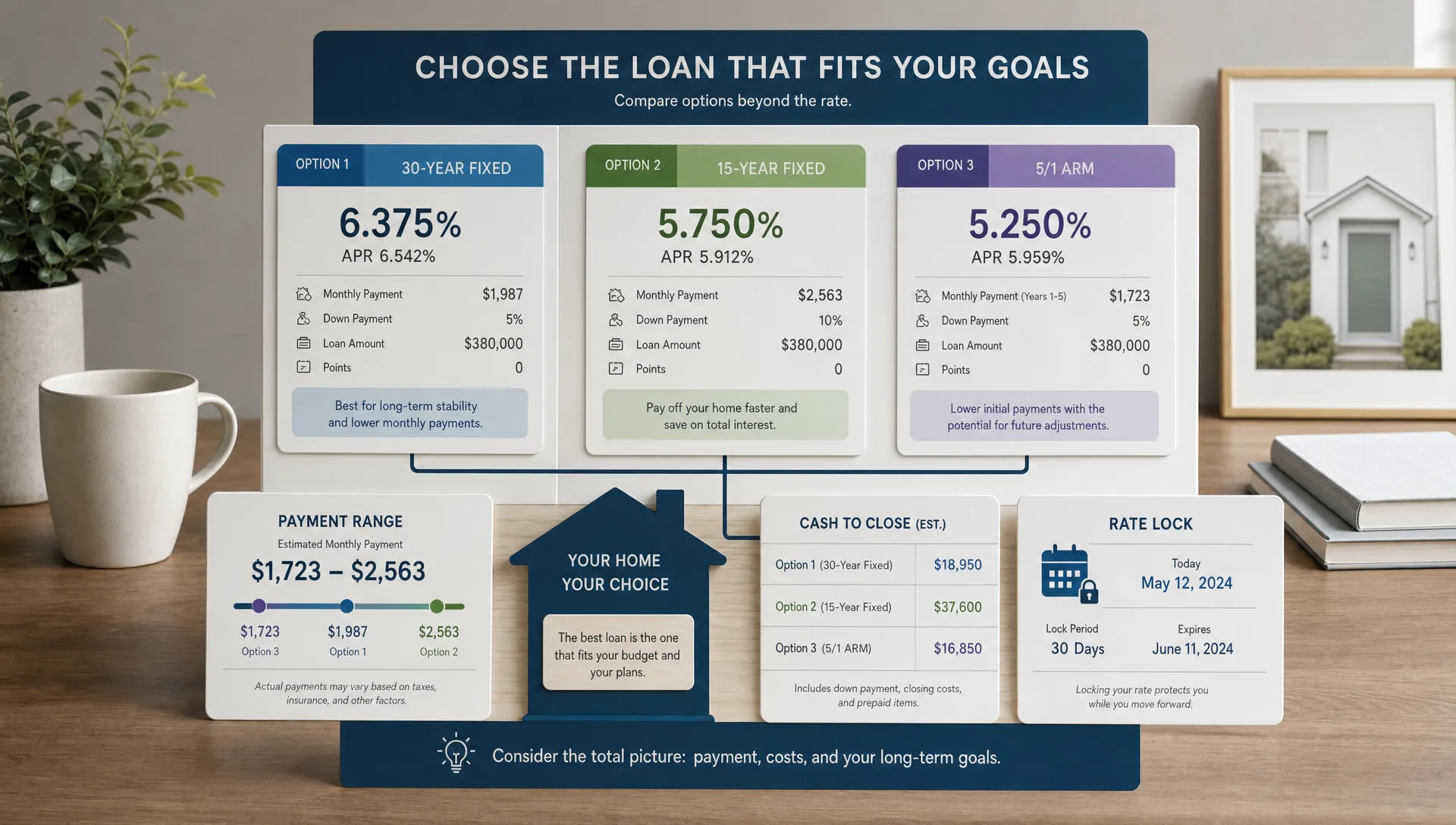
The interest rate matters, but it does not tell the whole story. A lower rate may come with discount points, higher lender fees, stricter qualification requirements, or less flexibility. A slightly higher rate may make sense if it reduces upfront cost and keeps more cash in your account after closing.
When comparing offers, look at the annual percentage rate, estimated closing costs, points, lender credits, mortgage insurance, prepaid items, and escrow setup. The Consumer Financial Protection Bureau’s Loan Estimate guide is a useful resource because it explains the standardized form lenders provide after application. The Loan Estimate helps you compare loan terms, projected payments, and closing costs in a consistent format.
Pay close attention to the difference between lender fees and third-party costs. Some costs are tied to the lender, while others may come from title companies, government recording fees, taxes, insurance, or escrow requirements. A reliable comparison should show which costs are fixed, which can change, and which are estimates.
Compare the payment over time, not just on day one
Some mortgage choices reduce the initial payment but may cost more later. Others require a higher payment now but can be more predictable over the life of the loan. Understanding this tradeoff is essential when choosing the right new home loan.
A fixed-rate mortgage gives you principal and interest stability, which can be valuable if you plan to stay in the home for a long time or want predictable budgeting. An adjustable-rate mortgage may begin with a lower rate for an initial period, but the payment can change later according to the loan terms. That may fit some buyers, but only if they understand the adjustment timeline and can handle potential payment increases.
Loan term also matters. A 30-year term often provides a lower monthly payment than a shorter term, but it usually means paying interest over a longer period. A 15-year or 20-year term may reduce total interest, but the higher payment can limit flexibility. The right answer depends on your budget and priorities.

Consider your cash-to-close strategy
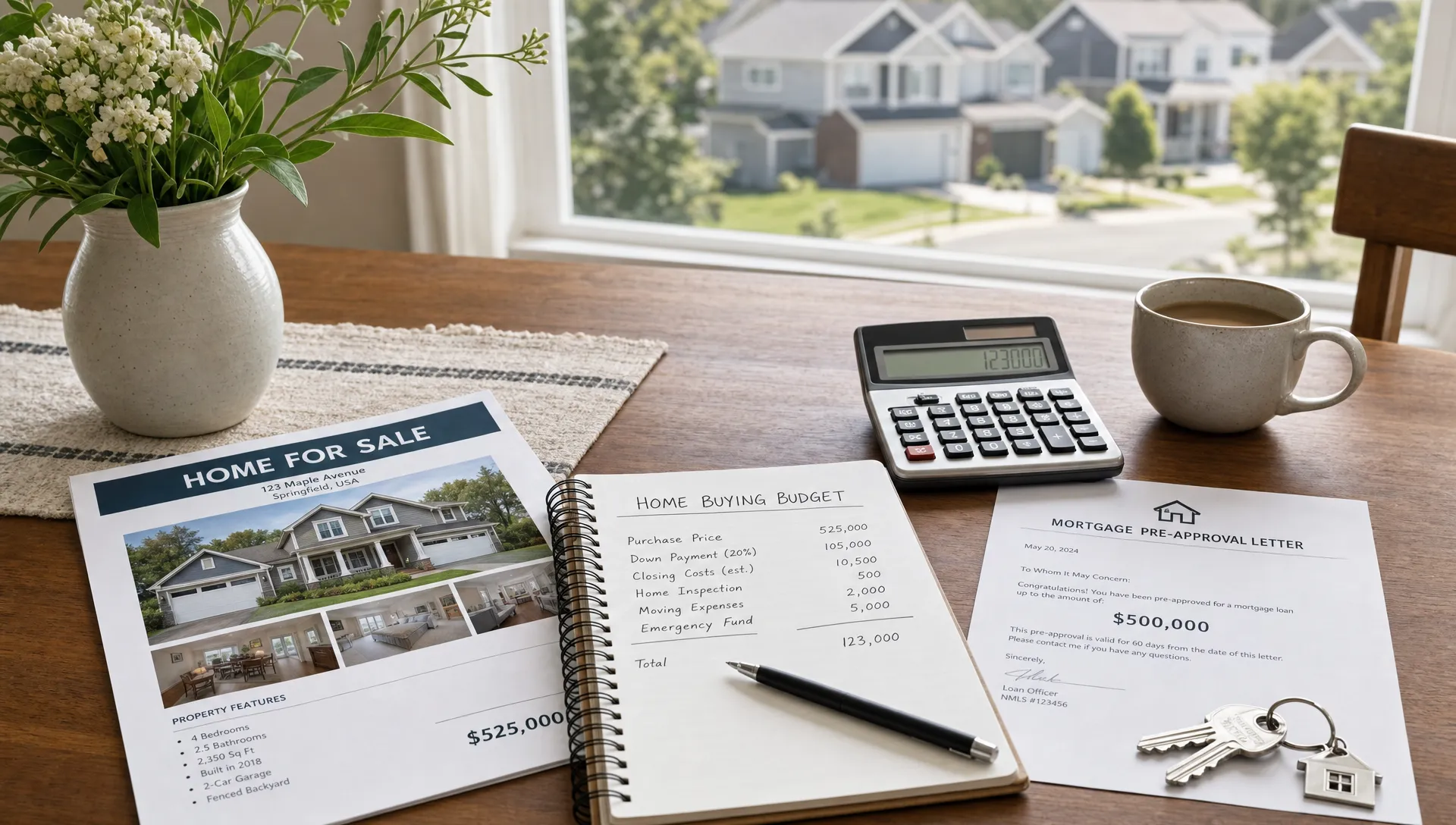
Down payment is important, but it is only one part of your cash needed at closing. Buyers also need to plan for closing costs, prepaid taxes, prepaid insurance, escrow deposits, inspections, moving costs, and immediate home expenses.
Putting more money down may lower your payment, reduce mortgage insurance, or improve pricing. But using nearly all of your cash to lower the loan amount can leave you financially vulnerable after closing. That matters because homeownership often comes with early expenses, from appliance replacements to furniture, repairs, and utility setup.
A better question is not simply how much can I put down. It is how much should I put down while still keeping enough reserves. A strong lender should show you several scenarios so you can see how different down payments affect monthly payment, mortgage insurance, and cash left after closing.
Think carefully about rate locks and timing
Mortgage rates can move between pre-approval, contract, underwriting, and closing. Once you are under contract, you may have the option to lock your rate for a specific period. A rate lock can protect you from market increases during the lock window, but timing, lock length, extension costs, and closing date all matter.
If your closing timeline is short and your budget is tight, locking may reduce uncertainty. If your timeline is unclear, you may need a more detailed discussion about lock options and potential risks. Rate decisions should be based on your contract timeline and tolerance for payment changes, not market guesses alone.
For a deeper look at this decision, review New Era Lending’s guide on when to lock your new home loan rate. It can help you understand why rate locks are a planning tool, not just a last-minute checkbox.
Evaluate the lender, not only the loan
The lender you choose can affect your experience as much as the mortgage program itself. A strong rate quote is helpful, but it is not enough if communication is poor, documentation requests are unclear, or closing timelines are missed.
Look for a lender who can explain tradeoffs clearly and provide transparent estimates. You should understand why one option costs more upfront, why another has a lower payment, and how each choice affects you over time. You should also feel comfortable asking questions without being rushed.
A modern mortgage process should combine convenience with guidance. Secure document uploads, e-signatures, and digital tools can make the process easier, but human expertise still matters when your file has nuance. New Era Lending combines smart mortgage technology with personalized guidance, which can be especially helpful when comparing purchase loans, refinancing paths, or equity access options across different borrower situations.
Before choosing a lender, consider whether they provide:
- Clear explanations of loan options and costs
- Realistic closing timelines based on your situation
- Transparent discussion of rates, points, and lender fees
- Secure and convenient document submission
- Responsive communication from pre-approval through closing
- Guidance that fits your goals instead of a one-size-fits-all recommendation
If you want a practical conversation guide, these questions to ask a home loan mortgage lender can help you compare lenders with more confidence.
Watch for warning signs before you commit
Some mortgage offers look better before the details are clear. If a quoted payment excludes taxes, insurance, HOA dues, or mortgage insurance, it may not reflect your real monthly cost. If a rate is advertised without explaining points or assumptions, it may not apply to your credit profile, property type, down payment, or lock period.
Be cautious if a lender avoids discussing total cash to close, cannot explain the difference between interest rate and APR, or pushes you toward one option without reviewing alternatives. You do not need to become a mortgage expert, but you should be able to understand the reason behind the recommendation.
Another red flag is pressure to waive important financial questions for speed. Fast approvals are valuable, but speed should not replace clarity. The best process helps you move efficiently while still understanding what you are signing.
Make the final decision with a simple framework
Once you have quotes and program options, narrow your decision with four questions.
First, does the payment fit your real budget after taxes, insurance, and other housing costs? Second, does the cash to close leave you with enough reserves? Third, does the loan structure match how long you expect to keep the home or mortgage? Fourth, do you trust the lender to communicate clearly and close on time?
If the answer to all four is yes, you likely have a strong fit. If one area feels uncertain, slow down and ask for another scenario. Mortgage decisions are easier when you compare complete options instead of isolated numbers.
Frequently Asked Questions
What is the most important factor when choosing a new home loan? The most important factor is overall fit. Interest rate matters, but you should also compare monthly payment, cash to close, mortgage insurance, loan term, rate stability, lender fees, and how the loan supports your long-term plans.
Should I choose the loan with the lowest interest rate? Not always. The lowest rate may require points or higher upfront costs. Compare the Loan Estimate, APR, closing costs, and how long you plan to keep the loan before deciding whether the lower rate is truly worth it.
How much should I put down on a new home loan? The right down payment depends on your savings, loan program, payment goal, and need for reserves after closing. A larger down payment can lower costs, but keeping enough cash for emergencies and home expenses is also important.
Is a fixed-rate mortgage better than an adjustable-rate mortgage? A fixed-rate mortgage may be better if you want predictable payments or plan to stay long term. An adjustable-rate mortgage may fit some short-term ownership plans, but you should understand how and when the payment can change.
When should I talk to a lender? It is smart to talk to a lender before you start making offers. Early guidance can help you understand your budget, compare loan options, prepare documents, and avoid surprises during underwriting.
Choose your new home loan with clarity
The right new home loan should make homeownership feel more manageable, not more confusing. By comparing payment comfort, total costs, loan structure, cash to close, and lender support, you can choose a mortgage that fits both your purchase and your future.
If you are ready to compare options, New Era Lending can help you explore personalized mortgage solutions with smart tools and human guidance from application to closing.