
.jpg)
.jpg)





.jpg)
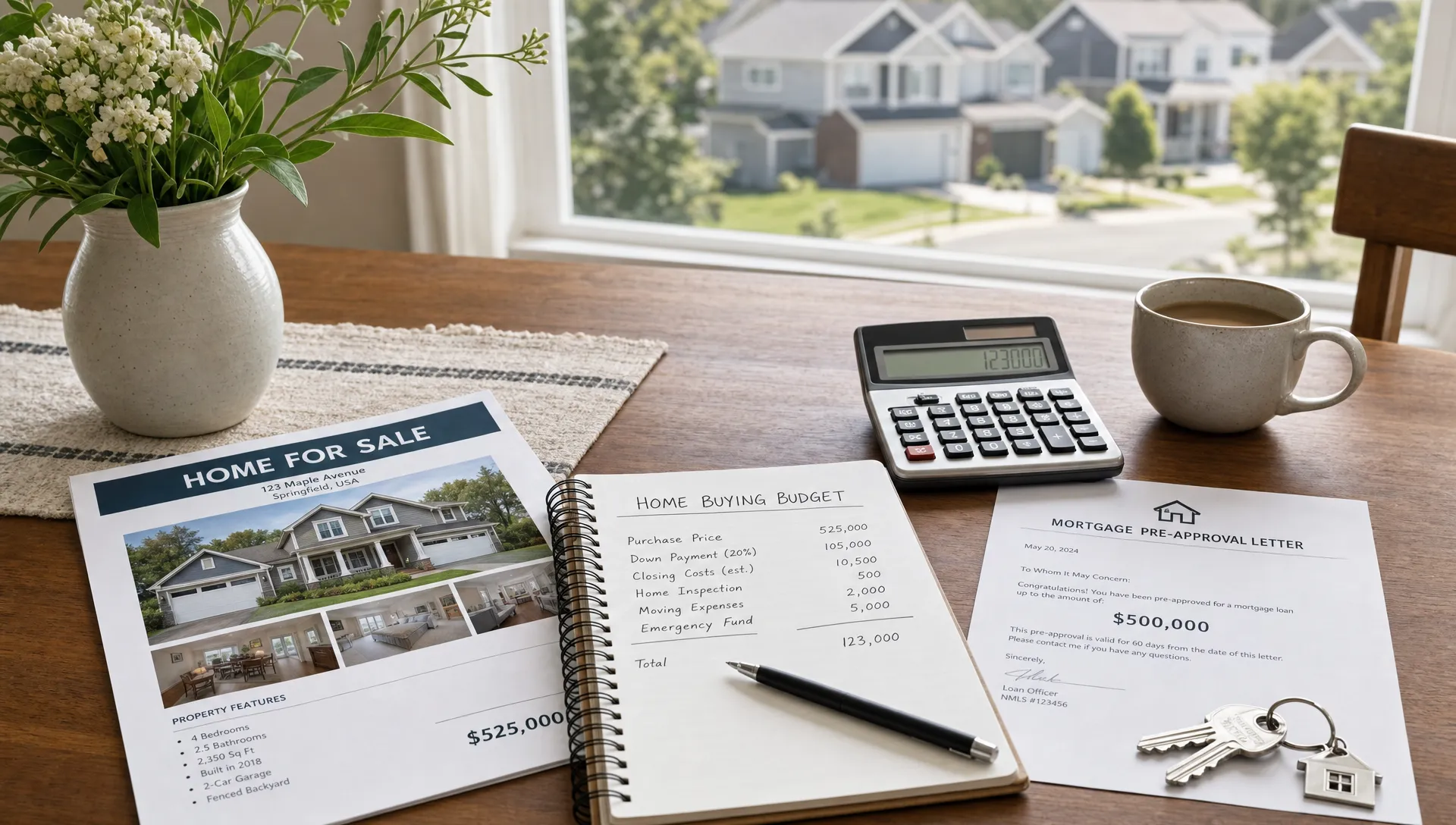

First-Time Home Loan Guide for 2026 Buyers

Buying your first home in 2026 is not just about finding a property you love. It is about understanding how the mortgage process works before you make an offer, so you can move with confidence instead of guesswork.
A first-time home loan is not one single product. It is a financing path built around your credit, income, down payment, debts, location, and long-term plans. The right loan for one buyer may be the wrong fit for another, which is why the best first step is not browsing listings. It is learning what lenders look for and how different mortgage options affect your monthly payment and cash due at closing.
This guide walks through the major decisions 2026 buyers should make before applying, including loan types, pre-approval, down payment planning, closing costs, and how to compare lenders.
What a first-time home loan really means
In most cases, first-time buyer status means you have not owned a primary residence within the past three years. That definition matters because some loan programs, grants, and local assistance options use it to determine eligibility.
However, being a first-time buyer does not automatically mean you need a special mortgage. Many first-time buyers use conventional, FHA, VA, or USDA loans, depending on their qualifications. Others combine a standard mortgage with down payment assistance or seller credits to reduce upfront costs.
The key is to avoid thinking of your mortgage as just an interest rate. A first-time home loan includes several moving parts: the loan program, rate structure, term length, mortgage insurance, closing costs, cash reserves, and how the payment fits your life after move-in.
Start with the monthly payment, not the purchase price
A home price can look affordable online while the real monthly payment tells a different story. In 2026, first-time buyers should begin by estimating the full housing payment, not just principal and interest.
Your complete monthly housing cost may include mortgage principal, mortgage interest, property taxes, homeowners insurance, mortgage insurance, HOA dues, and sometimes flood insurance or special assessments. Utilities, maintenance, and commuting costs can also change after you move.
A good affordability target should leave room for regular life. You may qualify for a larger loan than you feel comfortable paying. That does not mean you should use the full approval amount.
Before you apply, estimate three numbers:
- Comfortable monthly payment: The payment you can manage while still saving, paying other bills, and handling emergencies.
- Maximum monthly payment: The highest payment you would accept only if the home clearly fits your needs.
- Cash-to-close range: The amount you can realistically bring to closing without draining every dollar you have.
If you are just beginning, New Era Lending’s article on what first-time buyers should know before they start is a useful companion to this guide because it explains early budgeting mistakes in plain language.
Know what lenders review before you apply
Mortgage approval is based on your overall financial profile. Lenders are not looking at one number in isolation. They are checking whether your income, debts, credit history, assets, and the property all support the loan request.
Your credit score can influence the programs you qualify for, your interest rate, and your mortgage insurance costs. A higher score often gives you more options, but a perfect score is not required to buy a home.
Income is reviewed for stability and documentation. W-2 employees usually provide pay stubs, W-2s, and tax information. Self-employed borrowers may need business and personal tax returns, profit and loss details, or other documentation showing consistent earnings.
Debt-to-income ratio is another major factor. This compares your monthly debt obligations to your qualifying income. Student loans, auto loans, credit cards, personal loans, and other recurring debts may all matter.
Assets are also reviewed. Lenders want to verify your down payment, closing costs, and sometimes reserves, which are funds left over after closing. Large deposits may need to be documented, so avoid moving money around unnecessarily before applying.
Compare first-time home loan options for 2026
There is no universal best mortgage for first-time buyers. The right fit depends on your credit, military service history, income level, property location, savings, and long-term goals.
Conventional loans are common for buyers with solid credit and stable income. Some conventional programs allow low down payments for qualified borrowers, though mortgage insurance may apply when the down payment is below 20 percent.
FHA loans can be helpful for buyers who need more flexible credit guidelines or a lower down payment path. FHA financing includes mortgage insurance, so it is important to compare both upfront and monthly costs.
VA loans are designed for eligible veterans, active-duty service members, and certain surviving spouses. They can offer major benefits, including no required down payment for qualified borrowers, though VA funding fees and eligibility rules should be reviewed carefully.
USDA loans may help eligible buyers purchase in qualifying rural or suburban areas. These loans can offer no down payment options for qualified borrowers, but income and property location limits apply.
Some buyers also use down payment assistance, grants, forgivable second mortgages, deferred loans, or local assistance programs. These can reduce upfront cash needs, but they may come with income limits, location rules, education requirements, or repayment terms. If upfront funds are your biggest obstacle, read New Era Lending’s guide to down payment assistance for first time home buyers before assuming you need years more to save.
You may also see buydowns, lender credits, and seller concessions discussed more often in 2026. These can be useful, but they should be evaluated based on your full loan estimate, not just the short-term payment. For a broader breakdown of mortgage structures, see this guide to home loan options for 2026.
Get pre-approved before you shop seriously
Pre-approval is more than a casual estimate. A strong pre-approval helps you understand your budget, identify documentation issues early, and show sellers that you are prepared to finance the purchase.
During pre-approval, a lender typically reviews your credit, income, assets, debts, and desired loan details. The more complete your documentation is, the more useful the pre-approval becomes.
Common documents may include recent pay stubs, W-2s, tax returns, bank statements, photo identification, proof of other income, and documentation for large deposits. If you are self-employed, expect more detailed income review.
Because many mortgage steps now happen online, security matters. Use private Wi-Fi, strong passwords, and a trusted device when uploading pay stubs, tax returns, and bank statements. This is especially important if you are self-employed and your home office overlaps with your business systems, since companies that handle sensitive customer or financial data often rely on dependable managed IT services to reduce risk and keep systems protected.
A good pre-approval should also explain your estimated payment, likely cash to close, and any conditions that could affect final approval. If the number surprises you, ask questions before you start touring homes.

Plan for cash to close, not just the down payment
One of the most common surprises for first-time buyers is that the down payment is only one part of the cash needed to buy a home.
Closing costs may include lender fees, title charges, escrow or attorney fees depending on the state, appraisal fees, recording fees, prepaid homeowners insurance, property tax escrows, and prepaid interest. The exact amount depends on your loan, location, purchase price, and timing.
You should also budget for inspections, moving costs, basic repairs, furniture, utility deposits, and emergency savings after closing. A home can be affordable on paper but stressful if you move in with no cushion.
There are ways to reduce upfront cash. Seller credits may help cover closing costs if negotiated in the purchase contract. Lender credits may reduce upfront expenses in exchange for a different rate structure. Assistance programs may cover down payment or closing costs for eligible buyers.
The tradeoff is that every credit or assistance option has rules. Some affect your interest rate. Some affect your monthly payment. Some must be repaid if you sell or refinance too soon. Always ask how the option changes the total cost of the loan, not just the amount due at closing.
Understand rates without trying to time the market perfectly
Interest rates matter because they affect affordability, payment, and sometimes buying power. But waiting for the perfect rate can backfire if home prices rise, inventory tightens, or your personal situation changes.
Instead of trying to predict the market, focus on what you can control. Improve your credit where possible, reduce high-interest debt, save consistently, compare loan scenarios, and understand how different rates affect your payment.
When you receive a loan estimate, look beyond the headline rate. Review points, lender fees, mortgage insurance, annual percentage rate, estimated cash to close, and whether the rate is fixed or adjustable. A lower rate is not always the better deal if it requires high upfront costs that do not fit your timeline.
For example, paying points may make sense if you expect to keep the loan for a long time. It may be less useful if you plan to move or refinance within a few years. A temporary buydown may help with early payments, but you need to be comfortable with the payment after the buydown period ends.
Choose a lender who explains the why
For first-time buyers, communication can be just as important as the loan program. You are not only comparing rates. You are choosing the team that will guide you through documentation, deadlines, underwriting conditions, appraisal questions, and closing.
A strong lender should be able to explain your options clearly, compare scenarios, provide realistic timelines, and tell you what could create delays. If you feel rushed, confused, or unable to get straight answers, that is a warning sign.
Ask how the lender handles document uploads, e-signatures, pre-approval updates, and communication with your real estate agent. Ask whether they can compare multiple loan options side by side. Ask what happens if your credit, income, or purchase price changes before closing.
New Era Lending combines mortgage technology with human guidance, which can be especially valuable when you want a faster process without losing personal support. If you are still evaluating providers, this article on how to choose a lender as a first-time home buyer can help you compare more than just interest rates.
Follow a realistic first-time buyer timeline
Every purchase is different, but most first-time buyers benefit from working backward from the desired move date. Starting early gives you time to fix credit issues, save more cash, compare loan options, and understand your comfort zone before emotions enter the process.
A practical timeline might look like this:
- Six to twelve months before buying: Check credit, reduce unnecessary debt, build savings, and avoid major new financial obligations.
- Three to six months before buying: Talk with a lender, review loan options, estimate payment ranges, and gather financial documents.
- One to three months before buying: Get pre-approved, choose a real estate agent, tour homes, and refine your budget based on real listings.
- After your offer is accepted: Complete inspections, finalize your loan application, respond quickly to underwriting requests, review disclosures, and prepare for closing.
The biggest rule during this timeline is consistency. Do not open new credit accounts, finance furniture, change jobs, make large unexplained deposits, or move money between accounts without talking to your lender first. Even normal financial activity can require documentation once your loan is in process.
Avoid the biggest first-time home loan mistakes
First-time buyers usually make mistakes when they move too quickly or focus on the wrong number. The goal is not just to get approved. The goal is to buy a home you can afford and keep comfortably.
Avoid shopping at the top of your approval amount unless the payment still fits your full budget. Avoid assuming online calculators include every cost. Avoid comparing lenders based only on rate without reviewing fees and loan structure. Avoid skipping inspections just to make an offer look stronger unless you fully understand the risk.
Most importantly, avoid treating pre-approval as the final finish line. Final approval depends on the property, appraisal, title review, updated documentation, and underwriting conditions. Stay responsive and keep your finances stable until the loan closes.
Frequently Asked Questions
What is the best first-time home loan in 2026? The best first-time home loan depends on your credit, income, savings, location, military eligibility, and long-term plans. Conventional, FHA, VA, USDA, and assistance-based options can all be strong choices for the right buyer.
Do I need 20 percent down to buy my first home? No. Many qualified first-time buyers purchase with less than 20 percent down. Some programs allow low or no down payment options, although mortgage insurance, funding fees, eligibility rules, or income limits may apply.
When should I get pre-approved? Get pre-approved before you shop seriously or make offers. Pre-approval helps you understand your real budget, identify documentation issues, and show sellers you are financially prepared.
Can I buy a home if I have student loans? Yes, student loans do not automatically prevent you from getting a mortgage. Lenders will review how the payment affects your debt-to-income ratio and overall affordability.
What should I avoid before closing on my first home? Avoid new debt, job changes without lender guidance, large unexplained deposits, missed payments, and major purchases. Keep your finances stable until the loan is fully closed.
Take the next step with confidence
A first-time home loan does not have to feel overwhelming. When you understand your payment, compare loan options, plan for cash to close, and work with a lender who explains each step, the process becomes much easier to manage.
New Era Lending helps first-time buyers explore personalized mortgage options with smart technology and real human guidance. If you are preparing to buy in 2026, start with a clear conversation about your goals, your budget, and the loan path that fits your life, not just the maximum amount you can borrow.