








What to Budget for a New Jersey Mortgage Beyond the Down Payment
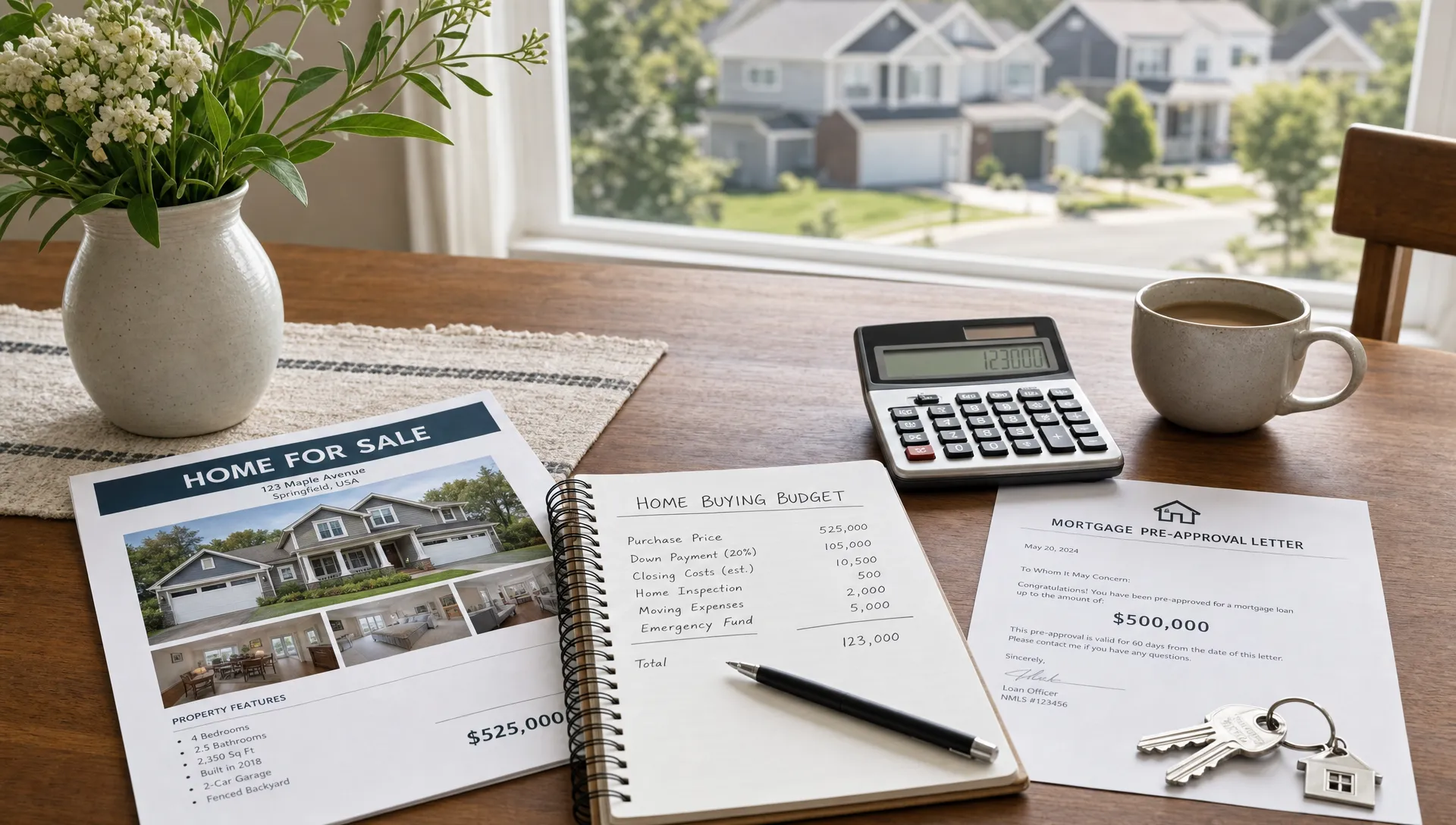
A New Jersey mortgage budget needs to cover more than the down payment and the payment shown in a listing calculator. Closing fees, prepaid insurance, property tax escrows and moving expenses can all require cash before you settle in. After closing, taxes, insurance and maintenance continue to affect what the home actually costs.
The practical approach is to build three separate budgets: cash needed to complete the purchase, the full monthly housing cost and money kept in reserve. Keeping those categories separate helps you avoid counting the same expense twice or using your entire savings balance at closing.
Start with three separate budget numbers
Your down payment reduces the amount you borrow. Closing costs pay for financing and completing the transaction. Reserves are money you retain after the purchase, whether your lender requires them or you choose to maintain them for emergencies.
Those distinctions matter when reviewing a New Jersey mortgage estimate. A lender may approve a payment that fits its underwriting rules, but that does not establish what you can comfortably afford after childcare, transportation, retirement contributions and other household expenses.
Set a monthly comfort limit first. Then work backward to determine how much cash you can contribute without exhausting your emergency fund. Your maximum preapproval amount should be a ceiling to evaluate, not a spending target.
Upfront expenses beyond your down payment
Lender, legal and settlement charges
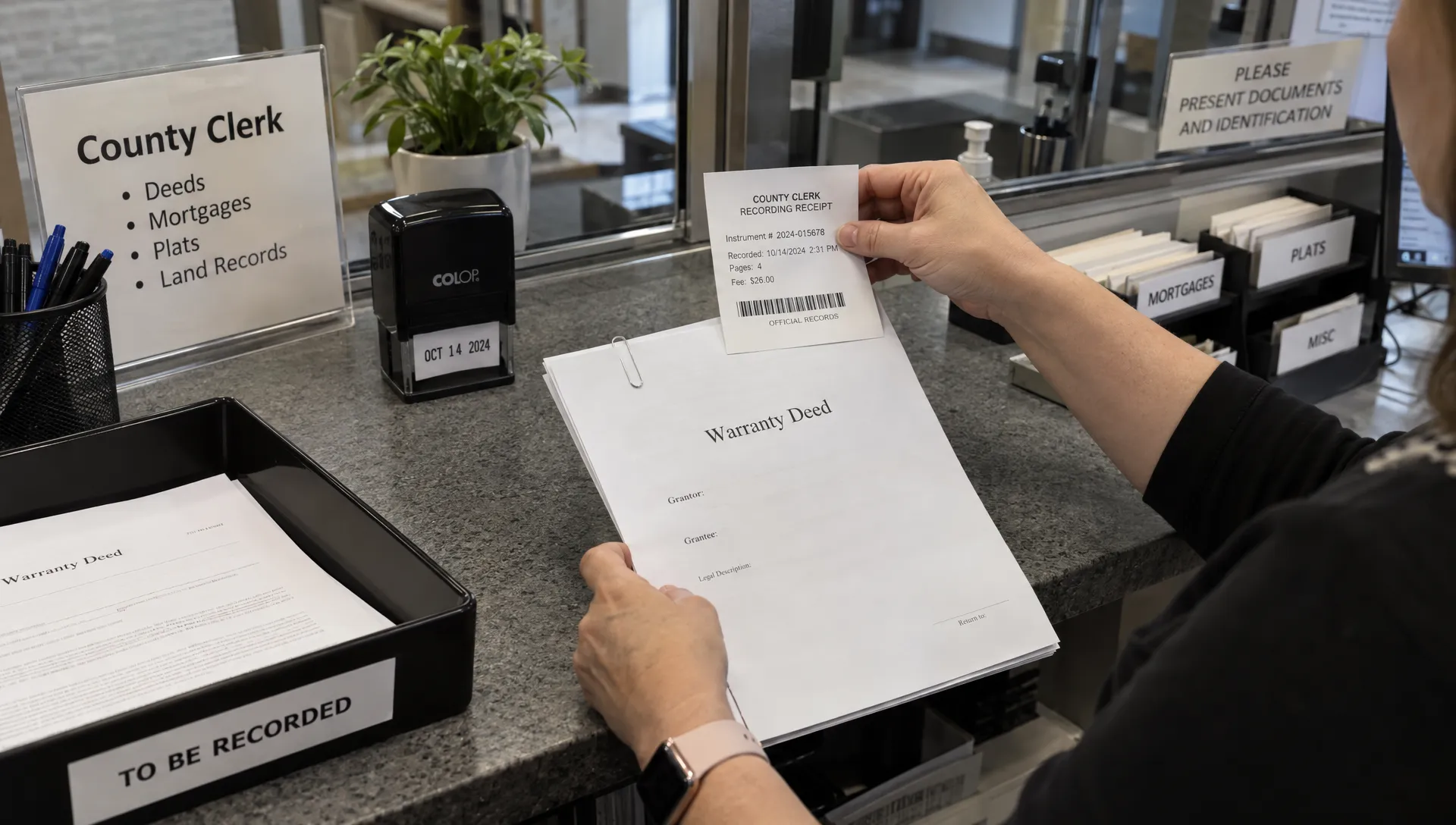
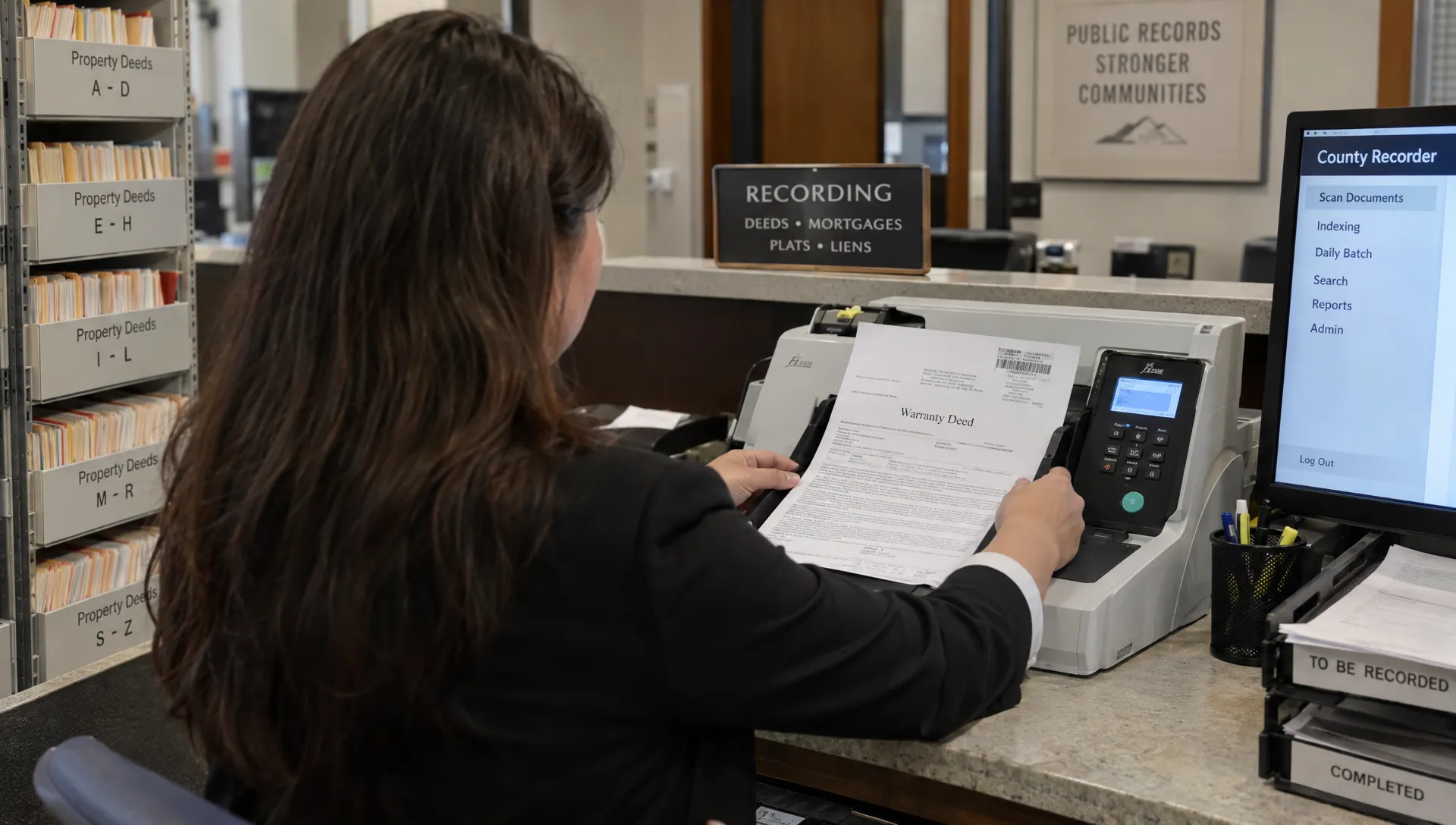
Start with the fees associated with obtaining the loan and transferring ownership. Depending on the transaction, these can include origination charges, an appraisal, credit-report fees, title services, recording charges and attorney fees.
An appraisal estimates value for the lender. It does not replace a home inspection. Budget separately for inspections appropriate to the property, which might include radon testing, a sewer evaluation or an investigation of an older underground oil tank.
Title charges also deserve a closer look. A lender’s title insurance policy protects the lender’s interest, while an owner’s policy protects the buyer against covered title problems. Ask which policies and settlement services are included in the quote.
New Jersey’s standard Realty Transfer Fee is generally a seller obligation. Higher-value transfers have additional rules, so have your attorney or settlement agent confirm the current allocation of transfer charges rather than relying on an older online calculator. Your contract and the applicable law determine what belongs on your side of the settlement statement.
Prepaid expenses and initial escrow deposits
Some cash collected at closing is not a service fee. It pays expenses in advance or establishes an account for future bills.
For a New Jersey mortgage with an escrow account, the lender typically collects money toward property taxes and homeowners insurance, then pays those bills when due. The initial deposit depends on the closing date, billing schedule and permitted account cushion.
You may also need to pay the first year’s homeowners insurance premium before or at closing. Prepaid interest covers the period between the closing date and the end of that month. Closing later in the month generally reduces that particular charge, but it does not automatically reduce the overall cost of owning the home.
Property tax adjustments are another separate item. The settlement agent allocates taxes between buyer and seller based on the closing date and taxes already paid or owed.
Do not add these expenses twice. If prepaid insurance and initial escrow funding are already included in your estimated closing costs, they should not appear again as additional cash-to-close charges.
An illustrative cash-to-close calculation
Consider a hypothetical $450,000 purchase with a 10% down payment. The following figures demonstrate the arithmetic, not a quote or a recommended down payment.
| Item | Illustrative amount |
|---|---|
| Purchase price | $450,000 |
| Down payment | $45,000 |
| Loan amount before any financed program fees | $405,000 |
| Closing costs, including prepaids and initial escrow | $12,000 |
| Earnest money deposit already paid | $5,000 |
| Remaining cash due at closing | $52,000 |
Here, $45,000 plus $12,000, minus the $5,000 deposit, leaves $52,000 due at closing. The deposit is part of the buyer’s contribution, not an additional charge on top of it.
Your New Jersey mortgage cash-to-close figure can change with seller credits, lender credits, tax adjustments and other transaction details. Inspection costs paid earlier, moving expenses and retained savings also sit outside this simplified calculation.
Calculate your full New Jersey mortgage payment
Use the property’s tax bill, not a statewide average
Two similarly priced homes in different New Jersey municipalities can carry materially different property tax bills. Even within the same town, assessments and property characteristics can produce different costs.
Ask for the current tax bill and verify it with the municipal tax office. Check whether the figure shown in the listing reflects an exemption, deduction or other benefit that may not apply to you.
New construction requires particular care. An existing bill may reflect the land or an incomplete assessment rather than the completed home. Ask how the fully assessed property is expected to be taxed and whether an added assessment could follow.
Do not assume a purchase automatically resets every New Jersey property’s assessment to its sale price. Assessment practices, revaluations and property changes need local confirmation.
For budgeting, divide the verified annual tax amount by 12. Then leave room for increases rather than treating today’s bill as permanent.
Add insurance, flood coverage and mortgage insurance
Get an insurance quote for the actual address before committing to a monthly payment. The home’s condition, replacement cost, location, deductible and coverage choices all affect the premium.
Standard homeowners insurance generally does not cover flood damage. Use the FEMA Flood Map Service Center to investigate mapped flood hazards, then discuss the property with your insurance agent. A location outside a high-risk mapped zone does not mean the property has no flood risk.
For a New Jersey mortgage, ask whether flood insurance will be required and obtain a quote early if it is relevant. Also review deductibles and exclusions that could leave you paying more out of pocket after a loss.
Mortgage insurance is a different expense. Conventional loans with less than 20% down commonly require private mortgage insurance, or PMI. FHA loans generally have upfront and annual mortgage insurance charges, while eligible VA loans do not require monthly mortgage insurance but may carry a funding fee unless an exemption applies. Cancellation rules differ by program, so do not assume every charge disappears at the same equity level.
A monthly payment example
Using the same hypothetical $405,000 loan, assume a 30-year fixed rate of 6.50%. That produces approximately $2,560 in monthly principal and interest. This rate is an illustration, not a current offer.
| Monthly expense | Illustrative amount |
|---|---|
| Principal and interest | $2,560 |
| Property taxes, assuming $10,800 annually | $900 |
| Homeowners insurance, assuming $1,800 annually | $150 |
| Mortgage insurance placeholder | $150 |
| Total before HOA dues, utilities and maintenance | $3,760 |
The mortgage insurance figure is only a placeholder. Your actual charge depends on the loan program and borrower characteristics. Flood insurance, if applicable, would also need to be added.
This example shows why a New Jersey mortgage should be evaluated using the complete payment, not principal and interest alone. The $3,760 total still excludes utilities, routine repairs, association dues and personal living expenses. New Era Lending’s guide to monthly mortgage costs buyers often miss explains how those additional expenses affect affordability.
Compare Loan Estimates on matching assumptions
A lower interest rate can require more cash upfront. A smaller cash-to-close figure can come with a higher rate. Compare offers for the same loan amount, program, term and rate-lock period, preferably obtained close together in time.
The Consumer Financial Protection Bureau’s Loan Estimate guide explains where the standardized form displays loan terms, projected payments and closing costs. Generally, lenders must provide this form within three business days of receiving an application.
Focus your comparison on these items:
- Origination charges: Identify lender fees separately from third-party charges.
- Discount points: Confirm the upfront price and the payment reduction being purchased.
- Lender credits: Ask whether accepting a credit changes the interest rate.
- APR: Compare this broader borrowing-cost measure alongside the rate, fees and expected ownership period.
- Rate-lock terms: Confirm the expiration date, extension charges and what happens if closing is delayed.
APR does not represent every expense of owning a home, including property taxes and homeowners insurance. Nor does the lowest APR necessarily identify the best choice for someone expecting to sell soon.
When comparing New Jersey mortgage offers, keep estimated taxes and insurance consistent. An unrealistically low tax estimate can make one lender’s payment look cheaper without making the loan itself better. For a closer look at points and credits, review how to lower rates without hurting your budget.
Keep moving costs and reserves outside closing funds
The balance left after settlement matters as much as the amount you bring to closing. Separate any lender-required reserves from the emergency savings you want available for daily life.
A lender may count qualifying assets toward reserve requirements without collecting that money. Those underwriting requirements are not a substitute for deciding how much accessible cash your household needs.
Plan a move-in allowance for movers, utility deposits, locks, basic tools and immediate repairs. Separate necessities from discretionary purchases, whether that means new furniture or sheepskin boots and slippers for winter. Those purchases belong in your personal move-in budget, not in the lender’s closing-cost total.
Your New Jersey mortgage plan should also account for the property’s likely near-term needs. An inspection suggesting an aging boiler or roof deserves a different reserve strategy from a home with recently replaced systems.
For a condominium or homeowners association, review the budget, reserve information and any pending special assessments. Association dues alone may not reveal the full financial obligation. Ask what the dues cover so you do not accidentally omit, or double-count, services such as water or exterior maintenance.
Check assistance and county loan limits early
Confirm assistance before treating it as available cash
The New Jersey Housing and Mortgage Finance Agency is an official starting point for state homebuyer financing and down payment assistance information.
Before relying on assistance for a New Jersey mortgage, confirm current income and purchase-price limits, eligible properties, participating lenders and any buyer-education requirements. Ask whether the assistance is a grant or a second loan and whether repayment or forgiveness conditions apply.
Funding availability and program rules can change. Do not subtract an advertised assistance amount from your required savings until your lender confirms that you and the property qualify and explains how the funds will reach closing.
Verify the limit for the county and property type
Conforming loan limits vary by county and number of units. Check the current-year FHFA conforming loan limits for the property’s location rather than assuming one statewide threshold applies.
A loan above the applicable conforming limit generally falls into jumbo territory. Jumbo programs may have different down payment, credit and reserve requirements. Establish that classification early because it can affect how much cash you need to retain after closing, not just how much you put down.
Test the budget before making an offer
Run a second version of your housing budget with higher taxes and insurance, a realistic maintenance allowance and any known repairs. If the payment only works when every estimate stays at its lowest possible level, reconsider the purchase price or cash contribution.
Also check timing. Inspections and some other charges may be due before closing, while earnest money becomes unavailable for other spending once deposited.
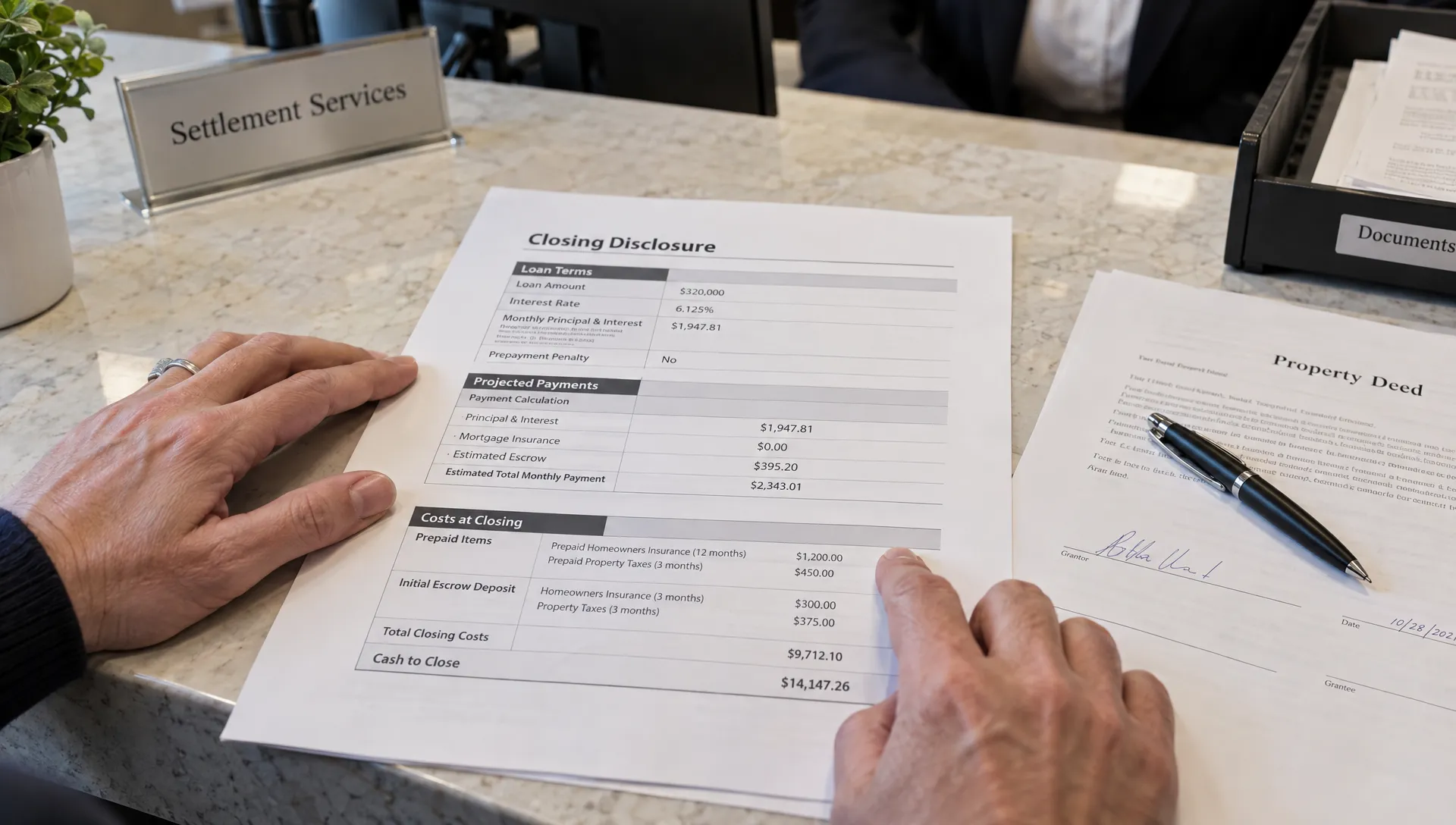
As your New Jersey mortgage moves toward settlement, compare the Closing Disclosure with the Loan Estimate and ask about material changes. For most covered purchase mortgages, you must receive the Closing Disclosure at least three business days before closing. Use that review period to verify the final cash-to-close amount and payment, not merely the interest rate.
Frequently asked questions
How much should I save beyond the down payment? Add your itemized closing-cost estimate, inspections, moving expenses and immediate repairs, then preserve a separate emergency fund. A percentage-based shortcut cannot account for a particular property’s taxes, insurance or condition.
Can closing costs be covered by seller or lender credits? Eligible charges may be offset by credits, subject to loan-program and transaction limits. Lender credits commonly involve accepting a higher rate. Credits generally cannot replace your required down payment, so have the lender explain the permitted allocation.
Can my payment increase with a fixed-rate loan? Yes. The scheduled principal-and-interest payment generally remains fixed, but taxes, insurance and escrow adjustments can change the total amount due. HOA dues and other ownership expenses can rise separately.
Is an escrow account the same as an emergency fund? No. Escrow holds money for designated bills such as property taxes and insurance. It is not a source of readily available cash for a broken appliance, job loss or moving expenses.
Build your budget around the actual property
Before making an offer, gather the address-specific tax bill, insurance quote, association information and an itemized loan estimate. Those documents turn a rough affordability calculation into a more useful purchase budget.
Discuss the numbers with New Era Lending to evaluate financing options and understand the cash needed at closing. The goal is a payment you can support while keeping enough savings for life after the move.