








Is Your Loan Right for Buying a Second Home?
Is your loan right for buying a second home, or does it simply meet a lender’s approval rules? Those are different questions. A mortgage can qualify on paper yet leave too little room for repairs, retirement savings or the cost of maintaining two properties. The better test is whether the financing matches how you will use the home, preserves enough cash after closing and remains manageable when circumstances change.
Start With How You Will Actually Use the Property
Before comparing rates, describe your intended use accurately. A place you visit for family vacations is different from a property you primarily operate as a rental. Calling both a “second home” does not make them eligible for the same financing.
Under Fannie Mae’s occupancy requirements, an eligible second home generally must be a one-unit property suitable for year-round use that the borrower occupies for part of the year. The borrower must retain control over occupancy. Rental arrangements can affect eligibility, and rental income cannot be used to qualify under Fannie Mae’s second-home rules.
Tell your lender if you expect to rent the property, use a management company or eventually make it your primary residence. Ask how those plans affect the proposed financing rather than assuming occasional personal use settles the classification.
Our guide to financing a vacation-home purchase explains the qualification basics. For this decision, the key point is that actual occupancy can make a loan right for one purchase and unsuitable for another.
Build a Budget That Includes Both Homes
Your lender’s debt-to-income calculation is not a complete household spending plan. It considers qualifying income and required debt payments, but it does not capture every expense that affects your comfort with two homes.
Start with your current housing costs, then add the second property’s principal and interest, property taxes, insurance and any association dues. Include utilities, maintenance, travel and services you may need when the property is vacant.
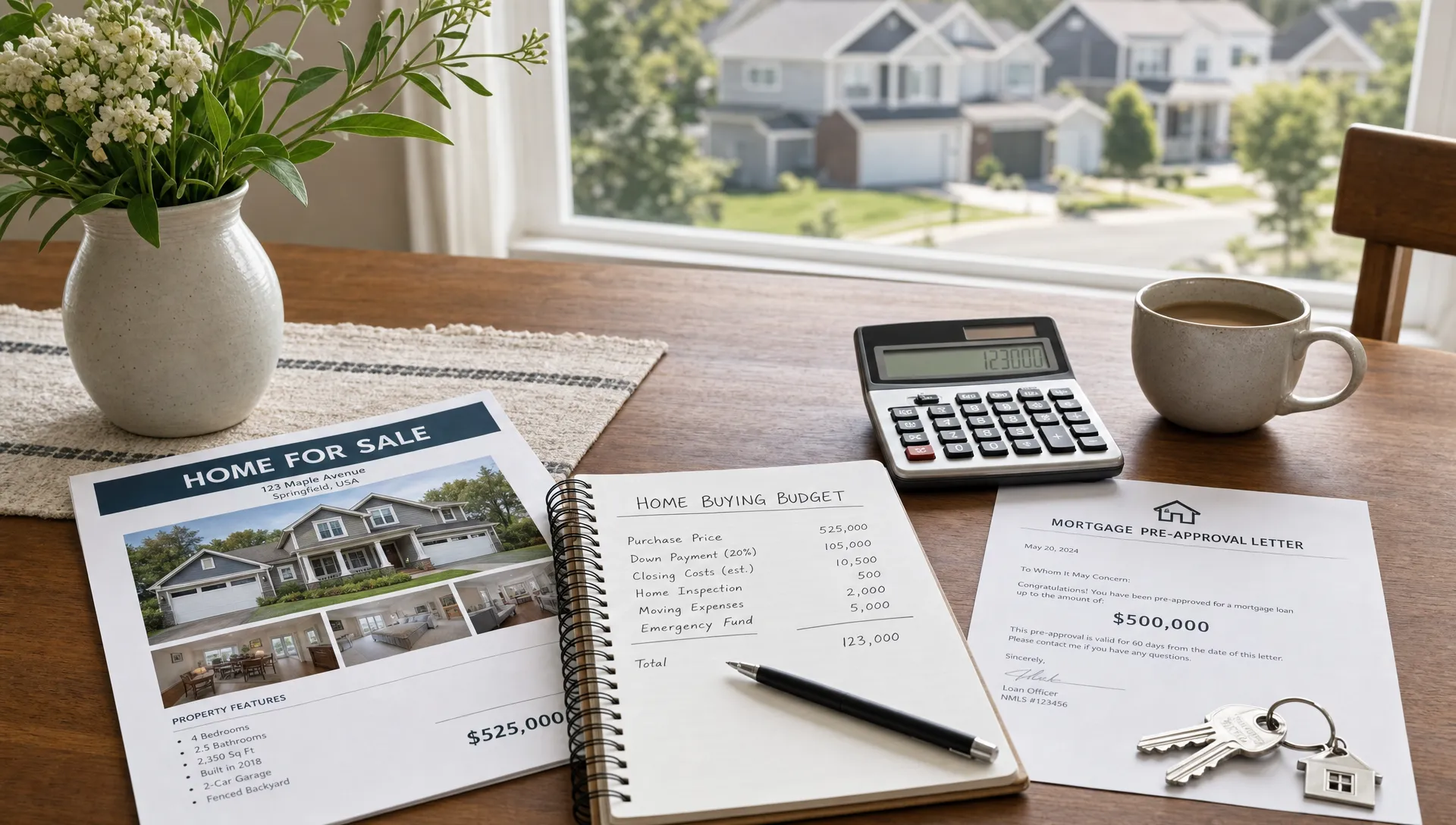
Here is a hypothetical monthly budget, not a loan quote or recommended spending limit:
| Budget item | Illustrative monthly amount |
|---|---|
| Current home’s total housing payment | $2,400 |
| Second home’s principal and interest | $2,100 |
| Second home’s taxes and insurance | $650 |
| Second home’s association dues | $200 |
| Second home’s utilities and upkeep allowance | $450 |
| Other household spending | $3,500 |
| Savings and retirement contributions | $1,500 |
| Total planned outflow | $10,800 |
With $12,000 in monthly take-home income, this household has $1,200 left over. That is its starting cushion, not proof that the purchase is affordable. A major repair could consume several months of that surplus.
Approval alone does not make a loan right for your everyday budget. Compare the remaining cushion with your actual spending history, including irregular costs that do not appear every month.
Keep Enough Cash After the Down Payment
A larger down payment can reduce the amount borrowed and may improve loan pricing. It can also leave you financially exposed if it drains the cash needed to operate two properties.
Separate three amounts before deciding how much to put down: cash required to close, assets needed to satisfy lender reserve requirements and money you want available for emergencies. These amounts serve different purposes, even when some of the same assets are considered during underwriting.
Lender-required reserves are generally measured in months of housing payments, with requirements varying by loan program and borrower profile. Your personal emergency fund should also reflect employment stability, property condition and the potential for overlapping repairs.
A retirement account that counts toward qualifying reserves is not necessarily money you would want to withdraw for a broken air conditioner. Access restrictions, taxes or penalties may apply.
Getting your loan right means choosing a down payment that balances borrowing costs with usable liquidity. Ask for side-by-side scenarios showing different down payments, estimated closing costs and the cash you would retain afterward.
Compare the Loan Over Your Likely Ownership Period
A second-home mortgage should fit how long you expect to own the property, not just the payment you want this month.
A fixed-rate mortgage keeps principal and interest predictable, although taxes, insurance and association charges can still rise. An adjustable-rate mortgage may offer a different initial cost structure, but its future payment depends on its adjustment terms. Neither is automatically the better choice for every buyer.
Compare written Loan Estimates using the same purchase price, down payment and loan term where possible. The Consumer Financial Protection Bureau’s Loan Estimate guide explains where to find projected payments, closing costs and other key terms.
Pay particular attention to discount points, lender credits and whether the interest rate is locked. Paying points lowers the rate in exchange for an upfront charge, so calculate how long the monthly savings would take to recover that charge. Selling or refinancing before then can change the value of that choice.
The lowest advertised rate does not necessarily make a loan right for your expected ownership period. Ask for comparisons that show both upfront cash and costs over the years you realistically expect to keep the mortgage.
Stress-Test the Purchase Before You Commit
A useful affordability review includes conditions that are less favorable than your starting assumptions. You do not need to predict every problem, but you should know which changes would force you to borrow more or cut essential savings.
Remove Expected Rental Income
Run the budget with no rental revenue. This is especially important when the property is being financed as a personal-use second home and anticipated rent is not eligible qualifying income.
Even when rental use is permitted, vacancies, cleaning, management fees and local restrictions can change the economics. Do not treat projected gross bookings as dependable household cash flow.
Increase Ownership Costs
Test higher insurance premiums, property taxes and association dues. Obtain property-specific insurance estimates early, including separate flood or wind coverage if needed. For a condominium, investigate pending assessments, association finances and any lender eligibility concerns before applicable contract deadlines.
Interrupt Household Income
Consider a period of reduced commissions, lost bonuses or a temporary employment gap. Check whether accessible reserves could cover both homes without relying on credit cards.
A purchase that works only with uninterrupted income and low expenses may be too fragile. These tests help establish whether a loan right for today’s budget will remain manageable under pressure.

Check Whether the Home Solves the Problem You Have
Financial suitability also depends on whether you will use the property enough to justify its ongoing obligations. Estimate the number of visits you can realistically make, not the number you hope to make during an ideal year.
Compare ownership with renting a similar place for those trips. Include travel time, cleaning, upkeep and the work of coordinating repairs from a distance. Renting may cost more per night while still costing less overall and requiring less commitment.
Avoid making the decision under pressure to keep up with friends or reward yourself after a difficult year. If burnout or anxiety is driving the urgency, consider addressing that separately before taking on a long-term obligation. Zen with Zur’s support for burnout and anxiety is an option for people seeking virtual therapy in North Carolina, South Carolina or Pennsylvania.
The goal is to distinguish a sustainable lifestyle choice from an expensive response to a temporary situation.
Is Your Loan Right? Use This Final Decision Test
Before making an offer or removing a financing contingency, bring the proposal back to a few concrete questions. A workable answer should be supported by documents and numbers, not reassurance alone.
- Property use: Does the lender’s occupancy classification match your actual plans?
- Monthly affordability: Can you carry both homes without depending on uncertain rental income?
- Cash after closing: Will accessible savings remain after the down payment, closing costs and immediate repairs?
- Loan structure: Do the rate type, upfront charges and repayment term fit your expected ownership period?
- Downside protection: Could you handle higher expenses or reduced income without expensive emergency borrowing?
If you plan to fund the purchase by borrowing against your current home, evaluate that debt alongside the new mortgage. A home equity loan, HELOC or cash-out refinance does not eliminate the cost of the down payment; it moves that cost into another loan. Review the risks of borrowing against your home before making your primary residence part of the financing strategy.
Also consider your exit options. Selling takes time and involves transaction costs. Refinancing depends on future rates, property value and qualification, so it should not be the step that makes an otherwise unaffordable purchase seem acceptable.
Frequently Asked Questions
Is a fixed-rate loan right for every second-home buyer? No. It provides predictable principal and interest payments, which can help when managing two homes. An adjustable-rate mortgage may fit some borrowers, but they should understand its adjustment schedule, caps and potential future payments rather than assuming they will refinance before an increase.
Do I always need 20% down for a second home? Not always. Some conventional programs permit less than 20% down, subject to eligibility and lender requirements. A smaller down payment may involve mortgage insurance or different pricing. Ask for the total payment and cash-to-close figures for each available option.
Can I use an FHA or VA loan for a vacation home? FHA and VA purchase loans are intended for eligible primary residences, not properties purchased solely as vacation homes. Owning another property does not automatically disqualify you, but the new purchase must meet the applicable occupancy requirements.
Does mortgage approval mean I can comfortably afford two homes? No. Approval reflects underwriting requirements. Your own affordability review should also include retirement contributions, maintenance, travel, irregular expenses and the amount of financial flexibility you want to preserve.
Review the Numbers Before Choosing the Mortgage
Bring your intended property use, current housing payment, available savings and comfortable monthly limit to a conversation with New Era Lending. Its personalized guidance and mortgage options can help you evaluate financing for the purchase. Ask for scenarios that show the full payment, cash needed at closing and remaining reserves so you can assess the commitment before moving forward.