









How Home Ownership and Mortgage Liability Differ

Your home and mortgage are connected, but they do not necessarily belong to the same people. One person can own part of a house without being personally responsible for its loan. Another can owe the mortgage debt without having an ownership interest in the property.
The distinction matters when buying with a partner, helping a family member qualify, refinancing or going through a divorce. Ownership determines your rights in the property. Mortgage liability determines your responsibility for the debt. Different documents establish each, and changing one does not automatically change the other.
Ownership, debt and collateral are separate questions
For a typical financed home purchase, three questions need separate answers: Who owns the property? Who promised to repay the loan? What property interest secures that promise?
A homeowner generally has ownership rights while paying off a mortgage. Financing does not mean the lender simply owns the house until the final payment. Instead, the lender has rights under a security arrangement that can allow foreclosure if the loan goes into default. The legal structure varies by state.
Likewise, making payments does not automatically create ownership. Someone who contributes to a partner’s mortgage may help reduce the balance without acquiring a recorded interest in the home.
Payment history, ownership and personal debt responsibility are not interchangeable. Start with the signed documents rather than assumptions about who pays the bills.
The documents behind your home and mortgage
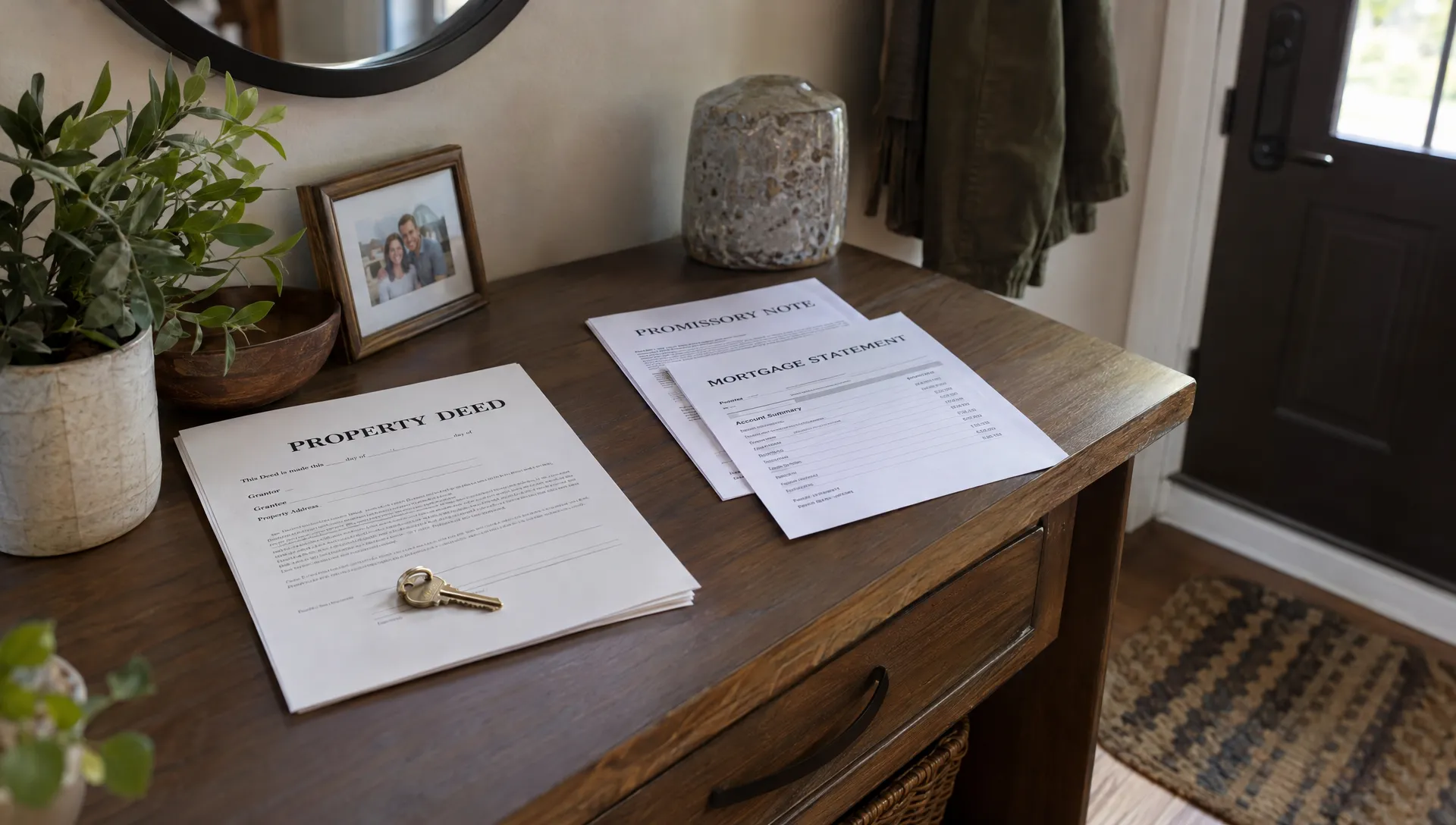
Three documents help establish the difference between owning real estate and owing money against it.
| Document | Main purpose | What to check |
|---|---|---|
| Property deed | Transfers an ownership interest | Named owners, legal description and how ownership is held |
| Promissory note | Establishes the borrower’s promise to repay | Borrower names, repayment terms and default provisions |
| Mortgage or deed of trust | Makes the property security for the debt | Property covered, interests pledged and lender remedies |
“Title” describes the legal ownership interest. A deed is the document used to transfer that interest. A title search helps identify recorded ownership, liens and other matters affecting the property.
The promissory note serves a different function: it identifies the contractual repayment obligation. The mortgage or deed of trust connects the debt to the property.
A person may sign the security instrument to allow their ownership interest to secure a loan without signing the note as a borrower. That distinction is especially relevant for non-borrowing spouses and other co-owners.
The Closing Disclosure explained by the Consumer Financial Protection Bureau summarizes final loan terms and closing costs, but it does not replace reviewing the deed, note and security instrument themselves.
Who can own the house, owe the loan or do both?
The names on your home and mortgage paperwork may overlap, but they do not have to match exactly. Common arrangements include the following:
| Person’s position | Ownership interest? | Personal repayment obligation? |
|---|---|---|
| Named owner who also signs the note as a borrower | Generally yes | Generally yes |
| Named owner who does not sign the note as a borrower | Generally yes | Not automatically; state law and other agreements may matter |
| Co-signer or borrower who is not an owner | Not from signing the note alone | Generally yes |
| Person who only contributes toward payments | Not from payments alone | Not from payments alone |
For example, Alex and Jordan might both appear on the deed while only Alex signs the promissory note. Jordan may still need to sign the security instrument so Jordan’s ownership interest is subject to the lien.
If the loan defaults, Jordan’s ownership interest could therefore be at risk even without personal liability under the note. Conversely, a parent who co-signs a child’s loan may owe the debt without acquiring ownership rights or a share of future sale proceeds.
These are general patterns, not substitutes for reviewing the actual documents and applicable state law.
What mortgage liability means for payments and credit
When two people sign a note as borrowers, the obligation is commonly joint and several. That generally means the lender can seek the full required payment from either borrower, not merely each person’s agreed share.
A private agreement to split payments equally usually does not limit the lender’s rights under the note. If one borrower stops contributing, the other cannot assume that paying “their half” keeps the loan current.
Your home and mortgage can also affect your finances differently. Ownership alone does not normally create a mortgage account on your credit report. A reported borrowing obligation can affect your credit history, and lenders may consider it when evaluating future applications. Missed payments can damage the credit of borrowers responsible for the account.
Property ownership carries separate responsibilities, including property taxes, maintenance and applicable association obligations. Homeowners insurance may be required under the loan terms. An escrow account can collect money for certain expenses, but it does not make those expenses disappear or turn every owner into a borrower.
What happens when ownership or relationships change?
Adding or removing someone from the deed
A deed transfer changes ownership rights. It does not, by itself, rewrite the promissory note or release a borrower.
If a departing owner signs a quitclaim deed, that person may give up their ownership interest while remaining liable for the entire mortgage debt. The opposite is also possible: adding someone to title does not automatically add that person to the loan.
Before changing how your home and mortgage are held, check both the loan requirements and the legal consequences of the transfer. A mortgage may contain a due-on-sale clause that allows the lender to demand repayment after certain transfers.
Federal law protects some qualifying residential transfers from enforcement of that clause, including certain transfers involving spouses, children, death or divorce. The federal due-on-sale rules contain specific conditions, so a family relationship alone is not enough to assume every transfer is protected.
New Era Lending’s guide to who has the right to mortgage a property provides additional context on ownership and signing authority.
Divorce or separation
A divorce decree can assign responsibility for making payments between former spouses. It generally does not, by itself, release either borrower from the lender’s contract.
For example, a court might award the house to one spouse and require that spouse to pay the mortgage. If both signed the note, both may remain liable until the lender approves a release or the existing debt is paid off.
Possible paths include selling the property, refinancing into one borrower’s name or completing an approved assumption with a release of liability, when available. Qualification, loan terms and lender approval matter. Do not assume that transferring the deed or completing an assumption automatically releases the departing borrower.
Inheriting a home with an existing loan
Inheriting ownership does not automatically make an heir personally responsible for the deceased borrower’s mortgage debt. However, the mortgage lien generally remains attached to the property.
That means an heir cannot assume the house is debt-free simply because they did not sign the note. Payments generally must remain current to avoid default while the estate and successors determine what happens next.
Certain transfers after death receive federal due-on-sale protections. A qualifying successor in interest may also have rights to communicate with the servicer and receive servicing information after their status is confirmed.
Whether to keep, sell or refinance the property depends on the estate, ownership documents, loan terms and the successor’s circumstances. Personal liability, estate liability and the lender’s rights against the property are separate issues. Contact the servicer promptly and obtain legal guidance before signing an assumption agreement or transferring an inherited interest.
What default can mean for owners and borrowers
The difference between your home and mortgage obligations becomes especially important when payments stop.
Foreclosure concerns the property securing the debt. Personal collection concerns the borrower’s repayment obligation. Those consequences can overlap, but they are not identical.
An owner who did not sign the note may still lose the ownership interest subject to the lender’s lien through foreclosure. A borrower who does not own the property may still face credit damage and potential collection exposure under the loan documents.
If a foreclosure sale does not cover the debt, the unpaid amount is often called a deficiency. Whether a lender can pursue it depends on state law, the loan type, the foreclosure process and any applicable borrower protections. It is not safe to assume either that foreclosure always erases the remaining debt or that every borrower will owe a deficiency.
If payments are becoming difficult, contact the mortgage servicer early to ask about available options. A housing counselor or attorney can help assess the situation without confusing ownership rights with repayment duties.
What to review before signing or changing anything
Before making changes to your home and mortgage arrangements, gather the recorded deed, promissory note, security instrument and current loan statement. Include any divorce orders, estate documents or co-ownership agreements that apply.
Then clarify the following points:
- Ownership: Who currently holds title, and how is that ownership structured?
- Debt: Who signed the note, and who remains personally liable?
- Collateral: Which ownership interests are subject to the lender’s lien?
- Transfer restrictions: Does the proposed change require review, consent or a qualifying exception?
- Release requirements: What written documentation would confirm that a departing borrower is no longer liable?
Also separate equity from debt responsibility. Equity is generally the property’s current value minus outstanding liens. It is not a bank account, and a person’s share of it depends on ownership rights, agreements and applicable law, not simply whose name appears on the loan.
For illustration, a home worth $400,000 with a $300,000 mortgage has $100,000 in gross equity before selling costs and other obligations. That calculation does not establish how much each co-owner receives. Nor does it mean either borrower owes only half of the mortgage.
A lender or servicer can explain loan requirements. A real estate attorney or title professional can address ownership and transfer questions within their professional role.
Frequently asked questions
Can I be on the deed but not the mortgage loan? Yes. You may own an interest without being a borrower on the note. However, you may need to sign the security instrument, and your ownership interest can still be at risk if the loan defaults. State law and the documents matter.
Does paying the mortgage make me an owner? Not automatically. Payments alone generally do not establish recorded ownership. If you contribute toward a property you do not own, a written agreement and legal advice can help clarify your rights and expectations.
Can I remove my name from the loan by signing a quitclaim deed? No. A quitclaim deed transfers whatever ownership interest you have; it does not release your promise to repay. Removing a borrower generally requires a lender-approved release, a qualifying transaction that expressly releases liability or repayment of the existing loan.
Do I own my house before the mortgage is paid off? Generally, yes. Your home and mortgage represent different legal interests: you have ownership rights, while the lender has rights under the security arrangement. After payoff, confirm that the appropriate satisfaction or release is recorded. Property taxes and other ownership expenses continue.
Get clarity before your next mortgage decision
Whether you are buying together, refinancing after a separation or reviewing an inherited property, identify who owns the home and who owes the debt before committing to a change.
Explore mortgage options with New Era Lending for personalized guidance on purchase or refinance financing. For deed changes, ownership disputes or estate questions, coordinate that financing guidance with a qualified legal professional.