










7 Questions to Answer About Home Loans After a Divorce

If you need to answer home loans questions after a divorce, start with three separate issues: who owns the home, who owes the mortgage and who can qualify to finance it. A divorce agreement can divide property and assign payment responsibilities, but it does not automatically change your contract with the lender.
That distinction matters before you promise to refinance, agree to an equity buyout or transfer your ownership interest. An arrangement that looks fair on paper can become difficult if the remaining owner cannot qualify for financing or afford the full housing payment.
The seven questions below help you evaluate the house as both a home and a financial obligation. Use them to coordinate discussions with your mortgage professional, loan servicer and divorce attorney. Mortgage eligibility depends on the loan program and your finances, while property rights depend on applicable law and your settlement.
1. Who should answer home loans questions before I sign a settlement?
Different professionals handle different parts of the decision. Your divorce attorney addresses property division and enforceable settlement terms. Your mortgage professional evaluates financing eligibility. Your current loan servicer explains procedures for the existing mortgage, including any available assumption or borrower-release process.
Start by gathering the current mortgage statement, loan documents and deed. Confirm whose names appear on each. Transferring ownership does not automatically remove mortgage liability. If both spouses signed the promissory note, both generally remain responsible until the loan is paid off or the creditor formally releases one of them.
New Era Lending’s explanation of how home ownership and mortgage liability differ provides a useful foundation for this conversation.
Federal law protects certain divorce-related ownership transfers from due-on-sale enforcement, but that protection is not the same as releasing a borrower from repayment obligations.
Before signing an agreement, identify the proposed financing route and what happens if it fails. Avoid assuming that a court-ordered refinance deadline guarantees lender approval. Likewise, do not assume that signing a deed transfer will end your exposure to missed payments on a joint loan.
2. Can I afford the home and qualify on one income?
Affordability and mortgage qualification are separate tests. A lender evaluates whether you meet underwriting requirements. Your household budget determines whether keeping the home leaves enough money for everyday expenses and unexpected repairs.
To answer questions about home loans realistically, calculate the complete cost of staying, not just the payment you and your former spouse previously shared.
Include principal and interest, property taxes, homeowners insurance, mortgage insurance where applicable and any association dues. Then add utilities, maintenance and a reserve for repairs. Account for new expenses such as separate health insurance, childcare or support payments.
For example, a hypothetical household might face $1,750 in principal and interest, $550 in taxes and insurance, $100 in association dues and a $250 maintenance reserve. That totals $2,650 per month before utilities and other household spending. A replacement mortgage could change that amount substantially.
Lenders generally assess debt-to-income ratio using qualifying gross monthly income and eligible monthly debt obligations. Your personal budget should also consider take-home pay and expenses that underwriting may not fully capture.
Ask for a financing review before committing to keep the property. If qualification depends on uncertain income or leaves no room for repairs, compare selling or purchasing a less expensive home rather than treating retention as the default.
3. Should I refinance, assume the mortgage or request a release?
These options are not interchangeable. The right route depends on your current loan, the servicer’s requirements and whether you need additional money for a buyout.
| Option | What it does | What to verify |
|---|---|---|
| Refinance | Replaces the existing mortgage with a new loan | Qualification, current pricing, closing costs and funds needed for the settlement |
| Loan assumption | Allows an approved borrower to take over an existing loan under applicable rules | Eligibility, approval requirements and whether the departing borrower receives a release |
| Release of liability | Removes an approved borrower’s repayment obligation without necessarily replacing the loan | Whether the creditor permits it and what written confirmation is required |
| Sale | Uses sale proceeds to pay off the mortgage | Net proceeds after liens, selling expenses and agreed adjustments |
Some FHA and VA loans may be assumable, subject to program requirements. Divorce-related transfers involving other mortgages require a case-specific review. Do not treat an assumption approval as proof that every borrower has been released. Obtain written confirmation of the result.
For a VA loan, also ask how the transaction affects entitlement. Release from liability and restoration of VA entitlement are separate matters.
When you answer questions about home loans after divorce, compare the full transaction rather than focusing only on preserving an old interest rate. An assumption may not provide the cash needed to pay your former spouse.
For a refinance, use the CFPB’s Loan Estimate guidance to compare payments, loan costs and cash to close.
4. How much equity must I buy out, and where will the money come from?
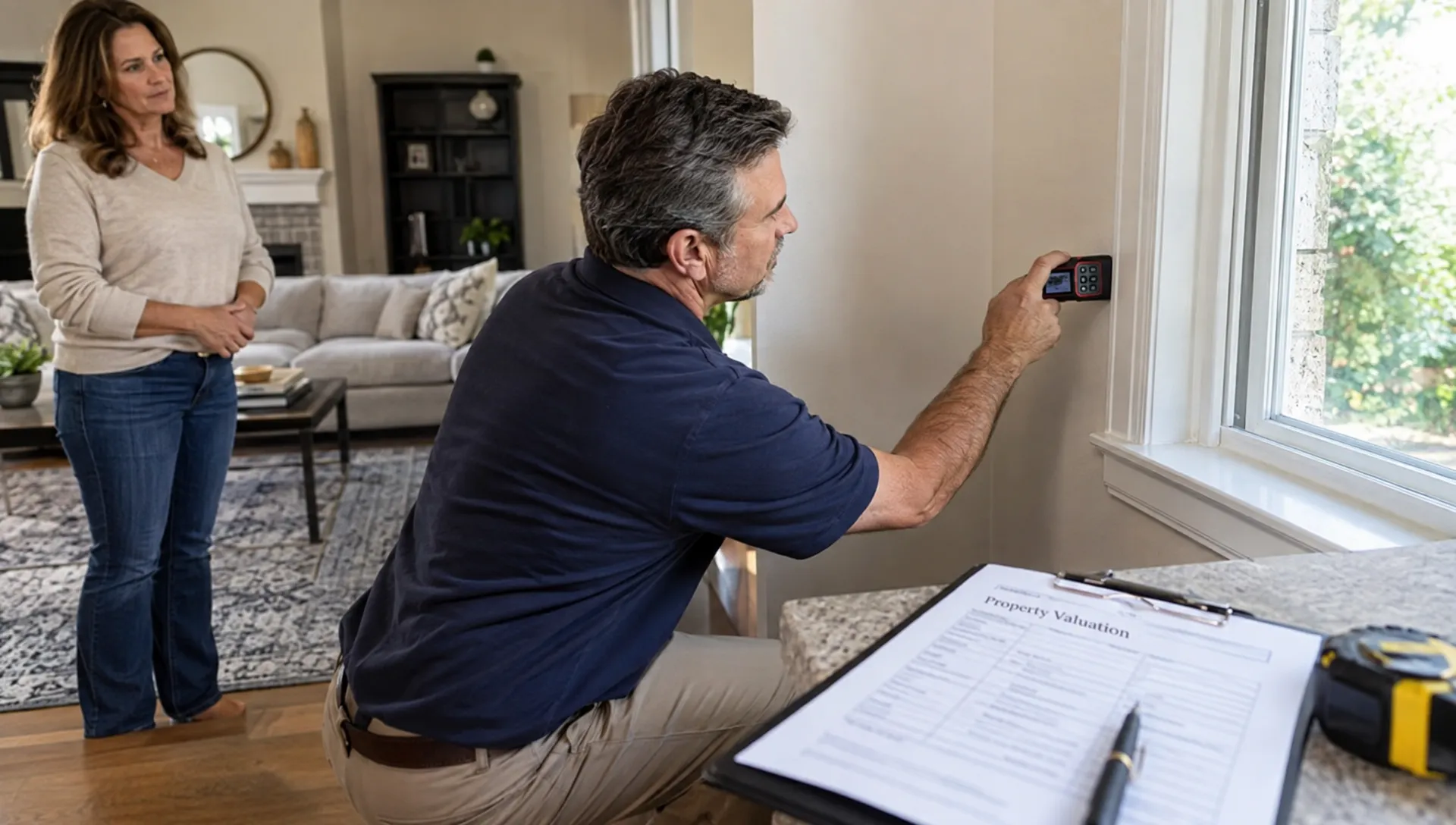
Home equity is not the same as available cash. Begin with an agreed valuation method, then identify mortgage balances, other liens and any adjustments required by the settlement.
The following example assumes an equal agreed division and excludes transaction costs, other liens and separate-property claims:
| Calculation | Hypothetical amount |
|---|---|
| Agreed home value | $400,000 |
| Existing mortgage balance | $240,000 |
| Equity before adjustments | $160,000 |
| Former spouse’s agreed half | $80,000 |
| New loan needed to repay the mortgage and fund the buyout | $320,000 |
That proposed $320,000 loan equals 80% of the property’s assumed value before financed closing costs. A lower appraisal or additional financed expenses would increase the loan-to-value ratio and could affect eligibility or mortgage insurance requirements.
Answer questions about home loans and equity together: can the available financing cover both the existing debt and the agreed buyout?
Ask how the lender classifies a divorce-related equity buyout. Depending on the program and documentation, its treatment may differ from ordinary cash-out refinancing. Do not assume that a general online cash-out limit settles the question.
Other settlement assets might reduce the required borrowing, but compare their tax treatment and liquidity with your attorney and tax professional. Trading retirement assets for home equity, for example, involves considerations beyond matching dollar amounts.
5. Which income and documents can I use to qualify?
Your application should reflect the finances that will exist after the separation, not simply repeat the household income from a previous joint application.
Employment income, self-employment earnings, retirement income and support payments can involve different documentation requirements. Lenders also review debts in your name. A settlement assigning a debt to your former spouse does not automatically exclude it from your mortgage qualification; any exclusion must satisfy the applicable program’s rules.
You do not have to disclose alimony, child support or separate-maintenance income if you do not want it considered for repayment. If you choose to use it, the lender may need the governing agreement or order, evidence of receipt and documentation that payments are expected to continue for the required period. Standards vary by program.
To answer questions about home loans without repeated document requests, prepare the records relevant to your situation:
- Current pay statements, W-2s and any requested tax returns.
- Bank statements showing available assets and any support deposits you want considered.
- The divorce decree, settlement agreement or temporary orders requested by the lender.
- Current mortgage statements and documentation of other debts.
- Business returns, financial statements or other self-employment records when required.
For Georgia borrowers with business or contract income, Archie Contable’s tax preparation and bookkeeping services can help organize tax and business records. The company offers support in English and Spanish; your lender determines which records meet underwriting requirements.
New Era Lending’s mortgage approval preparation tips can also help you organize the financial side of an application.
6. How will we protect our credit while the mortgage is still joint?
Moving out does not stop a mortgage from affecting a borrower’s credit. If both names remain on the loan, late payments can affect both borrowers, even when the settlement assigns payment responsibility to only one spouse.
Create a written payment arrangement that identifies who pays, when payment is due and how both parties can verify that it was made. Discuss access and authorization requirements with the servicer rather than sharing account passwords.
Answer questions about home loans during this transition with current account information. Confirm the payment status, any escrow shortage and whether taxes and insurance remain current. If permitted, establish alerts or another agreed method of monitoring payments.
Review your credit reports through AnnualCreditReport.com and address errors promptly. Avoid taking on new debt or making major credit changes before discussing their potential effect on a pending mortgage application.
If a payment problem develops, contact the servicer early and notify your attorney. A private reimbursement promise does not prevent the lender from reporting a delinquency or pursuing its contractual remedies.
7. What deadlines and backup plan should the agreement include?
A workable settlement needs more than “refinance as soon as possible.” It should connect the financial goal to specific responsibilities, documents and consequences if financing cannot be completed.
Ask your attorney to address the application deadline, completion deadline, responsibility for carrying costs and cooperation with lender requests. The agreement should also explain how the property will be valued and what happens if the appraisal or approved loan amount cannot support the planned buyout.
Before finalizing those terms, answer questions about home loans with your mortgage professional using the proposed settlement figures. A preliminary review can reveal problems, but it is not a guarantee of final approval.
A backup plan might involve another agreed source of buyout funds, a defined extension process or a sale. If selling becomes necessary, the agreement can address listing responsibilities, price adjustments, repairs and division of net proceeds.
Coordinate the deed transfer, funding and any required borrower release with your attorney and closing professionals. Do not sign away ownership on the assumption that the mortgage obligation will disappear later. Keep copies of the final closing documents and any written release.
Frequently asked questions
Can a divorce decree remove my name from the mortgage? Not by itself. A court can assign responsibility between spouses or require certain actions, but removing a borrower’s contractual liability generally requires payoff or the creditor’s formal approval and release.
Can I buy another home while my former spouse keeps our joint mortgage? Possibly. The existing obligation may affect qualification, although some programs permit exclusions when specific documentation requirements are met. Have the lender review the decree, payment history and applicable rules before assuming the debt will be excluded.
Must my divorce be final before I discuss financing? No. An early review can help you answer questions about home loans before settlement terms are fixed. Final approval may require signed agreements, court documents or other evidence of your post-divorce obligations.
What if the home is worth less than the mortgage balance? There may be no equity to divide, and an ordinary sale may require additional cash to pay off the debt. Discuss any proposed short sale or other resolution with the servicer and your attorney before making commitments.
Review the financing before committing to the house
New Era Lending combines digital mortgage tools with personalized human guidance for home purchases, refinancing and equity access. Discuss your post-divorce mortgage options with New Era Lending before committing to a buyout amount or financing deadline.
Bring your mortgage statement, income records and proposed settlement terms. The goal is to determine what financing may be available, what it would cost and whether keeping the home fits your post-divorce budget.