
.jpg)
.jpg)





.jpg)


New Era Lending: Smart Tools Plus Human Guidance Explained

Buying a home or refinancing in 2026 can feel like you need two things at the same time: speed and certainty. The problem is that many lenders optimize for one at the expense of the other. A fully manual process often means delays, repeated document requests, and unclear next steps. A fully digital process can be fast, but leaves you guessing when something is nuanced, like variable income, a tight closing date, or choosing between two loan structures.
New Era Lending is built around a hybrid idea that borrowers usually prefer: smart mortgage tools plus real human guidance. Below is what that actually means in practice, what you should expect from the process, and how to tell if this approach fits your situation.
Why “tech-only” (and “paper-only”) both fall short
Mortgages are not just a rate. They are a chain of decisions and validations, including income documentation, asset sourcing, credit, property appraisal, title work, disclosures, and timing. When any link is slow or unclear, the entire transaction can stall.
Two common failure modes show up repeatedly:
- Paper-heavy, manual workflows: If everything runs through email threads and spreadsheets, borrowers lose time chasing status updates and re-sending documents. Small errors can ripple into bigger delays.
- App-only workflows without support: You might get quick prompts, but not the context to make good tradeoffs (for example, choosing between a slightly higher rate with lower fees versus paying points).
A strong mortgage experience typically combines both: a clean digital workflow to reduce friction, plus an expert who helps you make the right calls at the right moments.
What “smart tools” usually mean at New Era Lending
When New Era Lending describes its approach as technology-driven, the goal is not to replace the loan officer. It is to remove avoidable friction from the parts of the process that should be straightforward.
In practical terms, modern mortgage tools tend to improve four areas.
A cleaner application and document workflow
A good digital process helps you submit information once, track what is outstanding, and avoid unnecessary re-requests.
New Era Lending highlights capabilities that borrowers typically care about most:
- Secure document uploads (so sensitive files are not bouncing around inboxes)
- E-signature support (so routine disclosures do not require printing or scanning)
- Faster approvals (primarily by reducing back-and-forth and keeping files moving)
If you have ever lost a weekend to “please re-send that PDF,” you already understand why this matters.
Transparency around rates and terms
Transparency is more than seeing a rate quote. It is understanding what is included, what is not, and how costs show up over time.
A good lender should be willing to walk you through the standard documents that govern these details, especially the Loan Estimate and Closing Disclosure (required in most residential mortgage transactions). If you want a neutral explainer of what those documents are and why they matter, the Consumer Financial Protection Bureau has a helpful overview of the Loan Estimate.
A “scenario” mindset, not a single quote
Most borrowers are not choosing between “yes mortgage” and “no mortgage.” They are choosing between options:
- A higher down payment versus keeping reserves
- A lower rate with points versus a higher rate with lower upfront costs
- Fixed rate versus adjustable rate
- Cash-out versus a smaller loan amount
Technology is useful when it supports clean comparisons, but the comparison only helps if someone explains what changes, and what that change means for your goal.
A smoother closing timeline
Home purchases are deadline-driven. Refinances can be timing-sensitive too.
Digital tools help keep tasks from slipping (disclosures, signatures, document intake). But speed should never come from cutting corners. It should come from removing repetitive steps, clarifying requirements early, and keeping the file organized.
What “human guidance” should look like (and why it matters)
Mortgage advice is valuable when it is specific, not generic. Human guidance is what turns a checklist into a strategy.
Here is where a strong loan officer makes the biggest difference.
Translating goals into the right structure
“Lowest rate” is not always the right objective. Some borrowers prioritize:
- Predictable payment
- Lowest cash-to-close
- Paying off the home sooner
- Accessing equity with minimal disruption
- Reducing long-term interest, even if the monthly payment changes
A good loan officer helps you define the primary goal, then tests loan structures against it.
Catching issues early (before underwriting does)
Many delays are predictable. For example:
- Large deposits that need sourcing
- Job changes or variable income
- Self-employment documentation complexity
- Credit events that require letters of explanation
Human review early in the process can prevent the “surprise checklist” that appears right before closing.
Communicating with other parties
In a purchase, your lender is part of a larger team that can include a real estate agent, title company, and insurance provider. When questions come up, responsiveness matters.
This is one of the most overlooked benefits of a hybrid model: the tech helps the file move, and the human helps everyone stay aligned.
How the hybrid process typically works at New Era Lending
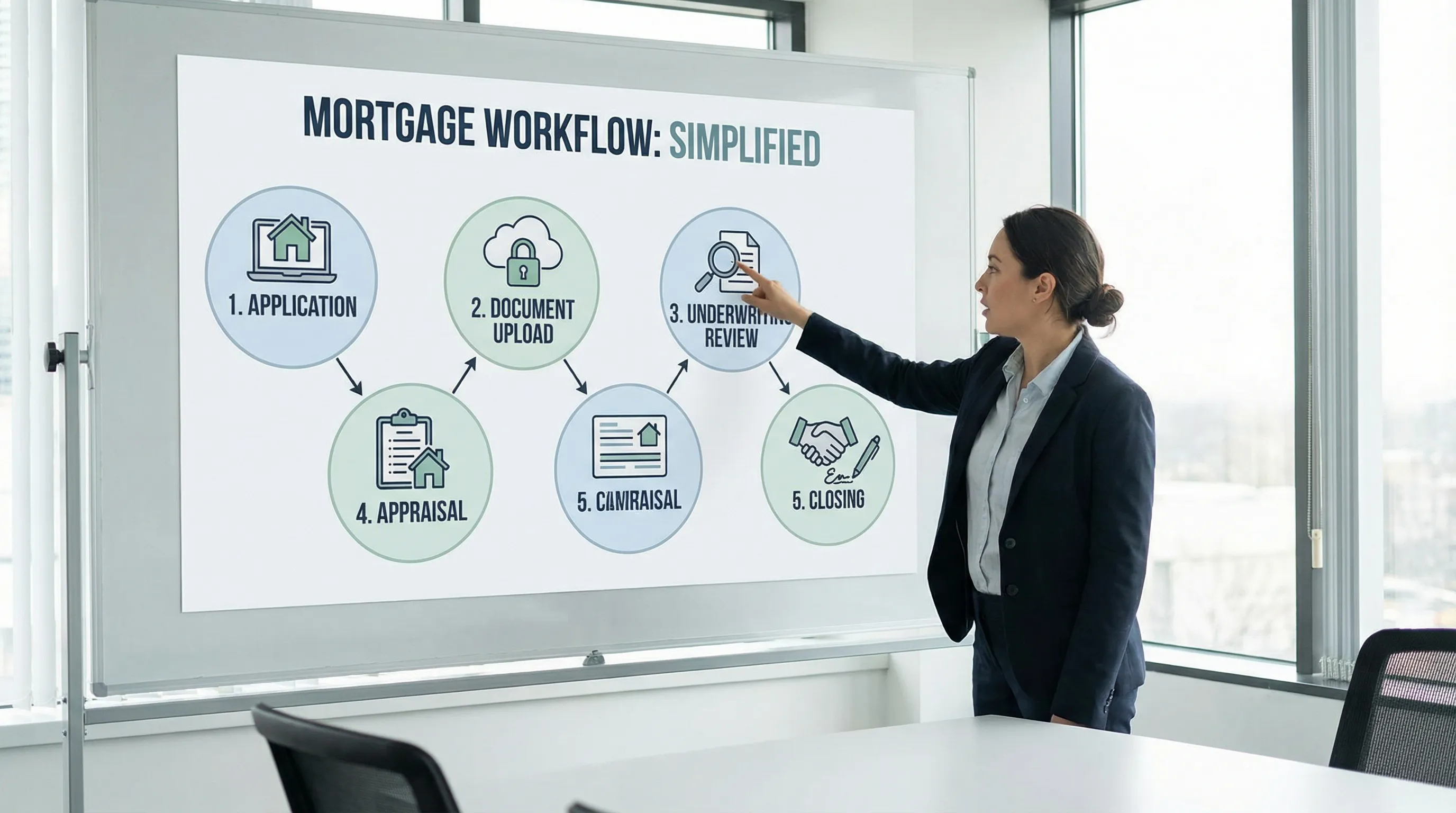
Every borrower is different, but a tech-forward lender with hands-on guidance usually follows a consistent rhythm. Here is what you can generally expect.
Initial conversation and needs assessment
This is where you clarify whether you are purchasing, refinancing, or accessing equity. It is also where a loan officer should ask the “uncomfortable but important” questions up front (income type, credit goals, cash-to-close comfort level, timeline).
Pre-approval or prequalification (for purchases)
If you are buying, pre-approval is where the process becomes real. You are not just estimating, you are validating.
A strong pre-approval experience typically includes:
- A clear list of required documents
- A discussion of what could change the outcome (for example, taking on new debt)
- A payment view that includes taxes and insurance, not just principal and interest
Processing and underwriting support
This is where digital tools shine, because the number of moving parts increases.
Human guidance still matters here because underwriting questions are not just “upload another file.” They often require context and correct framing.
Closing preparation
The last mile should feel calm, not chaotic.
A lender with strong process discipline will help you understand what you will sign, what you need to bring or wire, and what timing looks like. E-signatures can remove friction for parts of the closing package, depending on what is allowed in your state and transaction type.

Who benefits most from “smart tools plus human guidance”
Almost anyone can benefit from a smoother workflow, but the hybrid model is especially helpful when your file is either time-sensitive or nonstandard.
First-time buyers who want clarity
First-time buyers often do not need more content. They need someone to interpret it for their exact situation.
If you are still calibrating basics like down payment, cash reserves, and closing costs, New Era Lending has educational resources that can help you build confidence without guessing. For example, their guide on how much down payment you really need is useful when you are trying to decide between “minimum down” and “comfortably affordable.”
Self-employed borrowers who need proactive documentation planning
Self-employment income can be mortgage-eligible, but it is rarely “simple.” The win is not just qualification, it is qualifying without last-minute stress.
If your income comes from a business, 1099 work, or multiple streams, it helps to work with a lender who will map documentation needs early. New Era Lending’s overview of how to qualify for a self-employed mortgage loan is a good starting point for what lenders typically look for.
Veterans and military families who want benefit-aware lending
Veteran-focused lending is not just offering VA loans. It is understanding entitlement, funding fee rules, and how to optimize benefits over a lifetime of moves and refinances.
New Era Lending notes specialized veteran loan programs, and they also publish veteran-specific education, such as how veterans can optimize every benefit they’ve earned.
Homeowners evaluating refinance or equity options
A refinance or equity decision is usually about outcomes: lower payment, different term, removing mortgage insurance, consolidating debt, or funding a project.
The “smart tools” side helps compare scenarios cleanly, while the “human guidance” side helps you avoid common traps like focusing on rate alone without doing break-even math. (New Era Lending has a dedicated, current guide on when to refinance in 2026 if you are in that evaluation phase.)
What to look for when you compare lenders
If you are lender-shopping, focus less on marketing words and more on operational signals. A few practical indicators:
- Clarity: Can they explain APR versus rate, points, and the full cash-to-close without dodging?
- Speed with controls: Are they fast because the process is organized, or fast because they are rushing?
- Security: Do they provide a secure way to upload documents and limit email attachments?
- Options: Can they support multiple loan types, not just one product?
- Guidance: Do you have a specific human contact who can explain tradeoffs and next steps?
New Era Lending positions itself around these fundamentals: transparent rates and terms, secure uploads, e-signature support, a range of loan options, and human guidance, available across 39 states.
A quick note on AI and automation in lending
Many lenders are experimenting with automation, but the value is not “AI for AI’s sake.” The real value is reducing repetitive work, improving document routing, and creating clearer borrower communication, while staying compliant.
If you are a business leader (for example, a real estate brokerage or a mortgage team) thinking about how AI can responsibly improve workflows, it can help to start with an audit and a practical roadmap. Agencies like Impulse Lab’s AI audit and custom solutions team focus on turning AI into measurable productivity gains through automation and integration, which is the kind of approach that matters in regulated, document-heavy environments.
How to get started with New Era Lending
If you want a mortgage process that feels modern without feeling “hands-off,” the next step is simple: start a conversation, outline your goal (purchase, refinance, or equity access), and ask for scenario comparisons that match your timeline and risk comfort.
You can learn more about their approach at New Era Lending.