.jpg)
.jpg)





.jpg)
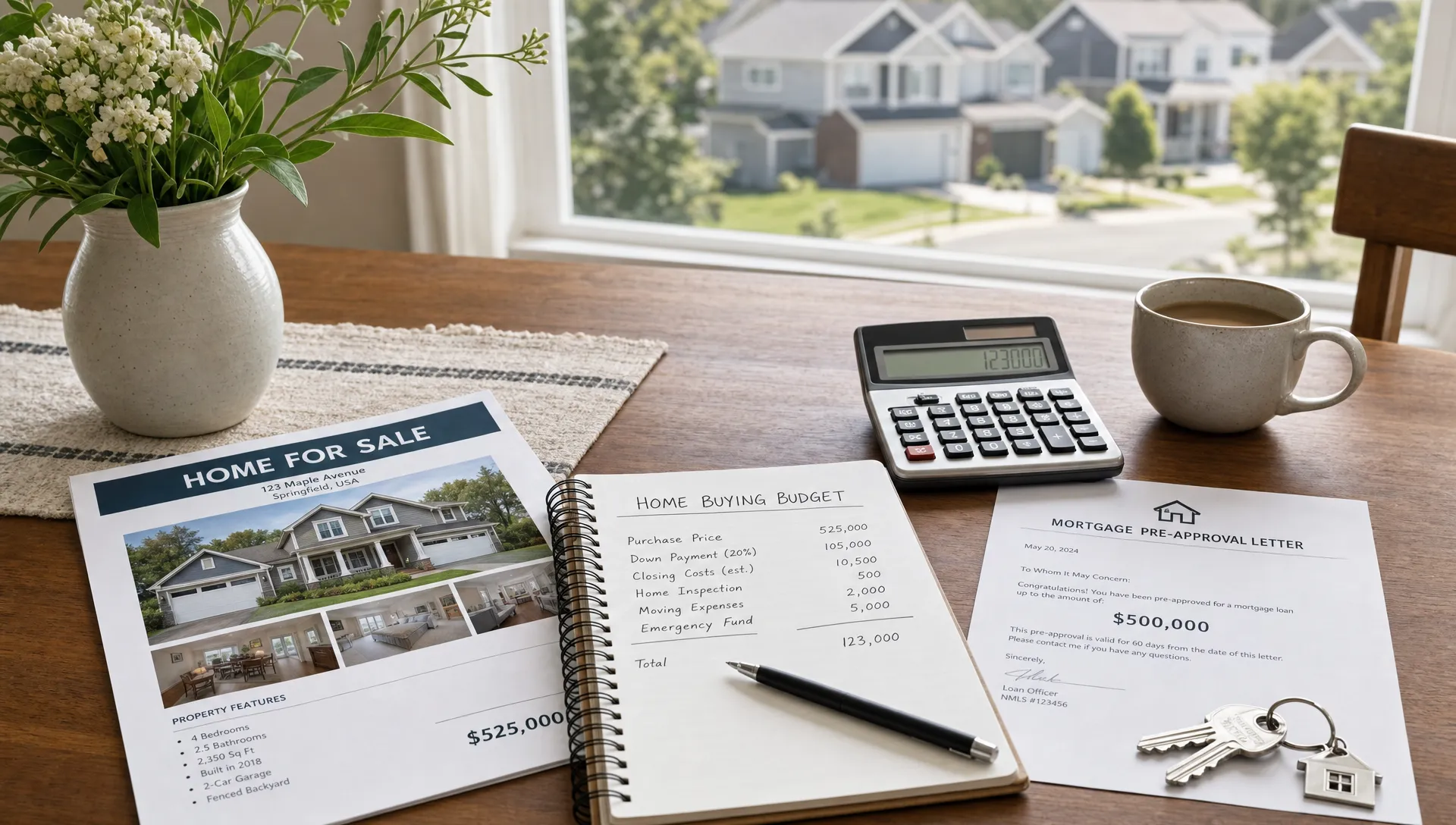

Investment Property Down Payments Explained
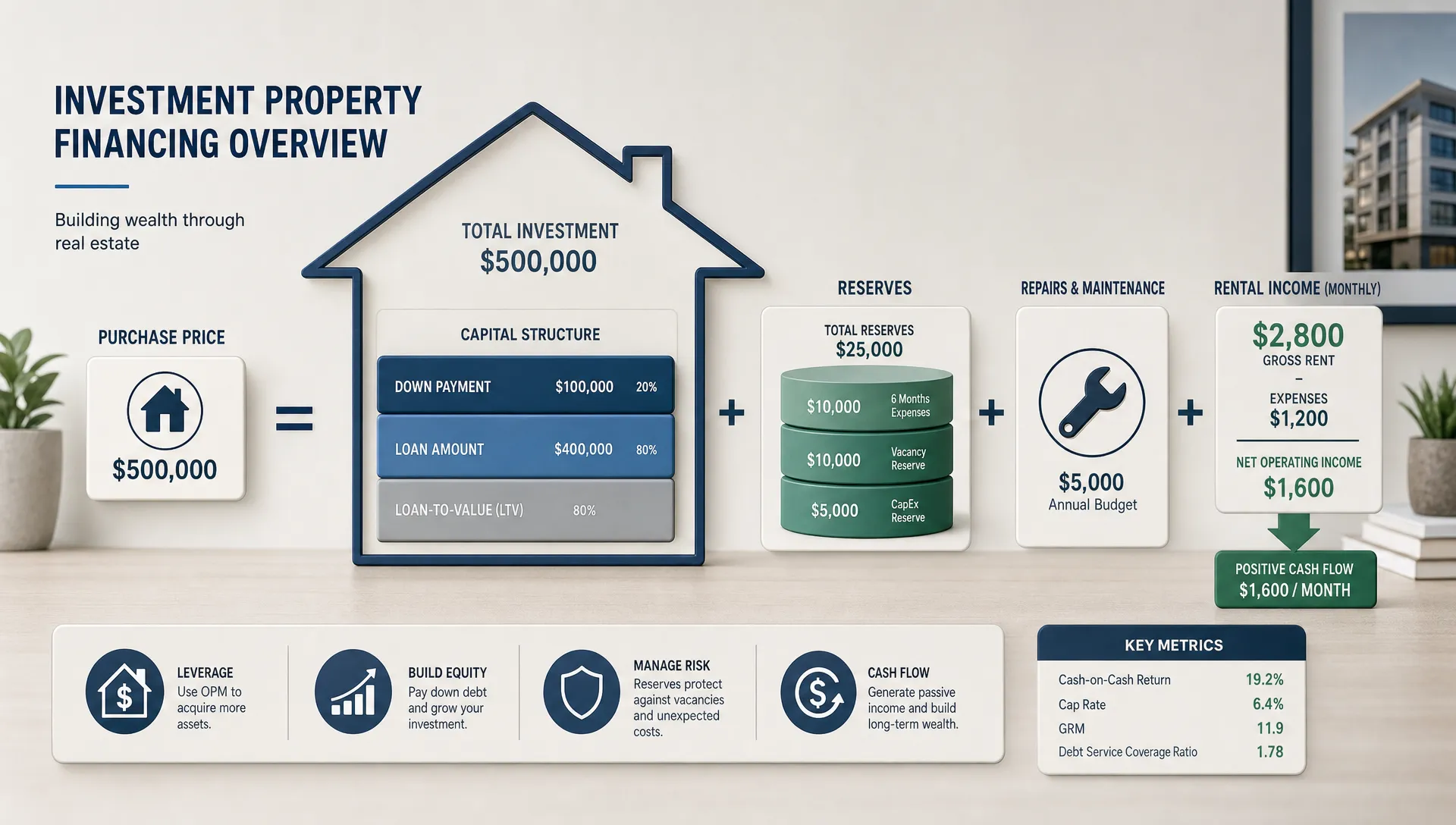
Buying a rental property is different from buying a primary home in one major way: the lender is not just evaluating whether you can afford the mortgage. They are evaluating whether the property, your cash reserves and your overall financial profile can hold up if rent is delayed, repairs appear or the market changes.
That is why investment property down payments are usually higher than down payments for owner-occupied homes. A larger upfront investment lowers the lender's risk, reduces your loan-to-value ratio and can make the numbers work better for long-term cash flow.
This guide breaks down typical investment property down payment ranges, what affects the amount you need and how to decide whether putting more money down is worth it.
Why investment property down payments are usually higher
A primary residence loan is backed by a home you plan to live in. An investment property loan is backed by a property intended to generate income. If financial pressure hits, lenders generally view a borrower as more likely to protect their primary home payment before a rental property payment.
That added risk shows up in several ways:
- Higher down payment requirements
- Stricter credit and reserve expectations
- Higher interest rates than comparable primary residence loans
- Closer review of rental income, leases and property condition
- Lower maximum loan-to-value limits
The down payment on investment property loans is not just a hurdle to clear. It is one of the main tools lenders use to measure risk. The more equity you bring to the purchase, the more cushion there is if property values shift or rental income is interrupted.
It also affects your own risk as an investor. A smaller down payment can preserve cash, but it usually means a larger loan balance, higher payment and less room for positive monthly cash flow.
Typical investment property down payment ranges
Minimums vary by loan program, property type, credit profile, occupancy, debt-to-income ratio and lender overlays. Still, most investors will see down payment expectations fall into a few common ranges.
| Property or loan scenario | Typical down payment range | What to know |
|---|---|---|
| Single-family investment property with a conventional loan | 15% to 25% | Some borrowers may qualify near the lower end, but 20% to 25% is common for stronger pricing and approval strength. |
| Condo investment property | 20% to 25% or more | Condo project rules, investor concentration and HOA finances can affect eligibility. |
| 2-4 unit residential investment property | Often around 25% | Multi-unit rentals can offer more income potential, but lenders usually require more equity. |
| DSCR loan | Often 20% to 25% or more | Approval focuses heavily on property cash flow, though credit and reserves still matter. |
| Jumbo or high-balance investment loan | Often 20% to 30% | Larger loans usually come with more conservative requirements. |
| 5+ unit or commercial property | Often 25% to 35% or more | These typically move outside standard residential mortgage guidelines. |
These are not universal rules. A well-qualified borrower purchasing a strong single-family rental may have more options than an investor buying a riskier property with thin projected cash flow. For a wider look at loan types and qualification factors, New Era Lending's guide to investment property loans, requirements, rates and down payment gives a helpful foundation.
Minimum down payment vs smart down payment
The minimum down payment is the least amount a program may allow. The smart down payment is the amount that supports the deal after you account for payment, reserves, repairs and return on investment.
Those two numbers are not always the same.
For example, a borrower might technically qualify for 15% down on a one-unit investment property. But if the resulting monthly payment leaves only a small amount of cash flow after taxes, insurance, HOA dues and maintenance, 20% or 25% down may create a safer investment. On the other hand, putting too much down can tie up cash that might be needed for repairs, vacancies or another opportunity.
A smart down payment balances four things:
- Approval strength
- Monthly cash flow
- Cash left after closing
- Expected return on the cash invested
This is where investor financing becomes more strategic than simply chasing the lowest possible down payment.
How loan-to-value shapes your down payment
Loan-to-value, usually called LTV, compares your mortgage amount to the property's value or purchase price. If you buy a property for $400,000 and borrow $320,000, your LTV is 80%. Your down payment is 20%.
Here is how different down payments change the loan amount on a $400,000 investment property purchase, before closing costs and other prepaid expenses.
| Down payment percentage | Cash down payment | Loan amount | LTV |
|---|---|---|---|
| 15% | $60,000 | $340,000 | 85% |
| 20% | $80,000 | $320,000 | 80% |
| 25% | $100,000 | $300,000 | 75% |
| 30% | $120,000 | $280,000 | 70% |
A lower LTV usually gives the lender more confidence. It may also improve loan pricing, reduce mortgage insurance exposure if applicable and help the property cash flow better because the borrowed amount is smaller.
The tradeoff is liquidity. Putting $120,000 down instead of $80,000 may lower the monthly payment, but it also removes $40,000 from your available cash. If the property needs a roof, sits vacant for two months or requires new appliances, that cash may matter more than a slightly lower loan balance.
If you are weighing several scenarios, it helps to understand how down payment size changes your home loan, especially the relationship between LTV, monthly payment and total borrowing cost.
Do not forget cash beyond the down payment
Many first-time investors focus on the down payment and underestimate the full cash needed to close safely. Your actual cash requirement may include closing costs, prepaid taxes, insurance, lender fees, title charges, reserves and immediate property improvements.
A realistic acquisition budget might look like this:
| Cost category | Why it matters |
|---|---|
| Down payment | Your required equity in the property. |
| Closing costs | Includes lender, title, recording and other transaction costs. |
| Prepaid expenses | Often includes property taxes, homeowners insurance and interest. |
| Reserves | Cash left after closing that shows you can handle payments if rent is interrupted. |
| Repairs and setup | Paint, flooring, safety items, appliances, cleaning and tenant-readiness work. |
| Vacancy cushion | Helps cover the mortgage while you market the property or wait for a tenant. |
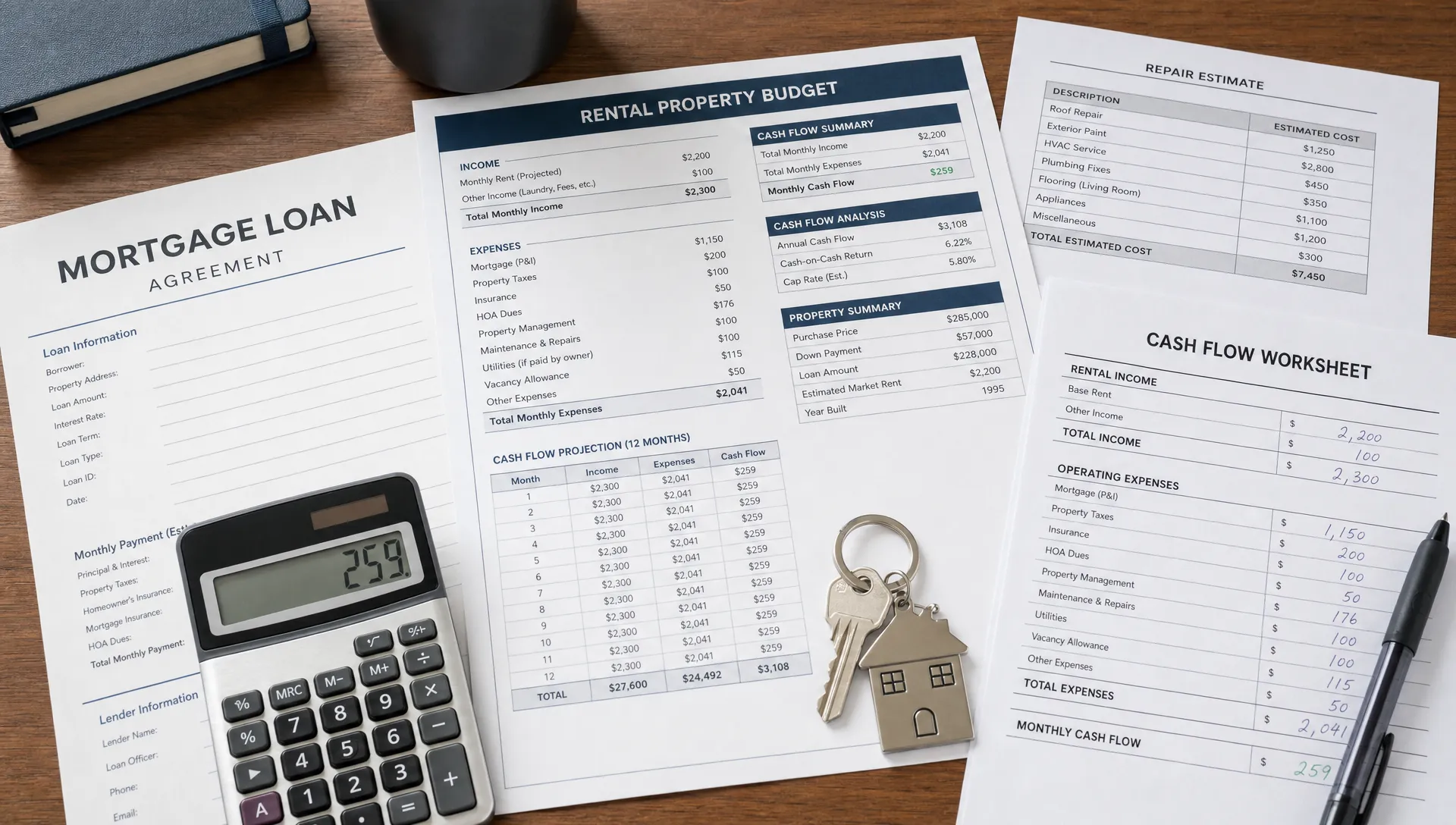
Repair costs deserve special attention. A property that looks profitable on paper can become tight if you underestimate the cost to make it rent-ready. Before you commit, gather contractor estimates, review local labor rates and compare renovation categories using resources that help homeowners compare tradespeople's costs so your repair budget is grounded in real numbers.
What affects how much you need down
Investment property down payment requirements are not based on the property alone. Lenders review the entire risk picture.
Credit score is one of the biggest factors. A stronger credit profile can improve your access to programs, pricing and LTV options. A lower score may require more money down or limit the programs available.
Debt-to-income ratio also matters, especially for conventional investment loans. Lenders want to know that your existing obligations and new property payment fit within guidelines. Rental income may help, but lenders typically apply rules to how that income is documented and calculated.
Cash reserves are another key piece. Reserves are funds left after closing, often measured in months of mortgage payments. A borrower who has enough cash to cover several months of payments is less risky than a borrower who uses nearly every available dollar at closing.
Property type can change the requirement too. A single-family rental may be simpler to finance than a small multi-unit property, condo or property needing substantial repairs. If the property condition raises questions about habitability or marketability, your financing options may narrow.
Loan type is also central. Conventional loans, DSCR loans, jumbo loans and portfolio loans can all treat down payment differently. If you want a deeper breakdown of underwriting priorities, review New Era Lending's article on what lenders look for in investment mortgage loans.
Can rental income help reduce the down payment?
Rental income can help you qualify, but it does not usually erase the need for a larger down payment. Lenders may count actual lease income, market rent from an appraisal schedule or a percentage of projected rent, depending on the program and property.
For conventional financing, rental income is often adjusted rather than counted dollar for dollar. For example, lenders may discount rent to account for vacancy, maintenance and operating risk. DSCR loans work differently because they compare the property's income to its housing payment, but even then, a weak DSCR may require more down or may not qualify.
In short, strong rental income can improve the file. It may support approval, help the debt-to-income calculation or strengthen a DSCR scenario. But the down payment still reflects the lender's required equity cushion.
Can you buy an investment property with less than 20% down?
Sometimes, yes, but it depends on the loan program and borrower profile. Some conventional programs may allow a down payment below 20% for certain one-unit investment property purchases. In practice, many investors still find that 20% to 25% down is more realistic once credit, reserves, pricing and lender overlays are considered.
Below 20% down can also come with tradeoffs. You may face higher monthly payments, less favorable pricing or mortgage insurance if the program permits it. A lower down payment may look attractive upfront, but the investment must still work after all monthly expenses.
It is also important not to confuse investment properties with second homes. A second home is for personal use and has different occupancy rules. Buying a property as a second home when it will actually be used as a rental can create serious loan compliance problems.
Using home equity for an investment property down payment
Many buyers fund an investment property down payment with savings. Others use equity from a current home through a cash-out refinance, home equity loan or HELOC. This can be a practical strategy, but it increases your total debt and adds another payment to your financial picture.
If you use home equity, lenders will consider the new or existing payment tied to that borrowed money. The investment property still needs to qualify, and your overall cash flow should be stress-tested. A deal that works only when everything goes perfectly may not be strong enough.
Ask yourself how the numbers look if rent comes in lower than expected, the tenant moves out or repairs arrive sooner than planned. Real estate investing rewards leverage, but leverage should be paired with enough liquidity to handle surprises.
How to decide the right down payment for your rental purchase
There is no single perfect down payment for every investor. A first-time rental buyer with limited reserves may benefit from keeping more cash available after closing. A seasoned investor with strong liquidity may prefer a larger down payment to improve cash flow and reduce debt.
A practical decision process starts with the property, not only the loan approval. Estimate rent conservatively, include taxes and insurance, account for HOA dues if applicable and build in maintenance, vacancy and management costs. Then compare multiple financing scenarios.
For each down payment option, look at:
- Monthly payment and projected cash flow
- Cash remaining after closing
- Reserve requirements
- Interest rate and pricing differences
- Repair budget and rent-ready timeline
- Long-term return on cash invested
A 25% down payment may produce stronger monthly cash flow, but if it leaves you undercapitalized, the safer answer may be 20% down with a larger reserve account. A 15% down option may preserve cash, but if the payment prevents the property from cash flowing, it may weaken the investment.
Common down payment mistakes investors make
One common mistake is assuming the down payment is the full cash requirement. Closing costs, escrows, repairs and reserves can add materially to the funds needed.
Another mistake is stretching to buy a property with no emergency cushion. Rental properties are businesses. They need working capital. Even a well-screened tenant can move out, and even a recently inspected home can need repairs.
Some buyers also assume gift funds, borrowed funds or undocumented cash can be used the same way they might be used in other contexts. Investment property transactions often have stricter rules around acceptable funds. Always verify your source of funds early, especially if money is being transferred between accounts or coming from business assets.
Finally, investors sometimes choose the lowest down payment without comparing the total cost. The better question is not just, "How little can I put down?" It is, "Which down payment creates the strongest combination of approval, cash flow and liquidity?"
Frequently Asked Questions
What is the typical down payment for an investment property? Many investment property buyers should expect 20% to 25% down, though some one-unit conventional scenarios may allow less and some higher-risk properties may require more.
Is 15% down possible on an investment property? It can be possible for certain one-unit investment properties with qualified borrowers, but it depends on the program, credit profile, reserves, property type and lender requirements.
Do investment properties require 20% down? Not always, but 20% is a common benchmark because it lowers LTV and may improve pricing, payment and approval strength. Multi-unit, jumbo or specialized loans often require more.
Can I use rental income to qualify for the loan? Yes, rental income may help you qualify if it meets the loan program's documentation rules. Lenders may use lease income, market rent or a discounted rental income calculation.
Are reserves separate from the down payment? Yes. Reserves are funds left after closing. They show the lender that you can keep making payments if the property is vacant or unexpected costs arise.
Can I use equity from my current home for the down payment? Often yes, through options such as a cash-out refinance, home equity loan or HELOC. The added debt must still fit your overall qualification and cash flow plan.
Plan your investment property down payment with guidance
The right investment property down payment is not only about meeting a minimum. It is about structuring the loan so the property, your cash reserves and your long-term goals work together.
New Era Lending combines modern mortgage technology with personalized human guidance for purchase, refinance and equity access solutions across 39 states. If you are comparing investment property loan options, exploring how much to put down or deciding whether to use existing equity, start with a conversation tailored to your numbers.
Visit New Era Lending to explore a clearer path to financing your next property with confidence.