









How to Buy a Home With a Loan the Seller Hasn't Paid Off
You can buy a home with loan debt still outstanding. In a typical sale, the seller’s mortgage gets paid from the sale proceeds at closing, and you purchase the property using your own mortgage, cash or both. You do not automatically take over the seller’s payments.
The key is making sure the existing loan and any other liens are handled correctly. A standard mortgage payoff, an approved loan assumption and an informal agreement to keep paying the seller’s mortgage are very different transactions. Here’s how to tell them apart and protect your purchase.
The seller’s mortgage usually gets paid at closing
A homeowner generally does not need to pay off their mortgage before listing or selling. Instead, the settlement agent, escrow company or closing attorney coordinates the payoff as part of the transaction. Who handles settlement depends on local practice.
The seller’s lender receives the amount needed to satisfy the existing loan. Other required payments are made, and the seller receives any remaining proceeds after costs and adjustments.
Buying a home with loan debt does not ordinarily mean inheriting that debt. Your purchase agreement sets the sale terms, while your financing documents establish your own borrowing obligations.
There are three arrangements worth distinguishing:
| Arrangement | What happens to the seller’s loan? | What the buyer needs to know |
|---|---|---|
| Standard purchase | Paid off through closing | You obtain separate financing or pay cash |
| Approved assumption | Remains in place and transfers to an approved buyer under the loan’s rules | The loan must permit assumption, and applicable approval requirements must be met |
| Purchase “subject to” the mortgage | Remains in the seller’s name even though ownership changes | The lender may have the right to demand repayment, and significant legal risks remain |
For most buyers, the first arrangement is the straightforward path.
How the mortgage payoff works, step by step
Confirm ownership and identify existing liens
A title search examines recorded ownership and claims against the property. The seller’s first mortgage may be only one of them. A second mortgage, home equity line of credit (HELOC), judgment or tax lien can also affect the transaction.
Review the preliminary title report or title commitment with your settlement professional. Ask which liens must be paid or otherwise resolved and which exceptions would remain after closing.
A title search identifies recorded issues; it does not automatically eliminate them. Your contract, lender requirements and the closing arrangements determine how those issues must be addressed.
Obtain a current payoff statement
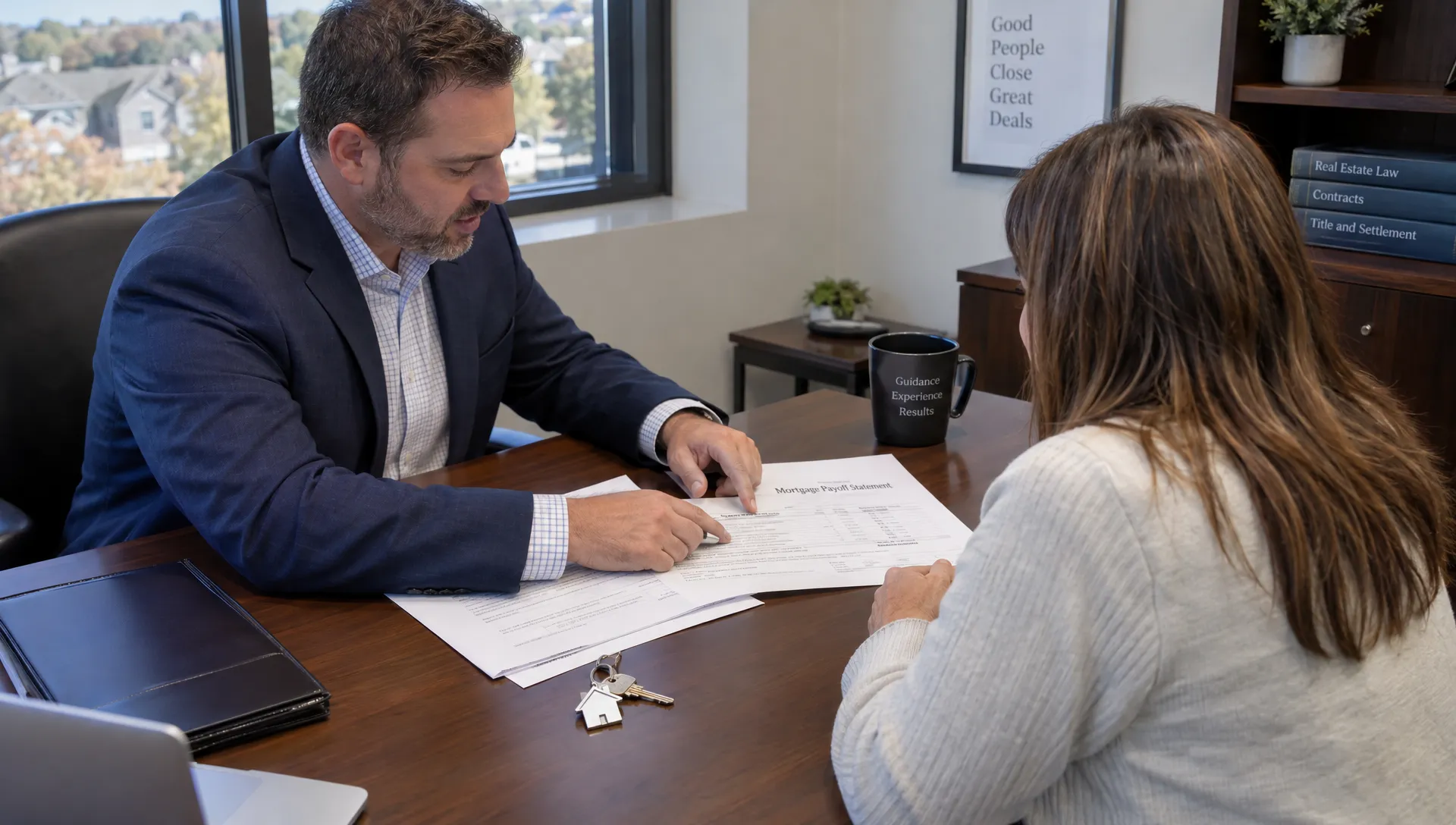
The closing professional typically obtains an official payoff statement from the seller’s mortgage servicer, with the seller’s authorization. This is different from the principal balance shown on a monthly statement.
The payoff can include interest through a specified date, permitted fees and other amounts required to satisfy the loan. If closing or disbursement moves, the payoff may need updating.
When purchasing a home with loan debt, you want the closing professional relying on an official, current payoff rather than the seller’s estimate. Any second mortgage needs separate attention. For a HELOC, ask how further draws will be prevented and how the account will be closed, not merely reduced to a zero balance.
Direct the sale proceeds to the right parties
Consider this simplified example. You agree to pay $400,000, using a $320,000 purchase mortgage and an $80,000 down payment.
| Item | Illustrative amount |
|---|---|
| Purchase price | $400,000 |
| Your new mortgage | $320,000 |
| Your down payment | $80,000 |
| Seller’s mortgage payoff | $250,000 |
| Assumed seller closing costs and adjustments | $24,000 |
| Estimated seller proceeds | $126,000 |
The seller’s $250,000 payoff comes from the $400,000 purchase price. You do not pay $400,000 plus the seller’s mortgage balance.
Your own closing costs, prepaid expenses and any required reserves are separate from the down payment in this example. An earnest money deposit generally counts toward the funds you already contributed rather than becoming an additional purchase-price charge.
The practical point when buying a home with loan debt is to distinguish your cash to close from the seller’s net proceeds. They are different calculations.
Track the mortgage lien release
Paying the servicer and updating the public record are related but separate steps. Depending on the state and security instrument, the document clearing the mortgage lien may be called a satisfaction, release or reconveyance.
That document may be recorded after closing rather than at the signing table. Ask who is responsible for obtaining and tracking it, and keep your settlement records.
Also ask about owner’s title insurance. A lender’s title policy protects the lender’s interest, not your ownership interest. An owner’s policy provides coverage subject to its terms, exclusions and exceptions; it is not a substitute for resolving known problems.
Arrange your own financing without tying it to the seller’s balance
In a standard purchase, your loan approval depends on your finances, the property and the mortgage program. The seller’s original interest rate or remaining balance generally does not determine your new rate or down payment requirement.
Start with a realistic budget and get preapproved before making an offer. Compare the interest rate, annual percentage rate, mortgage insurance, closing costs and estimated monthly payment across suitable options. If upfront funds are your main concern, explore ways to buy with a low down payment rather than assuming you need to take over the seller’s loan.
Your offer should address financing, title requirements and any other protections appropriate to the transaction. A real estate agent or attorney can explain the applicable contract and deadlines.
For a home with loan debt being paid off normally, you generally do not need to use the seller’s lender. Choose financing based on your own qualifications and the overall cost.
Can you assume a home with loan debt instead?
A mortgage assumption lets an approved buyer take over an eligible existing loan under its applicable terms. It can be attractive when that loan carries a lower rate than available new financing, but a listing’s “assumable” label is only a starting point.
FHA, VA and certain USDA loans may permit assumptions, subject to program rules, loan terms and required approvals. Most conventional fixed-rate mortgages are not assumable by an ordinary buyer. Some other conventional loans have different provisions.
To buy a home with loan debt through an assumption, contact the existing servicer early. Confirm whether the specific loan is assumable, who processes the request, what qualification standards apply and what timeline and fees to expect. A new purchase lender cannot simply transfer another servicer’s loan to you.
Budget for the seller’s equity
Assuming a loan does not mean buying the property for its unpaid balance.
Suppose the price is $400,000 and the assumable mortgage balance is $260,000. You need to cover the $140,000 difference, plus applicable closing costs. That equity gap can make an assumption cash-intensive even when the interest rate looks appealing.
Secondary financing may be possible in some transactions, but it must satisfy the applicable loan rules and underwriting requirements. Do not build your offer around a second loan until its availability and terms are confirmed.
Treat VA entitlement and seller liability separately
For a VA loan, an assumption can also affect the veteran seller’s entitlement. An eligible non-veteran may be able to assume a VA loan, but the seller’s entitlement generally remains tied to it unless the requirements for restoring it are met.
A release of the seller’s personal liability is a separate issue from substitution of entitlement. The VA explains these distinctions in its guidance on selling a home with a VA-backed loan. Both parties should confirm the required approvals before committing to a closing date.
What if the seller owes more than the sale will cover?
An outstanding mortgage is routine. Insufficient sale proceeds are a different problem.
If the price will not cover the required mortgage payoffs and selling costs, the seller may need to bring money to closing. Otherwise, the transaction may require a short sale, in which affected lienholders agree to accept less than the full amount owed and release their liens under written terms.
Buying a home with loan debt that exceeds the available proceeds requires more coordination than a standard payoff. An accepted purchase offer alone does not establish that the lenders have approved the short sale.
Ask whether all necessary lienholders have approved the transaction, whether approval deadlines apply and whether the proposed closing date is realistic. Past-due payments, foreclosure proceedings or bankruptcy can introduce additional requirements and delays.
Do not agree to cover an unexplained seller shortfall outside closing. Any buyer contribution needs proper disclosure and approval from the relevant professionals and lenders.
Be cautious about “just taking over the payments”
An informal payment arrangement is not the same as an approved assumption. In a “subject-to” purchase, ownership changes while the existing mortgage remains in the seller’s name.
Many mortgage agreements contain a due-on-sale clause, which can allow the lender to demand repayment after a transfer. Federal law provides certain exceptions, but an ordinary sale to an unrelated buyer generally is not one of those protected transfers. The governing framework appears in the federal due-on-sale statute.
A home with loan obligations left in the seller’s name can expose both parties to problems involving payment access, insurance, default notices and responsibility for the debt. Continuing to make payments does not, by itself, remove those risks.
Before considering this structure, get independent advice from a real estate attorney and discuss the existing loan’s requirements with the servicer. Do not treat an investor’s assurance that “the bank won’t care” as lender approval.
What to verify before you close
For most covered purchase mortgages, you must receive the initial Closing Disclosure at least three business days before consummation, which is when you become legally obligated on the loan. Use the CFPB’s Closing Disclosure guide to review your loan terms, costs and cash to close.
The buyer’s disclosure is not a substitute for confirming the seller’s payoff arrangements with the closing professional. Before sending funds or signing, verify these points:
- Payoff coverage: The closing professional has identified the existing loans and obtained the necessary payoff information.
- Title requirements: You understand which liens will be resolved and any exceptions that will remain.
- Funding gaps: Any seller shortfall has an approved, documented solution.
- Release tracking: Someone is responsible for following up on mortgage satisfactions or releases.
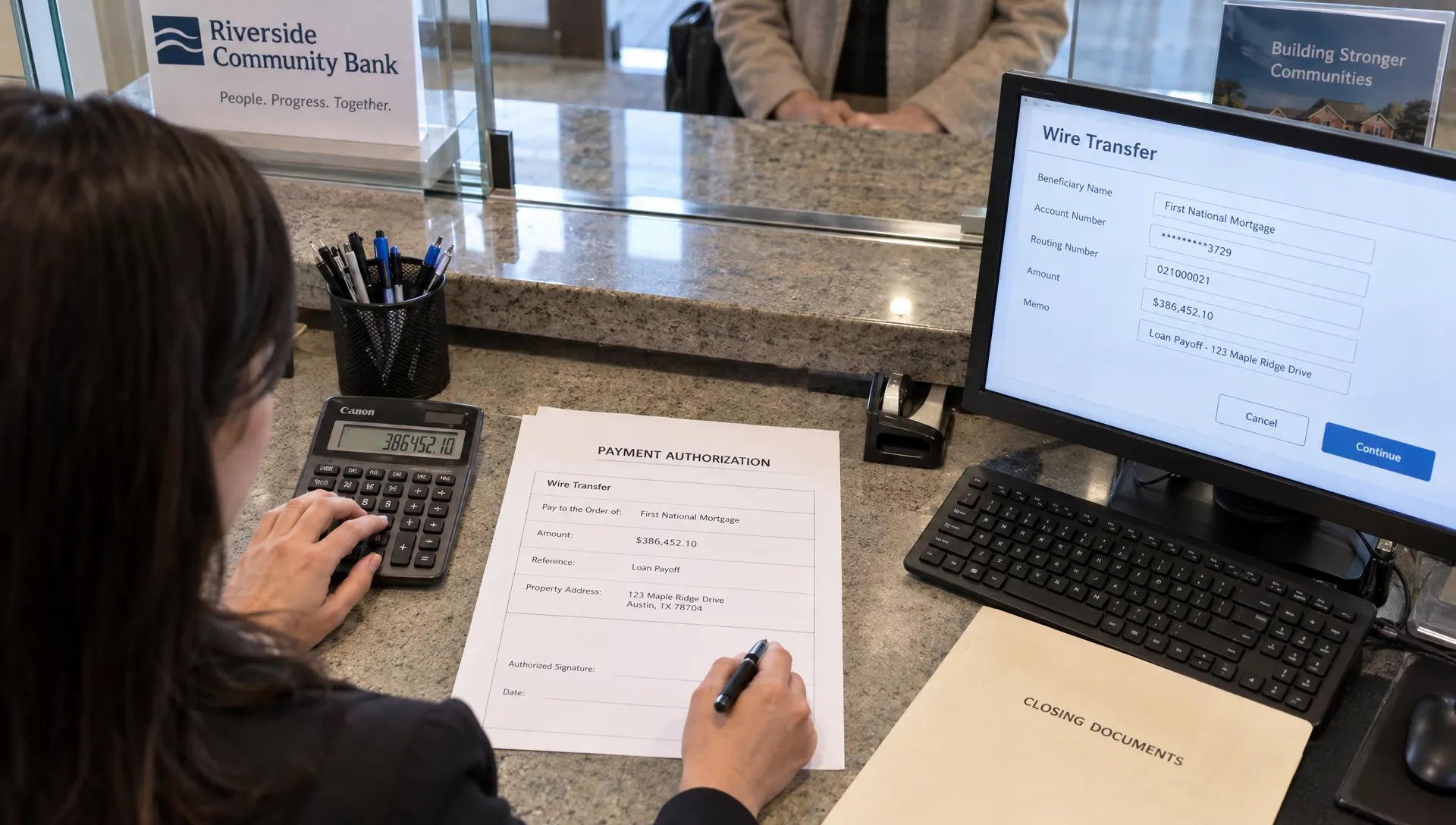
- Wire instructions: You independently verify payment instructions through a trusted phone number, not a new number supplied in an unexpected email.
When buying a home with loan debt, unresolved payoff or title questions are reasons to pause and get answers. A scheduled move-in date should not pressure you into accepting unclear obligations.
Frequently asked questions
Does the seller have to pay off the mortgage before accepting my offer? Usually not. In a standard sale, the mortgage is paid through closing using sale proceeds. The seller must still be able to meet the contract’s title and closing requirements.
Will I owe the seller’s remaining mortgage after buying the house? Not in a properly completed standard purchase where the existing loan is paid off and its lien is released. An approved assumption or subject-to arrangement works differently and needs separate review.
Does the seller’s equity determine my down payment? Not for a standard purchase with your own financing. Your down payment follows your loan program and approval. With an assumption, however, the gap between the purchase price and remaining loan balance can create a substantial cash requirement.
Can the purchase fall through because of the seller’s mortgage? Yes. An unresolved lien, insufficient payoff funds, missing short-sale approval or delayed assumption approval can prevent closing. Early title work and clear financing contingencies help identify those issues sooner.
Plan your purchase around the right financing
A seller’s unpaid mortgage is usually a closing task, not a reason to avoid the property. The important distinction is whether that debt will be paid off, formally assumed or left in place.
If you’re preparing to buy a home with loan debt still attached, New Era Lending can help you explore purchase financing with personalized guidance. Coordinate that financing with your settlement professional so your loan, the seller’s payoff and the title requirements fit the same closing plan.