.jpg)
.jpg)





.jpg)

How Home Mortgage Lending Rates Are Set

When you see a mortgage rate online, it can feel like the number came from one place. In reality, your rate is the result of a chain reaction that starts in the financial markets and ends with the specific details of your loan file.
That is why two borrowers can apply on the same day and receive different offers. It is also why a quote can move from morning to afternoon, especially in a volatile market. Understanding how home mortgage lending rates are set helps you shop smarter, ask better questions, and avoid focusing on the wrong number.
The short answer: no single agency sets your rate
The Federal Reserve does not directly set mortgage rates. Your lender does not simply pick a number at random either. Mortgage rates are shaped by the cost of money, investor demand, loan risk, lender operations, and borrower-specific details.
A helpful way to think about it is this: the market sets the starting point, the lender turns that market price into available loan options, and your financial profile determines which options you qualify for.
1. The broader economy sets the starting point
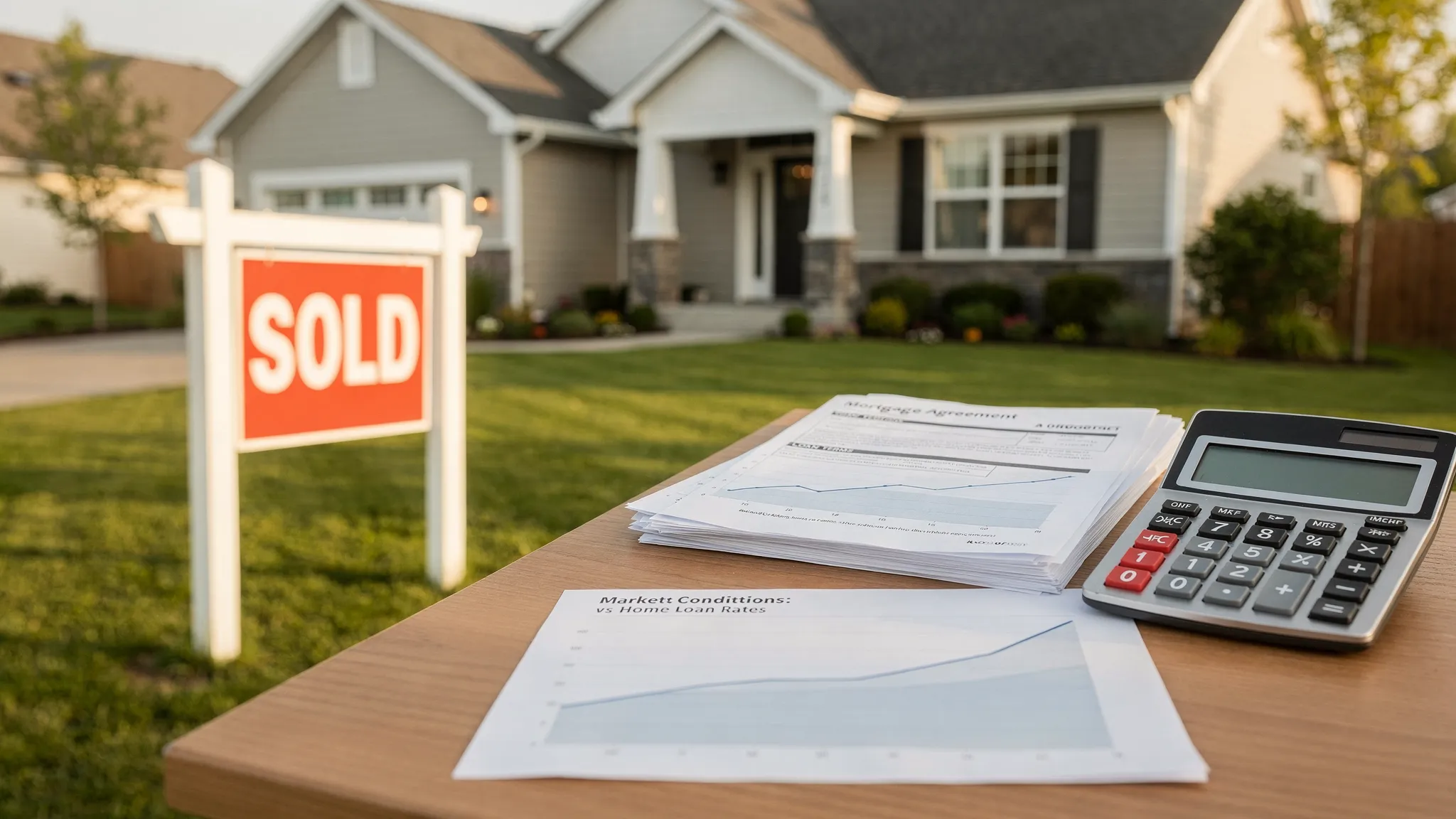
Mortgage rates are closely tied to the bond market because most home loans are long-term financial assets. Investors compare mortgage-backed investments with other options, including U.S. Treasury securities. When investors demand higher returns, mortgage rates usually rise. When demand is strong and inflation expectations cool, rates may ease.
Several economic forces influence that starting point:
- Inflation trends and expectations
- Employment and wage growth
- Federal Reserve policy signals
- Demand for U.S. Treasury bonds
- Global market uncertainty
- Investor appetite for mortgage-backed securities
The Federal Reserve matters because its policies influence overall borrowing costs and market expectations. But the Fed primarily controls short-term interest rate policy, not the exact 30-year mortgage rate you receive. The Federal Reserve explains monetary policy as a tool for influencing credit conditions, inflation, and employment, which then ripple through markets.
This is why mortgage rates can move before or after a Fed meeting, not only during the meeting itself. Investors often react to what they expect the Fed to do in the future.
For a broad view of national rate movement, many borrowers watch Freddie Mac's Primary Mortgage Market Survey. It is useful for tracking trends, but it is not a personalized quote. Your final rate depends on your loan scenario.
2. Mortgage-backed securities connect your loan to investors
After many mortgages close, they may be sold into the secondary mortgage market. Loans with similar characteristics can be grouped into mortgage-backed securities, often called MBS. Investors buy those securities because they expect to receive income from the underlying mortgage payments.
That investor demand is a major reason mortgage rates change. If investors are willing to pay more for mortgage-backed securities, lenders may be able to offer lower rates. If investors require more return because of inflation, uncertainty, or prepayment risk, rates generally move higher.
Prepayment risk is especially important. A mortgage can be paid off early when a homeowner sells, refinances, or pays extra principal. If rates fall and many borrowers refinance, investors may receive their money back sooner than expected and lose future interest income. That risk gets reflected in mortgage pricing.
Different loan channels also matter. Conventional loans that may be sold to Fannie Mae or Freddie Mac follow agency standards. FHA, VA, and USDA loans involve government insurance or guarantees, but private lenders still set the note rate. Jumbo and non-agency loans may follow different investor expectations because they are not handled the same way as standard agency loans.
3. Lenders translate market pricing into rate sheets
A lender receives market data and turns it into a rate sheet, which is essentially a menu of available rates and costs for different loan scenarios. This rate sheet can change daily and sometimes more than once per day when markets move quickly.
The lender's rate sheet reflects more than the bond market. It can include the lender's cost to originate loans, servicing considerations, operational capacity, competitive positioning, and risk appetite for specific loan types.
That is one reason different lenders can quote different numbers for the same borrower. One lender may be more competitive on a conventional purchase loan. Another may be stronger on a VA refinance or a cash-out transaction. A lender with a very attractive rate may also have higher upfront costs, a shorter lock period, or different underwriting requirements.
This does not mean lenders can price loans however they want. Mortgage pricing operates within regulatory, investor, and fair-lending requirements. Still, lenders have different business models and cost structures, so comparing more than one offer can be valuable.
If you are evaluating lenders, start with practical questions before you apply. New Era Lending's guide on questions to ask a home loan mortgage lender can help you prepare.
4. Your loan details create rate adjustments
Once the market and lender baseline are in place, the details of your loan file shape the rate you are actually offered. Lenders price risk, structure, and eligibility. A lower-risk or easier-to-sell loan may receive better pricing than a more complex loan.
Common borrower and loan factors include:
- Credit profile: Higher credit scores often improve access to better pricing, though exact impacts vary by program.
- Down payment and loan-to-value: A larger down payment can lower perceived risk, but the relationship is not always linear.
- Loan program: Conventional, FHA, VA, USDA, jumbo, and non-QM loans each have different pricing rules and investor expectations.
- Occupancy: Primary residences are often priced differently from second homes or investment properties.
- Property type: Condos, multi-unit properties, manufactured homes, and unique properties may affect pricing.
- Loan term: A 15-year loan, 30-year loan, or adjustable-rate mortgage can carry different pricing.
- Debt-to-income ratio and reserves: Stronger overall financial capacity may improve approval strength and available options.
None of this means a borrower is good or bad. It simply means lenders and investors price loans based on expected risk, marketability, and repayment characteristics.
This is also why a generic online rate can be misleading. A rate based on a high credit score, large down payment, primary residence, and discount points may not match your real scenario.
5. Points, credits, and locks turn a market rate into your offer
A mortgage rate is not complete unless you know the cost attached to it. The same loan may be available at several rates depending on whether you pay discount points, receive lender credits, or choose a different lock period.
Discount points are upfront fees paid to lower the interest rate. Lender credits work in the opposite direction: you may accept a higher rate in exchange for help covering some closing costs. Neither option is automatically better. The right choice depends on your cash available, how long you expect to keep the loan, and whether short-term savings or long-term interest savings matters more.
A rate lock is also part of how lending rates are set for your individual transaction. Until a rate is locked, your quote can move with the market. Once locked, the lender commits to that rate for a specific period, as long as the loan still meets the assumptions used for the quote.
Longer lock periods may cost more because the lender is taking on more market risk. Shorter lock periods may price better, but they can create extension risk if your closing is delayed.
For a deeper explanation of points, APR, and amortization, read Loan Terms Explained: APR, Points, and Amortization.
Why advertised rates can differ from your real quote
Advertised mortgage rates often rely on assumptions. They may assume a specific credit score, loan amount, down payment, property type, occupancy, lock period, and amount of points. If your scenario differs, your personalized quote may differ too.
The most reliable comparison tool is the Loan Estimate. After you apply, lenders must provide a standardized Loan Estimate that helps you compare interest rate, APR, monthly payment, estimated closing costs, and cash to close. The CFPB's Loan Estimate guide explains how this form is designed to help consumers compare mortgage offers.
When shopping, do not compare one lender's rate with another lender's APR or one quote with points against another quote without points. Compare the same loan type, same lock period, same down payment, same property use, and same timeline.
New Era Lending's article on how to compare new mortgage rate offers today walks through this process in more detail.
A simple example: why small rate differences matter
Small rate differences can change your payment meaningfully, but only when you compare them with the cost required to get that rate.
For illustration only, principal and interest on a $400,000 30-year fixed loan at 6.50% is about $2,528 per month. At 6.75%, it is about $2,594 per month. That $66 monthly difference adds up to nearly $24,000 over 30 years before considering any difference in upfront fees.
But if the lower rate requires $8,000 in discount points, the decision changes. A simple break-even estimate would divide the upfront cost by the monthly savings. In this example, $8,000 divided by $66 is about 121 months, or just over 10 years. If you expect to refinance, sell, or pay off the loan sooner, the lower rate may not be worth the upfront cost.
That is why the lowest rate is not always the best deal. The best mortgage offer is the one that fits your timeline, budget, cash-to-close needs, and long-term goals.
What borrowers can control before their rate is set
You cannot control inflation reports, bond yields, or investor demand. But you can control the quality of your loan file and the way you compare offers.
Before requesting quotes, focus on the items that make your scenario clearer and stronger:
- Review your credit reports and address errors early.
- Avoid taking on new debt before or during the mortgage process.
- Keep bank statements, pay stubs, tax documents, and asset records organized.
- Decide how much cash you want to use for down payment and closing costs.
- Ask lenders to quote the same loan type, lock period, and point structure.
- Compare interest rate, APR, cash to close, and full monthly payment together.
Good preparation can reduce surprises. It may also help you move quickly if rates improve and you decide it is time to lock.
For more on the market side of rate movement, see Mortgage Rates in 2026: What Really Moves Them.
Questions to ask when a lender quotes your rate
A rate quote should come with context. If a lender gives you a number without explaining assumptions, ask for more detail before making a decision.
Useful questions include:
- What credit score, loan amount, down payment, and property type is this quote based on?
- Does this rate include discount points or lender credits?
- What is the APR, and what costs are included in it?
- Is the rate locked or floating?
- How long is the lock period?
- What happens if closing is delayed and the lock expires?
- How would the payment change with a different down payment or loan program?
- Can I see a Loan Estimate for a true side-by-side comparison?
A good mortgage conversation should make the numbers easier to understand, not more confusing.
Frequently Asked Questions
Does the Federal Reserve set home mortgage lending rates? No. The Federal Reserve influences the economy and credit conditions, but it does not directly set the mortgage rate on your loan. Mortgage rates are more closely tied to long-term bond market expectations, mortgage-backed securities, lender pricing, and your loan scenario.
Why did my quoted mortgage rate change after pre-approval? A pre-approval does not automatically lock your rate. If your rate is floating, it can change with market conditions. Your rate can also change if loan details change, such as loan amount, down payment, credit score, property type, or lock period.
Can two lenders offer different rates for the same borrower? Yes. Lenders may have different cost structures, investor relationships, margins, and program strengths. That is why it is important to compare Loan Estimates, not just advertised rates.
Is APR the same as the interest rate? No. The interest rate is used to calculate your principal and interest payment. APR is designed to show a broader annualized cost of borrowing, including certain fees. APR is helpful, but it should be reviewed with the monthly payment, cash to close, and loan term.
Should I always choose the lowest mortgage rate? Not always. A lower rate may require higher upfront costs. If the break-even period is longer than you expect to keep the loan, a slightly higher rate with lower costs may be more practical.
Make your rate decision with clear numbers
Home mortgage lending rates are set through a complex process, but your decision does not have to feel complicated. The key is to compare personalized options using the same assumptions and to understand the tradeoff between rate, APR, payment, and cash to close.
New Era Lending combines smart mortgage tools with personalized human guidance for home purchases, refinances, and equity access across 39 states. If you want help reviewing real scenarios, comparing loan options, and understanding what affects your rate, start with New Era Lending.