.jpg)
.jpg)





.jpg)

No PMI Mortgage Loans: Who Can Qualify?
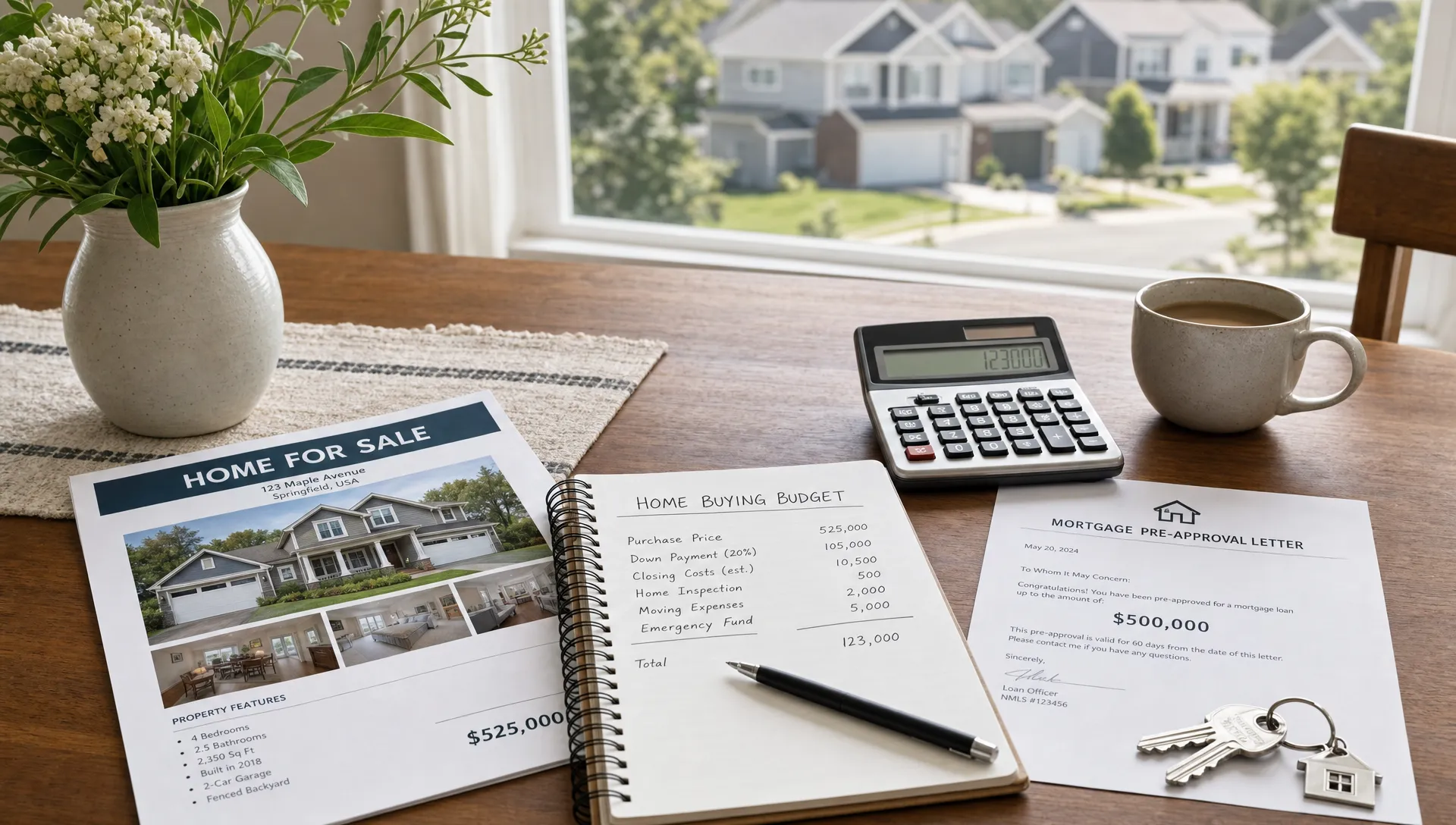
Private mortgage insurance can be one of the most frustrating costs for homebuyers. It protects the lender, not the borrower, and it can raise your monthly payment when you put less than 20% down on a conventional loan. That is why many buyers search for no PMI mortgage loans before choosing a loan program.
The good news is that some borrowers can avoid monthly PMI. The catch is that “no PMI” does not always mean “no extra cost.” Some options require a larger down payment, some are limited to eligible military borrowers, some replace PMI with a different fee, and some build the cost into the interest rate.
If you are trying to decide whether a no-PMI path fits your situation, the most important question is not just “Does this loan have PMI?” It is “What are the total costs, and can I qualify?”
What does a no PMI mortgage loan actually mean?
PMI, or private mortgage insurance, is typically associated with conventional mortgage loans when the borrower has less than 20% equity. According to the Consumer Financial Protection Bureau, PMI is designed to protect the lender if the borrower stops making payments.
A no PMI mortgage loan generally falls into one of a few categories:
- A conventional loan with at least 20% down
- A refinance where the homeowner has enough equity
- A VA loan, which does not require monthly PMI for eligible borrowers
- A lender-paid PMI option, where the cost may be built into the rate
- A piggyback loan structure, such as an 80-10-10 loan
- Certain portfolio, professional, or specialty loan programs
- A USDA loan, which has no PMI but does have guarantee fees
That distinction matters. FHA loans, for example, do not use PMI, but they do require mortgage insurance premiums, often called MIP. USDA loans do not have conventional PMI, but they include upfront and annual guarantee fees. VA loans do not have monthly PMI, but many borrowers pay a VA funding fee unless exempt.
So, when comparing options, look beyond the label. A loan without PMI can still have other costs that affect your payment, cash to close, and long-term savings.
Who can qualify for no PMI mortgage loans?
Different no-PMI options have different qualification rules. Here are the most common borrower profiles that may qualify.
Buyers with a 20% down payment
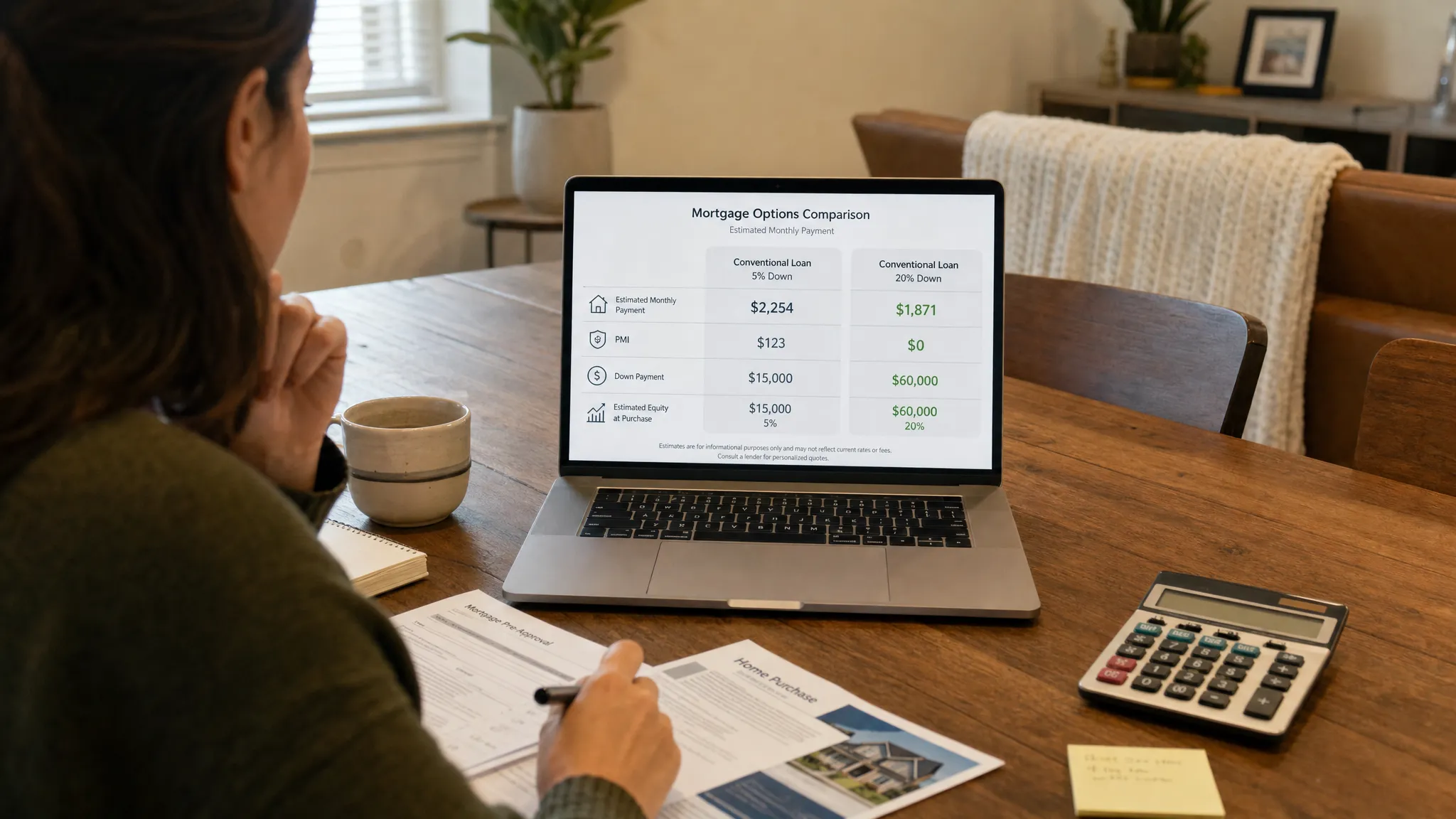
The simplest way to avoid PMI on a conventional mortgage is to make a down payment of at least 20% of the purchase price. This gives the lender an 80% loan-to-value ratio, often shortened to LTV.
For example, if you buy a home for $400,000 and put down $80,000, you are financing 80% of the property’s value. In many conventional loan scenarios, that means PMI is not required.
This option may fit buyers who have significant savings, proceeds from selling another home, gift funds that meet lender guidelines, or a combination of eligible assets. However, putting 20% down is not always the best choice for every borrower. If it drains your emergency fund or leaves you without money for repairs, moving costs, or reserves, a lower down payment with PMI may be more practical.
A strong lender will help you compare both sides: the monthly savings from avoiding PMI and the opportunity cost of using more cash upfront.
Homeowners refinancing with enough equity
No PMI mortgage loans are not only for home purchases. Current homeowners may qualify for a no-PMI refinance if they have enough equity in the property.
In many conventional refinance scenarios, PMI is not required when the new loan balance is 80% or less of the home’s appraised value. For example, if your home appraises for $500,000 and your new loan amount is $400,000 or less, your LTV is 80% or lower.
This can be especially relevant if your home has increased in value, you made extra principal payments, or you originally purchased with a smaller down payment and have since built equity. A refinance can potentially remove PMI, change your loan term, adjust your rate type, or help you access home equity, depending on your goals and qualification.
Keep in mind that refinancing comes with closing costs and underwriting requirements. Removing PMI is valuable, but it should be evaluated as part of the entire refinance picture.
Eligible veterans, service members, and surviving spouses
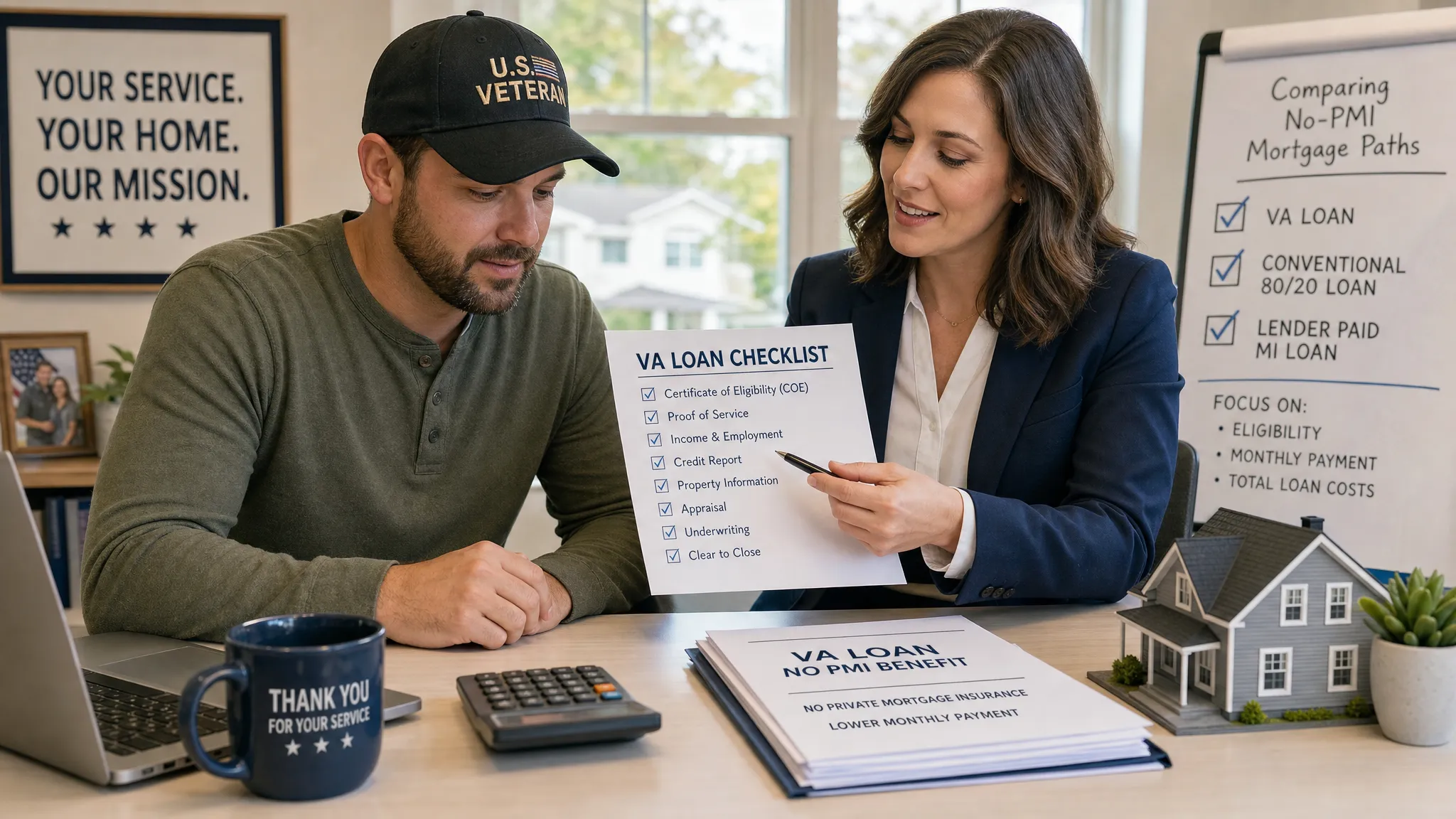
VA loans are one of the most well-known no-PMI mortgage options. The VA home loan program is available to eligible veterans, active-duty service members, certain National Guard and Reserve members, and some surviving spouses. The U.S. Department of Veterans Affairs explains that VA-backed purchase loans can offer favorable terms and do not require monthly mortgage insurance.
For qualified borrowers, this can be a major advantage. VA loans may allow eligible buyers to purchase with no down payment, no monthly PMI, and flexible underwriting compared with some conventional programs.
However, “no PMI” does not mean “no fee.” Many VA borrowers pay a VA funding fee, which can often be financed into the loan. Some borrowers, including certain veterans with qualifying service-connected disabilities, may be exempt from the funding fee.
To qualify, you typically need a Certificate of Eligibility, acceptable credit and income, sufficient residual income, and a property that meets VA requirements. If you are eligible, it is worth reviewing the benefits of a VA mortgage loan before assuming a conventional loan is your best fit.
Buyers using a piggyback loan
A piggyback loan is another way some borrowers avoid PMI without putting 20% down in cash. The classic structure is called an 80-10-10 loan:
- 80% first mortgage
- 10% second mortgage or home equity line of credit
- 10% borrower down payment
Because the first mortgage stays at 80% LTV, conventional PMI may not be required on that first loan. The second loan fills part of the gap between your down payment and the full purchase price.
This can work for buyers who have strong credit, reliable income, and enough cash for a moderate down payment but not a full 20%. It may also appeal to borrowers buying in higher-cost markets where PMI would be expensive.
The tradeoff is complexity. You may have two payments, two sets of terms, and a second loan with a variable interest rate. A piggyback structure can make sense, but only if the combined payment, rate risk, and closing costs are better than the alternatives.
Borrowers who qualify for lender-paid PMI
Lender-paid PMI is often advertised as a no-PMI option because the borrower does not pay a separate monthly PMI line item. But the insurance cost usually does not disappear. Instead, the lender may charge a higher interest rate to cover it.
This may be useful for borrowers who want a lower upfront cash requirement and prefer a simpler monthly payment. It may also make sense if you plan to sell or refinance before the higher rate costs more than traditional borrower-paid PMI.
The downside is that lender-paid PMI is usually not cancelable in the same way monthly borrower-paid PMI can be. If the cost is built into your interest rate, you may need to refinance to remove it. That is why it is important to compare the total cost over the time you realistically expect to keep the loan.
If you want a deeper breakdown of how PMI works, including costs and ways to avoid it, New Era Lending’s guide to property mortgage insurance costs, rules, and avoidance strategies can help you understand the basics before comparing loan estimates.
Buyers who qualify for USDA loans
USDA loans are sometimes grouped with no PMI mortgage loans because they do not charge private mortgage insurance. Instead, USDA loans have guarantee fees, including an upfront guarantee fee and an annual fee.
USDA loans are designed for eligible rural and some suburban properties, and they include income limits. Borrowers must meet program requirements, and the property must be located in an eligible area. The USDA provides an online property and income eligibility tool that can help buyers check general location and income guidelines.
This option may fit buyers with moderate income who are purchasing in an eligible area and want low or no down payment. But because USDA fees still affect cost, it is better to think of USDA as “no conventional PMI” rather than “no mortgage insurance cost at all.”
Borrowers eligible for specialty or portfolio programs
Some lenders and financial institutions offer specialty loan programs that waive monthly PMI for certain borrowers. These may include programs for physicians, dentists, attorneys, high-income professionals, first-time buyers, or borrowers in specific communities.
Qualification rules vary widely. A program may require a strong credit score, certain employment or degree credentials, income documentation, reserves, or a specific property type. Some programs may allow a low down payment without monthly PMI but compensate with a higher rate or stricter underwriting.
Because these programs are not identical from lender to lender, the key is to compare them against standard conventional, FHA, VA, and USDA options. A waived PMI line item is valuable only if the full loan terms support your financial goals.
What lenders look at when deciding if you qualify
Even if a loan program offers no PMI, you still have to meet underwriting requirements. Lenders generally evaluate your full financial profile, not just your down payment.
Common qualification factors include credit history, debt-to-income ratio, income stability, employment history, cash reserves, property type, occupancy, and loan amount. The stronger your overall profile, the more options you may have.
Credit can be especially important for no-PMI structures like piggyback loans or specialty programs. A borrower with excellent credit may qualify for more competitive terms, while a borrower with limited credit history or recent credit events may have fewer options.
Your debt-to-income ratio also matters. This ratio compares your monthly debt obligations to your qualifying income. A borrower with a high DTI may still qualify for some programs, but no-PMI options can become more limited if the payment is stretched.
Income documentation is another major factor. W-2 employees, self-employed borrowers, commissioned professionals, and retirees may all qualify, but the documentation needed can differ. Lenders want to verify that your income is stable, likely to continue, and sufficient to support the mortgage payment.
Finally, the property itself has to qualify. A primary residence is usually treated differently from a second home or investment property. Condos, multi-unit properties, manufactured homes, and unique properties may have additional requirements.
When a no-PMI loan may not be the cheapest option
Avoiding PMI feels like an obvious win, but it is not always the lowest-cost strategy.
Consider a buyer who can put 10% down and pay monthly PMI, or use a lender-paid PMI option with a higher interest rate. If the buyer expects to refinance or sell in a few years, one option may be better. If the buyer plans to keep the loan for 20 years, the math may change.
The same is true for putting 20% down. If using all your available cash helps you avoid PMI but forces you to rely on credit cards for repairs or emergencies, the savings may not be worth the risk. Liquidity has value, especially in the first year of homeownership.
A good comparison should include:
- Monthly principal and interest
- PMI, MIP, funding fees, or guarantee fees
- Interest rate differences
- Closing costs
- Cash needed to close
- How long you expect to keep the loan
- Whether the insurance or higher rate can be removed later
This is where personalized guidance matters. A loan with no PMI is not automatically better, and a loan with PMI is not automatically bad. The right answer depends on your timeline, budget, eligibility, and comfort with upfront cash.
How to improve your chances of qualifying
If your goal is to qualify for a no-PMI mortgage, you can often strengthen your profile before applying. Start by reviewing your credit reports, reducing high-interest debt, and avoiding new credit accounts before mortgage approval. Even small improvements in credit and DTI can affect your available options.
It also helps to document your assets clearly. Lenders may need bank statements, investment account statements, gift letters, or proof of proceeds from a home sale. Large deposits may need to be explained, so keeping your finances organized can prevent delays.
If you are eligible for a VA loan, request your Certificate of Eligibility early. If you are considering USDA financing, check the property area and household income limits before you fall in love with a home. If you are comparing conventional options, ask your lender to show side-by-side scenarios with and without PMI.
You may also want to revisit your down payment strategy. Sometimes moving from 5% down to 10% or 15% down meaningfully reduces PMI, even if it does not eliminate it completely. In other cases, preserving cash may be smarter than chasing a no-PMI structure.
For buyers exploring low down payment paths, it can also be helpful to compare no-PMI programs with mortgages that require no down payment, especially if you may qualify for VA, USDA, or assistance-based options.
Questions to ask before choosing a no-PMI mortgage
Before you commit to any no-PMI option, ask your lender for a clear comparison. The goal is to understand the full cost, not just the marketing label.
Useful questions include:
- Is there truly no monthly mortgage insurance, or is the cost built into the rate?
- Are there upfront fees, funding fees, or guarantee fees?
- Can the insurance cost be canceled later?
- What is the total monthly payment compared with a loan that has PMI?
- How much cash do I need to close?
- What credit score, DTI, and reserve requirements apply?
- How long would I need to keep the loan for this option to make sense?
If the answer is unclear, ask for numbers. A side-by-side loan estimate can make the tradeoffs easier to see.
Frequently Asked Questions
Can first-time homebuyers qualify for no PMI mortgage loans? Yes, first-time buyers can qualify if they meet the requirements for a no-PMI option, such as putting 20% down, using a VA loan if eligible, qualifying for a specialty program, or using a piggyback structure. Many first-time buyers also compare low-down-payment loans with PMI to see which option is more affordable overall.
Do VA loans have PMI? No, VA loans do not require monthly PMI. However, many VA borrowers pay a VA funding fee unless they qualify for an exemption. The funding fee is different from PMI and should be included when comparing total costs.
Is lender-paid PMI really no PMI? It depends on how you define it. Lender-paid PMI usually means there is no separate monthly PMI charge, but the cost may be built into a higher interest rate. That can be helpful in some situations, but it is not the same as the cost disappearing.
Can I remove PMI without refinancing? In some conventional loan scenarios, PMI can be canceled after you build enough equity and meet lender requirements. The rules depend on your loan type, payment history, property value, and whether you request cancellation or reach automatic termination. Refinancing is another possible path if your home value has increased enough.
Is it better to put 20% down or pay PMI? Not always. Putting 20% down can eliminate PMI, but it also uses more cash upfront. Paying PMI may be reasonable if it lets you buy sooner, keep emergency savings, or avoid taking on higher-cost debt. The better option depends on your budget, timeline, and total loan costs.
Find the no-PMI path that fits your situation
No PMI mortgage loans can be a smart way to lower your monthly payment, but qualification depends on your eligibility, equity, credit profile, income, property, and loan structure. The best option is the one that balances monthly savings with upfront cash, long-term cost, and financial flexibility.
New Era Lending helps borrowers compare home purchase, refinance, and equity-access options with modern tools and personalized guidance. If you want to understand whether you can qualify for a no-PMI mortgage, a VA loan, a refinance without PMI, or another strategy, start by reviewing your options with a mortgage professional who can show the numbers clearly.
Visit New Era Lending to explore a clearer path to home financing and compare mortgage solutions with confidence.