









Mortgage Steps to Review Before Removing a Co-Borrower

The mortgage steps you take before removing a co-borrower should establish two separate outcomes: who will own the home and who will remain responsible for the debt. Changing one does not automatically change the other.
Whether the reason is divorce, separation or a change in shared ownership, start with the existing loan documents and the servicer’s requirements. Then compare financing options, calculate any equity buyout and coordinate the legal paperwork before either person signs away ownership.
1. Separate mortgage liability from property ownership
Three documents serve different purposes:
- The promissory note identifies who has promised to repay the loan.
- The deed identifies the property’s owners.
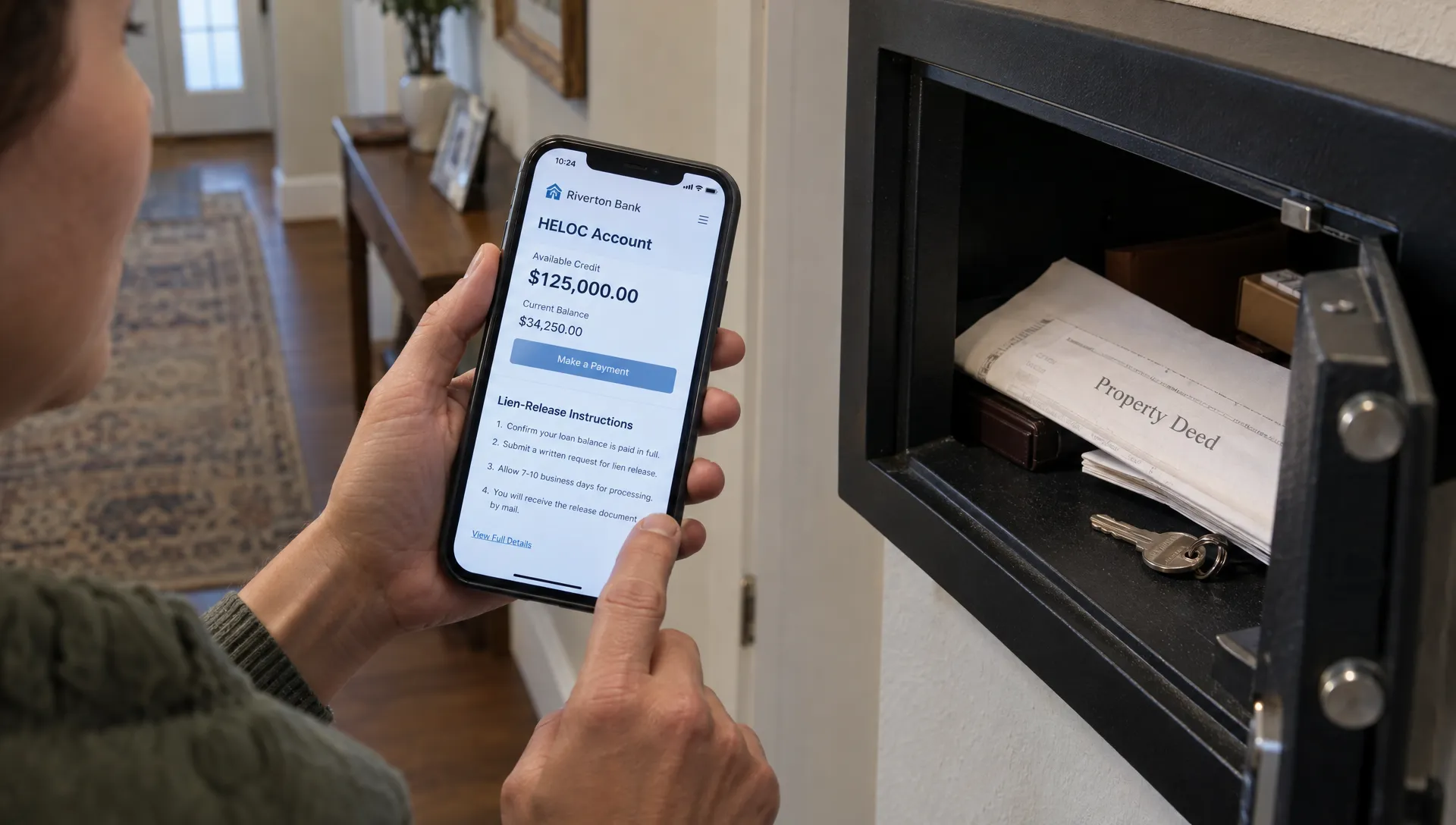
- The mortgage or deed of trust gives the lender a security interest in the property.
A quitclaim deed generally transfers an ownership interest, not responsibility for the loan. Similarly, a divorce decree assigning payments to one spouse does not, by itself, release the other spouse from the lender’s contract.
Our explanation of home ownership and mortgage liability covers why these distinctions matter. Before signing a deed, have the lender and an attorney confirm how the ownership transfer and debt release will be coordinated.
2. Compare mortgage steps for each removal option
Refinancing is one route, but it is not always the only one. Ask the current servicer which alternatives the existing loan permits and request the requirements in writing.
| Option | What happens to the loan | What must be confirmed |
|---|---|---|
| Refinance in the remaining borrower’s name | A new loan pays off the existing mortgage | The remaining borrower qualifies and the old loan is fully paid |
| Approved assumption with release | An approved borrower takes responsibility under the existing loan’s terms | The departing borrower receives an explicit release of liability |
| Release of a borrower without refinancing | The creditor removes a borrower if its rules allow it | Written approval states exactly who is released and when |
| Sell the property | Sale proceeds pay off the mortgage at closing | Proceeds cover the payoff, transaction costs and agreed distributions |
An assumption and a release of liability are not interchangeable. Do not treat permission to take over payments as proof that the departing borrower has been released.
FHA, VA and USDA loans can have assumption pathways, subject to program requirements. Conventional loan treatment varies. With a VA loan, also ask about the departing veteran’s entitlement: release from personal liability and restoration of entitlement are separate issues.
If refinancing appears appropriate, review the broader refinance process alongside these co-borrower-specific checks.
3. Test whether the remaining borrower can qualify
Before paying for legal transfers or promising a buyout date, use these mortgage steps to test the remaining borrower’s finances without relying on the departing person’s income.
The lender may evaluate credit history, documented income, employment, assets and debt-to-income ratio. The housing expense generally includes principal, interest, property taxes, homeowners insurance and applicable association dues or mortgage insurance.
A payment that two people have comfortably shared can still be difficult for one person to qualify for. The remaining borrower may also be taking on support obligations, a vehicle loan or other debts through the separation agreement.
Ask how the lender will document any support income used to qualify and how it will treat debts allocated by a divorce decree. Do not assume a court’s allocation automatically removes a jointly held debt from underwriting calculations.
A preliminary estimate or prequalification is not final approval. Even a documented preapproval may depend on appraisal results, title review and updated financial information. Until closing and funding, avoid new borrowing or major account transfers without discussing them with the lender.
4. Calculate the equity buyout and full transaction cost
Separate estimated equity from available cash
The financial mortgage steps should address both the departing owner’s equity share and the remaining borrower’s ability to finance it. Equity is not the same as cash available at closing.
For example, suppose the agreed property value is $400,000 and the mortgage payoff is $240,000. Estimated equity is $160,000 before costs. An equal division would suggest an $80,000 share for each owner, but the actual settlement may account for legal agreements, ownership percentages or other adjustments.
Financing the $240,000 payoff plus an $80,000 buyout would require $320,000 before financed costs, or 80% of that assumed value. This calculation does not establish eligibility. The appraisal, loan program and transaction classification still matter.
Ask whether the proposed buyout is treated as cash-out or another refinance category. Different classifications can change eligibility, pricing and available loan amounts.
Budget for costs without overstating property value
Include lender charges, title services, recording fees, legal work and any appraisal expense. Separate true transaction costs from prepaid taxes, insurance and escrow funding. Request a payoff statement because the balance shown on a monthly statement may not equal the amount needed to close.
If selling another property will help fund the buyout, deduct its preparation costs from expected proceeds. For an overseas property in Melbourne, for example, a quote for residential painting in Melbourne can inform that budget; U.S. properties need estimates from local contractors. Painting costs do not guarantee an equivalent increase in appraised value.
5. Gather documents before making the transfer binding
Document preparation is one of the mortgage steps that can expose problems early, especially when a settlement agreement and a loan application must match.
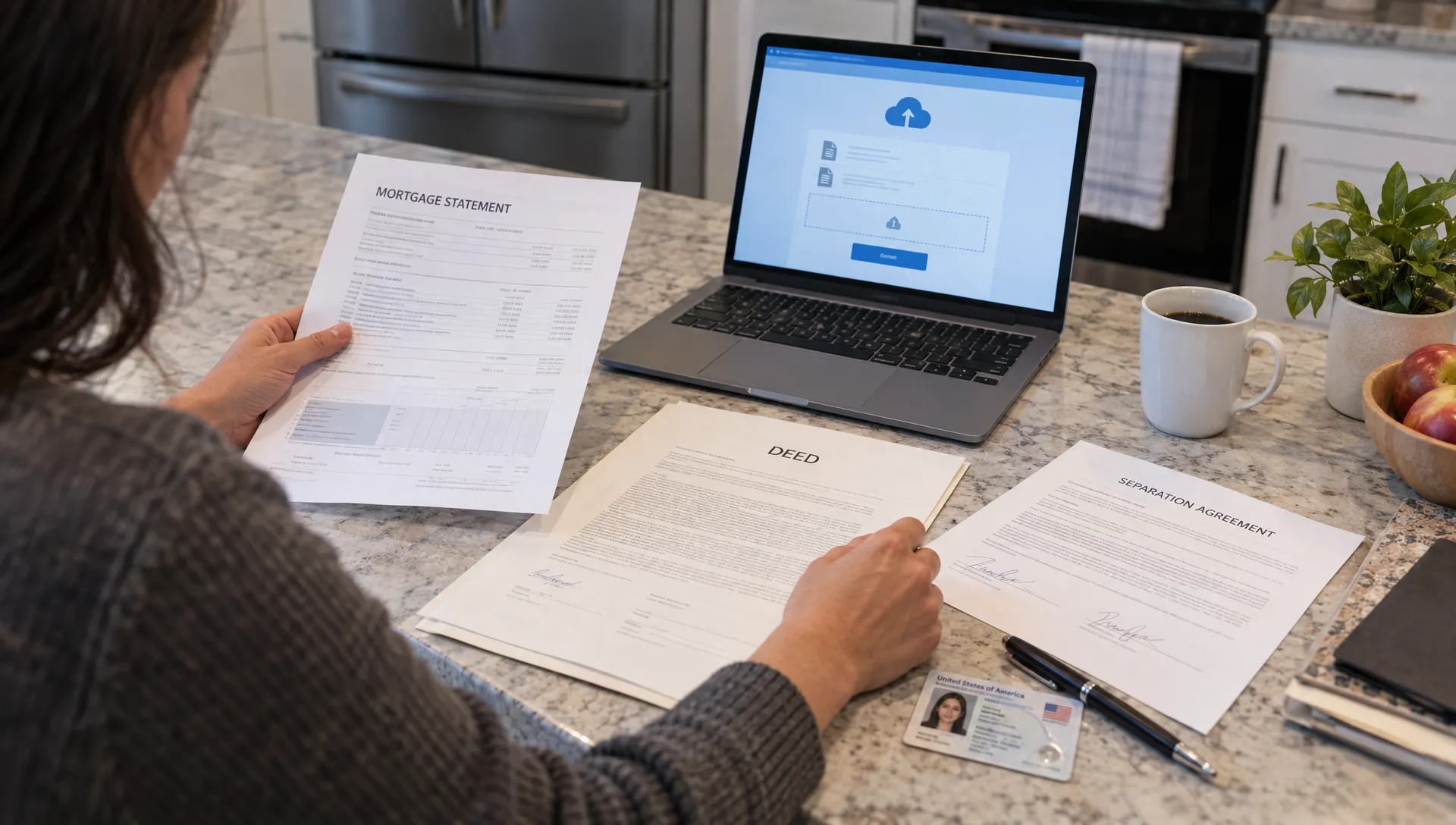
The lender’s request will vary, but commonly needed records include income documentation, bank statements, the current mortgage statement, insurance information and identification. Self-employed borrowers may need additional business and tax records.
For a co-borrower removal, also expect questions about the recorded deed, any divorce decree or separation agreement, the proposed buyout terms and the source of funds. A lender may need a complete signed agreement rather than a summary of the arrangement.
Make sure the documents consistently identify who keeps the property, who receives money and which obligations remain after closing. If funds come from a gift, asset sale or another account, ask about documentation before moving them.
An attorney can help structure deadlines and contingencies so that someone does not surrender ownership while remaining liable for the mortgage. A loan application alone is not protection against that outcome.
6. Resolve underwriting issues and confirm the closing schedule
Address approval conditions before relying on a date
Underwriting can identify an income-documentation gap, an undisclosed debt, a title issue or insufficient equity. Ask which conditions remain outstanding and who must resolve each one.
If the appraisal is lower than expected, possible responses include reducing the financed buyout, bringing additional cash or revisiting the settlement. You can also ask about the lender’s appraisal reconsideration process if there are factual errors or relevant comparable sales. A higher value is not guaranteed.
Build these mortgage steps into any settlement deadline rather than assuming the loan will close on the first proposed date. Assumptions and borrower-release requests follow different workflows from refinances, so request a timeline for the actual option being pursued.
Account for disclosures and funding
For most covered closed-end mortgages, the Loan Estimate generally must be delivered or mailed within three business days after application and at least seven business days before consummation. The borrower generally must receive the Closing Disclosure at least three business days before consummation. These are sometimes called the “3-7-3” timing rules; the applicable business-day definitions differ.
The CFPB’s Closing Disclosure guidance explains the final document and review period. Certain significant loan changes can require a new waiting period.
Many refinances secured by a principal residence also have a three-business-day rescission period. Confirm when the transaction will actually fund and the old mortgage will be paid off, not just when documents will be signed.
7. Verify the release, payoff and recorded ownership
The final mortgage steps should produce evidence, not just assurances that a name has been removed from an online account.
With a refinance, confirm that the new loan funded and the previous mortgage was paid in full. Obtain confirmation of the old account’s paid status and ask how the lien satisfaction or reconveyance will be recorded under local procedures.
With an assumption or other release arrangement, obtain the written release that applies to the departing borrower. Have unclear language reviewed before treating the obligation as ended. A servicing update, payment arrangement or change of mailing address is not a substitute.
Separately, confirm that the intended deed was recorded correctly. Update homeowners insurance, payment arrangements and account access as appropriate, coordinating any insurance changes with the lender and insurer.
Keep copies of the settlement agreement, closing documents, recorded deed and payoff or release records. Check credit reporting after the creditor has had time to update the account. A closed mortgage can remain on a credit report as historical information; the concern is whether its balance and responsibility are reported accurately.
If solo qualification does not work yet
A failed qualification review does not make transferring the deed first a safer solution. Revisit the financing or the settlement structure instead.
Possible next moves include paying down qualifying debts, documenting additional eligible income, contributing more cash or delaying the transaction under an attorney-reviewed agreement. Selling may be more workable if neither owner can afford the home independently.
Before repeating the mortgage steps with another lender, identify the actual obstacle. A program-specific restriction may lead to a different answer elsewhere, while insufficient sustainable income may require a change in the plan.
If both borrowers temporarily remain on the loan, each should understand the continuing risk. Late payments can affect both borrowers’ credit, and the mortgage may affect their ability to qualify for future financing. Any interim agreement should address payment monitoring, expenses, deadlines and what happens if the planned refinance fails.
Frequently asked questions
Can I remove a co-borrower without refinancing? Sometimes. An approved assumption with a release of liability or another creditor-approved borrower release may be available. Eligibility depends on the loan and creditor requirements. Simply changing the deed or payment account is not enough.
Does a divorce decree remove someone from the mortgage? No, not by itself. It can allocate responsibilities between former spouses, but releasing a borrower from the loan generally requires creditor approval or payoff. Certain transfers have federal due-on-sale protections, which are different from a release of personal liability.
Can the remaining borrower keep the current interest rate? An approved assumption may preserve existing loan terms. A refinance replaces the existing mortgage and is priced under the new loan’s terms. Ask the servicer whether an assumption or release pathway is available before replacing a favorable rate.
How long does removing a co-borrower take? There is no universal timeline. The mortgage steps depend on whether the transaction involves refinancing, assumption or another approved release, plus underwriting, title work and required waiting periods. Request a case-specific estimate before agreeing to a binding deadline.
Review the financing before signing away ownership
New Era Lending offers personalized mortgage guidance and refinancing options. Discuss your existing loan, proposed ownership arrangement and buyout needs with New Era Lending to explore available financing paths. Coordinate that review with an attorney or title professional so the debt obligation and ownership transfer are handled together.