









How to Get Help With Your Mortgage After an Escrow Error
An unexpected escrow shortage, duplicate tax payment or insurance billing mistake can push your mortgage payment higher even when your loan’s interest rate has not changed. If you need help with your mortgage after an escrow error, start with your mortgage servicer, the company that collects your payments. Ask it to investigate, preserve your records and use a written dispute when necessary.
The goal is to correct the account without creating a separate missed-payment problem. Here is how to check the numbers, document the issue and escalate if the servicer does not resolve it.
Check whether the escrow increase is actually an error
An escrow account holds money your servicer uses to pay expenses such as property taxes and homeowners insurance. Your payment can legitimately increase when those bills rise, when an earlier estimate was too low or when the account needs to restore an allowed cushion.
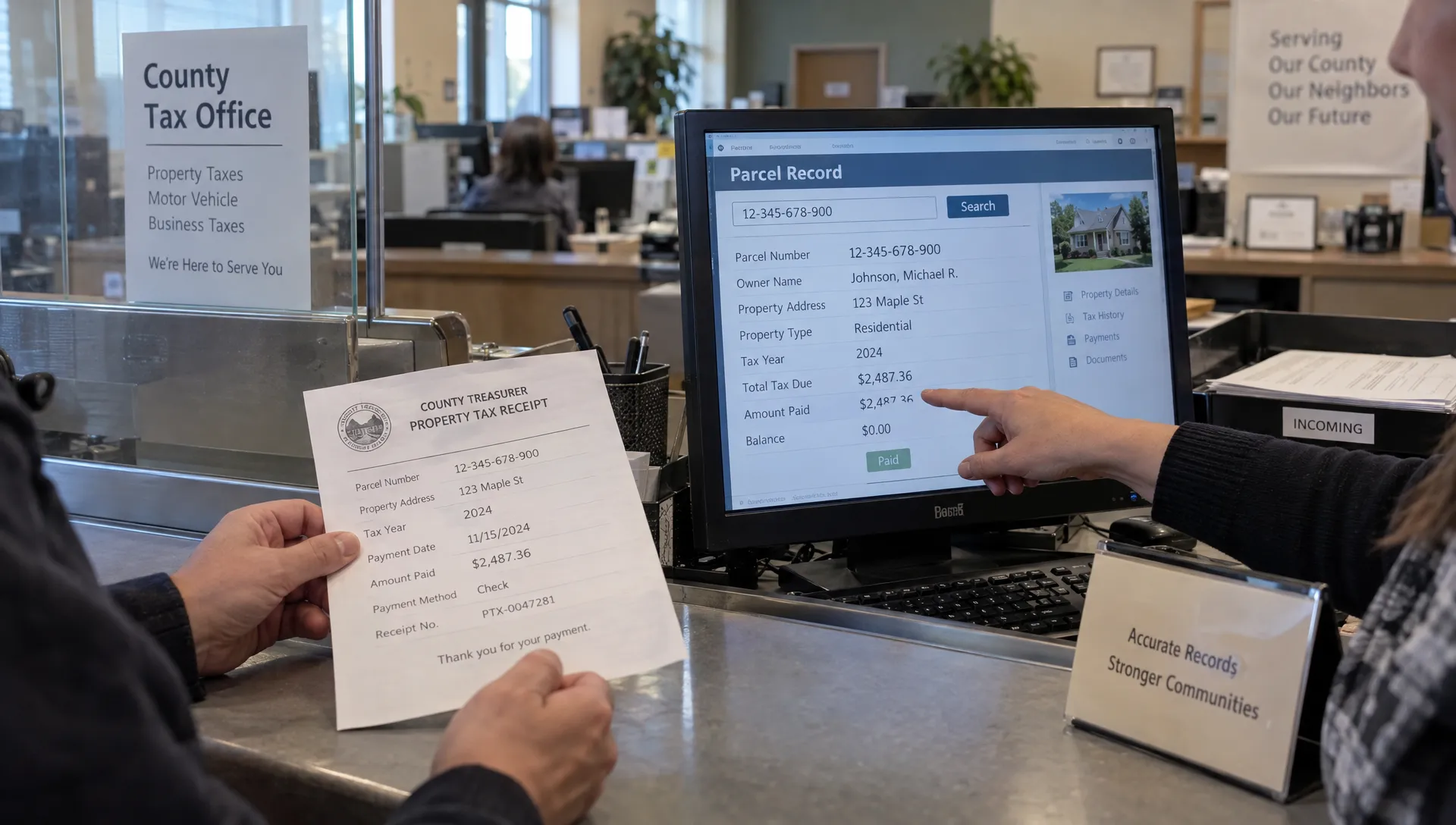
A shortage alone does not prove a servicing mistake. Compare the latest escrow analysis with actual bills and payment records.
| What you notice | Possible explanation | What to verify |
|---|---|---|
| Property taxes suddenly doubled | Duplicate payment, incorrect parcel or a real assessment change | Parcel number, tax year and taxing authority’s ledger |
| Insurance charges increased sharply | Renewal increase, duplicate premium or force-placed insurance | Policy dates, premium and proof of existing coverage |
| A shortage appears after a servicing transfer | Missing balance or transaction records | Prior closing balance and new servicer’s opening balance |
| Monthly escrow rises despite unchanged bills | Prior undercollection, cushion adjustment or calculation error | Projected disbursements and lowest projected balance |
| A tax bill is overdue despite escrow collections | Missed payment, payment misapplication or another processing issue | Due date, disbursement record and payment receipt |
Under federal escrow-account rules, the cushion generally cannot exceed one-sixth of estimated annual disbursements, roughly two months of escrow payments. Your loan documents or state law may require less.
Getting help with your mortgage is easier when you can identify the specific transaction or calculation that appears wrong.
Separate higher ongoing costs from shortage repayment
A payment increase can contain two different charges: a higher amount for future bills and a temporary amount to repay a past shortage.
For example, suppose your annual insurance premium increases by $600 and your escrow analysis identifies a $1,200 shortage. If that shortage is spread over 12 months, the increase would be $50 per month for the higher premium plus $100 per month for shortage repayment, assuming nothing else changes.
In that hypothetical example, correcting the shortage would not erase the higher insurance cost. Ask the servicer to show each component separately and explain the repayment period. Do not assume the entire shortage must be paid immediately, since federal rules limit how servicers may collect shortages in many situations.
Gather the records that establish what happened
Build a small evidence packet before calling. You do not need to send every document from your original closing. Focus on records that connect the disputed charge to the correct amount.
Useful documents include:
- Your latest mortgage statement, escrow analysis and payment-change notice.
- The previous escrow analysis and recent escrow transaction history.
- Property tax bills showing the correct parcel, amount and due date.
- Insurance declarations, renewal notices and proof of premium payment.
- Relevant servicing-transfer notices, payment confirmations and prior correspondence.
Write a short timeline with dates, amounts and what each document establishes. For example: “The county shows one tax bill for $3,200, but the escrow ledger shows two $3,200 disbursements.”
When requesting help with your mortgage, separate verified facts from questions. “Please identify the recipient of the second payment” is more useful than assuming the money disappeared.
Keep original records and send copies. Use the servicer’s verified contact information, not a phone number from an unsolicited message. If necessary, follow these steps for verifying a mortgage payment phone number before discussing your account.
Call the servicer and ask for a specific correction
Ask for the escrow or servicing research department. Explain what appears wrong, which records support your concern and when the higher payment takes effect.
A useful opening is:
My escrow analysis dated [date] appears to include a duplicate property tax payment of [amount]. The county’s records show only one bill. Please investigate the transaction, explain the current payment requirement and tell me where to send a written notice of error.
Request a case number and record the representative’s name, the date and any promised follow-up. Ask whether the correction will require a new escrow analysis and when an updated statement should appear.
If insurance is involved, contact your insurer as well. For force-placed insurance, provide evidence of your existing coverage and ask the servicer to review any overlapping charges. For a tax issue, ask the taxing authority whether funds were received, returned or applied to the wrong parcel.
A phone call may resolve a straightforward problem, but a verbal promise is not the same as a corrected account.
Put requests for help with your mortgage in writing
For an unresolved servicing mistake, send a written notice of error. Federal mortgage servicing protections under RESPA and Regulation X establish a process for investigating qualifying written notices.
Use the servicer’s designated notice-of-error address if it has one. This may differ from the payment address or general correspondence address. Check your statement and the servicer’s official website. Use an online submission method only if the servicer identifies it as an accepted way to submit these notices.
Your letter should identify you and the loan, describe the suspected error and explain the correction requested. You do not have to quote a regulation or use legal terminology.
Sample escrow error letter
Subject: Notice of error concerning escrow account, loan [number]
I believe my mortgage account contains an escrow servicing error. The escrow analysis dated [date] includes [describe the disputed charge, payment or calculation].
My supporting records show [brief explanation, including relevant dates and amounts]. I have enclosed copies of [documents].
Please investigate, correct any error, provide an updated escrow analysis and explain the resulting monthly payment. Please also review any related fees, tax penalties or credit reporting that may require correction.
Please send your written response to [mailing address]. My name is [name], and my contact information is [contact details].
Keep a complete copy and proof of delivery. If you need help with your mortgage because the calculation remains unclear, also request the transaction history and documents used to prepare the analysis.
Know the usual response deadlines
For a typical escrow-related notice of error, the servicer generally must acknowledge receipt within five business days. It generally must correct the error or investigate and explain its determination within 30 business days.
For these deadlines, Saturdays, Sundays and legal public holidays are excluded. In some circumstances, the servicer can extend the investigation by 15 business days, but it must notify you before the original deadline and explain the delay. Exceptions apply to certain notices.
The CFPB’s notice-of-error regulation explains these requirements. A servicer generally cannot require payment as a condition of investigating a qualifying notice.
If the servicer concludes there was no error, review its explanation against your records. You can request the documents it relied on in making that determination.
Protect your payment history while the dispute is open
A dispute does not automatically suspend your mortgage payment obligation. Do not stop paying or send only the old amount without understanding how the servicer will handle it. A partial payment may be held in a suspense account rather than credited as a full monthly payment.
Ask the servicer to confirm in writing the amount needed to keep the account current during its investigation. If you cannot afford that amount, request a separate hardship review immediately. Keep the escrow dispute and assistance request connected in your records, but do not assume one automatically starts the other.
Check your autopay settings before the next withdrawal. Some arrangements adjust to the new amount, while fixed bank bill-pay instructions may continue sending the old payment. This guide to setting up mortgage autopay without missed payments explains that distinction.
Federal rules also restrict adverse credit reporting for 60 days about a payment that is the subject of a qualifying notice of error. That is a limited protection, not a blanket freeze on reporting or permission to skip future payments.

Escalate an unresolved escrow problem
If the response deadline passes or the explanation does not address your evidence, follow up with the servicer’s escalation or complaint department. Reference the original notice, delivery date and case number rather than starting the story from scratch.
You can also submit a complaint to the Consumer Financial Protection Bureau. Include a concise timeline, the disputed amounts, supporting records and the outcome you are requesting. A complaint does not replace a properly submitted notice of error or pause legal deadlines.
A HUD-approved housing counselor can help you understand statements, organize documents and communicate with the servicer. Foreclosure-prevention counseling through HUD-approved agencies is available free of charge.
When seeking help with your mortgage, avoid companies that guarantee a correction, demand upfront mortgage-relief fees or instruct you to redirect payments to them. Verify any professional independently before sharing financial information.
Treat foreclosure notices and tax-sale deadlines as urgent
If you have received foreclosure papers, a scheduled sale notice or a tax-sale warning, contact a local attorney or legal aid organization immediately. Do not wait for the escrow investigation to finish.
A written dispute does not, by itself, guarantee that a foreclosure or tax sale will stop. Court response deadlines, state protections and mortgage assistance rules require separate attention. The Legal Services Corporation’s legal aid directory can help you find local assistance if you qualify.
If the corrected payment is still unaffordable
Sometimes the servicer fixes the error but the remaining payment is still too high because taxes or insurance genuinely increased. At that point, you need an affordability review as well as an accurate account.
Ask about available shortage repayment arrangements and mortgage hardship options. A forbearance temporarily reduces or pauses payments but does not erase the amount owed. A repayment plan adds missed amounts to future payments. A modification changes loan terms and may increase total interest or extend repayment. Eligibility and treatment depend on the loan and program.
You can seek help with your mortgage while the error investigation continues. Explain that the disputed amount and your current ability to pay are separate issues, and ask what documents are needed for each review.
For broader budgeting and loan considerations, review these mortgage payment solutions when costs rise. Check any state or local assistance program directly for current funding and eligibility. An older program announcement does not establish that applications remain open.
Do not use a refinance solely to bury an unresolved accounting mistake. First establish the correct balance, payment history and escrow position, then compare any new loan’s costs and benefits.
Frequently asked questions
Can an escrow error increase my mortgage payment even with a fixed interest rate? Yes. A fixed rate generally keeps the loan’s principal-and-interest payment stable, but the escrow portion can change. An incorrect tax amount, duplicate insurance charge or legitimate shortage can change the total payment.
Who should I contact for help with your mortgage after an escrow mistake? Contact the current mortgage servicer first, rather than assuming your original lender still manages the account. If the problem remains unresolved, a HUD-approved housing counselor can help you prepare records and understand your options.
Will the servicer refund an escrow overcharge? The outcome depends on the error and account status. A correction may produce a lower payment, an account credit or a refund. Ask for a written explanation showing how the adjustment was applied and whether related charges were reviewed.
Should I pay the shortage in full while disputing it? Do not assume a lump-sum payment is required or that paying it resolves the underlying problem. Ask the servicer to explain your options, the amount needed to keep the loan current and how any later correction would be handled.
Can I remove escrow instead of correcting the error? Escrow removal depends on your loan type, loan terms and servicer requirements. It does not erase an existing accounting mistake, and you would become responsible for paying applicable tax and insurance bills directly.
Resolve the account before choosing a new loan
The most useful help with your mortgage starts with accurate records: verify the bills, dispute specific errors in writing and confirm that the correction reaches your payment statement.
New Era Lending offers personalized guidance on purchase, refinance and equity-access options. Your current servicer must address the existing servicing error. Once the account is accurate, you can evaluate financing choices without carrying an unexplained discrepancy into the decision.