









How Deployment Can Affect Home Loan Rates for Veterans
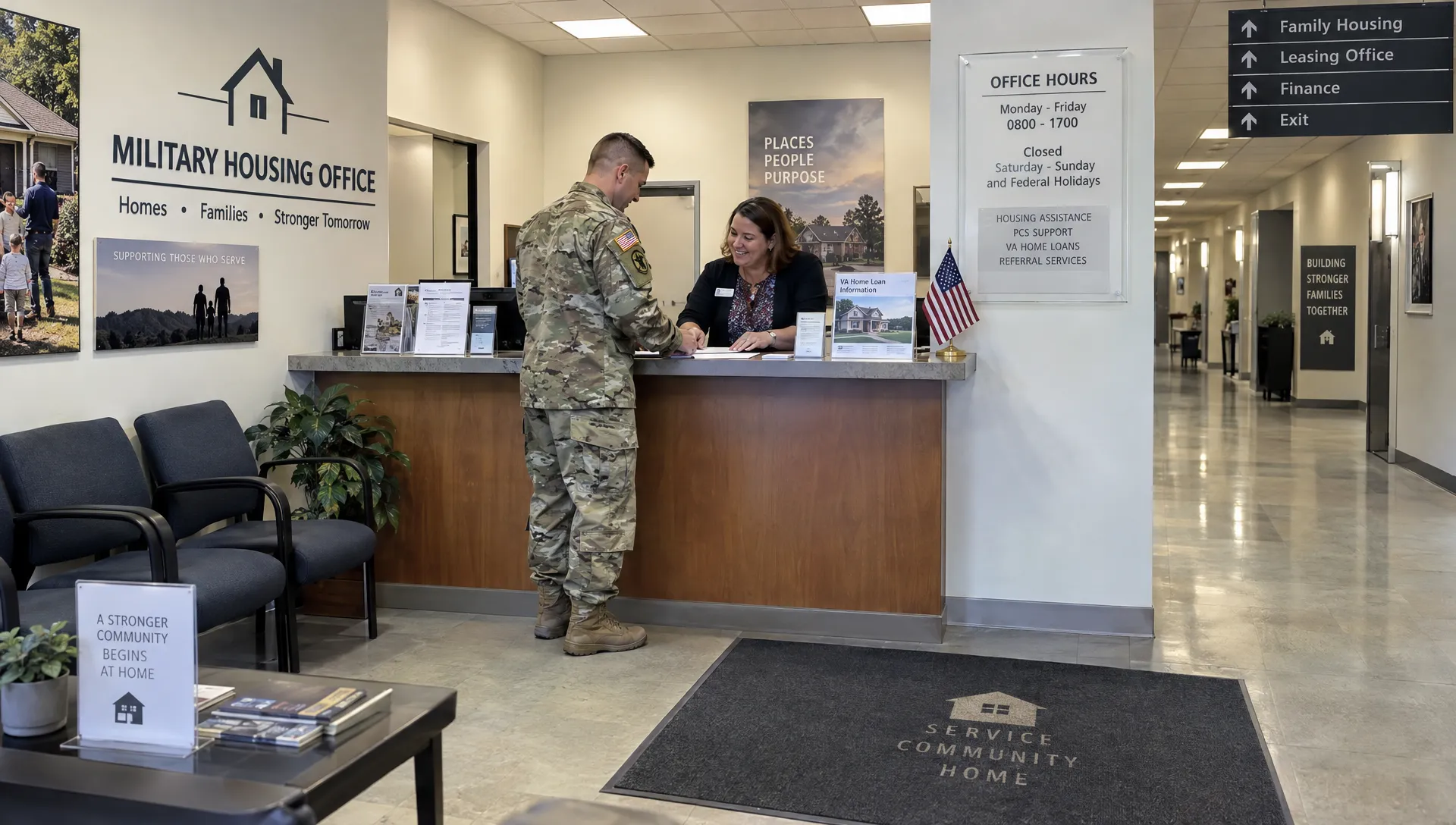
Deployment can complicate a mortgage application, but it does not automatically mean a higher interest rate. When comparing home loan rates for veterans, the key is separating market pricing from the practical effects of military service: changing pay, occupancy requirements, overseas signatures and a closing schedule that may be difficult to control.
For a new VA loan, lenders set the rate. For an existing mortgage, certain servicemembers may qualify for separate interest-rate protections. Understanding that distinction can help you avoid unnecessary costs and keep a deployment-related delay from derailing your financing.
Deployment is not an automatic mortgage-rate penalty
The Department of Veterans Affairs guarantees part of an eligible VA loan, but it does not set the mortgage interest rate. Private lenders price loans based on financial markets, loan characteristics and their own underwriting and pricing policies.
Inflation expectations and mortgage-backed securities markets can move rates while you are preparing to deploy. Your credit profile, loan amount, loan type and choice of discount points also affect an offer. A quote that changes after you receive orders may reflect market movement rather than deployment itself.
There is no standard VA deployment surcharge or automatic deployment discount. Ask the lender to explain whether a changed offer comes from market pricing, a different loan structure, updated financial information or an expired rate lock. Those causes call for different solutions.
How deployment can affect home loan rates for veterans
Deployment usually affects financing indirectly. The main concern is whether the income supporting your application will continue and can be documented through closing.
A larger deposit during deployment does not necessarily mean the lender can qualify you using that entire amount. Military compensation has several components, and each may need a different review.
| Pay component | What the lender may need to verify | Why it matters |
|---|---|---|
| Basic pay | Current amount, service status and expected continuation | Establishes a core source of qualifying income |
| Basic Allowance for Housing (BAH) | Current entitlement and changes associated with orders or location | An assignment change may affect the amount available |
| Basic Allowance for Subsistence (BAS) | Receipt and expected continuation | May contribute to qualifying income when acceptable under applicable guidelines |
| Special or incentive pay | Payment history, purpose and expected duration | Temporary compensation may not support a long-term mortgage obligation |
VA underwriting also considers residual income, the money remaining after specified obligations and expenses. That is different from simply looking at your debt-to-income ratio.
A pay change may affect approval or the loan amount you qualify for without directly changing your interest rate. Ask the lender to distinguish an underwriting issue from a pricing issue before changing your purchase budget.
Build a mortgage file that can survive your departure
A deployment-ready application should explain your military income rather than leave the underwriter to infer it from bank deposits. Missing information can delay approval and make a rate-lock extension necessary.
When evaluating home loan rates for veterans, ask lenders what military-income documentation they need before you pay for a lock or commit to a closing date.
Useful records may include:
- Recent Leave and Earnings Statements showing pay, allowances and deductions.
- Deployment, activation or permanent change of station orders relevant to your income or occupancy plans.
- Documentation of expected service continuation when requested by the lender.
- Bank statements showing funds available for closing and any required reserves.
- A Certificate of Eligibility and information about any existing VA-backed mortgage.
Your Certificate of Eligibility establishes VA benefit eligibility, not automatic mortgage approval. The lender must still evaluate credit, income, the property and other requirements.
If you are buying while keeping another home, disclose the existing mortgage early. Its payment and your remaining VA entitlement may affect the new transaction. New Era Lending’s guide to documents veterans typically need for a mortgage provides a starting point for organizing the file.
Confirm occupancy before choosing a closing date
VA purchase loans generally finance a primary residence, not a vacation home or an investment property. Deployment creates special circumstances, but it does not eliminate the occupancy requirement.
The VA Lenders Handbook addresses occupancy rules, including provisions involving active-duty borrowers, spouses and dependent children. Occupancy is generally expected within a reasonable time, usually 60 days, but qualifying circumstances can allow different arrangements.
Before comparing home loan rates for veterans on a particular property, explain who will live there, when they will move in and whether deployment prevents you from personally occupying it. A spouse’s or dependent child’s occupancy may satisfy the requirement under applicable VA rules, but the lender needs to confirm your circumstances.
Do not assume that a home can be purchased as a rental simply because you intend to live there after an uncertain return date. Conversely, being overseas does not automatically disqualify an otherwise eligible borrower.
If orders arrive after you already occupy a VA-financed home, discuss the change with your servicer as needed. A later military assignment is different from misrepresenting your occupancy intentions when applying.
Protect your rate lock against overseas closing delays
A rate quote is not necessarily a locked rate. A lock generally protects specified pricing for a defined period, subject to its terms and the application remaining eligible.
Deployment can introduce delays through time-zone differences, limited connectivity, document verification or access to acceptable notarization. Those delays can affect home loan rates for veterans if a lock expires before closing.
Before locking, get written answers about the expiration date, extension charges and who pays if the lender causes a delay. Also ask whether a float-down option exists if market rates fall. Availability, fees and eligibility vary; a falling market does not automatically entitle you to a lower locked rate.
Confirm signing arrangements before departure. If someone will sign under a power of attorney, have the lender and title or settlement provider approve the document and its scope in advance. VA and lender requirements can include additional certifications or verification.
Electronic signatures do not mean every closing document can be signed remotely. Notarization, property-state rules and settlement-provider requirements still matter. Arrange a secure communication channel and avoid sending sensitive documents through unsecured email simply because you are overseas.
Compare the full loan cost, not a military discount label
An advertisement aimed at military borrowers may assume excellent credit, a particular loan amount, substantial discount points or a short lock period. It may not describe the financing available for your deployment schedule.
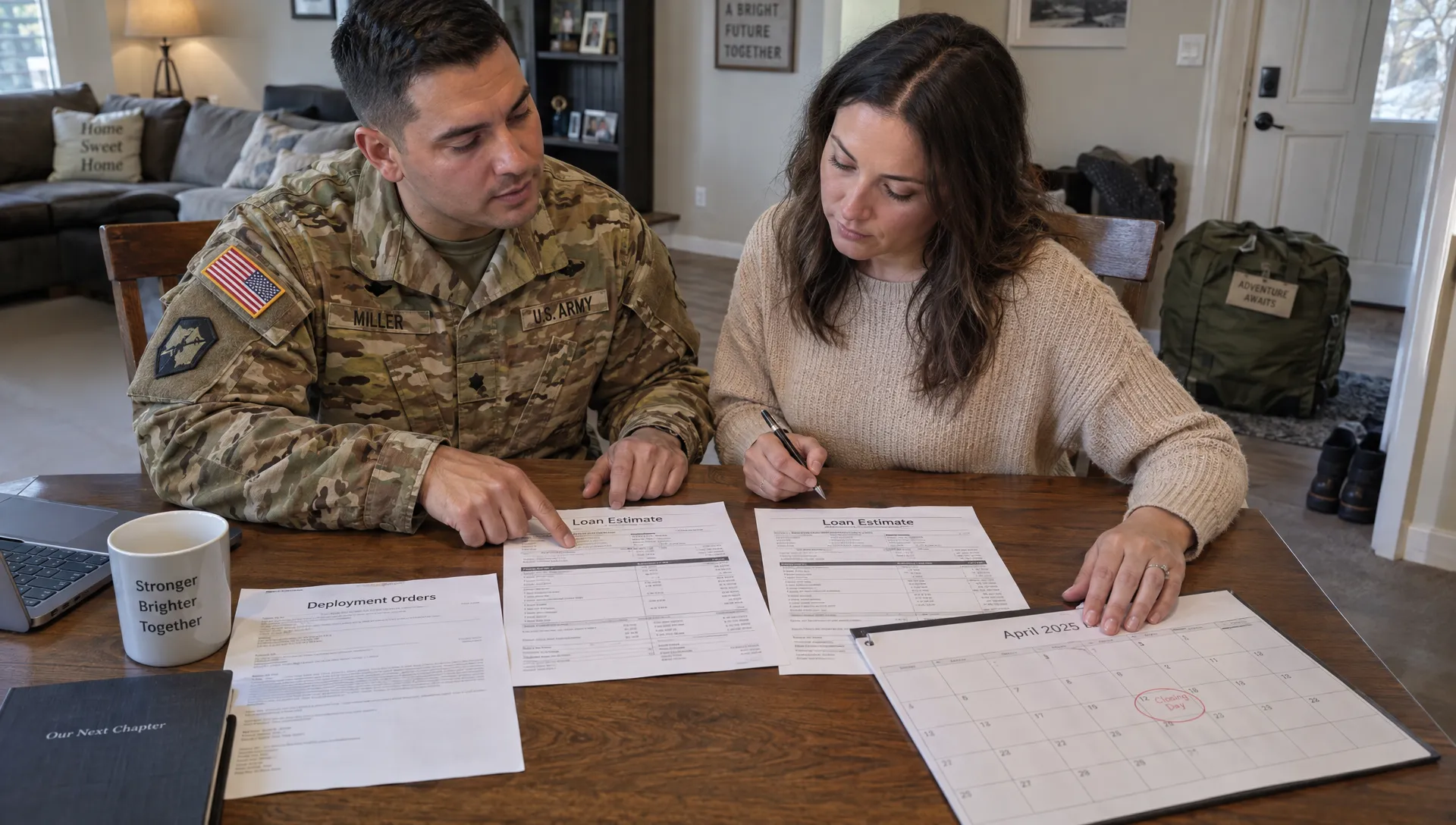
To compare home loan rates for veterans fairly, request offers for the same loan type, term, loan amount, points and lock period, as close together in time as practical. Once you have Loan Estimates, use the Consumer Financial Protection Bureau’s Loan Estimate guide to review the details.
| Item to compare | What it tells you |
|---|---|
| Interest rate | The rate used to calculate interest on the loan balance |
| Annual percentage rate (APR) | A broader cost measure incorporating interest and certain finance charges |
| Discount points | Upfront charges paid for a lower rate |
| Lender credits | A reduction in upfront costs, generally in exchange for a higher rate |
| Cash to close | The estimated money needed to complete the transaction |
| Lock terms | How long pricing is protected and what extensions may cost |
APR is useful, but it is not a substitute for reviewing fees and your expected ownership period. It does not include every expense associated with buying a home.
Also check whether quoted cash to close includes the VA funding fee or assumes an exemption. Deployment alone does not create an exemption. Certain borrowers qualify based on circumstances such as eligible service-connected disability benefits; the lender should verify your status using the VA’s funding-fee rules.
Decide whether discount points fit your next move
One discount point equals 1% of the loan amount, but the rate reduction it buys varies. A lower rate can be a poor trade if you sell or refinance before recovering the upfront cost.
For example, suppose a hypothetical $300,000 loan offers $60 in monthly payment savings for $3,000 in additional upfront points. The simple break-even period is 50 months: $3,000 divided by $60. This illustration excludes financing costs, the time value of money and differences in remaining loan balances.
For a household facing another assignment, home loan rates for veterans should be evaluated alongside the likely time until a sale or refinance. Your next move does not always mean selling, so use your actual housing plan rather than your deployment length alone.
A fixed-rate mortgage keeps its interest rate unchanged, although taxes and insurance can change the total payment. An adjustable-rate mortgage can change after its initial fixed period. Review adjustment limits and potential payments rather than assuming you will refinance before an adjustment.
Understand when the SCRA 6% interest cap applies
The Servicemembers Civil Relief Act, or SCRA, provides protections that are separate from VA loan benefits. It does not establish a 6% rate for every new mortgage taken out during deployment.
For eligible mortgage obligations incurred before qualifying military service, the SCRA generally limits interest to 6% during that service and for one year afterward. A loan already below 6% does not become more expensive because of this protection.
When researching home loan rates for veterans, distinguish a new-loan quote from a request to apply the SCRA to an existing debt. Deployment by someone already on active duty does not, by itself, make an existing active-duty-era mortgage a pre-service obligation. Qualifying activation of a reservist or National Guard member can present different circumstances.
According to the Department of Justice’s SCRA guidance, servicemembers generally must submit written notice and military orders or other appropriate service documentation to the creditor. The request must be made no later than 180 days after the end of military service. Interest above the applicable cap must be forgiven, not merely deferred.
Ask your servicer to review eligibility promptly. State law may provide additional protections. Before refinancing a potentially protected mortgage, consult military legal assistance about how replacing that obligation could affect your rights.
Check VA benefits without assuming they determine your rate
VA purchase loans generally do not require a down payment when entitlement and lender requirements are satisfied, and they do not require monthly private mortgage insurance. Neither benefit guarantees the lowest available interest rate.
If you retain an existing VA-financed property, remaining entitlement can affect whether a down payment is needed on the next purchase. Financing a funding fee, when applicable, increases the loan balance and total borrowing cost even if the quoted interest rate stays the same.
A useful review of home loan rates for veterans therefore separates three questions: Are you eligible for the benefit? Can you qualify for this particular mortgage? Is this the best-priced offer for your situation? New Era Lending’s guide to making full use of earned VA home loan benefits explains the broader benefit considerations.
Frequently asked questions
Can I get a VA purchase loan while deployed overseas? Potentially, yes. You must meet eligibility, credit, income and occupancy requirements. Confirm your household’s occupancy plan and acceptable closing arrangements before committing to a purchase timeline.
Does deployment automatically lower my existing mortgage rate? No. Some pre-service mortgages qualify for SCRA interest-rate protection, but deployment alone does not establish eligibility. Ask your servicer to review when the debt originated and when qualifying service began.
Can deployment pay help me qualify for a larger mortgage? Possibly, but temporary pay is not automatically qualifying income. The lender must determine which components are acceptable and sufficiently likely to continue. Base your budget on sustainable income, not just your largest deployment paycheck.
What happens if my rate lock expires while I am deployed? The lender may offer an extension, potentially for a fee, or require different pricing. The outcome depends on the lock agreement and circumstances. Discuss foreseeable delays before choosing the lock period.
Does the lowest advertised rate mean the cheapest loan? No. When comparing home loan rates for veterans, account for points, lender fees, credits, lock costs and your expected time in the loan. A lower rate can require substantially more cash upfront.
Plan financing around your orders
Before deployment, settle three issues with your lender: which income qualifies, how occupancy will be satisfied and how the closing will be completed. Then compare written offers using consistent assumptions.
New Era Lending combines mortgage technology with personalized human guidance, including specialized veteran loan programs. Share your orders, anticipated closing date and household occupancy plan early so you can discuss financing options and identify documentation needs before leaving.