.jpg)
.jpg)





.jpg)


Cash Out Home Loan: Pros, Cons, and Best Uses of Funds

Home equity can feel “stuck” on paper until you actually need it. A cash out home loan is one of the most common ways homeowners convert equity into usable cash, often at a lower interest rate than credit cards or personal loans. But it is also a decision that can increase your mortgage balance, extend your payoff timeline, and put more of your home on the line.
This guide breaks down what a cash out home loan is, the real pros and cons, and the smartest (and riskiest) ways to use the funds.
What is a cash out home loan?
In everyday conversation, “cash out home loan” usually refers to a cash-out refinance.
With a cash-out refinance, you replace your current mortgage with a new, larger mortgage. The difference between your old loan payoff amount and your new loan amount is paid to you in cash at closing (after fees and payoff).
Example conceptually:
- Your current mortgage payoff is $260,000
- Your new mortgage is $320,000
- You may receive roughly $60,000 in cash out (minus closing costs and any adjustments)
This is different from:
- Home equity loan: a second loan (often fixed-rate) in addition to your first mortgage.
- HELOC: a revolving line of credit secured by your home, often with a variable rate.
If you want a deeper comparison across options, New Era Lending also covers equity access choices in their educational library, including their overview of HELOCs and equity loan vs HELOC differences.
How a cash out home loan works (what lenders look at)
While exact guidelines vary by loan program and borrower profile, most cash-out decisions come down to a few core factors:
Your available equity (LTV)
Lenders base cash-out limits on your home’s value and your total mortgage balance after closing. This is typically expressed as loan-to-value (LTV).
- Higher equity usually means more flexibility.
- Lower equity can limit the amount you can take out, or price the loan higher.
An appraisal (or another valuation method, depending on the scenario) is commonly used to confirm value.
Your income, debts, and payment comfort
Even if you have plenty of equity, you still need to qualify based on your ability to repay. That generally includes:
- Income and employment history
- Debt-to-income ratio (DTI)
- Cash reserves (especially if the new payment is higher)
Credit profile and pricing
Cash-out refinancing often prices differently than a “rate and term” refinance because the lender is taking on additional risk by increasing the loan amount.
Occupancy and property type
Rules can vary depending on whether the home is your primary residence, a second home, or an investment property.
Closing costs and timing
A cash-out refinance typically has closing costs, and it can take time to process (documentation, underwriting, appraisal/valuation, title work, and closing).
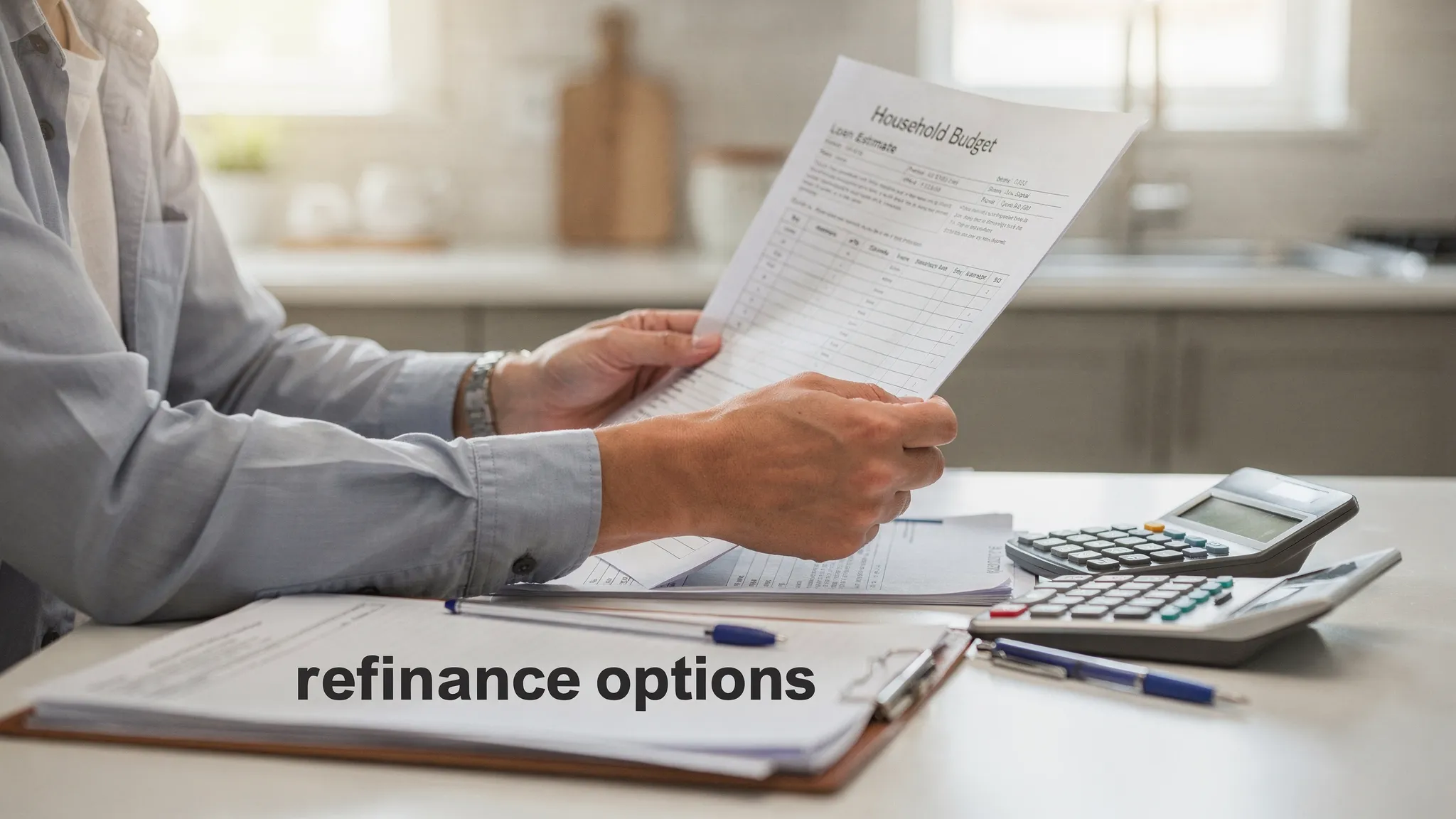
If you want a consumer-friendly overview of how costs show up in real life, the CFPB’s guide to understanding Loan Estimates is a helpful reference.
Pros of a cash out home loan
A cash out home loan can be a strong tool when it is tied to a clear, measurable goal.
Potentially lower borrowing cost than unsecured debt
Mortgage rates are often lower than rates on credit cards and many personal loans because the loan is secured by the home. Using cash-out funds to replace very high-interest debt can reduce monthly interest expense substantially.
One monthly payment (simple cash flow)
If you are consolidating multiple payments (credit cards, personal loans, an auto loan), rolling them into one mortgage payment can simplify your budget.
Access to a larger lump sum
For big, planned expenses (major home renovation, tuition, or a one-time settlement), a lump sum is sometimes more practical than a revolving credit line.
Possible payment stability (fixed rate option)
Many cash-out refinances are fixed-rate mortgages, which can provide predictable principal and interest payments over the life of the loan.
Flexibility in how funds are used
In most cases, cash-out funds can be used for almost any purpose. The key is whether the use improves your finances, or quietly increases risk.
Cons and risks to understand first
Cash out is not “free money.” You are converting equity into debt, and the tradeoffs are real.
You may reset your mortgage clock
Refinancing into a new 30-year term can lower the payment, but it can also increase total interest paid over time (especially if you already paid down years on your current loan).
Closing costs can be meaningful
Cash-out refinances typically include third-party fees and lender costs. A good analysis compares the total cost (APR, fees, and timeline) against the benefit you are trying to achieve.
Your payment could go up
Even if the rate is reasonable, the new balance may be much higher. The result can be a higher monthly payment, or a longer term to keep payments manageable.
You reduce your equity buffer
Equity is a safety net. Pulling too much out can leave you with less flexibility if:
- home values flatten or fall
- you need to sell sooner than expected
- a job change or unexpected expense hits
Your home is the collateral
This is the biggest risk: if you cannot make the payment, your home is at risk of foreclosure. That is why cash-out should be tied to a plan, not a vague “we might need it.”
Tax benefits are not automatic
Some homeowners assume mortgage interest is always deductible. In reality, deductibility depends on IRS rules and whether you itemize deductions. The IRS overview in Publication 936 is the best starting point, and a tax professional can help apply it to your situation.
Best uses of funds (and why they tend to work)
The best uses of cash-out funds generally fall into one of two buckets:
- increasing the value or livability of the home
- replacing expensive debt with cheaper debt, with strict guardrails
1) Home improvements that add long-term value
Using equity to improve the property can be one of the most defensible reasons to borrow, especially when the project:
- improves safety or functionality (roof, HVAC, electrical)
- adds usable space (finished basement, ADU where permitted)
- increases marketability (kitchen/bath updates done responsibly)
The goal is not “spend because we can,” it is “invest because the home needs it and the budget supports it.”
2) Debt consolidation (only with a paydown plan)
Consolidation can work when you treat the refinance as a restructure, not permission to re-borrow.
A simple safety checklist:
- Close or reduce limits on paid-off cards if overspending is a risk
- Keep the new mortgage payment comfortably below your max budget
- Avoid turning short-term debt into long-term debt without a payoff strategy
If you consolidate $30,000 of credit cards into a 30-year mortgage and then run the cards back up, you have doubled the problem.
3) Building a real emergency buffer
If your cash reserves are low, a modest cash-out to create a true emergency fund can reduce financial fragility. The keyword is modest. Many homeowners regret pulling out the maximum “just because it was approved.”
4) Education or career ROI moves
Paying for education can be reasonable if the outcome is clear (licensure, credential, income increase) and the payment still fits your budget.
5) Buying out a co-owner in a divorce or inheritance
Cash-out refinancing is sometimes used to pay an agreed buyout amount, while putting the home and mortgage into one person’s name. These scenarios can be document-heavy, but the purpose is straightforward: clean separation and clear title.
6) Funding a business (proceed carefully)
Using home equity to fund a business can work for experienced operators with conservative projections and sufficient reserves, but it is one of the riskiest uses because it converts business risk into housing risk.
If part of your plan involves expanding overseas or setting up an entity in another country, make sure you get jurisdiction-specific guidance. For example, founders exploring UAE company formation often consult specialists such as Alldren’s corporate structuring team to understand setup, compliance, and banking realities before committing capital.
Uses that usually backfire
These are common cash-out “reasons” that tend to create regret:
- Paying for lifestyle upgrades with no lasting value (vacations, luxury purchases)
- Covering chronic monthly shortfalls (the budget problem remains)
- Speculative investing without downside planning
- Taking maximum cash-out with no clear use, “just in case”
If you do not have a plan for the money before you refinance, it is usually a sign to pause.

When a cash out home loan makes the most sense
A cash out home loan tends to be strongest when most of these are true:
- You plan to keep the home long enough to justify the closing costs
- Your new payment fits comfortably, even if income fluctuates
- You are using funds for a defined purpose with measurable benefit
- You are not draining your equity to the edge, you are keeping a buffer
It may be a poor fit when:
- you might sell soon
- the cash-out is mainly to “catch up” on an unsustainable lifestyle
- you would be stretching your DTI or reserves too thin
Cash-out refinance vs HELOC vs home equity loan (quick decision guide)
Instead of asking “Which one is best?” ask “Which one matches the goal and risk?”
- Cash-out refinance: best when you want a lump sum and the overall mortgage terms (rate, term, payment) still make sense.
- Home equity loan: best when you want a lump sum but do not want to replace your first mortgage.
- HELOC: best when you want flexibility (draw as needed) and can tolerate potential payment changes if the rate is variable.
New Era Lending can help you compare these paths with side-by-side scenarios so you can evaluate total cost and payment comfort, not just the headline rate.
What to do before you apply (to get a cleaner result)
A little prep often leads to better pricing, fewer surprises, and faster underwriting.
- Estimate your home value conservatively, and calculate rough equity.
- Review your credit and correct obvious errors.
- List your goal for the cash and the exact amount needed (avoid rounding up).
- Gather income and asset documents early so the process is not delayed.
- Compare offers using the Loan Estimate, focusing on APR, total closing costs, and monthly payment.
Frequently Asked Questions
Is a cash out home loan the same as a home equity loan? Not usually. “Cash out home loan” most often means a cash-out refinance, which replaces your first mortgage. A home equity loan is typically a second loan that sits behind your first mortgage.
How much cash can I take out of my home? It depends on your home value, current mortgage balance, loan program rules, credit profile, income/DTI, and occupancy type. Your lender will evaluate your maximum allowed LTV and ability to repay.
Will a cash-out refinance raise my monthly payment? It can. Even with a good rate, increasing the loan balance may increase the payment. Some homeowners offset this by extending the term, but that can increase total interest over time.
Do I pay taxes on cash-out refinance money? Cash received from a cash-out refinance is generally not treated as taxable income, but tax rules can be complex. Mortgage interest deductibility also has specific requirements. Consult a qualified tax professional for advice.
Can I use cash-out funds for anything? In many cases, yes, but “allowed” is different from “wise.” The best uses typically improve your financial position, replace high-interest debt with a payoff plan, or invest in the home’s value.
Is cash-out better than a HELOC in 2026? It depends on your goal (lump sum vs flexible draw), rate structure preference (fixed vs variable), and your current first-mortgage terms. The best choice is usually the one with the lowest risk for your budget, not the one with the lowest initial rate.
Get a clear cash-out comparison before you commit
A cash out home loan can be a smart move when it supports a specific plan, protects your equity buffer, and improves your overall financial picture. It can also be expensive and risky when it is used to fund short-term spending or when the new payment stretches your budget.
If you are considering cash-out, New Era Lending can help you compare scenarios with modern tools plus real human guidance, including transparent rate and term breakdowns, secure document uploads, and e-signature support.
Explore your options at New Era Lending and request a personalized cash-out comparison based on your goals and your home’s equity.