










What the Purchase of Your Loan Means for Mortgage Servicing

The purchase of loan assets that include your mortgage usually changes who owns the debt, not the agreement you signed. Your interest rate, repayment schedule and other contractual terms generally stay in place. Whether you need to send payments somewhere new depends on a separate question: Did your mortgage servicer also change?
That distinction matters when a transfer letter arrives. A new owner may keep your existing servicer, while a servicing transfer can happen without an ownership change. Understanding which event occurred helps you protect your payments, escrow account and credit without unnecessarily refinancing or signing new loan documents.
Who Owns Your Mortgage and Who Services It?
Several companies can play different roles in the same mortgage. The name on your monthly statement is not necessarily the company that owns your debt.
| Role | What it does | What it means for you |
|---|---|---|
| Originating lender | Makes the loan at closing | May later sell the loan or transfer servicing |
| Loan owner or investor | Holds the ownership interest in the mortgage debt | May use another company to collect payments |
| Mortgage servicer | Collects payments, maintains account records and administers escrow when applicable | Usually handles your ongoing payment questions |
One company can fill more than one role. Alternatively, the lender, owner and servicer may all be different organizations.
For a broader explanation of these relationships, New Era Lending’s guide to how the mortgage business works and who gets paid explains how lenders, investors and servicing companies fit together.
How a purchase of loan assets differs from a servicing transfer
A lender may sell individual mortgages or a portfolio of loans to another institution. These transactions help lenders manage funding, liquidity and financial risk. A routine sale is not, by itself, a sign that you missed payments or that something is wrong with your mortgage.
The buyer might retain the existing servicer. In that situation, you could receive an ownership notice while continuing to use the same payment portal, account number and customer-service team.
A servicing transfer changes the company responsible for administering your account. That can happen alongside a loan sale or through a separate transaction involving servicing rights. Your payment destination, online access and support contacts may change even though the owner remains the same.
This article addresses the sale of an existing mortgage, not a purchase-money mortgage used to buy a home. Shopping for a new loan is also a separate process. An ownership change does not normally require you to submit a new mortgage application or qualify again.
The practical rule is simple: An ownership notice identifies who owns the debt. A servicing notice tells you who will manage your payments. Read each notice according to its purpose.
Which Transfer Notices Should You Receive?
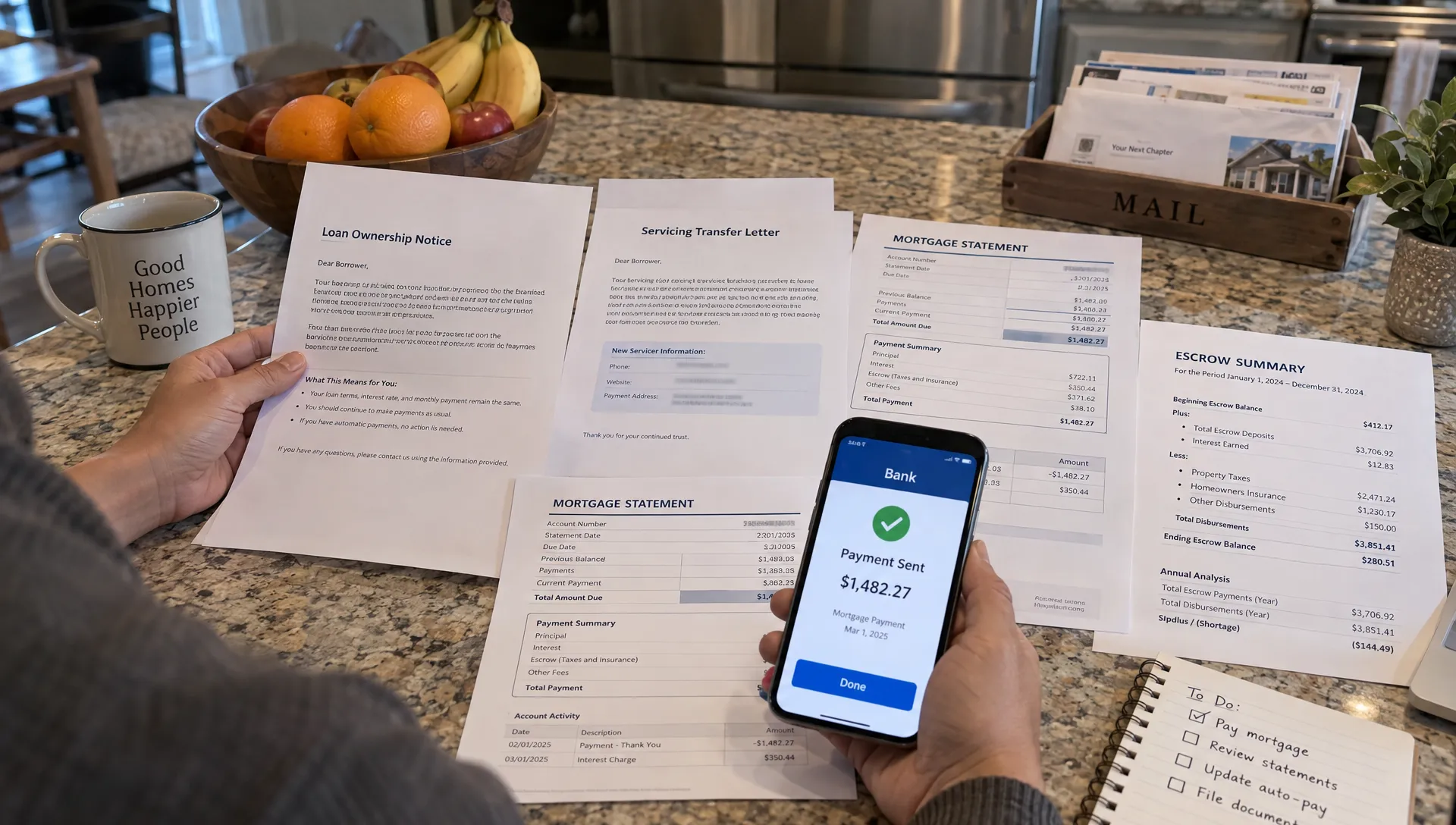
A purchase of loan assets may generate an ownership disclosure even when your payment instructions remain unchanged. For covered mortgage loans, the new owner generally must provide notice within 30 calendar days after the transfer, subject to exceptions. The federal mortgage ownership disclosure rule describes this requirement.
Servicing transfers follow a different notice schedule. For transfers covered by the federal servicing rule, the outgoing servicer generally must notify you at least 15 days before the effective transfer date. The incoming servicer generally must notify you no later than 15 days afterward. Certain exceptions apply.
The companies can instead send a combined notice, generally at least 15 days before the transfer. These notices should identify the transition date, explain when each company will accept payments and provide contact information.
Do not assume that two letters mean two different transfers. They may describe separate parts of the same transaction. Compare the effective dates, property address and loan details before changing anything.
Keep the notices with your mortgage records. They provide a useful reference if a payment later appears missing or a customer-service representative gives you conflicting instructions.
Your Mortgage Terms Generally Stay in Place
Selling a mortgage does not give the buyer permission to rewrite the contract. Your fixed interest rate does not become adjustable simply because another company owns the loan. Your remaining repayment term also does not restart.
For an adjustable-rate mortgage, future adjustments can still occur under the original agreement. Those changes come from the existing rate formula and adjustment schedule, not from the sale itself.
The purchase of loan assets likewise does not automatically increase your principal balance or require a new down payment. A transfer is not a refinance, and you should not need to sign a replacement promissory note merely because ownership changed.
Your total monthly payment can still change for independent reasons, including property-tax increases, homeowners insurance premiums or an escrow shortage. Mortgage insurance charges and adjustable interest rates may also change when the governing terms allow it.
If the new statement shows a higher amount, ask for an itemized explanation rather than assuming the sale caused it. Compare principal and interest separately from escrow and other charges. New Era Lending’s explanation of mortgage loan basics can help you identify those components.
A company should be able to explain both the amount of a change and the contractual or legal reason for it.
Payment Timing and the 60-Day Transfer Protection
A purchase of loan servicing rights can lead to new payment instructions even when the mortgage owner stays the same. Use the effective date in the verified servicing notice to determine where payments belong.
For covered servicing transfers, federal rules provide an important protection: During the 60-day period beginning on the effective transfer date, a timely payment received by the former servicer cannot be treated as late merely because it went to that company instead of the new one. That includes late fees and adverse credit reporting based on the misdirected payment. The federal servicing-transfer rule explains this protection.
This is not a 60-day payment holiday. You still need to make your scheduled payments on time.
For example, suppose the transfer takes effect June 1 and your old servicer receives your June payment on time. The payment should not become a late payment simply because the new servicer was supposed to receive it. Save the bank confirmation and ask where the funds were forwarded.
Automatic withdrawals deserve special attention. Confirm whether the new servicer requires fresh authorization, then check your bank account after the scheduled withdrawal. If you use your bank’s bill-pay service, update the payee details yourself. Coordinate any manual payment carefully so you do not accidentally pay twice.
Check the First Statement Against Your Records
After a purchase of loan assets, compare the first new statement with your final statement from the previous servicer. The purpose is to confirm that the account transferred correctly, not to renegotiate the mortgage.
A short review can catch problems before they become harder to untangle:
- Principal balance: Compare balances while accounting for recent payments and the dates each statement covers.
- Payment activity: Confirm that the last payment reached the account and was applied correctly.
- Escrow balance: Check that transferred funds appear, allowing for legitimate tax or insurance disbursements.
- Payment breakdown: Review principal, interest, escrow and any additional charges separately.
- Account instructions: Verify the new loan number, payment address and customer-service contacts against authenticated notices.
A new account number does not mean you took out a second mortgage. It may simply reflect the incoming servicer’s recordkeeping system. Keep a note connecting your old account number with the new one.
Download statements and payment histories before access to the old portal ends. Also save any escrow analysis, payoff quote, pending dispute or written payment arrangement.
Do not expect every number to match without considering timing. A tax payment made between statement dates can reduce escrow funds legitimately. An unexplained discrepancy, however, deserves a written explanation rather than a verbal assurance that it will eventually resolve itself.
Protect Escrow, Insurance and Requests Already in Progress
Confirm upcoming tax and insurance payments
The purchase of loan assets should not require you to fund the same escrow balance twice. When servicing changes, the companies must handle the transfer of applicable account funds and records. That does not eliminate a legitimate escrow shortage, but the servicer should explain any shortage separately.
If a property-tax bill or insurance premium is due near the transition, confirm who will pay it and when. Check payment status with the taxing authority or insurer if needed. Escalate an unpaid bill before a deadline passes rather than waiting for the next mortgage statement.
Ask your insurance agent whether the policy’s mortgagee information needs updating. A servicing change does not automatically mean you need a different homeowners insurance policy.
Keep confirmation numbers and written responses. Those records help establish what happened if an insurer sends a cancellation warning or a tax office assesses a penalty.
Follow up on pending assistance or disputes
A transfer can be especially stressful if you are already requesting a modification, completing a repayment plan or resolving an account error.
Send the new servicer copies of relevant correspondence and ask it to confirm the status of your request. Include submission dates, existing deadlines and any written agreement. Do not assume that a new portal displaying no documents means your earlier submission never happened.
Federal loss-mitigation requirements may apply, but deadlines and protections depend on the circumstances. Ask whether the application is considered complete, whether anything remains outstanding and who is responsible for the next response.
A transfer does not erase a valid agreement. Documentation nevertheless helps resolve disagreements about its terms. If foreclosure activity is underway or a sale date is approaching, promptly seek help from a HUD-approved housing counselor or qualified attorney rather than relying only on routine customer-service calls.
What Happens to Your Credit Report?
A mortgage sale is not the same as applying for new credit. The ownership change itself does not mean you opened an additional mortgage or agreed to different borrowing terms.
When servicing changes, credit reports may show the former account as transferred or closed and a new entry associated with the incoming company. That reporting transition should not turn one mortgage obligation into two outstanding debts.
Review the reported balance, payment history and account status. Reporting dates can differ, so a temporary mismatch does not necessarily indicate an error. However, investigate duplicate outstanding balances or a late-payment mark that conflicts with your records.
The purchase of loan assets should not, by itself, create a delinquency. If reporting is inaccurate, dispute it with the relevant credit bureau and the company furnishing the information. Include payment confirmations and transfer notices that support your position.
Avoid assuming that any credit-score movement proves the transfer harmed your credit. Scores can change for several reasons, including other account activity and the timing of reported balances.
Verify the Transfer Before Sharing Money or Data
A transfer notice asks you to trust unfamiliar payment instructions, making independent verification essential. Contact your existing servicer using a number from a previous statement or your established account portal, not just the number printed in an unexpected letter.
Ask it to confirm the incoming servicer’s name, effective date and official contact details. Then access the new company through a verified website rather than a link in an unsolicited text message.
A purchase of loan assets does not require you to accept unexplained payment demands. Requests for gift cards, cryptocurrency, a personal wire transfer or an urgent “transfer activation fee” are strong warning signs. Do not send money while the instructions remain unverified.
Visual branding is not enough either. A physical office with custom storefront signage may help you locate a business, but it does not establish that business’s authority to collect your mortgage payments. Confirm the servicing relationship through your existing account records.
Be cautious with requests for sensitive information. An authenticated servicer may need to verify your identity, but you should initiate that exchange through a trusted channel. Never disclose your account password or one-time security code to an unsolicited caller claiming to manage the transition.
Correct Errors Without Missing Your Next Payment
If a payment disappears or an unexplained charge appears, start by contacting the servicer and documenting the conversation. Record the date, representative’s name and promised next step.
For covered servicing errors, a written notice of error provides a formal route for requesting investigation. Send it to the address the servicer designates for these notices, which may differ from its payment address. Clearly identify the account, explain the problem and include copies of supporting records.
Under the federal notice-of-error rule, servicers generally must acknowledge a qualifying notice within five business days and respond to many covered errors within 30 business days. Some issues have different deadlines, and limited extensions may apply. For these rules, Saturdays, Sundays and legal public holidays are excluded.
A purchase of loan assets does not justify leaving a documented servicing error unresolved. If ordinary escalation fails, you can consider a complaint to the Consumer Financial Protection Bureau or the appropriate state regulator.
Continue making required payments while the dispute is reviewed. An error notice generally does not suspend your payment obligation. Ask for verified instructions if the dispute concerns where or how to pay, and preserve proof of every payment. Keep original documents in your own files and send copies when supporting a complaint.
Frequently Asked Questions
Can I refuse to have my mortgage sold? Borrowers generally cannot prevent a sale that is permitted by their mortgage documents and applicable law. The sale does not eliminate the buyer’s obligation to honor the loan terms or the servicer’s applicable consumer-protection duties.
Can my servicer change when the mortgage owner stays the same? Yes. Servicing responsibilities can move separately from ownership. That is why an unchanged investor name does not necessarily mean your payment address will stay the same.
Does the purchase of loan assets require me to refinance? No. Refinancing creates a new loan and should be evaluated separately based on rates, costs, repayment terms and your goals. A sale of the existing mortgage is not, by itself, a reason to refinance.
Should I pay both companies if I am unsure who received my payment? Do not automatically send a duplicate payment. Confirm whether the first payment cleared, contact both servicers through verified channels and request written confirmation of where the funds were applied. Continue addressing the issue before your next payment deadline.
Does a transfer let me skip a payment? No. Your repayment obligations continue. The 60-day protection for timely payments received by the former servicer addresses misdirected payments, not missed ones.
Keep a Loan Transfer Separate From Your Financing Decisions
If your mortgage changes hands, focus first on verifying the notice, confirming payment instructions and checking that your records transferred correctly. You do not need a replacement loan simply because a different company now owns or services yours.
If you independently want to purchase a home, refinance or access equity, New Era Lending offers personalized mortgage guidance and technology-supported financing options. Evaluate any new loan against your existing obligations and long-term costs, not the inconvenience of a servicing transition.