.jpg)
.jpg)





.jpg)

VA Loan Down Payment Rules Explained Simply
For many eligible veterans, active-duty service members, National Guard and Reserve members, and qualifying surviving spouses, the biggest VA loan benefit is simple: you may be able to buy a home with no down payment.
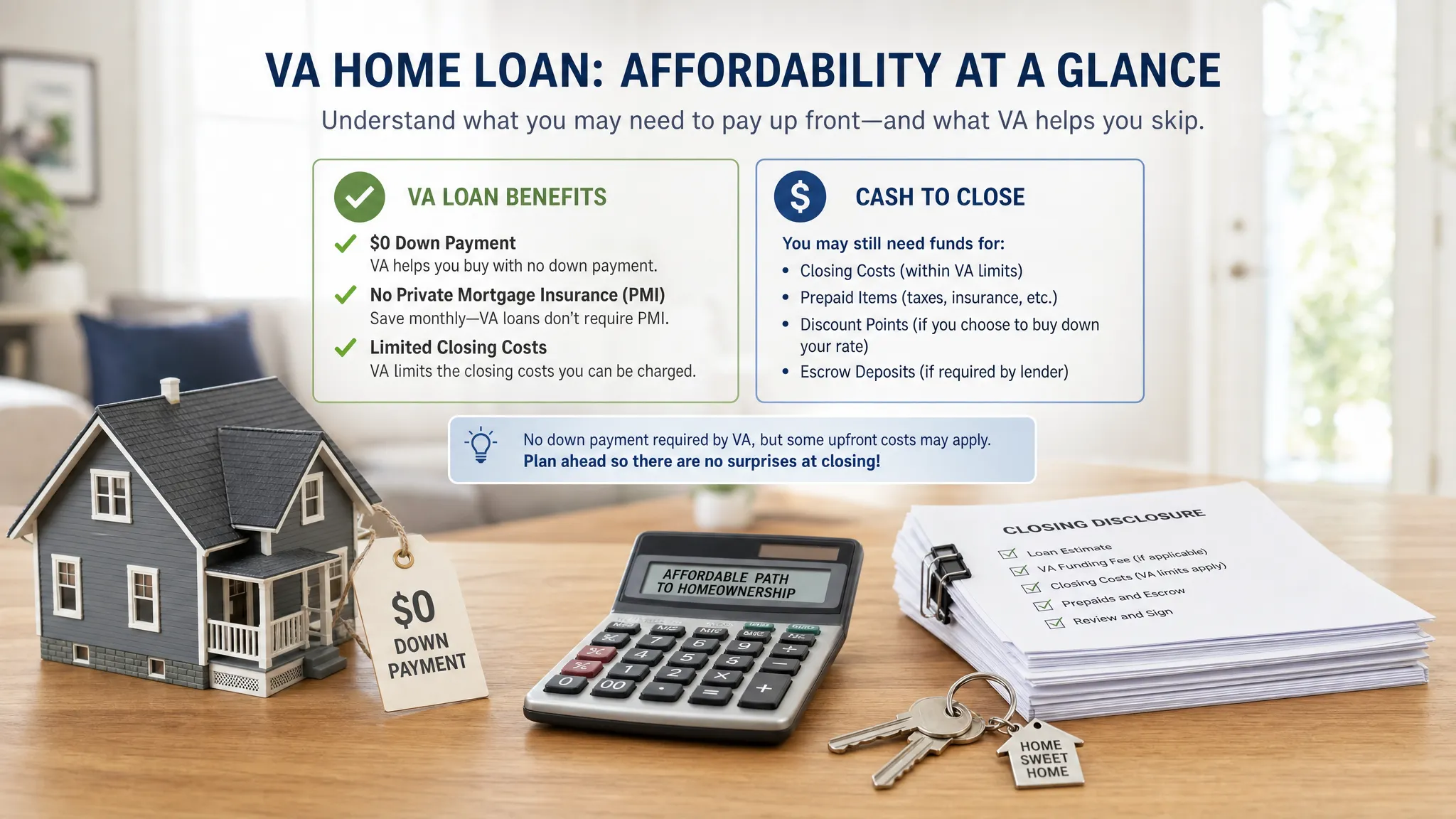
But “$0 down” does not always mean “$0 due at closing.” VA loan down payment rules depend on your entitlement, the purchase price, the property value, lender requirements, and whether you choose to put money down voluntarily.
Here is the plain-English version of how the rules work, when a down payment may be required, and what costs you should still plan for before making an offer.
The Basic VA Loan Down Payment Rule
The VA purchase loan program is designed to help eligible borrowers buy a primary residence with favorable financing. According to the official VA purchase loan guidance, VA-backed purchase loans can help eligible borrowers buy, build, or improve a home, often with no down payment if the borrower, lender, and property all qualify.
In simple terms:
If you have full VA entitlement and the lender approves the loan, you usually do not need a down payment.
That is one of the main differences between VA loans and many conventional or FHA loans. Conventional loans often require at least 3% to 5% down, and FHA loans commonly require 3.5% down. VA financing can allow eligible buyers to preserve savings for moving costs, repairs, furniture, emergencies, or other post-closing needs.
Still, VA loans are not automatic approvals. The VA provides a guaranty to the lender, but private lenders still review your credit, income, debts, residual income, assets, and the property itself. A $0 down payment does not remove the need to qualify.
Full Entitlement vs. Partial Entitlement
The easiest way to understand VA loan down payment rules is to start with entitlement. Your entitlement is the portion of the loan the VA agrees to guarantee for the lender if you default.
Full entitlement usually means no VA down payment
You may have full entitlement if you have never used your VA loan benefit, or if you used it before but sold the home and restored your entitlement. You may also have full entitlement in some other situations, depending on how prior VA loans were handled.
With full entitlement, the VA generally does not impose a loan limit for down payment purposes. That does not mean you can borrow any amount you want. It means the VA does not require a down payment solely because the loan is above a county loan limit.
The lender still decides how much you can afford based on your financial profile. For larger loan amounts, lenders may have stricter requirements, such as stronger reserves, tighter debt-to-income expectations, or additional review.
Partial entitlement can create a down payment requirement
Partial entitlement usually comes into play when you still have an active VA loan, had a previous VA loan not fully restored, or experienced a past VA loan claim. In these cases, the remaining guaranty may not be enough to cover the new loan at $0 down.
When you have partial entitlement, county loan limits can matter. Lenders typically want the VA guaranty, plus any down payment you make, to equal at least 25% of the loan amount. If your remaining entitlement does not provide enough guaranty, you may need to put money down to bridge the gap.
This is one of the most misunderstood VA loan rules because the calculation is not always obvious. The required amount depends on your remaining entitlement, the county loan limit, and the new loan amount. A loan officer can calculate it before you shop so you do not make offers based on a wrong assumption.
When a VA Loan May Still Require a Down Payment
Even though VA loans are known for $0 down, there are situations where you may need to bring a down payment or extra cash.
Common reasons include:
- Partial entitlement: You may not have enough remaining VA guaranty to support the new loan with no money down.
- Appraisal gap: If the home appraises for less than the purchase price, you may need to renegotiate, challenge the value, or cover the difference.
- Lender requirements: Some lenders may require additional cash for larger loans or riskier scenarios, even if the VA itself does not require it.
- Property or occupancy issues: VA loans are for eligible primary residences, and the property must meet VA and lender standards.
- Borrower choice: You may decide to put money down to lower the loan amount, reduce the funding fee, or make your offer stronger.
The key is to separate “VA minimum down payment” from “total cash needed.” They are related, but they are not the same thing.
Down Payment vs. Cash to Close
A down payment is the portion of the purchase price you pay upfront to reduce the loan amount. Cash to close is broader. It includes the total money you may need to finalize the transaction.
With a VA loan, your cash to close may include closing costs, prepaid taxes, prepaid homeowners insurance, escrow setup deposits, inspection costs, appraisal-related items, and any negotiated costs not covered by the seller, lender credits, or other allowed sources.
For example, a VA borrower might buy with $0 down but still need money for:
- Earnest money deposit: A good-faith deposit submitted with the purchase contract, often credited back toward closing costs or cash to close.
- Home inspection: Usually optional from a loan standpoint, but strongly recommended for buyer protection.
- Appraisal: Required for VA financing and typically paid as part of the loan process.
- Prepaid expenses: Homeowners insurance, property taxes, and escrow deposits.
- Closing costs: Title, recording, lender, and settlement-related charges, depending on the transaction.
This is why it is important to review a Loan Estimate and not rely on the phrase “no down payment” alone. A VA loan can dramatically reduce the upfront barrier to buying, but you still need a realistic closing budget.
The VA Funding Fee Is Not a Down Payment
The VA funding fee is a one-time cost charged on many VA loans. It helps support the program and reduces the cost to taxpayers. Some borrowers are exempt, including certain veterans receiving VA disability compensation and some eligible surviving spouses. Active-duty service members who have received a Purple Heart may also qualify for an exemption in certain circumstances.
The funding fee can often be financed into the loan instead of paid upfront. That means it may increase your loan balance, but it is not the same thing as a down payment.
The funding fee percentage can vary based on your loan type, whether it is your first use or subsequent use of the VA benefit, and how much you put down. The VA’s official funding fee and closing cost page is a useful source for current fee rules and exemptions.
One important planning point: making a down payment of at least 5% or 10% may reduce the VA funding fee for some purchase loans. That does not mean you should automatically put money down. It means you should compare the savings against what you would lose in liquidity.
Should You Put Money Down If VA Allows $0 Down?
A required down payment and a strategic down payment are different. If you qualify for $0 down, you still may choose to put money down for practical reasons.
A voluntary down payment may help you:
- Lower your monthly principal and interest payment
- Reduce the total amount of interest paid over time
- Lower the VA funding fee in some cases
- Create immediate equity
- Strengthen your offer in a competitive market
But there are tradeoffs. Using too much cash upfront can leave you without enough savings after closing. That can be risky if the home needs repairs, your insurance premium changes, you move across the country, or your household budget shifts.
For many VA buyers, the better question is not “Can I put money down?” It is “What amount leaves me with the strongest overall financial position after closing?”
How Appraisal Gaps Affect VA Down Payment Rules
A VA appraisal serves two purposes. It estimates the home’s market value and checks whether the property meets VA Minimum Property Requirements. If the appraised value supports the purchase price, the financing can usually move forward from a value standpoint.
If the appraisal comes in low, the VA loan is generally based on the appraised value, not the higher contract price. That creates a gap.
For example, if you offer $360,000 and the VA appraisal comes in at $350,000, the lender will not simply treat the home as worth $360,000 for loan-to-value purposes. You may need to negotiate the price down, ask the seller to meet you in the middle, request a Reconsideration of Value if there is strong evidence, or bring cash for the difference.
That cash is not exactly the same as a traditional down payment, but from the buyer’s perspective, it still means money out of pocket. This is why your offer strategy matters, especially in competitive markets.
Clear communication can also help. Just as ambitious businesses may work with a brand-growth partner like Boil Agency to sharpen how they are positioned, VA buyers can benefit from presenting a clean, confident offer package that helps sellers understand the strength of their financing.
Can Seller Credits Cover VA Closing Costs?
VA loans allow sellers to pay certain buyer costs, subject to program rules and contract terms. This can reduce how much cash you need at closing.
Seller credits may help cover closing costs and some prepaid items. VA rules also limit certain seller concessions, and the details can be transaction-specific. This is one reason it is important to structure the purchase contract correctly from the beginning.
Seller-paid costs can be especially helpful when the buyer is using $0 down and wants to preserve cash. However, seller credits are not guaranteed. In a competitive market, asking for too much seller assistance may weaken the offer. In a slower market, seller credits may be easier to negotiate.
The right approach depends on the home, the seller’s motivation, your cash reserves, and how competitive the offer needs to be.
Gift Funds and VA Loans
VA loans may allow acceptable gift funds, but the source and documentation matter. Lenders typically need to verify that the funds are truly a gift and not an undisclosed loan that must be repaid.
If you plan to use gift funds for closing costs, reserves, or a voluntary down payment, tell your loan officer early. Moving money around at the last minute can create underwriting delays. A clean paper trail is much easier to document than multiple transfers between accounts.
The same advice applies to earnest money deposits. If you submit an earnest money deposit, keep records showing where the funds came from and when they cleared your account.
VA Down Payment Rules for Different Property Types
VA loans are intended for eligible primary residences. The property type and occupancy plan can affect approval.
A VA loan may be used for certain single-family homes, VA-approved condos, some multi-unit properties, manufactured homes, modular homes, and new construction, subject to lender and VA requirements. But not every property will qualify.
For example, a home with major safety, structural, or habitability concerns may run into VA appraisal issues. A condo may need to be VA-approved. A multi-unit property may require you to occupy one of the units as your primary residence.
The down payment rule may still be $0 if you have full entitlement and qualify, but the property must also fit the program. That is why a strong pre-approval should include a conversation about the type of home you plan to buy.
For a deeper look at eligibility and approval rules, you may want to review New Era Lending’s guide to qualifying for a VA loan.
A Simple Way to Estimate What You May Need
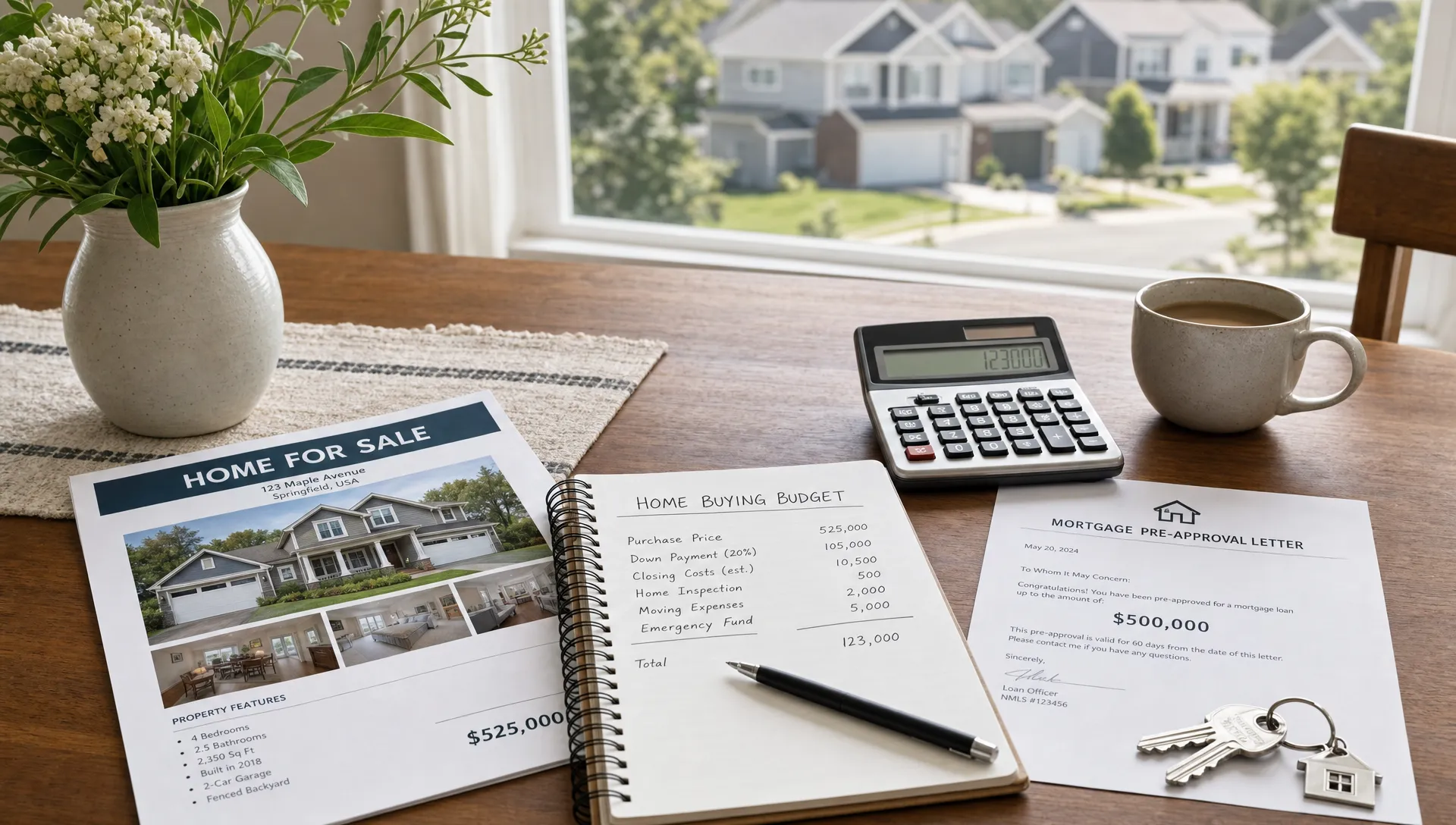
Before you start touring homes, ask your lender to model more than one scenario. A good VA loan estimate should show the difference between $0 down, a small voluntary down payment, and any seller credit options you may want to negotiate.
Focus on these numbers:
- Purchase price
- Estimated loan amount
- Down payment, if any
- VA funding fee and whether it is financed
- Estimated closing costs
- Prepaid taxes and insurance
- Seller credits or lender credits
- Estimated cash to close
- Full monthly payment, including taxes and insurance
This gives you a clearer picture than looking at down payment alone. A home that technically allows $0 down may still be uncomfortable if the monthly payment stretches your budget. On the other hand, a well-structured VA loan may let you buy sooner while keeping emergency savings intact.
Common VA Down Payment Mistakes to Avoid
The VA benefit is powerful, but misunderstandings can create frustration. Avoid these common mistakes:
- Assuming $0 down means no money is needed at all
- Forgetting about closing costs, prepaid expenses, inspections, and moving costs
- Making an offer before confirming full or partial entitlement
- Ignoring the VA funding fee when comparing loan options
- Assuming every property qualifies for VA financing
- Using all available savings for a voluntary down payment
- Comparing VA, FHA, and conventional loans without reviewing total monthly payment and cash to close
A VA loan is often the best fit for eligible buyers, but the strongest decision comes from comparing real numbers. If you are still weighing VA against other programs, New Era Lending’s guide to VA loan benefits can help you understand the bigger picture.
Frequently Asked Questions
Does a VA loan always require no down payment? No. Many eligible borrowers can buy with no down payment, especially with full entitlement, but a down payment may be required if you have partial entitlement, an appraisal gap, or lender-specific requirements.
Is the VA funding fee considered a down payment? No. The VA funding fee is a separate program cost. It can often be financed into the loan, although doing so increases the loan balance.
Can I put money down on a VA loan even if I do not have to? Yes. Some borrowers choose to make a down payment to lower the monthly payment, reduce the funding fee, build equity, or strengthen an offer.
Can the seller pay my VA closing costs? In many cases, yes, seller credits can help cover eligible costs, subject to VA rules, lender guidelines, and contract negotiations.
What is the difference between down payment and cash to close? A down payment reduces the loan amount. Cash to close includes the down payment, if any, plus closing costs, prepaid expenses, escrow deposits, and other settlement charges.
Do VA loans have mortgage insurance? VA loans do not require monthly private mortgage insurance. However, many VA borrowers pay a VA funding fee unless they qualify for an exemption.
Get Your VA Loan Down Payment Scenario Reviewed
VA loan down payment rules are simple at the surface, but the details matter once you factor in entitlement, property value, seller credits, funding fees, and total cash to close.
New Era Lending helps eligible buyers compare VA loan scenarios with modern tools and personalized human guidance. If you are planning a home purchase, refinancing, or reviewing your VA benefit, a clear pre-approval can help you understand what you may owe before you make an offer.
Start by confirming your eligibility, reviewing your entitlement, and comparing realistic numbers for your budget. The right VA loan strategy can help you use the benefit you earned with confidence.