.jpg)
.jpg)





.jpg)

Down Payment for a VA Loan: What You May Owe
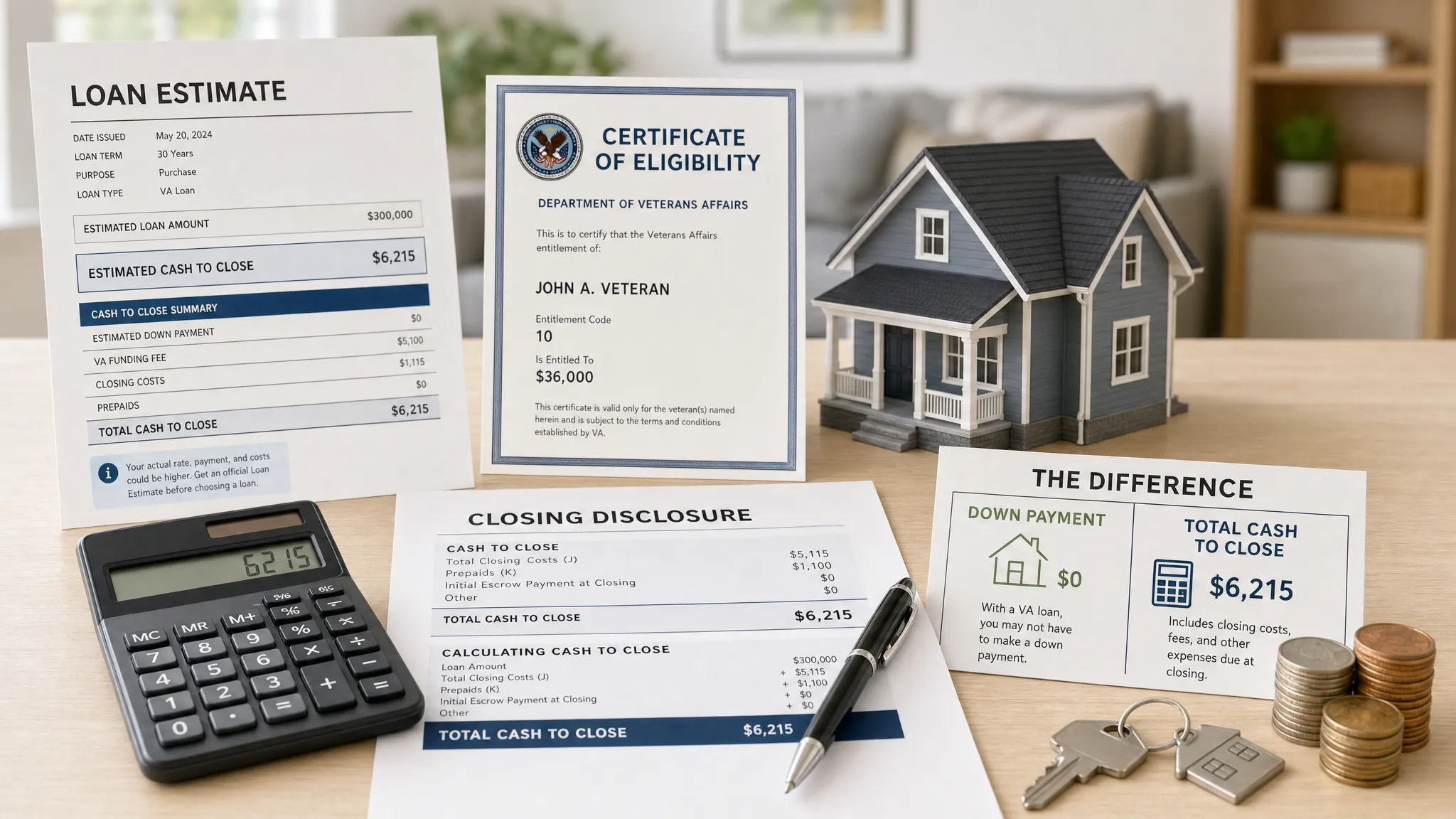
A VA loan is famous for one major advantage: eligible borrowers may be able to buy a home with no down payment. That benefit can make homeownership more accessible for veterans, active-duty service members, certain National Guard and Reserve members, and eligible surviving spouses.
But “no down payment” does not always mean “no money due.” You may still have closing costs, prepaid taxes and insurance, a VA funding fee, earnest money, inspection costs, or a down payment in certain special situations.
The key is understanding the difference between your down payment for a VA loan and your total cash to close. They are related, but they are not the same.
The Short Answer: Many VA Buyers Can Put $0 Down
For eligible buyers with full VA entitlement, a VA purchase loan can often be structured with 0% down as long as the borrower qualifies with the lender and the property meets VA requirements. The VA does not lend the money directly in most cases. Instead, it guarantees a portion of the loan for approved private lenders, which helps make the $0 down option possible.
That said, the lender still reviews your credit, income, debts, residual income, assets, property details, and overall ability to repay. The VA benefit removes the standard down payment requirement in many cases, but it does not remove underwriting.
If you are comparing VA financing with other loan types, this is one of the biggest differences. Conventional and FHA loans usually require a minimum down payment unless paired with assistance. VA loans may not, and they also do not require monthly private mortgage insurance. For a broader overview of the benefit, see New Era Lending’s guide to the benefits of a VA mortgage loan.
Down Payment vs. Cash to Close: Why the Difference Matters
A down payment is the amount you pay upfront to reduce the loan amount. If you buy a $400,000 home with a $0 down VA loan, your base loan amount may be $400,000, before any financed VA funding fee.
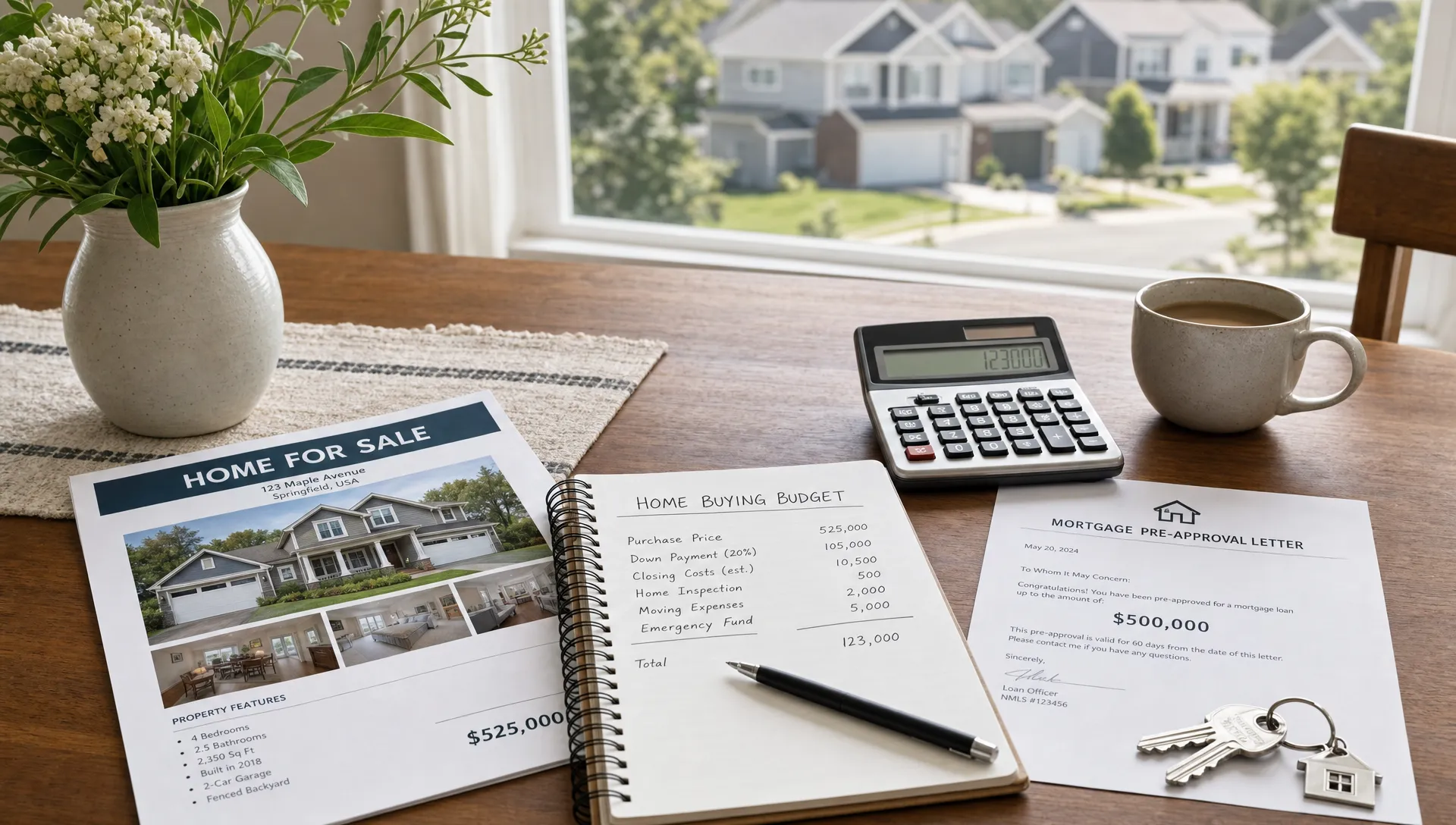
Cash to close is broader. It includes the money needed to complete the transaction after accounting for credits, deposits, fees, prepaid expenses, and any down payment.
Your cash to close may include:
- Closing costs, such as lender fees, title charges, recording fees, appraisal fees, and credit report fees.
- Prepaid items, such as homeowners insurance, property taxes, and escrow reserves.
- Earnest money deposit, depending on your contract and how it is credited at closing.
- Inspection costs, which are often paid before closing and may not appear as a closing cost on your final settlement.
- VA funding fee, if it is not exempt or financed into the loan.
- Any appraisal gap or required down payment due to partial entitlement.
This is why two VA buyers can both say they are buying with $0 down, while one brings very little to closing and the other brings several thousand dollars. The loan structure, seller credits, lender credits, prepaid expenses, and funding fee treatment all matter.
When You May Owe a Down Payment for a VA Loan
For many eligible buyers, the VA down payment is $0. However, there are several situations where you may owe or choose to make a down payment.
You Do Not Have Full VA Entitlement Available
Full entitlement generally means you have enough VA benefit available that the VA does not impose a loan limit for a $0 down purchase, subject to lender approval and property value. This often applies when you have never used your VA loan benefit, or when a previous VA loan has been fully paid off and entitlement has been restored.
Partial entitlement is different. It can happen if you still have an active VA loan, lost entitlement due to a prior foreclosure or short sale, or have not restored entitlement after a previous VA-backed loan.
With partial entitlement, a lender may need the combination of VA guaranty and your down payment to meet required coverage. If your remaining entitlement does not support the full purchase price, you may need to bring money down.
A simplified example: if the lender needs $125,000 of coverage on a loan and your available VA guaranty is only $100,000, you may need to cover the $25,000 shortfall as a down payment. Actual calculations depend on your entitlement, county loan limits when applicable, loan amount, and lender guidelines.
This is one reason it is important to review your Certificate of Eligibility early, especially if you have used a VA loan before.
The Home Appraises for Less Than the Purchase Price
A VA appraisal helps determine whether the home meets VA Minimum Property Requirements and whether the value supports the sales price. If the appraised value comes in below the agreed purchase price, the lender bases the loan amount on the lower value, not simply the contract price.
In that situation, you generally have a few options:
- Renegotiate the price with the seller.
- Ask the seller to make concessions or adjust terms.
- Challenge the value through the VA Tidewater process or a reconsideration of value, when supported by better comparable sales.
- Pay the difference in cash if you still want to proceed.
That last option is not technically a standard VA down payment, but it functions like extra cash due at closing. If you agree to pay $410,000 and the home appraises at $400,000, you may need to cover the $10,000 gap unless the deal is renegotiated.
You Choose to Put Money Down
Even if a down payment is not required, you may decide to make one. This can reduce your loan amount, lower your monthly principal and interest payment, and potentially reduce your VA funding fee.
For VA purchase loans, the funding fee is typically lower when the borrower puts at least 5% down, and lower again at 10% down. That does not mean everyone should put money down. It means you should compare the tradeoff between using cash upfront and keeping cash available after closing.
For many buyers, preserving emergency savings is more valuable than making a larger down payment. For others, a down payment may help create a more comfortable payment or reduce long-term borrowing costs.
You Need to Strengthen the Offer or Loan Scenario
A VA loan’s $0 down feature is powerful, but real estate markets vary. In a competitive situation, a buyer may choose to put money down to show stronger financial positioning, reduce the loan amount, or create room for a possible appraisal issue.
This is not always necessary, and it should not be done just for appearances. The better approach is to ask your loan officer to compare scenarios before you write the offer. A strong pre-approval, clear communication with the listing agent, and a well-structured contract can matter just as much as down payment size.
The VA Funding Fee Is Not the Same as a Down Payment
The VA funding fee is a one-time charge that helps support the VA loan program. It applies to many VA loans, but not all borrowers have to pay it. Veterans receiving VA disability compensation, certain eligible surviving spouses, and some active-duty service members with qualifying pre-discharge disability ratings may be exempt.
According to the Department of Veterans Affairs, the funding fee amount can vary based on loan type, down payment size, and whether you have used the VA loan benefit before. The VA’s official page on funding fees and closing costs is a helpful source for checking current rules.
As of current VA purchase loan guidance, common funding fee tiers for eligible non-exempt borrowers include:
- First use with less than 5% down: 2.15% of the loan amount.
- Subsequent use with less than 5% down: 3.3% of the loan amount.
- 5% down or more: 1.5% for first or subsequent use.
- 10% down or more: 1.25% for first or subsequent use.
Always confirm the current funding fee schedule before you make a final decision, since program rules can change.
The funding fee can often be financed into the loan instead of paid upfront. For example, if you buy a home for $400,000 with $0 down and you are not exempt, the funding fee may be added to the loan balance. That can reduce cash needed at closing, but it increases the amount financed and may slightly increase your monthly payment.
Closing Costs You May Still Owe With a VA Loan
Even with $0 down, closing costs still exist. Some can be paid by the buyer, some may be paid by the seller, and some may be offset with lender credits depending on the rate and loan structure.
Common VA loan closing costs include lender origination charges, appraisal fees, title insurance, settlement fees, recording fees, discount points if chosen, credit report fees, and prepaid expenses. Prepaids are not exactly lender fees. They are upfront funding for items like homeowners insurance, property taxes, and escrow accounts.
The VA limits certain fees that can be charged to the borrower, which can help protect eligible buyers from excessive costs. However, that does not mean every closing cost disappears.
Seller credits can help. VA rules allow sellers to pay certain buyer closing costs and concessions, subject to program limits. Seller concessions are generally capped at 4% of the loan amount for certain items, but sellers can also pay normal discount points and allowable closing costs in many cases. The structure matters, so your lender and real estate agent should coordinate before you submit the offer.
Earnest Money, Inspections, and Out-of-Pocket Costs
Some costs happen before closing, so buyers sometimes forget to include them in the budget.
An earnest money deposit is money you put down with the purchase contract to show the seller you are serious. If the transaction closes, it is typically credited back to you toward your cash to close. If the transaction falls apart, whether you get it back depends on your contract terms and contingencies.
A home inspection is separate from the VA appraisal. The VA appraisal is not a full inspection for your personal protection. A professional inspection can help you understand the home’s condition, potential repairs, safety concerns, and future maintenance needs. The buyer often pays for this before closing.
You may also pay for specialized inspections, such as pest, septic, well, roof, or structural evaluations, depending on the property and local requirements.
Should You Put Money Down If You Do Not Have To?
There is no universal answer. A VA loan’s $0 down benefit can help you buy sooner and preserve savings, but a down payment can reduce your loan balance and payment.
A down payment may make sense if you have strong cash reserves, want to reduce the VA funding fee, want a lower monthly payment, or need to solve a partial entitlement or appraisal gap issue.
A $0 down structure may make more sense if using your cash would leave you with little emergency savings, you expect near-term moving or repair costs, you qualify comfortably, or seller and lender credits reduce your cash to close.
The right decision is not just about the lowest upfront cost. It is about the safest overall plan for your household. A home purchase often comes with new expenses after closing, including utilities, furniture, maintenance, repairs, and higher insurance or tax bills than expected.
How to Estimate What You May Owe Before You Make an Offer
Before you shop seriously, ask for a personalized VA loan scenario. Online calculators can help, but they cannot fully account for your entitlement status, funding fee exemption, seller credit strategy, local taxes, insurance, or property-specific details.
A good pre-offer estimate should show:
- Expected purchase price and loan amount.
- Whether the scenario assumes $0 down or a chosen down payment.
- Estimated VA funding fee and whether it is financed or paid upfront.
- Estimated closing costs and prepaid expenses.
- Seller credits, lender credits, or gift funds included in the plan.
- Estimated cash to close after earnest money credit.
- Full monthly payment, including taxes, insurance, and any HOA dues.
Choosing the right professional guidance matters in any specialized decision. In another field, for example, someone researching digital orthodontics in Bucharest would look for a specialist who can explain options clearly and plan with precision. VA financing deserves the same mindset: work with a lender who understands entitlement, funding fees, appraisal rules, seller credits, and veteran-specific loan scenarios.
Common Mistakes to Avoid
The biggest mistake is assuming $0 down means $0 out of pocket. A VA loan can reduce the barrier to buying, but you still need a clear estimate of closing costs, prepaid items, inspections, and reserves.
Another common mistake is ignoring the VA funding fee. If you are exempt, that can significantly change your numbers. If you are not exempt, you need to understand whether financing the fee fits your long-term plan.
Buyers with previous VA loan use should also avoid waiting too long to check entitlement. Partial entitlement can change the required down payment calculation, especially when buying another home before selling the current one.
Finally, do not compare lenders by rate alone. Compare the full Loan Estimate, including APR, lender fees, points, credits, funding fee treatment, cash to close, and monthly payment. If you want a deeper look at VA cost myths and fees, New Era Lending’s guide to VA loans, eligibility, fees, and common myths is a useful next read.
Frequently Asked Questions
Does a VA loan always require no down payment? No. Many eligible buyers with full entitlement can buy with $0 down, but a down payment may be required if you have partial entitlement, an appraisal gap, or a loan scenario that does not meet required coverage. You may also choose to put money down voluntarily.
Is the VA funding fee considered a down payment? No. The VA funding fee is a separate program cost. It can often be financed into the loan, while a down payment is cash paid upfront to reduce the loan amount.
Can the seller pay my VA loan closing costs? Yes, sellers can often pay allowable closing costs and certain concessions, subject to VA rules and negotiated contract terms. This can reduce your cash to close, but it must be structured correctly.
Do I need cash reserves for a VA loan? Sometimes. VA rules and lender requirements vary based on property type, risk profile, and borrower circumstances. Even when reserves are not required, keeping money available after closing is usually wise.
What happens if the VA appraisal is lower than the purchase price? You may renegotiate the price, request a reconsideration of value if supported, ask for seller concessions, cancel under applicable contract protections, or pay the difference in cash if you choose to proceed.
Should I make a down payment on a VA loan if I can afford it? It depends on your goals. A down payment can lower your payment and possibly reduce the funding fee, but preserving cash for emergencies, repairs, and moving costs may be more important.
Get a Clear VA Cash-to-Close Estimate
A VA loan can be one of the most powerful home financing tools available to eligible buyers, but the smartest move is to understand the full picture before you make an offer.
New Era Lending helps veterans, service members, and eligible buyers compare VA loan scenarios with modern technology and personalized human guidance. From secure document uploads to clear cost breakdowns, the goal is to make your path to home financing simpler, faster, and easier to understand.
If you want to know whether your VA down payment could be $0, what you may owe at closing, and how seller credits or funding fee treatment could change your numbers, connect with New Era Lending for a personalized review.