.jpg)
.jpg)





.jpg)


Down Payment and Mortgage Insurance: Key Rules

A down payment does more than reduce the amount you borrow. It can also determine whether you need mortgage insurance, what type of insurance applies, how much you pay each month, and how long that cost may last.
For many buyers, the big question is not simply, “Can I buy with less than 20% down?” In many cases, yes. The better question is, “What does that smaller down payment do to my full mortgage cost?” That is where the rules around down payment and mortgage insurance become important.
Below is a practical guide to the key rules homebuyers should understand before choosing a loan program or deciding how much cash to put down.
First, what is mortgage insurance?
Mortgage insurance is protection for the lender if a borrower defaults on the loan. It is not the same as homeowners insurance, which protects the property and your personal coverage needs.
Borrowers often pay for mortgage insurance because it allows lenders to approve loans with smaller down payments. Without mortgage insurance or a government guarantee, many low-down-payment loans would be riskier for lenders and harder for borrowers to access.
The name and rules depend on the loan type:
- Conventional loans usually use private mortgage insurance, often called PMI.
- FHA loans use mortgage insurance premium, often called MIP.
- VA loans generally do not have monthly mortgage insurance, but many borrowers pay a VA funding fee unless exempt.
- USDA loans do not use PMI, but they usually include guarantee fees.
The main thing to remember is simple: your down payment affects your loan-to-value ratio, and your loan-to-value ratio often determines your mortgage insurance rules.
The key connection: down payment, LTV, and mortgage insurance
Loan-to-value ratio, or LTV, compares your loan amount to the property value used by the lender. On a purchase loan, lenders usually use the lower of the purchase price or appraised value.
For example, if you buy a $400,000 home and put 5% down, your down payment is $20,000 and your loan amount is $380,000. Your LTV is 95%.
A higher LTV usually means more risk to the lender. That can lead to mortgage insurance, a higher insurance premium, different pricing, or stricter underwriting requirements. A lower LTV often means more equity from day one and may reduce or remove mortgage insurance.
This is why two buyers with the same purchase price can have very different monthly payments. The interest rate matters, but the down payment and mortgage insurance rules can change the full payment in a big way.
If you want a deeper look at down payment ranges by loan type, New Era Lending also explains what down payment you need for a mortgage loan.
Conventional loans: the 20% rule and PMI
For a conventional mortgage, the most familiar rule is this: if you put less than 20% down, you will usually need PMI.
That does not mean you must put 20% down to buy a home. Many conventional loan options allow qualified buyers to put down far less, sometimes as low as 3% depending on the program, borrower profile, and property type. PMI is the tradeoff that makes those smaller down payments possible.
How PMI is usually paid
PMI can be structured in several ways, depending on the lender and program. The most common is monthly borrower-paid PMI, where the premium is included in your mortgage payment. Other structures may include upfront PMI, split premiums, or lender-paid mortgage insurance.
Lender-paid mortgage insurance can sound attractive because there may be no separate monthly PMI line item. However, it is not free. The cost is typically built into the interest rate or overall loan pricing, so it should be compared carefully.
What affects PMI cost?
PMI is not a flat fee for everyone. The cost can vary based on factors such as your credit profile, down payment, loan term, occupancy type, property type, and overall loan structure.
In general, a borrower putting 15% down may pay less PMI than someone putting 3% down. A borrower with stronger credit may also qualify for better PMI pricing than someone with a weaker credit profile.
This is why it is useful to compare multiple down payment scenarios. Sometimes the difference between 5% down and 10% down meaningfully lowers PMI. In other cases, keeping more cash in reserves may be the smarter move.
When can PMI be removed?
Conventional PMI is often removable, which is one of its biggest advantages over some other types of mortgage insurance.
Under federal Homeowners Protection Act rules, many borrowers can request PMI cancellation when the mortgage reaches 80% of the home’s original value, assuming they meet requirements such as a good payment history. PMI is generally scheduled to terminate automatically when the loan reaches 78% of the original value, if the borrower is current.
There are details and exceptions, so you should confirm the exact rules with your loan servicer. For example, removing PMI based on a new appraised value, major improvements, or home appreciation may involve seasoning requirements, proof of value, and servicer-specific guidelines.
The important rule is that conventional PMI is often not permanent. If your long-term plan is to remove mortgage insurance, conventional financing may give you a clear path if you qualify.
FHA loans: lower down payment, different MIP rules
FHA loans are popular with buyers who need more flexible credit guidelines or a smaller down payment. A qualified borrower may be able to buy with 3.5% down, although lender requirements and individual approval factors still apply.
FHA mortgage insurance is called MIP, and it works differently from conventional PMI.
Most FHA loans include two types of MIP: an upfront mortgage insurance premium and an annual mortgage insurance premium that is paid monthly as part of the mortgage payment. The upfront premium can often be financed into the loan, but financing it increases the loan balance.
The key rule is that FHA MIP may last much longer than conventional PMI. For many FHA borrowers who put less than 10% down, annual MIP typically lasts for the life of the loan. If the borrower puts 10% or more down, annual MIP may last 11 years under current FHA rules.
That does not make FHA a bad option. It simply means the lower entry cost should be compared against the long-term cost. FHA can be a strong fit for buyers who need its flexibility, but a borrower with strong credit and enough down payment may want to compare FHA against conventional PMI before deciding.
For a broader comparison of these loan types, see New Era Lending’s guide to FHA vs. conventional loans.
VA loans: no monthly mortgage insurance, but know the funding fee
For eligible veterans, service members, and certain surviving spouses, VA loans can be one of the most powerful mortgage options available. One major benefit is that VA loans generally do not require a down payment and do not have monthly mortgage insurance.
Instead, many VA borrowers pay a VA funding fee, unless they are exempt. The fee can vary based on factors such as first-time or subsequent VA loan use, down payment amount, and exemption status.
A down payment is not always required with a VA loan, but making one can reduce the funding fee in some cases. That means eligible borrowers should not assume that zero down is automatically the best financial choice. It may be best, especially if preserving cash is the priority, but it should still be compared against options with some money down.
VA loans also have eligibility, occupancy, property, and appraisal requirements. The mortgage insurance advantage is significant, but the full loan structure still needs to fit the home and borrower.
USDA loans: no down payment, but guarantee fees apply
USDA loans may allow eligible buyers to purchase with no down payment in qualifying rural and some suburban areas. Like VA loans, USDA loans do not use conventional PMI.
However, USDA loans typically include an upfront guarantee fee and an annual fee paid monthly. These fees function differently from PMI but still affect your cash-to-close, loan amount, and monthly payment.
USDA eligibility depends on property location, income limits, occupancy rules, and other program requirements. If you are considering a USDA loan, compare the full monthly payment, not just the down payment requirement.
Jumbo and investment property loans may have stricter rules
Not every mortgage follows the same mortgage insurance pattern. Jumbo loans, portfolio loans, non-QM loans, and investment property loans may have different down payment requirements and may not offer standard PMI options.
For example, a jumbo lender may require a larger down payment rather than allowing mortgage insurance at a very high LTV. Investment property loans also commonly require more money down than primary-residence loans, and pricing can be more sensitive to LTV and credit strength.
If your loan is outside a standard primary-residence purchase, it is especially important to ask your lender how the down payment affects approval, rate, reserves, and any insurance or pricing adjustments.
Key rules to know before choosing your down payment
The exact numbers can vary by loan program and lender, but these rules apply broadly to many homebuyers.
Rule 1: Less than 20% down does not mean you are making a mistake
The 20% down payment is useful because it can help you avoid PMI on a conventional loan. But it is not a universal requirement.
If waiting to save 20% means delaying homeownership for years, facing higher home prices, or draining your emergency fund, a smaller down payment may be reasonable. The right decision depends on your monthly comfort level, reserves, credit profile, and timeline.
Rule 2: Mortgage insurance should be compared as part of the full payment
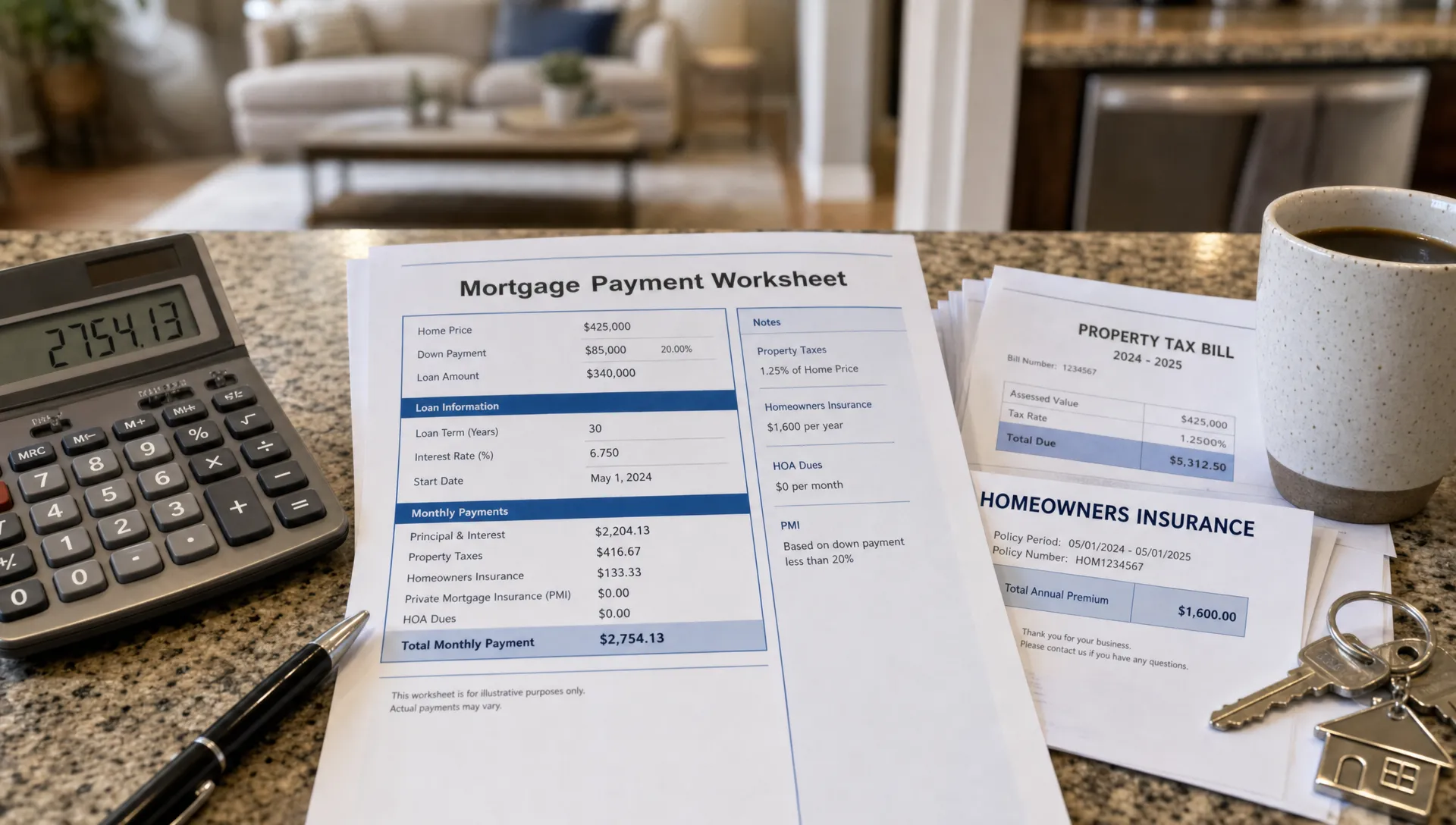
Do not evaluate mortgage insurance in isolation. Compare the full monthly housing payment, including principal, interest, taxes, homeowners insurance, mortgage insurance, HOA dues if applicable, and any other recurring costs.
A loan with PMI may still be affordable and strategically useful if it helps you buy sooner while keeping healthy cash reserves. On the other hand, if PMI stretches your monthly budget too far, a larger down payment or different loan type may be better.
Rule 3: The lowest down payment is not always the cheapest loan
A low down payment can reduce cash needed at closing, but it may increase the loan amount, interest paid over time, and mortgage insurance cost.
This is why side-by-side scenarios matter. Ask your lender to compare 3%, 5%, 10%, and 20% down if those options are realistic for you. The best choice may become clearer when you see the difference in payment, cash-to-close, mortgage insurance, and remaining reserves.
Rule 4: A larger down payment can help, but liquidity matters
Putting more money down may lower your payment and reduce mortgage insurance, but using every dollar for the down payment can create risk after closing.
Homeownership comes with repairs, maintenance, moving costs, furniture needs, utility setup, and unexpected expenses. A buyer with a slightly higher payment but strong emergency savings may be in a better position than a buyer who avoids PMI but has no cash left.
Rule 5: Appraisal value can affect mortgage insurance
Because LTV is based on the value used by the lender, the appraisal can influence your mortgage insurance position.
If the appraisal comes in lower than the purchase price, your effective LTV may be higher than expected. That can affect PMI, cash-to-close, loan approval, or program eligibility. In that situation, you may need to renegotiate, bring more cash, change loan terms, or revisit your loan options.
Documentation matters when money is coming from multiple sources
Down payment planning is not only about having the funds. Lenders also need to verify where the money came from and whether it is an acceptable source.
Common sources may include checking and savings accounts, investment accounts, gift funds, employer assistance, down payment assistance programs, or proceeds from the sale of another property. Each source may require documentation.
Gift funds, for example, often require a gift letter stating that the money is not a loan and does not need to be repaid. Large deposits may require a written explanation and supporting records. If you are drafting a clear gift letter or letter of explanation, a tool like an AI letter generator can help you create a polished starting point, but always follow your lender’s exact template and documentation instructions.
This paperwork may feel small, but it can affect underwriting speed. Clear documentation helps the lender verify your funds and reduces last-minute conditions.
How to decide if paying more down is worth it
The best down payment is not always the largest one. It is the one that balances approval strength, monthly affordability, cash reserves, and long-term cost.
Before deciding, ask your lender to show you how each option changes your numbers. Focus on these questions:
- How much will the monthly payment change at each down payment level?
- How much mortgage insurance will I pay, and for how long?
- How much cash will I have left after closing?
- Does a larger down payment improve my rate or approval strength?
- If I choose PMI, what is the realistic path to removing it later?
- Would a different loan program lower my total cost?
This is also where technology and human guidance work well together. Calculators can estimate payments quickly, but a loan officer can explain program rules, underwriting details, and tradeoffs that are easy to miss.
New Era Lending’s mortgage process is designed around that combination: smart tools, transparent guidance, secure document handling, and personalized loan comparisons for purchase, refinance, and equity needs.
Common mistakes to avoid
One common mistake is assuming PMI is always bad. PMI is a cost, but it can also help qualified buyers purchase before they have a 20% down payment. The real question is whether the cost fits your plan.
Another mistake is comparing only interest rates. A loan with a lower rate may still have higher mortgage insurance, higher fees, or less favorable long-term flexibility. Always compare the full Loan Estimate, cash-to-close, APR, payment, and mortgage insurance details.
A third mistake is using all available cash to avoid PMI. Avoiding mortgage insurance can feel like a win, but not if it leaves you financially fragile after closing.
Finally, some buyers assume mortgage insurance rules are the same across all loan types. They are not. Conventional PMI, FHA MIP, VA funding fees, and USDA guarantee fees each follow different rules.
For a deeper breakdown of insurance types, New Era Lending covers PMI vs FHA MIP vs VA options in more detail.
Frequently Asked Questions
Do I need 20% down to avoid mortgage insurance? On a conventional loan, putting at least 20% down usually avoids PMI. However, VA loans generally do not require monthly mortgage insurance even with zero down for eligible borrowers, while FHA and USDA use different insurance or guarantee fee structures.
Is PMI permanent? Conventional PMI is often removable once you meet certain equity, payment history, and servicer requirements. FHA MIP may last 11 years or the life of the loan depending on the down payment and loan terms.
Is mortgage insurance the same as homeowners insurance? No. Mortgage insurance protects the lender if you default. Homeowners insurance protects the home and provides coverage based on your policy terms.
Can I refinance to remove mortgage insurance? In some cases, yes. If your home value has increased, your loan balance has decreased, or your credit profile has improved, refinancing may help remove or reduce mortgage insurance. You should compare closing costs and break-even timing before refinancing.
Should I put more down just to avoid PMI? Not always. A larger down payment can reduce costs, but preserving emergency savings may be more important. Compare multiple scenarios before deciding.
Compare your down payment and mortgage insurance options with confidence
Down payment and mortgage insurance rules can change the real cost of a home loan. A smaller down payment may help you buy sooner, while a larger down payment may reduce your monthly payment or remove insurance. The right answer depends on your loan type, credit profile, property, timeline, and cash reserves.
New Era Lending helps borrowers compare mortgage options with modern tools and experienced human guidance. Whether you are buying, refinancing, or reviewing ways to access home equity, you can get a clearer view of your payment, cash-to-close, mortgage insurance, and long-term tradeoffs.
Start with personalized numbers, not guesses. Visit New Era Lending to explore mortgage solutions built around your goals.